Cities are fundamentally designed around togetherness. From sprawling public parks and bustling university campuses to transit hubs, waiting areas, and open public plazas, our urban infrastructure usually operates on a singular assumption: that people want to sit near one another, converse, observe their surroundings, or actively participate in the collective energy of public life. However, what these shared environments so frequently overlook is the exact opposite human need. Throughout the day, individuals often find themselves craving a few minutes of psychological separation, a moment of quiet retreat, or a brief spatial buffer without being forced to abandon the public realm entirely or seek out an enclosed private room.
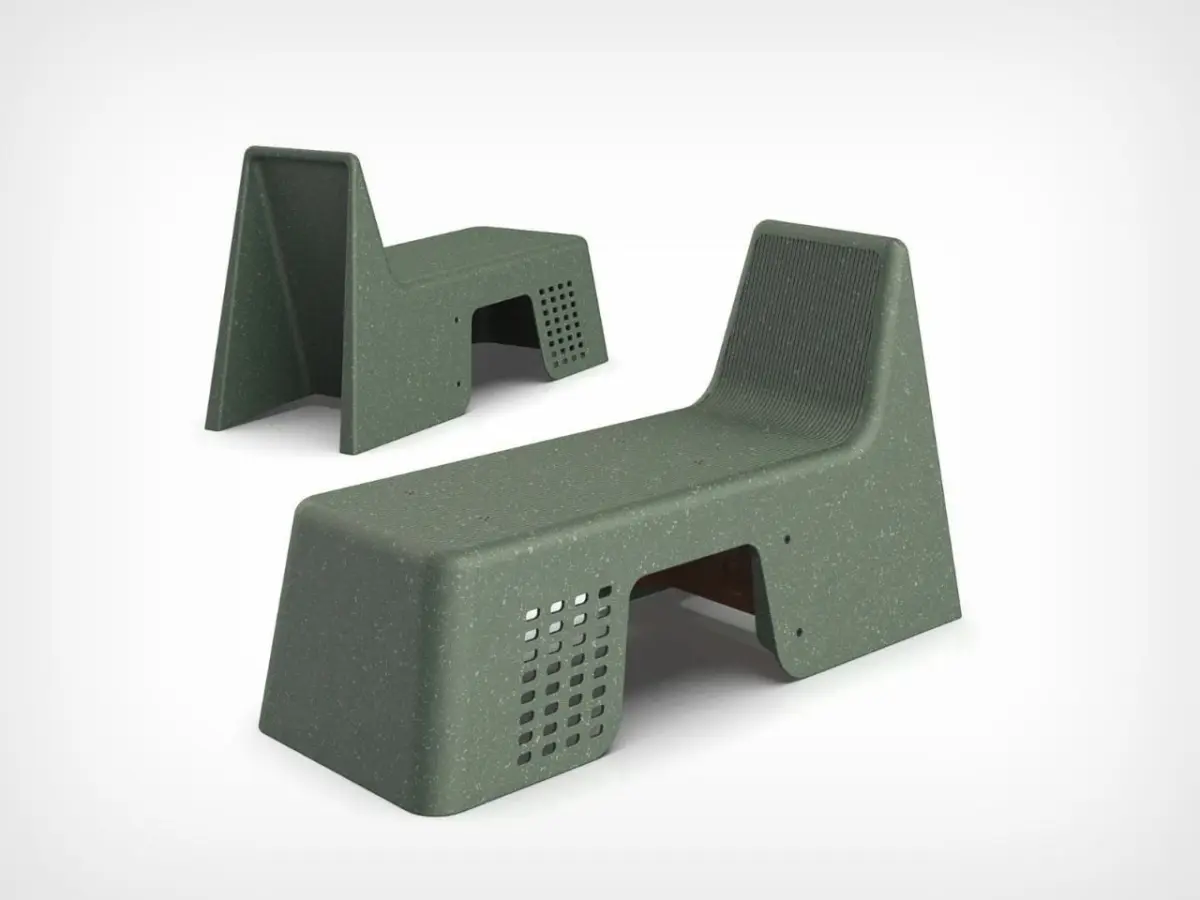
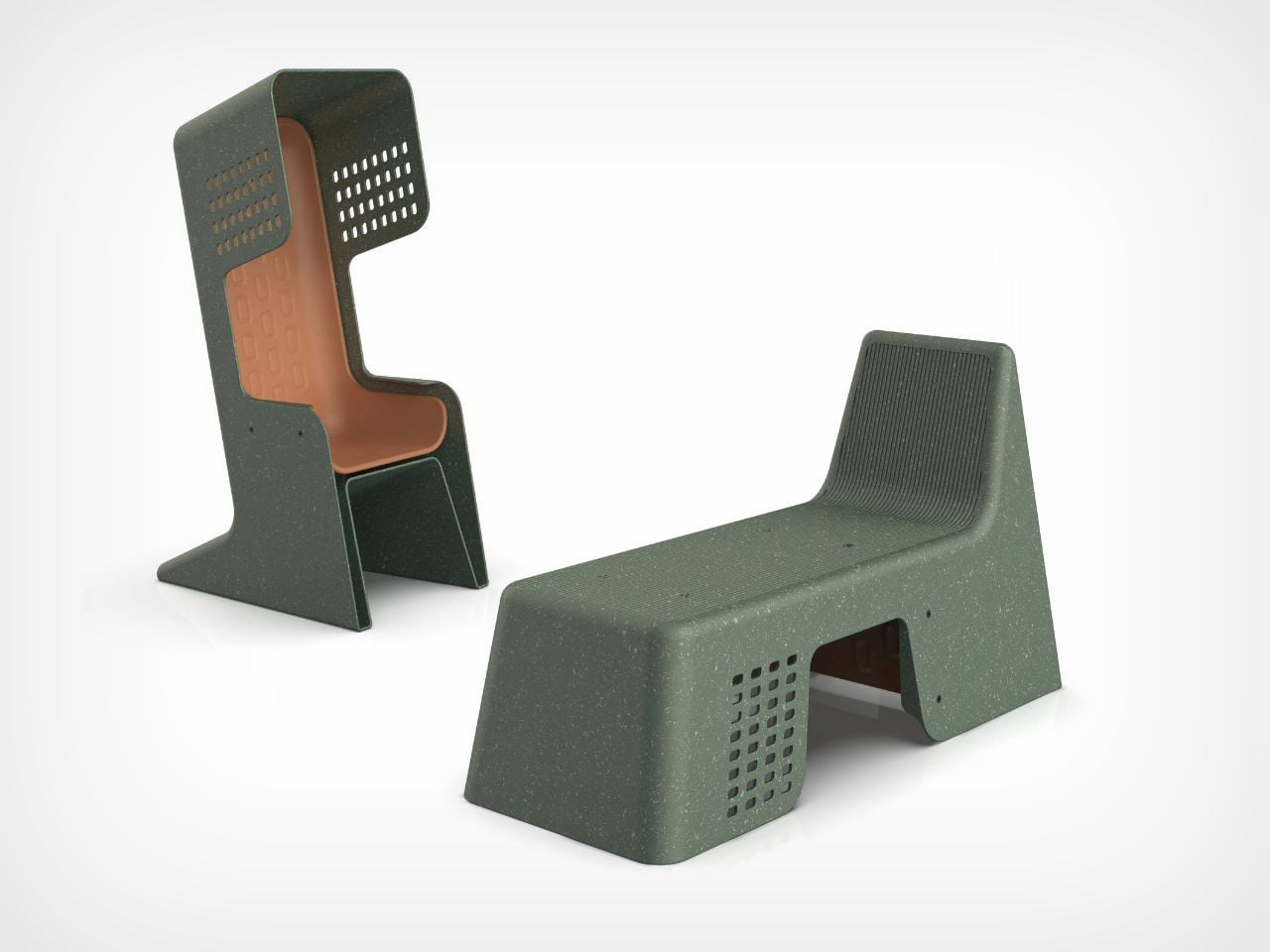
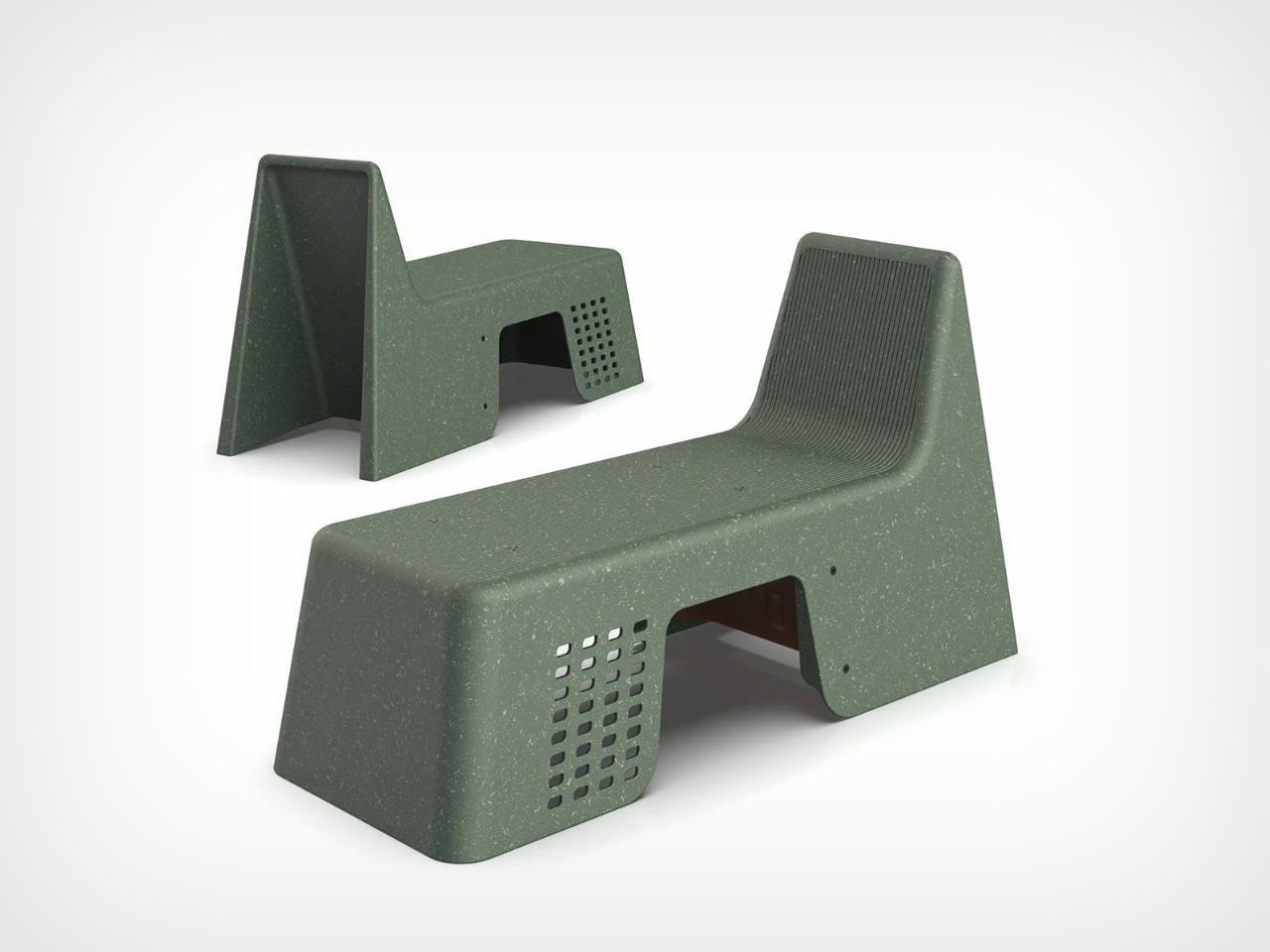
Addressing this subtle yet persistent contradiction in modern architecture, industrial designer Ümithan Üçok has created CONVERTIBLE, a multifunctional privacy chair designed to transform how we think about and utilize adaptable public furniture. The project successfully bridges the gap between two familiar furniture typologies that typically serve mutually exclusive social behaviors: the standard open public bench and the secluded privacy chair. Rather than forcing urban planners and landscape architects to decide in advance whether a specific zone must support communal interaction or solitary isolation, CONVERTIBLE introduces an innovative design paradigm where a single physical object can comfortably accommodate both states depending on the immediate desires of the user.
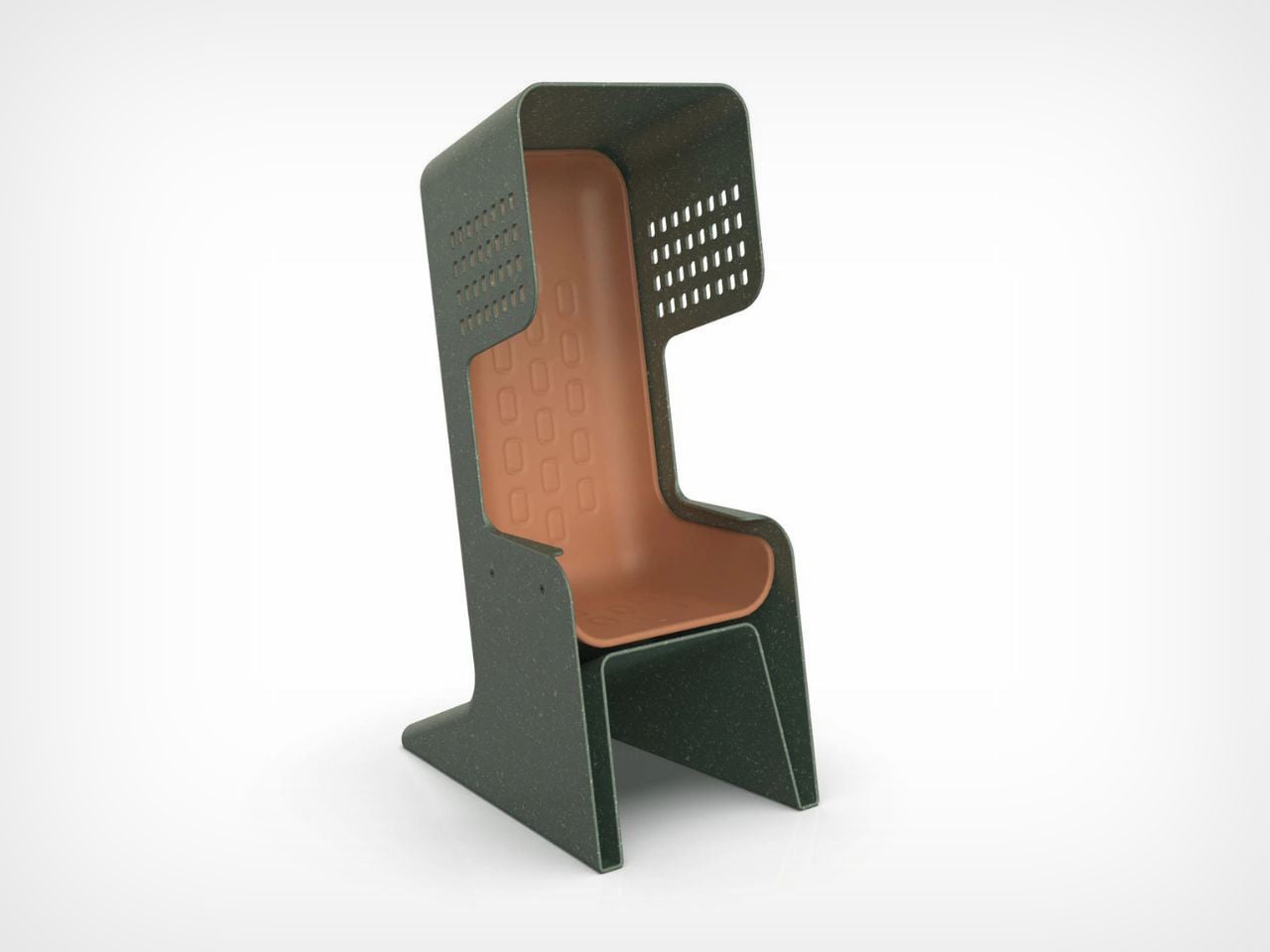
At first glance, the object functions as a conventional shared seating arrangement, seamlessly maintaining the visual and physical openness expected from furniture placed within high-traffic communal environments. Its form can then be effortlessly reconfigured by the user to establish a much more enclosed, protective seating condition. This dynamic shift grants a single occupant a significantly stronger sense of personal territory and psychological boundary right in the middle of a shared space.
This functional fluidity feels increasingly vital to the realities of contemporary urban life. Over the past few decades, public spaces have become densely programmed around constant movement, visual stimulation, and rapid social interaction. Consequently, finding opportunities for temporary mental retreat or quiet focus has grown remarkably difficult. In most modern cities, achieving privacy typically requires a drastic measure—entering an indoor building, booking a private room, traveling all the way home, or completely withdrawing from the surrounding environment. CONVERTIBLE proposes a much more nuanced, less absolute alternative. It permits a person to remain physically present and anchored within a shared urban environment while simultaneously establishing a temporary, adjustable boundary around their immediate personal space.
This capability is precisely what makes the design much more interesting and versatile than a conventional architectural privacy pod or a fixed reading booth. The primary purpose of Üçok’s design is not to enforce permanent isolation or to wall people off from their communities. Instead, privacy is treated as a fluid condition—something that can appear and disappear organically according to the shifting needs of the person sitting down. The furniture actively responds to changing human behaviors rather than prescribing one rigid, unchanging way of utilizing public seating.
Imagine a commuter or student using the furniture in its open configuration while meeting a friend, catching up on messages, or waiting between appointments. Later that same day, that exact same seating element can be reconfigured into a more sheltered, cocoon-like environment ideal for reading a book, reviewing work documents, making a confidential phone call, or simply spending a quiet moment alone amidst the urban chaos.
Beyond its psychological benefits, there is also a critical spatial advantage to combining these two distinct functions within a single footprint. Public furniture must constantly justify the physical area it occupies, particularly in dense metropolitan centers where square footage is at a premium and public spaces are heavily contested. Providing completely separate benches for group seating alongside separate private pods or isolated chairs can quickly clutter an environment, making public plazas feel crowded, visually disjointed, or inefficiently organized. A convertible object allows the exact same physical footprint to serve vastly different needs at different moments throughout the day.
For urban designers and city planners, this multifunctionality represents much more than a clever visual gesture or an aesthetic novelty. It offers a practical method for making public seating infinitely more flexible without cluttering the landscape with an excess of specialized furniture pieces.
The project also prompts a quieter, more philosophical question about what the concept of privacy actually means within a public setting. True privacy does not always necessitate a sealed, soundproof room, a locked door, or complete visual separation from the rest of the world. Often, a subtle shift in orientation, the presence of a surrounding curved surface, or a clearly defined personal zone is entirely sufficient to fundamentally alter how exposed a person feels in a crowd. By transitioning fluidly between a conventional bench and an enclosed privacy chair, CONVERTIBLE utilizes the physical architecture of the furniture itself to create that essential psychological distinction.
Üçok’s project is ultimately anchored in a remarkably simple yet profound observation: human beings do not behave socially all the time, nor do our emotional and psychological needs remain static from morning to night. Our desire for connection, conversation, solitude, and focus ebbs and flows continuously over the course of a single day, yet the physical spaces and furniture surrounding us rarely possess the capacity to adapt alongside those internal changes.
CONVERTIBLE gives that natural fluctuation a tangible, physical form. Instead of treating public seating as a fixed object with a singular, unyielding purpose, the design reimagines urban furniture as an active mediator between openness and withdrawal. It allows the exact same public space to feel communal and collaborative one moment, and deeply personal and introspective the next.
This kind of flexibility carries significant weight because public life is rarely defined by just one mood for very long. A modern public plaza, a university campus courtyard, or a busy transit waiting area must successfully accommodate conversation, passive observation, professional work, and quiet personal retreat—frequently within the exact same hour and utilizing the exact same physical footprint. By empowering a single object to shift effortlessly between a shared bench and an individualized privacy chair, CONVERTIBLE treats these constant behavioral shifts as ordinary parts of daily life rather than exceptional challenges to be solved with more walls. While it does not single-handedly solve urban loneliness or overcrowding, it points toward a much more responsive, empathetic future for public furniture: seating that remains wide open when company is welcome, and gently closes in just enough when someone needs a moment to themselves.