Kyle Valade, founder of Rust Coast Manufacturing Technology, describes the company as a next-generation manufacturing quality platform designed to save companies millions of dollars by ensuring that correctly sized products are always shipped to the market. In a fast-paced global apparel industry where profit margins are continually squeezed and consumer expectations remain exceptionally high, bridging the gap between factory production and end-consumer satisfaction has never been more critical. By leveraging advanced visual artificial intelligence and automated computer vision, Rust Coast is introducing a transformative approach to garment inspection that promises to redefine quality assurance across global supply chains.
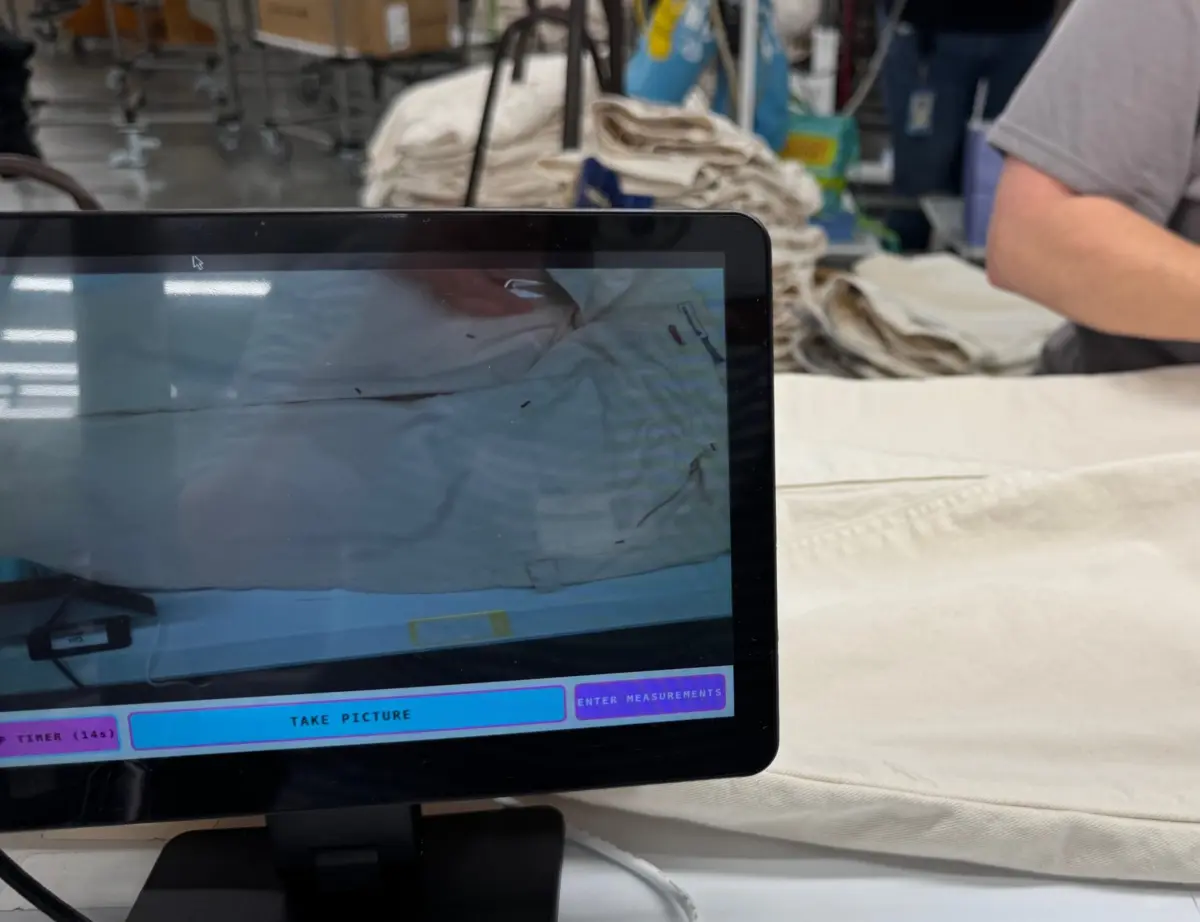
The company’s turnkey solution uses specialized cameras that are strategically installed across factories to capture high-resolution images of garments during production. These images are immediately run through visual AI systems to automatically measure the clothing made by suppliers, comparing them against the design specifications in real time. This seamless integration allows factories to monitor production accuracy continuously without disrupting existing floor workflows or slowing down production output.
Once captured, the photos and data are transmitted to the company’s cloud-based application, where they undergo more intensive processing. This deeper analysis generates actionable analytics and automated alerts that are routed directly to the brand’s centralized portal. What Rust Coast is building toward is creating a comprehensive visual archive of each individual piece of clothing throughout the entire manufacturing process. Because the cameras passively take measurements, they operate entirely in the background without getting in the way of the human operators and workers on the factory floor.
Here, Valade explains the profound challenges apparel brands face in manufacturing today and details how his company’s innovative technological solution can help overcome them.
Bridging Gaps in Traditional Garment Manufacturing
When discussing the specific gaps and recurring issues in traditional garment manufacturing quality control that inspired him to found Rust Coast, Valade notes that the platform was conceived to automate quality inspections for garments, starting fundamentally with measurements. Before settling on measurements, he originally founded Rust Coast around the broader concept of digitizing manual processes in the factory. Despite the presence of highly advanced and digital machinery in modern production facilities, a surprising number of foundational processes still rely heavily on traditional pencil-and-paper methods.
Valade began exploring this challenge by examining the various stages of manufacturing for beanies, which might seem on the surface to be among the simplest items to produce. However, upon closer inspection, the process reveals a multitude of critical steps that must all be executed perfectly or the entire product is ruined. The yarn must be precisely knit; the fabric cut, folded, and sewn; and the label must be applied accurately. At the final stage, the physical measurements must match exact tolerances, the label cannot be crooked, and the machinery must be properly calibrated to prevent skipped stitches or structural flaws.
Drawing from his professional background working on large-scale data systems at Rivian for several years—where he helped pull in and organize petabytes of vehicle data—Valade recognized parallels in industrial monitoring. At Rivian, this data was utilized inside the factory so workers could verify whether vehicles were behaving correctly or to inspect specific vehicle components. Once vehicles were on the road, that same data stream was leveraged to detect issues and improve the driving experience proactively, eliminating the need to wait for customer complaints or formal returns. Because other major industries have successfully integrated these types of automated inspections, Valade set out to build this exact capability for the apparel industry.
The apparel supply chain presents a unique set of complexities, involving numerous people spread across different factories in various countries, collectively producing millions of garments on a vast array of specialized machinery. Brands and factories often struggle to verify whether these distributed operations are consistently following the original design intent. While technical specifications, known as tech packs, and manual inspections exist, they involve a staggering number of variables. Furthermore, traditional inspections—particularly physical measurements—take a significant amount of time to perform by hand.
These manual measurements tie directly into the broader concept of garment fit. Fit is a priority of paramount importance to apparel brands, yet they typically possess almost no visibility into what is actually being produced, let alone the precise measurements of garments as they emerge from the factory floor. Fit is equally critical to the consumer; when an individual puts on a pair of pants, it is immediately clear whether they fit properly. If the fit is wrong, the garment is almost certainly destined for a return. In fact, over half of all retail returns are directly attributed to fit issues. Because of this information gap, it remains exceptionally difficult or impossible for brands to determine whether those fit problems stem from subjective consumer preferences or are fundamentally rooted in how the clothes are being manufactured at the facility. Rust Coast is actively working to close that visibility gap.
Operational and Financial Realities of Manual Sampling
Addressing the biggest operational and financial challenges that apparel brands face today when relying on standard manual sampling rates and delayed defect reporting, Valade highlights consistency and quality as primary operational hurdles. As modern supply chains grow increasingly complex, brands must ask themselves how they can affordably ensure consistent quality across tens or hundreds of different factories. At the heart of the issue is a profound lack of granular data. Under the current status quo, a consumer might return an item because it does not fit properly, while the factory simultaneously returns a quality report certifying that all physical measurements were exact. Without additional data points, the brand has little foundation to determine whether that particular return was merely an isolated outlier that slipped through normal quality checks or indicative of a much larger systemic defect.
Compounding this problem is the reality of delayed discovery. Global order lead times frequently span months. When a quality issue is discovered late in the manufacturing process, it can severely disrupt inventory levels, damage brand reputation, and negatively impact sales targets.
From a financial perspective, returns are notoriously expensive, and brands are highly motivated to reduce the volume of returns driven by sizing discrepancies and manufacturing defects. Within the e-commerce sector, approximately a quarter of all purchased items are returned, with the vast majority of those returns driven by fit problems. According to data from Coresight Research, the end-to-end operational cost of handling a single return can escalate to consume up to two-thirds of the original product cost.
Traditional sampling rates are historically rooted in the economic assumption that inspecting every single item is simply too expensive. Consequently, facilities inspect only a small fraction of total output—typically sitting at 1 to 2 percent or even less. Brands and manufacturing facilities must simply hope that this tiny sample group is fully representative of the broader production run, while knowingly accepting the inherent risk that it might not be. Rust Coast fundamentally changes this economic equation by drastically reducing the cost of inspecting garments. The system does not seek to replace human quality inspectors; rather, it powerfully augments what those human professionals are capable of achieving. When positioned inline within existing factory workflows, the technology introduces the potential to inspect 100 percent of garments. While automated checks may not be quite as exhaustive in every dimension as a thorough human review, they provide a level of oversight vastly superior to inspecting almost nothing at all.

Non-Disruptive Integration and Real-Time Computer Vision
Explaining how Rust Coast’s non-disruptive hardware and real-time AI computer vision integration transform how factories catch and fix specification errors, Valade emphasizes that manufacturing defects become progressively more expensive to fix the further they travel down the production line. Discovering immediately after the sewing stage that a pair of pants is cut too tight is significantly cheaper than investing additional labor, time, and materials into finishing and packaging a product that will ultimately fail a downstream inspection.
However, because traditional manual measurement is labor-intensive and expensive, it is performed sparingly. To fully measure a single pair of pants by hand can easily take a trained inspector roughly 20 minutes. In stark contrast, Rust Coast can execute the same comprehensive evaluation using visual AI in a matter of seconds.
This immediate, real-time feedback loop provides the factory with crucial operational flexibility. For instance, if a specific batch of pants trends closer to the precise specifications of a different size than originally intended, management has the option to relabel the pants for the correct size, execute targeted repairs, or reject the faulty batch early, thereby avoiding costly international shipping expenses on substandard inventory.
Many existing measurement solutions available on the market require factory lines to fundamentally alter their established workflows. Introducing an entirely new operational step imposes a substantial additional cost on the factory, and because many factory floor workers are compensated based on their daily production output, any disruption is fiercely resisted. Consequently, those legacy solutions often experience very low adoption rates.
Rust Coast is designed to function seamlessly either with or without direct human interaction. This versatility allows the platform to perform quality checks across a greater number of stations throughout the manufacturing process, effectively enabling the auditing of 100 percent of products at every point where they are touched, all with minimal disruption to the existing factory workflow. Ultimately, factories unlock greater opportunities to save money by detecting defects much earlier in the production lifecycle, while the time required to inspect finished goods is radically compressed. Furthermore, every inspection station continuously generates valuable data that can be leveraged to pinpoint the exact root cause of any recurring defects and feed broader artificial intelligence initiatives in the future.
Driving Value Through Comprehensive Measurement and Data
Detailing the overall value proposition Rust Coast offers to brands seeking to curb high return rates, elevate measurement accuracy, and secure supply chain visibility, Valade points back to core industry metrics. With roughly 25 percent of items being returned and fit accounting for at least half of those returns in e-commerce channels, successfully reducing return rates by even 10 percent can easily translate into millions of dollars in direct savings for a large apparel brand.
While conventional measurements are traditionally captured on only a minor subset of the overall inspection sample, Rust Coast aims to measure 100 percent of garments passing through the line. While a human quality inspector may require up to 20 minutes to fully measure a complex garment, the Rust Coast system evaluates all visible points of measurement within seconds. Moreover, the system’s measurements achieve an accuracy rate within one-eighth of an inch of a manual inspection over 90 percent of the time, with ongoing optimization efforts continually pushing toward absolute perfection. By comparison, even trained human quality auditors often exhibit variances of up to one-quarter of an inch from one another.
The hardware stations are engineered to operate collaboratively with or without direct inspector input and can be deployed across a wide variety of factory environments. Training floor inspectors to utilize the system is remarkably fast, typically taking approximately five minutes.
Currently, apparel brands possess little to no granular data regarding their physical products outside of final customer returns, online product reviews, and high-level quality summaries provided intermittently by the factory. Rust Coast changes this dynamic by delivering immediate photographic evidence and statistical tracking for every item monitored. Because corporate quality teams are often stretched thin and physically unable to be present in a dozen different manufacturing countries simultaneously, they can effectively offload repetitive inspection tasks to Rust Coast’s automated platform. This allows quality professionals to pivot their focus toward proactive process improvements. Garments can be meticulously tracked through every manufacturing phase, working toward the ultimate goal of establishing a complete, end-to-end digital record for every individual garment throughout its entire lifecycle.
Transforming Quality Assurance via Digital Product Passports
Looking toward the future of data integration and digital product passport capabilities, Valade envisions a fundamental shift in how fashion and apparel executives manage quality assurance across their global supplier networks. Instead of relying solely on generalized quality summaries issued by factories at the end of a production run, brands gain direct, unvarnished visibility into the true quality of their merchandise. This granular data can be directly integrated into comprehensive supplier scorecards.
When integrated directly with consumer return data, companies achieve total visibility across the entire product lifecycle. For example, a brand can take the purchase order number of a returned garment—easily identified via the sewn-in product tag—enter it into the application, and instantly access high-resolution images from the original production batch alongside exact measurement data.
Connecting production metrics with return data empowers companies to determine the exact blast radius of any quality issues flagged by consumers. Brands can immediately discern whether a defect is isolated to a single item, confined to a specific production batch, or indicative of a systemic failure across an entire stock-keeping unit within the supply chain. Equipped with this intelligence, quality teams can identify emerging trends and communicate precisely with manufacturing partners.
Armed with this deep visibility and continuous data stream, quality assurance teams gain the leverage necessary to intercept defects before they ever reach the consumer. This shifts the industry paradigm away from reactive measurement checks and toward proactive process engineering, ensuring that manufacturing defects are systematically prevented at the source.