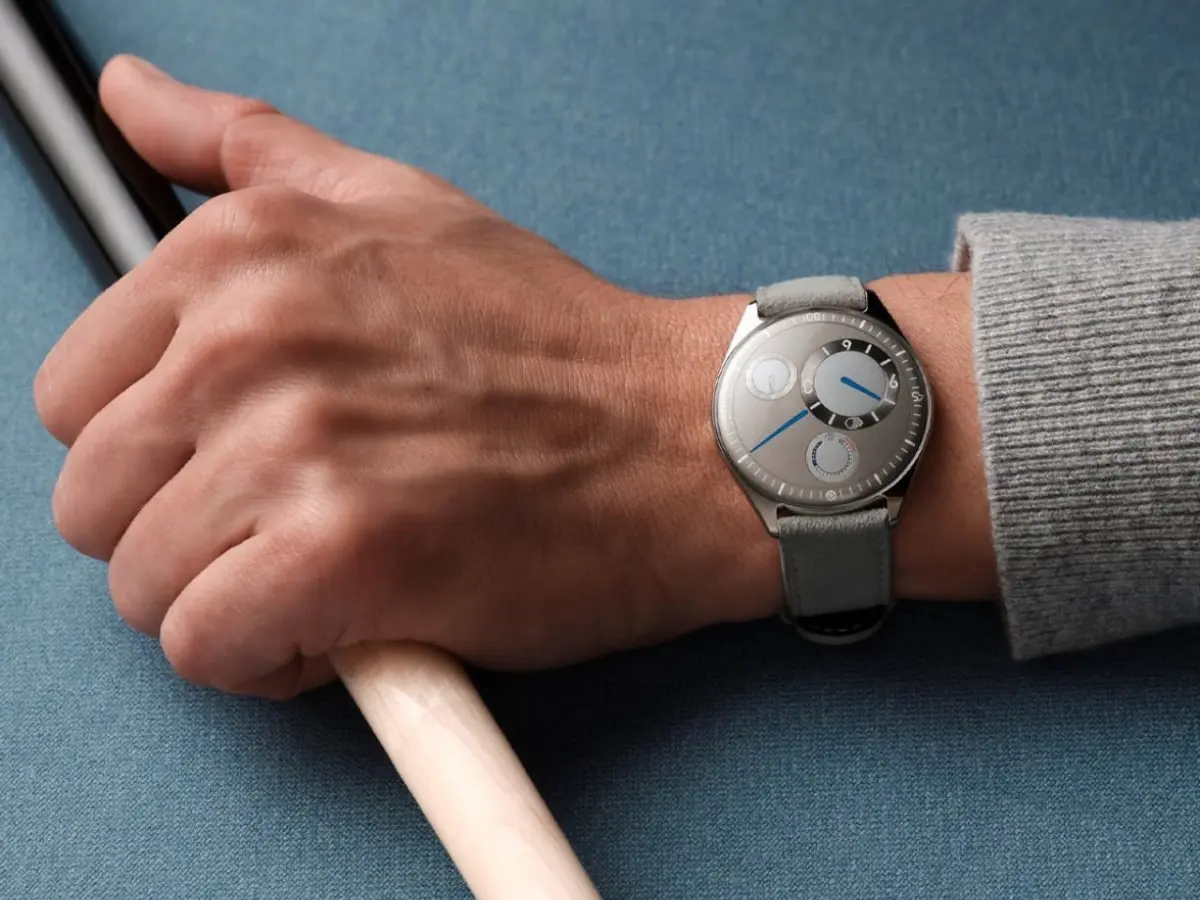
Fine watchmaking has spent centuries perfecting an inner universe. Traditionally, horology is built from the inside out: watchmakers begin with the movement—gears, escapements, and mainsprings—and construct a case and a flat dial around those mechanical components to display the time. But what would happen if a mechanical watch were invented today, handed cold to an industrial designer with no allegiance to centuries-old conventions? Would they give it traditional hands, a traditional crown, and a flat dial?
That fundamental question anchors an ongoing exploration of design thinking in modern manufacturing, serving as the central theme of Design Mindset, Yanko Design’s weekly podcast. Hosted to examine what it truly takes to think differently about a design problem, the show turned its attention in a recent episode to fine watchmaking via a guest who arrived in the industry entirely untethered from its historical rules: Benoît Mintiens, the founder of Ressence. For 16 years, Mintiens and his team have lived out the answer to that opening hypothetical question, resulting in a brand whose timepieces look and function like nothing else on the modern wrist.
Mintiens, a Belgian industrial designer, possesses a career background that spans far beyond the confines of a traditional watchmaker’s workbench. Before he ever touched a mechanical watch movement, he designed high-speed trains, commercial aircraft cabins, medical devices, leather goods, and even hunting guns. This cross-industry perspective heavily influenced his approach when he founded Ressence in 2010—a name formed by the contraction of "Renaissance of the Essentials." Designed in Antwerp and manufactured in Switzerland, Ressence watches are produced in strictly limited annual editions, appealing to a clientele that values forward-thinking industrial design over nostalgic replication. The brand’s avant-garde approach has earned high industry praise, including a Red Dot Award Best of the Best in 2024 for the Type Three BB2, followed by the same prestigious recognition for the TMN model in 2026.
Designing from the User Outward
When Mintiens is asked to describe his design process, his answer consistently disrupts conventional expectations. Rather than starting with the watch movement, he begins by examining the relationship between the user and the object itself. As he explains, most people forget this crucial initial step in product development. By working in reverse—moving from the user inward toward the mechanical movement, rather than outward from the gears—Mintiens completely alters the physical architecture, appearance, and tactile experience of the finished product.
This philosophy treats the human-product relationship as a deeply ergonomic exercise rooted in physiology and behavioral observation. To Mintiens, the ultimate measure of successful industrial design is disappearance. He argues that the best product is one the user effortlessly forgets while utilizing it—an invisible tool that seamlessly integrates into daily life. When customers acquire a Ressence timepiece, he often tells them he hopes they quickly forget they are wearing it, viewing that mental and physical absence of friction as the ultimate proof that the design has succeeded. When prompted in a rapid-fire interview segment to complete the sentence regarding where the future of design lies—stopping the question of how to make things and shifting toward a different inquiry—his five-word answer captures his entire philosophy: "How do you want to feel." That emotional and sensory aspiration is where every Ressence project begins.
Challenging Industry Conventions
The historical landscape of watchmaking underwent a seismic shift during the quartz crisis of the 1970s. Prior to that era, mechanical watchmaking was defined primarily by precision, mechanical quality, and functional reliability. When inexpensive quartz movements arrived at a fraction of the cost, the traditional industry was forced to reinvent its value proposition to survive. According to Mintiens, the industry successfully adapted by layering emotional storytelling and brand prestige onto its physical products, shifting the focus away from the tangible object itself—a trajectory he views with some regret as an industrial designer.
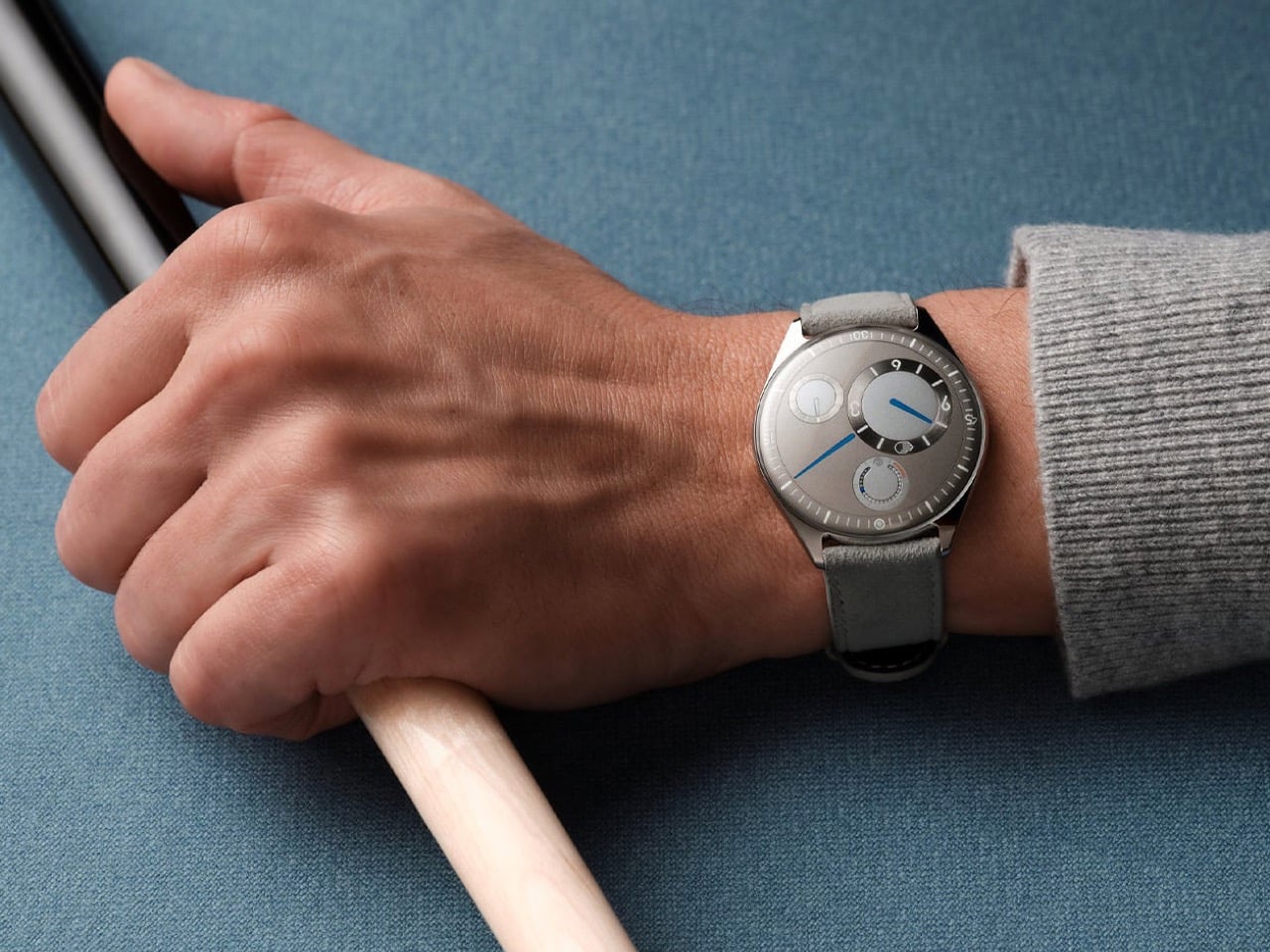
In evolutionary terms, Mintiens argues that any enduring product must pass through the rigorous selection criteria of functional evolution to reach subsequent generations. Yet, mechanical watchmaking’s core functional evolution largely froze at the quartz crossroads two centuries ago. While different brands continually reinvent aesthetic treatments, the underlying mechanical architecture has remained largely static. Ressence seeks to bridge that historical gap by treating aesthetics, ergonomics, technique, social context, and production not as isolated elements, but as an interconnected ecosystem. In his view, the way time is displayed and the ergonomics of the piece directly define its aesthetics and the engineering techniques behind it. Without this holistic coherence, a product risks becoming a disjointed collection of parts.
The Human Connection to Mechanical Objects
The enduring appeal of mechanical watches in an era where digital screens and smartphones offer absolute timekeeping accuracy without the need for manual winding is a paradox Mintiens has analyzed for years. He attributes this phenomenon to a concept he calls "empathy for gears." To illustrate this human inclination, he offers a philosophical thought experiment: a survivor floating on ocean debris must choose between two strangers—one with whom they conversed during a voyage, and another whose language and background remain completely opaque. Naturally, humans gravitate toward what they can understand and relate to.
Consumer products operate on this exact psychological principle. Circuit boards and microchips are visually opaque and conceptually distant to the average user, whereas the intricate operations of a mechanical watch are graspable, rhythmic, and visceral. Mintiens points out that the tactile nature of mechanical watches—their audible ticking, the physical resistance of winding them, and the necessary care required for maintenance—deepens the emotional bond between the wearer and the object. This demand for interaction transforms the watch from a passive tool into a companion, fulfilling a fundamental human need for meaningful physical relationships with the objects we carry.

Ressence’s Innovations and Design Philosophy
Positioning Ressence within the luxury market requires a careful distinction, according to Mintiens. While conventional luxury often leans heavily toward decoration, prestige storytelling, and emotional branding, high-end design in his view is defined by technical and functional sophistication dedicated entirely to the user. A product derives its true reason for existence from the quality and integrity with which it executes its core function.
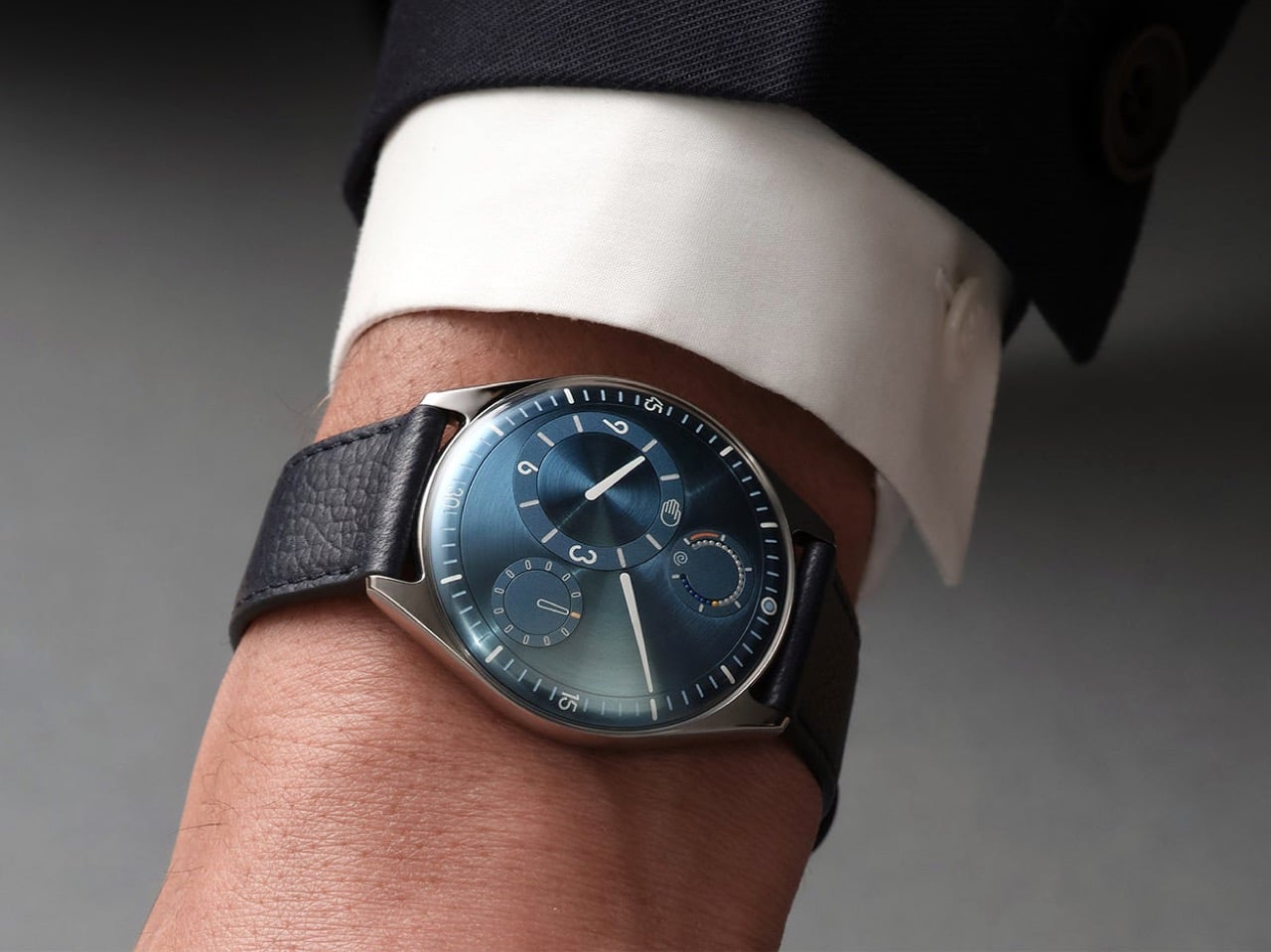
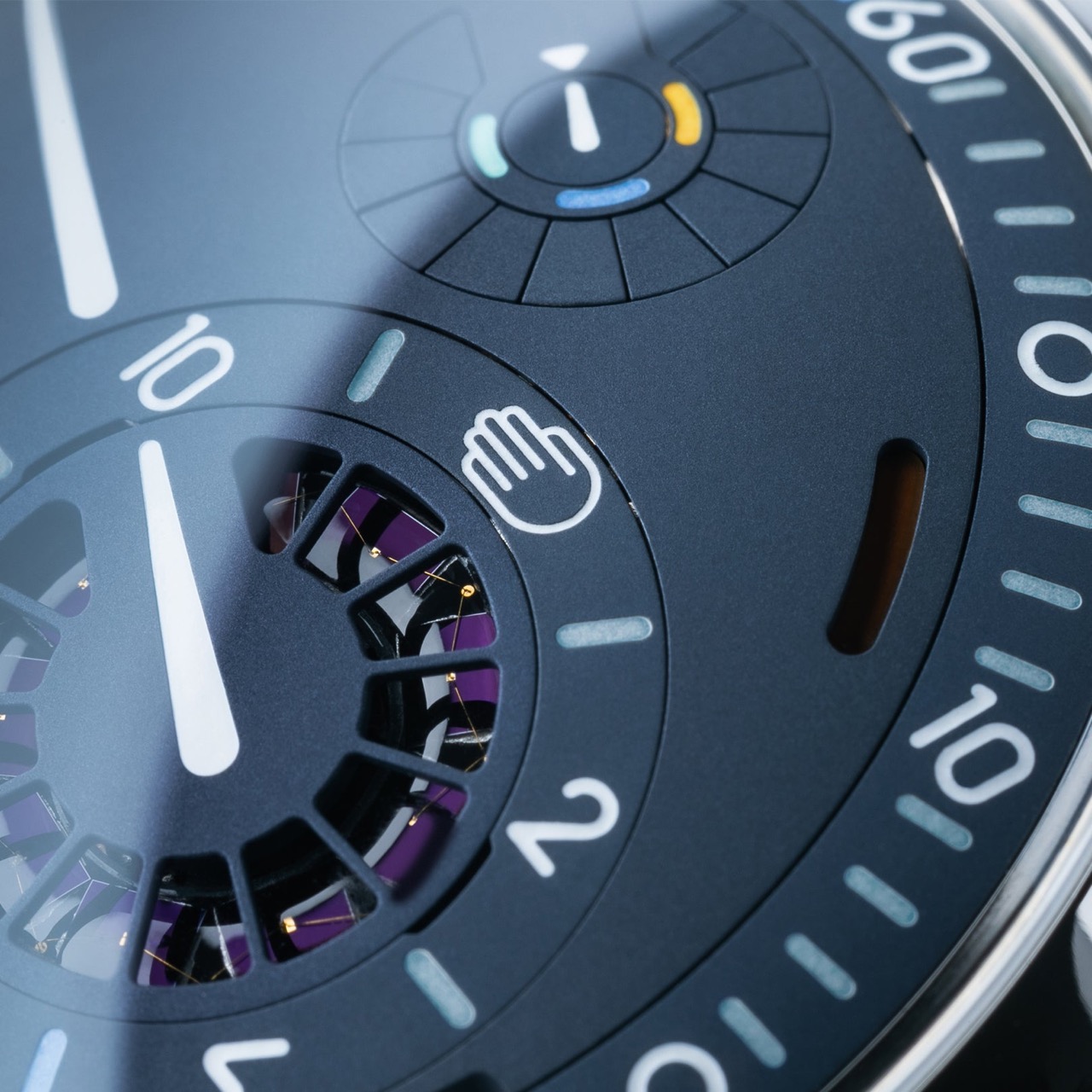
This philosophy manifests most visibly in the Ressence Orbital Convex System, commonly known as ROCS. Instead of traditional hands sweeping across a static dial, the ROCS utilizes a system of rotating discs that orbit one another, requiring approximately 200 custom components where a standard watch might use only four. From the brand’s inception, Mintiens imposed a strict creative brief upon himself: Ressence had to be original, but never marginal.
The signature oil-filled dial found on models ranging from the Type 3 to newer iterations stems from a deeply personal childhood memory. Mintiens traces the concept back to his youth spent sailing the Mediterranean, navigating overnight to Corsica guided solely by an oil-filled ship’s compass before the widespread availability of GPS. The visual memory of a floating mechanical indicator submerged in liquid became permanently burned into his creative consciousness. Beyond its aesthetic impact, the oil-filled architecture serves a profound functional purpose, particularly in models like the Type 5 dive watch. By filling the dial chamber with oil, the system eliminates light refractions between the sapphire crystal, water, air, and a diver’s mask, ensuring absolute legibility at any depth.
Production, Materials, and the Future
Despite 16 years of operation, scaling production remains one of the greatest operational hurdles for Ressence. A single timepiece incorporates roughly 400 custom-made parts engineered to extreme precision tolerances. Unlike standard flat watch dials, the characteristic curved geometry of a Ressence dial requires specialized five-axis machining, with individual components often passing through up to twelve different specialized supplier facilities before reaching a watchmaker’s bench.
Because of this intense technical complexity, supply lead times for independent production range from nine months to two years, resulting in inherent structural scarcity, limited annual runs, and precise waiting lists. Unhurried by industry pressures, Mintiens maintains a clear-eyed product roadmap extending years into the future while recognizing that broader brand recognition cannot be forced. By adhering strictly to a coherent design vision, independent watchmaking can carve out a sustainable path forward. Looking toward future material explorations, Mintiens has expressed a distinct fascination with organic textures, pointing to sustainably recovered Siberian mammoth ivory as an example of natural structural beauty. Ressence continues its work from its base in Antwerp, demonstrating that questioning fundamental industrial assumptions can yield entirely new ways to experience time.