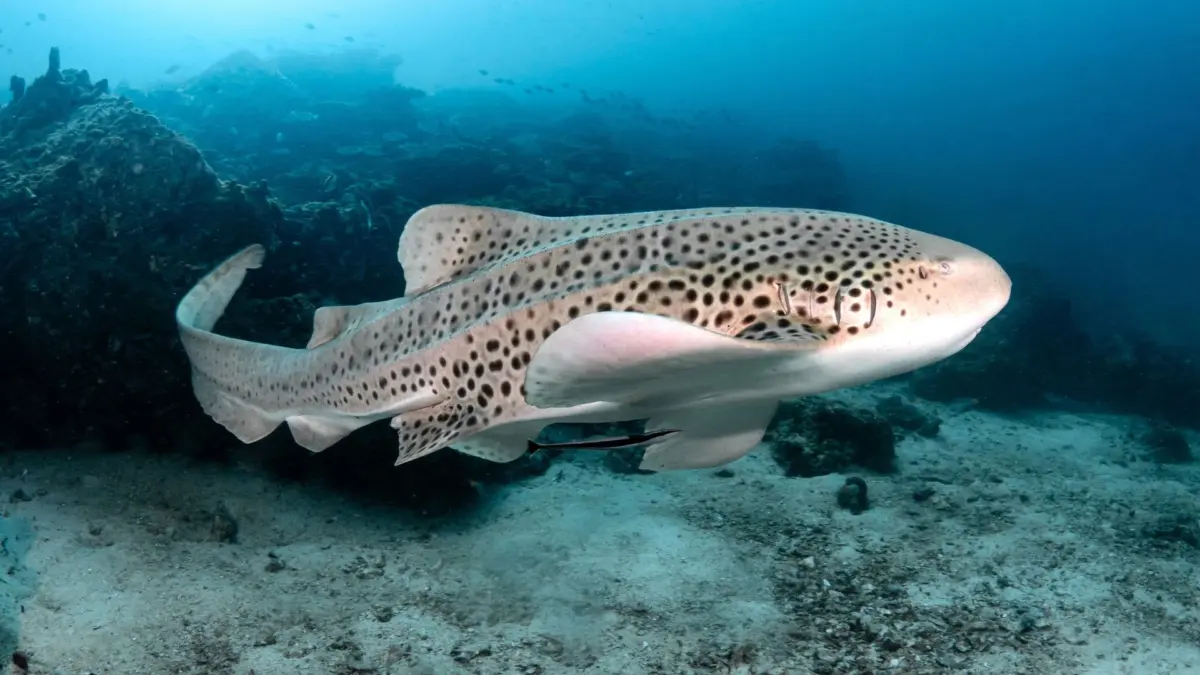
Researchers conducting marine surveys off the coast of one of Samoa’s smallest populated islands have made a groundbreaking discovery after reviewing underwater footage, capturing the first verifiable evidence of an endangered leopard shark within the region’s waters.
The scientific expedition, carried out by a team working with the National Geographic Pristine Seas project, was deploying specialized camera systems off the dramatic coast of Apolima Island earlier this summer. During this routine marine life assessment, the researchers utilized baited remote underwater video systems, commonly referred to as BRUVs, to record aquatic species that naturally inhabit the area. Upon retrieving and reviewing the digital footage, the team made the unexpected discovery of a rare leopard shark, scientifically known as Stegostoma tigrinum and frequently referred to internationally as a zebra shark.
While historical reports and anecdotal accounts from local fishers occasionally suggested that the species might pass through or inhabit Samoan waters, marine biologists lacked definitive proof. According to the researchers, this newly captured footage represents the first verifiable evidence confirming that the endangered species actually populates the marine habitats near the Samoan islands. This vital piece of documentation immediately broadens our scientific understanding of the geographic distribution and natural range of the species in the South Pacific.
Beyond expanding the known habitat range of the leopard shark, the successful recording highlights the immense value of deploying unmanned camera technology in modern marine wildlife research and conservation initiatives. BRUVs consist of autonomous camera setups paired with a secure canister of bait, which are typically placed on the ocean floor and left undisturbed for roughly an hour. This non-invasive methodology allows scientists to document elusive, highly mobile, or skittish marine animals that would otherwise flee or alter their natural behaviors in the immediate presence of human scuba divers.
For the National Geographic Pristine Seas team, capturing the endangered predator on their very first camera deployment in the region served as a remarkably promising start to their broader research expedition.
"A single camera deployment can reveal something entirely unexpected and add an important piece to our understanding of a species distribution," said National Geographic Pristine Seas scientist Jett Walker, emphasizing how crucial advanced imaging technology is to contemporary field research.
The leopard shark is characterized by its slow-moving nature and distinctive appearance. Typically, these unique creatures are observed resting or cruising along sandy ocean bottoms, where they hunt for their preferred diet of bottom-dwelling marine life. Their primary food sources include various species of gastropods and bivalve mollusks, such as snails, clams, and mussels, which they crunch using powerful, specialized teeth designed for crushing hard shells.
However, capturing this specific individual on camera also contributes to a growing body of scientific evidence suggesting that the species is not exclusively restricted to sandy plains. Increasingly, observations indicate that these sharks also frequent complex coral reef environments, demonstrating a greater ecological adaptability than previously understood by marine zoologists.
The National Geographic Pristine Seas initiative has long combined rigorous scientific research with powerful underwater filmmaking, photography, and storytelling. By documenting fragile marine ecosystems and uncovering hidden biodiversity, the organization’s ongoing global efforts have successfully supported the establishment and expansion of 31 protected marine reserves across the world’s oceans.
The successful documentation in Samoa reinforces how vital modern camera technology has become to global conservation biology. From tracking rare sharks to observing elusive behaviors in other marine mammals and predators, remote imaging systems continue to provide scientists with the empirical data needed to advocate for targeted environmental protections and marine conservation policies worldwide.