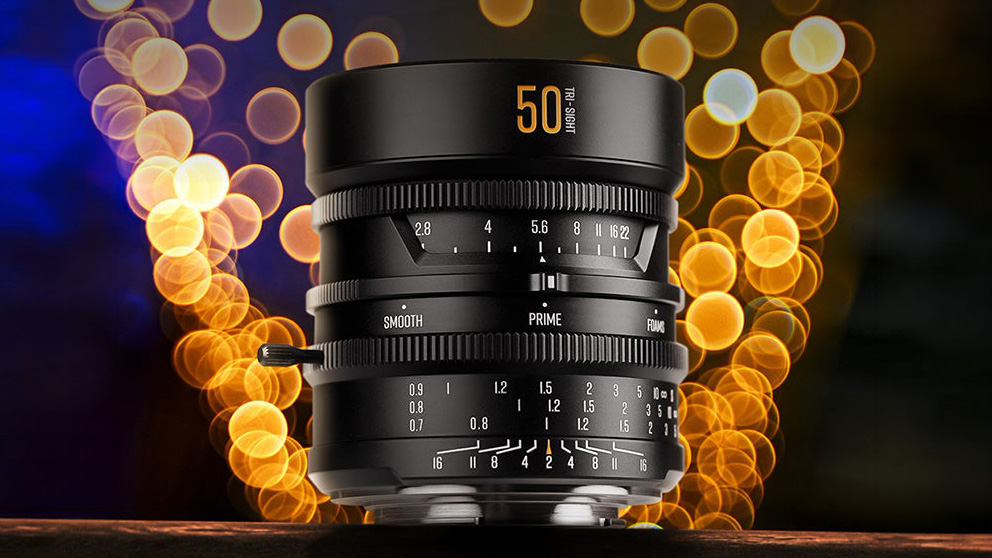
Brightin Star has expanded its photographic optics lineup with the release of the MF 50mm F2.0 Tri-Sight lens, a distinctive manual-focus optic that bridges the gap between conventional full-frame performance and experimental artistic expression. While its baseline specifications describe a fairly standard 50mm focal length paired with a moderately fast maximum aperture of F2.0, the lens distinguishes itself within a crowded market by introducing user-selectable rendering modes designed to fundamentally alter the character of out-of-focus background highlights, commonly known as bokeh.
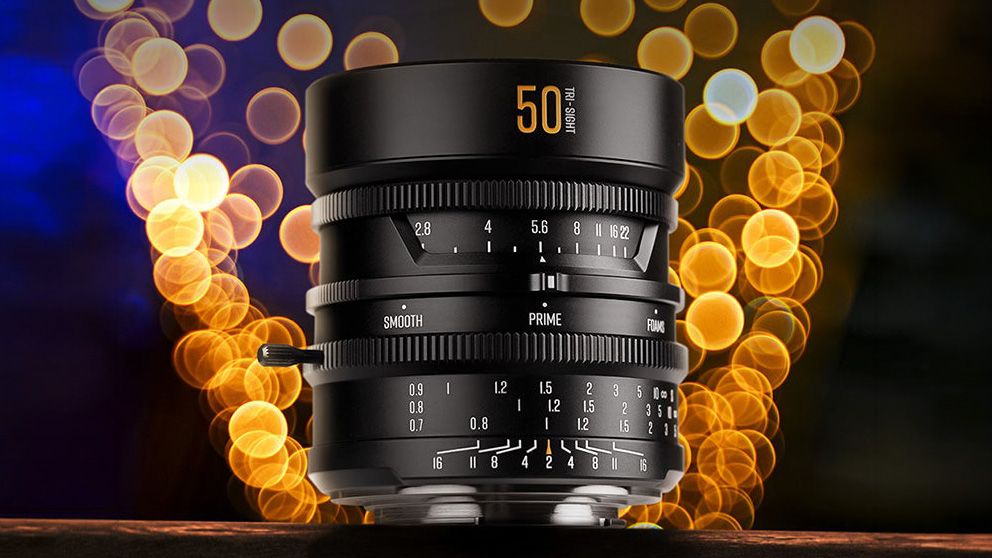
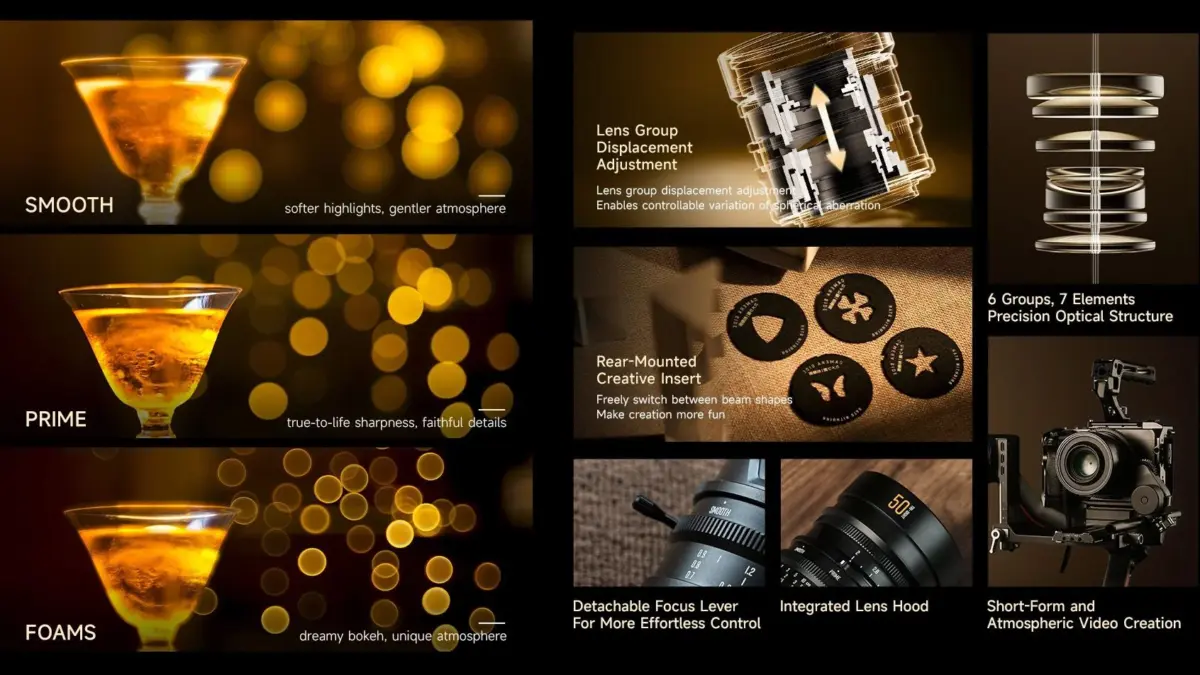
Designed for photographers and videographers seeking specialized optical effects without resorting to digital post-processing filters, the new lens gives creators the ability to switch between three distinct bokeh styles on the fly. Users can select from Smooth bokeh, which yields soft, creamy highlights; Prime, which delivers sharper and more defined point-light sources; and a third setting designated as Foams, which produces a dreamy, bubble-like light flare reminiscent of classic vintage optics.
The mechanics behind this creative versatility rely on a dedicated control ring positioned neatly between the primary focus ring and the aperture ring on the all-metal lens barrel. Operating this control ring moves an internal floating group of optical elements back and forth along the optical axis, effectively shifting the focus distance of that specific group. This physical adjustment alters the convergence characteristics of light rays passing through the optical stack. Depending on where those light rays converge relative to the primary focal plane, the overall appearance of the background blur transforms dramatically, allowing for rapid stylistic shifts during a shoot without requiring any lens swaps or external accessories.
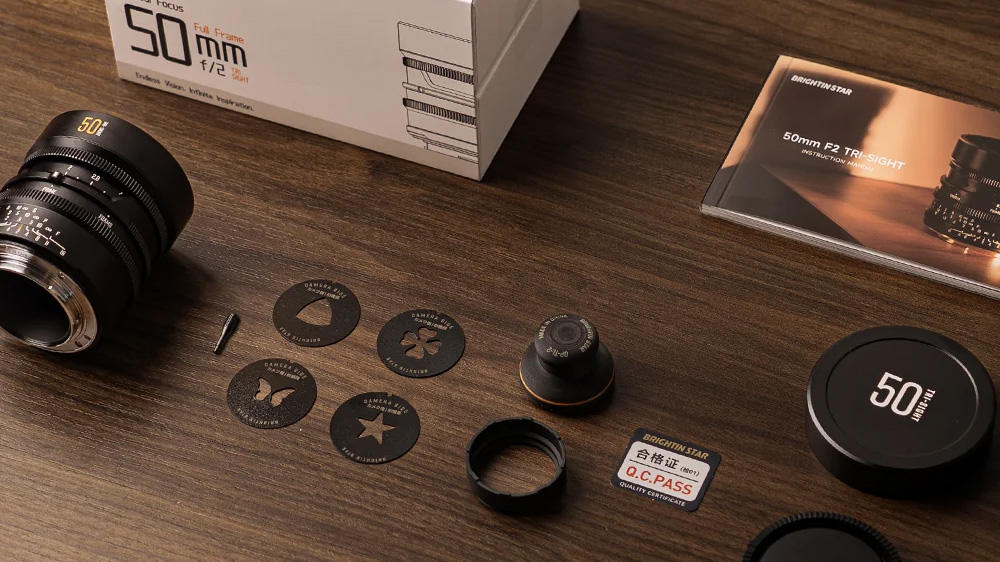
Beyond its adjustable internal optical elements, the Brightin Star MF 50mm F2.0 Tri-Sight offers an additional layer of creative control through a set of four circular metal plate inserts featuring novelty aperture cut-outs. These interchangeable plates allow photographers to reshape ordinary, rounded out-of-focus light points into distinct patterns, including butterflies, stars, triangles, and four-leaf clovers. While manipulating bokeh shapes through alternative aperture stops is not an entirely unprecedented concept in the photographic industry—having been implemented previously by brands such as Lomography in lenses like the Petzval and the Daguerreotype Achromat—Brightin Star has adopted a unique physical mounting approach.
Rather than dropping novelty plates downward into the interior of the lens barrel, operators must unscrew a locking ring located near the lens mount, place the chosen plate securely into position, and then re-attach the locking ring to secure it. Alongside this mechanism, the lens barrel features a dedicated slot designed to accommodate more traditional photographic accessories, specifically conventional drop-in 37.5mm filters, ensuring that users do not have to sacrifice standard filtration capabilities in pursuit of artistic effects.
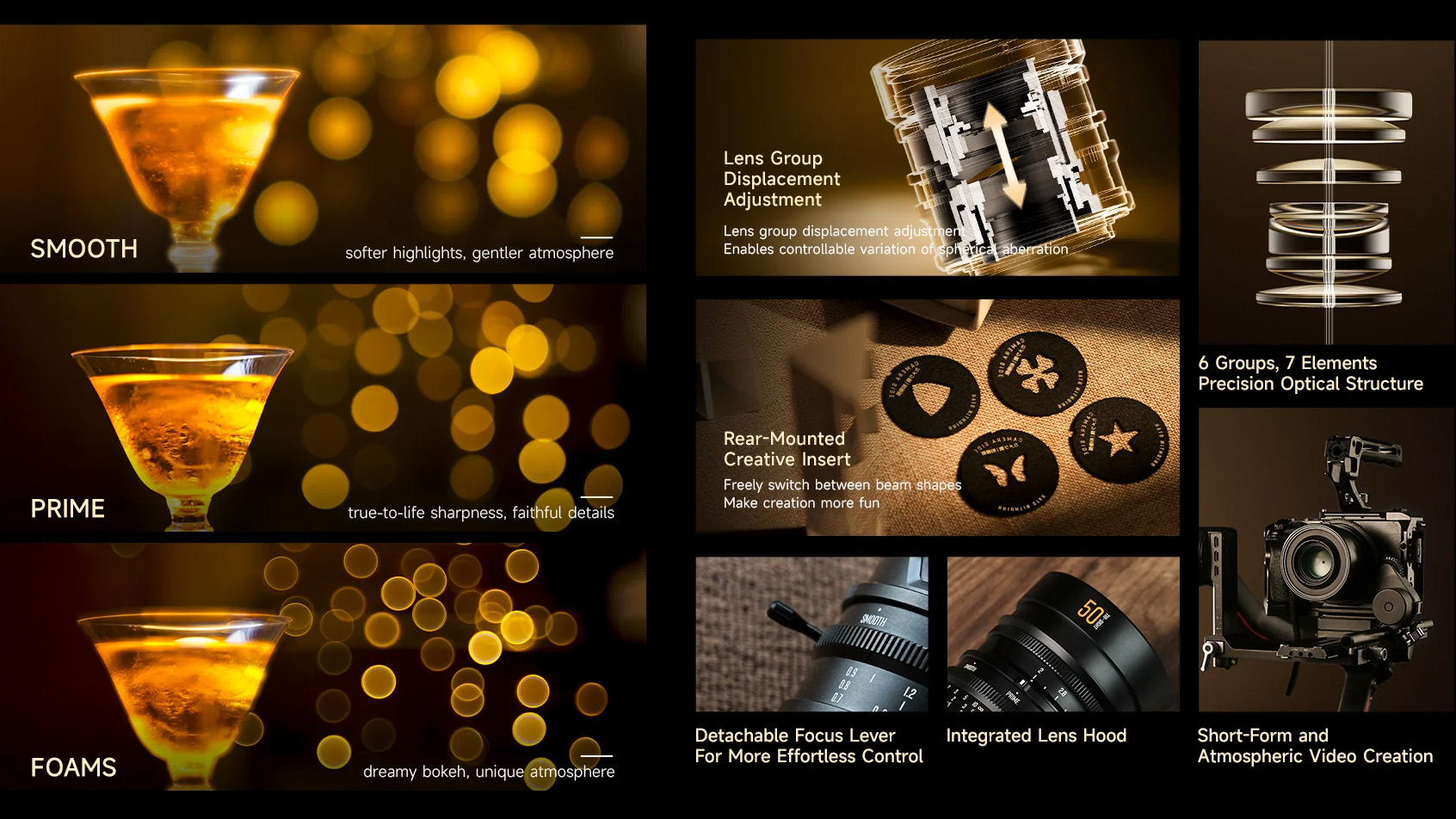
Constructed entirely from metal to withstand the rigors of regular fieldwork, the lens body incorporates a convenient retractable lens hood that helps suppress unwanted flare and ghosting when shooting in challenging lighting conditions. Depending on the specific camera mount chosen, the physical dimensions and weight of the lens vary slightly, with weights ranging between 429 grams and 454 grams, and physical lengths spanning from 70 millimeters to 74 millimeters.
For moving-image creators, the aperture diaphragm is constructed from a generous complement of 11 blades, helping to maintain a near-circular opening across various f-stops while producing smooth, organic transitions in out-of-focus areas. Furthermore, the aperture control ring is de-clicked, allowing videographers to execute silent and seamless exposure adjustments while filming. Recognizing that the lens operates entirely via manual focus with no electronic autofocus capabilities, Brightin Star has also included a detachable focus lever in the box. This lever attaches directly to the focus ring to facilitate finer, more precise adjustments when pulling focus during video production or critical macro-style photography.
Internally, the optical formulation consists of seven individual elements organized across six distinct groups. Positioned at the very front of this optical stack is a custom-engineered protective lens constructed from precision-ground, ultra-thin glass measuring a mere 0.7 millimeters in thickness. This specialized front element is a functional necessity rather than a mere design choice; when the lens is operated in its Foams rendering mode, the internal floating element group shifts forward to the extent that it extends slightly beyond the main physical confines of the exterior barrel, leaving the frontline glass more vulnerable to accidental impacts or scratches. To mitigate this risk during transport and storage, Brightin Star strongly recommends that users return the bokeh control ring to the Prime mode before packing the lens away, ensuring that the internal elements retract safely within the protective housing.
The Brightin Star MF 50mm F2.0 Tri-Sight lens is available for purchase immediately. It is offered in a wide variety of native mounts to accommodate popular mirrorless camera ecosystems, including full-frame and APS-C formats for Sony E, Canon RF, Nikon Z, and L-mount systems. The retail price is set at $349.99 in the United States and £263.99 in the United Kingdom, positioning it as an accessible specialty tool for visual storytellers looking to infuse their imagery with unique, analogue-style character.