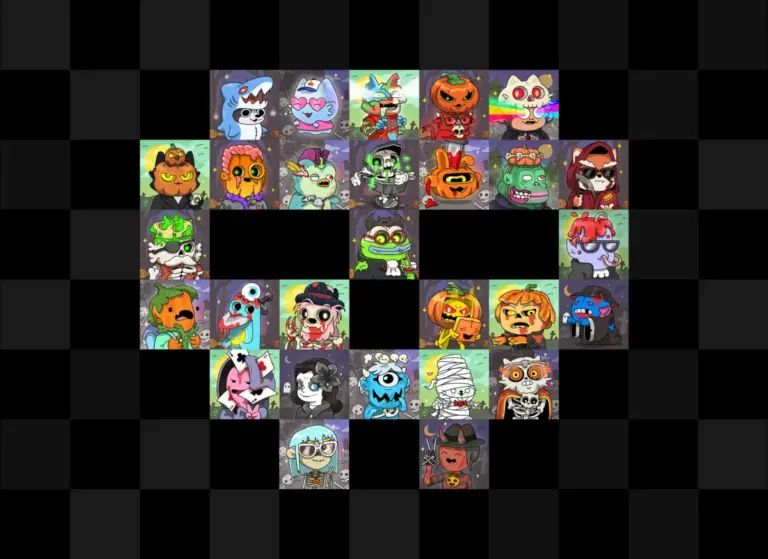
The idea that randomness shapes human experience is far from new. In his book on moral philosophy, How to Be Perfect, The Good Place creator Mike Schur dedicates a chapter titled "The Luck of the Draw" to discussing how the myth of meritocracy causes people to underestimate the role luck plays in their lives. From quantum physics to ancient philosophy—recalling Heraclitus’s famous axiom that one cannot step into the same river twice—unpredictability is a fundamental condition of reality. In modern web design, art mirrors life as digital interfaces increasingly embrace controlled nondeterminism.
While extreme manifestations of dynamic UI—such as AI-generated generative user interfaces in search platforms—have drawn mixed reactions from users, there remains a compelling elegance in web pages that exist in a state of subtle flux each time they render. Until recently, achieving presentational randomness required heavy reliance on JavaScript or complex build steps. However, with the ongoing evolution of declarative web standards, browser capabilities are expanding to handle controlled presentational chaos directly within CSS.
The introduction of the CSS random() function represents a major step toward standardizing presentational randomness. However, because browser implementation schedules vary widely, developers face a familiar challenge: an emerging feature available in one rendering engine but missing in others. To bridge this gap, open-source efforts have produced a client-side polyfill that allows developers to experiment with native CSS randomness today across all major web browsers.
Real-World Use Cases for Presentational Randomness
In client services and greenfield web design, emerging trends quickly reveal what features modern digital products demand. A recurring pattern in contemporary projects is the intentional application of controlled chance. For instance, launching a randomized draw might trigger a celebratory burst of custom confetti to heighten user engagement.
In enterprise software design, even simple visual effects like dynamic confetti are subject to strict brand guidelines. Every randomized particle must align with specific corporate styling rules. Standard third-party JavaScript confetti libraries often lack the fine-grained stylistic control needed to fulfill custom design systems, leading engineering teams to write tailored implementations from scratch.
This tension highlights a long-standing challenge in user experience design: balancing organic, varied motion with precise brand control. Web engineers have long pondered whether presentational randomness could be managed cleanly in the CSS layer without abandoning declarative styling rules.
The W3C CSS Working Group has historically sought to absorb common design patterns into standard declarative syntax—a process often referred to as "paving the cowpaths." Developers like Schalk Neethling have demonstrated how CSS-driven randomness provides granular control over visual effects like confetti, while CSS experts such as Alvaro Montoro argue that CSS is inherently the right layer for visual variability. Using CSS for presentational randomness aligns with the web’s "Rule of Least Power," which recommends solving a technical problem using the least powerful language capable of expressing the solution.
The Browser Landscape and the Need for a Polyfill
Toward the end of 2025, Apple’s WebKit team made Safari the first browser engine to implement support for the CSS random() function, introduced as part of the Safari 26.2 release. The update focused on empowering developers to solve common UI problems natively using HTML and CSS alone, drastically reducing the necessity for external JavaScript frameworks or heavy utility scripts.
Despite enthusiastic reactions from the web development community, cross-browser availability remains fractured. While feature tracks in Chromium (Chrome) and Gecko (Firefox) indicate active engineering work, neither browser vendor has provided firm release timelines for widespread baseline availability.
This created an unusual dynamic in web software development. Web developers routinely test cutting-edge features in Chromium builds long before they reach other platforms. With CSS random(), the reverse occurred: WebKit users gained early native support, while Chromium and Gecko users were left waiting.
Furthermore, even within the Apple ecosystem, Safari updates are frequently bound to operating system releases, leaving users on older platform builds unable to run native random() styles. This fragmentation spurred the creation of css-random-polyfill, a lightweight library published on npm that enables cross-browser standard CSS randomness today.
Practical Demos: Bringing CSS Randomness to Life
To test the capabilities of the CSS random() specification and verify cross-browser performance under a polyfill, developers have adapted several prominent WebKit feature demonstrations.
Random Starfield
One classic demonstration created by the WebKit team is an animated starfield. The visual features two hundred star elements scattered across the viewport, each fading in and out at randomized speeds and delays. Four-pointed star variants tilt at uniform, randomly generated angles, while each star casts a soft drop shadow with subtle hue variations.
To make the Safari-only starfield code run across Chrome, Firefox, and older Safari versions, the HTML structure relies on a lightweight script tag alongside a marker class on target elements:
<!-- Load the polyfill script on page startup -->
<script src="https://unpkg.com/css-random-polyfill@latest/dist/css-random-polyfill.js"></script>

<!-- Elements marked with "randomized" inform the polyfill script which nodes to process -->
<div class="randomized star"></div>
<div class="randomized star"></div>
<div class="randomized star fourpointed"></div>
<div class="randomized star fourpointed"></div>
In standard CSS declarations, arbitrary unrecognized functions can cause rendering engines to drop property declarations during parsing. However, CSS custom properties (variables) permit arbitrary tokens. By assigning random() expressions to custom properties prefixed with --random, the CSS remains fully valid standard syntax across all browsers:
.star
  --random-star-size: random(1px, 7px, 1px);
  background-color: white;
  border-radius: 50%;
  aspect-ratio: 1/1;
  width: var(--random-star-size);
  position: fixed;

  --random-top: random(0%, 100%);
  --random-left: random(0%, 100%);
  top: var(--random-top);
  left: var(--random-left);

  --random-hue: random(0, 360);
  filter: drop-shadow(0px 0px calc(var(--random-star-size) * 0.7) oklch(0.7 0.2 var(--random-hue)))
    drop-shadow(0px 0px calc(var(--random-star-size) * 3) white);
  mix-blend-mode: hard-light;

  --random-speed: random(2s, 5s);
  animation: fade-in var(--random-speed);
  animation-iteration-count: infinite;

  --random-delay: random(2s, 5s);
  animation-delay: var(--random-delay);
  animation-direction: normal;
This starfield demo illustrates key elements of the CSS Values and Units Module Level 5 draft specification. For instance, passing a third argument provides a step interval, ensuring values snap to discrete increments:
--random-star-size: random(1px, 7px, 1px);Additionally, utilizing the element-shared keyword allows distinct elements to share identical random values across a given matching selector context:
.star.fourpointed
  --random-rotation: random(element-shared, -45deg, 45deg);
  rotate: var(--random-rotation);
While inline usage of random() is natively valid without custom property intermediate bindings, structuring styles around CSS custom variables ensures forward compatibility. Once native engine support reaches baseline across all major browsers, developers can remove the polyfill script without modifying their underlying CSS logic.
Random Colored Grid Cells
Another scenario highlighted by CSS commentators including Chris Coyier involves generating dynamic CSS grid layouts with randomized cell dimensions and multi-colored backgrounds. A 100×100 grid arrangement demonstrates how multiple inline random() evaluations can be assigned to shorthand container properties like grid-area:
.rectangle
  --random-grid-area: random(1, var(--rows), 1) / random(1, var(--columns), 1);
  grid-area: var(--random-grid-area);
Wheel of Fortune
A demonstration crafted by WebKit engineer Tim Nguyen—originally presented alongside web standards research at Web Directions—simulates a interactive "wheel of fortune" spinning wheel. This showcase tests unit mixing in typed arithmetic calculations:
@keyframes spin
  from
    rotate: 0deg;

  to
    rotate: var(--random-rotation);


#wheel
  --random-rotation: random(2turn, 10turn, 20deg);
The specification allows combining differing units (turn and deg) within the same calculation parameter list, provided they resolve to the same underlying dimensional type (angle values), matching the mathematical unit conversion rules used by calc().
Random Squares and Value Sharing
A minimal exercise adapted from Chris Coyier’s original CodePen experiments showcases basic square layouts with randomized positioning and color fills. To verify custom caching key semantics, the implementation applies custom keys to ensure each element’s rendered width always equals its height:
--random-height: random(--side, 40px, 100px);
--random-width: random(--side, 40px, 100px);

width: var(--random-height);
height: var(--random-width);
By passing a custom identifier string (--side), the evaluation context reuses the generated value across both geometric property assignments on that element.
Chromium-Only Exploration: Simulating random-item()
While numeric CSS randomness can generate varied colors when piped into functions like rgb() or oklch(), selecting non-numeric values from a list of discrete strings requires an distinct function outlined in the specification draft: random-item().
Although random-item() remains unimplemented in stable engines, experimental custom CSS function capabilities (@function) and inline conditional logic (if()) in modern Chromium builds allow developers to simulate picking random items from a collection:
--random-index: random(element-shared, 1, 5, 1);
--random-color: --item(var(--random-index), aqua, purple, pink, grey, green);
The underlying custom CSS helper function accepts an index argument alongside multiple optional parameter slots, utilizing inline CSS conditional logic to map numerical indices to arbitrary CSS values:
@function --item(--index,
  --arg-1: ,
  --arg-2: ,
  --arg-3: ,
  --arg-4: ,
  --arg-5: ,
  --arg-6: ,
  --arg-7: ,
  --arg-8: ,
  --arg-9: ,
  --arg-10: )

  result: if(
    style(--index: 1): var(--arg-1);
    style(--index: 2): var(--arg-2);
    style(--index: 3): var(--arg-3);
    style(--index: 4): var(--arg-4);
    style(--index: 5): var(--arg-5);
    style(--index: 6): var(--arg-6);
    style(--index: 7): var(--arg-7);
    style(--index: 8): var(--arg-8);
    style(--index: 9): var(--arg-9);
    else: var(--arg-10);
  );
Unlike historic techniques that relied on type-restricted color hacks, leveraging native CSS custom functions works across any valid CSS value type, offering a look at how future declarative list-selection standards will operate.
Technical Architecture of the Polyfill
Under the hood, css-random-polyfill delegates mathematical resolution to @csstools/css-calc, an open-source parsing package managed by the CSSTools organization. Originally constructed as a build-time PostCSS utility, @csstools/css-calc was expanded to support the latest specifications for CSS Values and Units Module Level 5.
The client-side polyfill executes through a straightforward procedural flow when loaded in a browser:
First, the polyfill checks native support using CSS.supports("width", "random(0px, 100px)"). If the browser natively understands the random() syntax (such as recent Safari releases), execution immediately halts, allowing the native browser engine to handle calculations without performance overhead.
If the feature is unsupported, the polyfill injects a temporary style rule hiding all marked .randomized elements to prevent layout shifts during processing.
Next, unique tracking identifiers are assigned to the document context and each targeted element using browser APIs such as crypto.randomUUID() and WeakMap.
The script then queries all .randomized elements in the DOM, inspecting their computed styles via getComputedStyle(). It extracts any custom CSS properties matching the --random prefix convention.
The extracted raw CSS variable string is passed to @csstools/css-calc, along with context parameters such as document ID, element ID, property name, and precision settings.
Once @csstools/css-calc resolves the mathematical logic, key hashing, and step intervals, the polyfill assigns the calculated value back to the element using inline styles (element.style.setProperty).
Finally, the script removes the temporary hiding styles, cleanly displaying the updated, fully styled elements to the user.
import  calc  from "@csstools/css-calc";
const calcFn = calc;

if (!CSS.supports("width", "random(0px, 100px)"))
  const styleTag = document.createElement("style");
  styleTag.textContent = ".randomized  display: none; ";
  document.head.appendChild(styleTag);
  const elementIDs = new WeakMap();
  const documentID = crypto.randomUUID();

  document.querySelectorAll(".randomized").forEach((element) =>
    const styles = getComputedStyle(element);
    [...styles]
      .filter((property) => property.startsWith("--random"))
      .forEach((propertyName) =>
        const css = styles.getPropertyValue(propertyName);
        const value = resolveRandom(css,
          element,
          propertyName,
          documentID,
          elementIDs,
          calcFn,
          crypto,
        );
        element.style.setProperty(propertyName, value);
      );
  );
  if (styleTag.parentNode)
    styleTag.parentNode.removeChild(styleTag);


function resolveRandom(css,  element, propertyName, documentID, elementIDs, calcFn, crypto ) fixedb
By leveraging arbitrary CSS custom property values as data transport channels, the polyfill bypasses common pitfalls associated with traditional CSS polyfilling—such as re-fetching external stylesheet files over the network or re-parsing complex stylesheet ASTs in JavaScript.
As browser engines continue to advance toward unified standard capabilities, polyfills like css-random-polyfill offer web designers and software engineers a practical bridge, bringing declarative presentational randomness out of experimental preview builds and onto the modern open web.