The resurgence of analog photography continues to gather momentum, driven by a growing appetite for tangible, physical media among younger generations and seasoned shooters alike. Into this vibrant market steps the Kodak EC35, a slimline 35mm point-and-shoot camera that immediately catches the eye with bags of retro style. Bearing a sliding lens cover that instantly recalls classic film compacts of yesteryear such as the Olympus Mju or the XA2 clamshell models, it presents an undeniably attractive proposition—particularly once potential buyers see its remarkably low price tag. However, beneath the nostalgic exterior and pastel colorways lies a plastic lens that comes with hard performance limits, sparking a broader conversation about value in an era when the cost of film and processing is higher than ever.
Although the iconic yellow-and-red Kodak branding is displayed prominently on both the box and the camera body, the EC35 is in fact engineered and manufactured by brand licensee Reto Project. Over recent years, Reto has established a prominent footprint in the modern analog and digital space by producing a string of Kodak-branded novelty and budget successes. Among its most notable triumphs is the keychain-sized Kodak Charmera, which became a massive viral hit on Instagram, alongside analog products like the half-frame Kodak Ektar H35N point-and-shoot and the more sophisticated, full-frame Kodak Snapic A1, which features an automatic wind-on mechanism and a three-element glass lens.
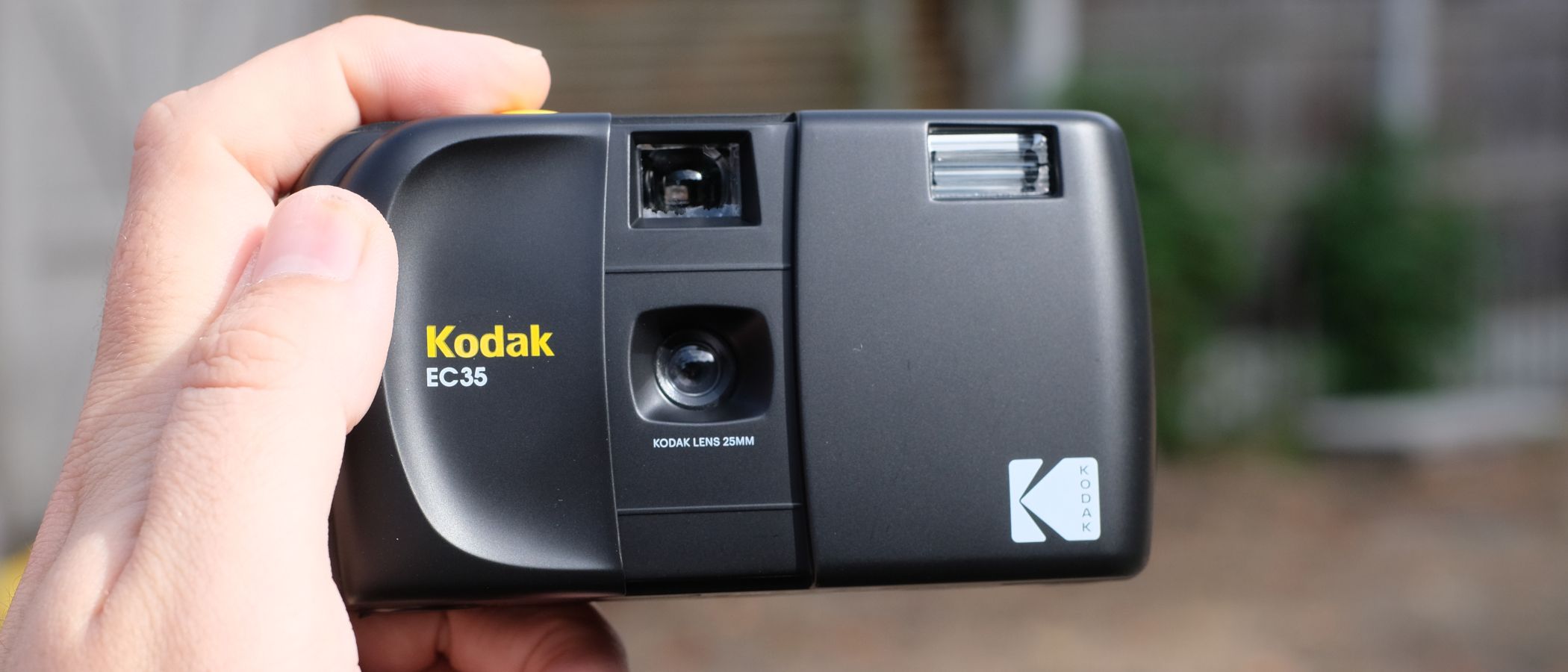
Positioned below these stablemates thanks to a rock-bottom price point, the Kodak EC35 aims to capture the absolute entry-level tier of the market. Retailing for just $35 or £35 for the camera on its own, or $45 or £45 when bundled with a roll of film and a camera strap, it stands as one of the most affordable new film compacts currently available. It undercuts even Reto’s own half-frame Kodak Ektar H35N, which typically sells for around $52 to $67, and sits far below the higher-end Kodak Snapic A1, which commands approximately $99.
Build and Handling
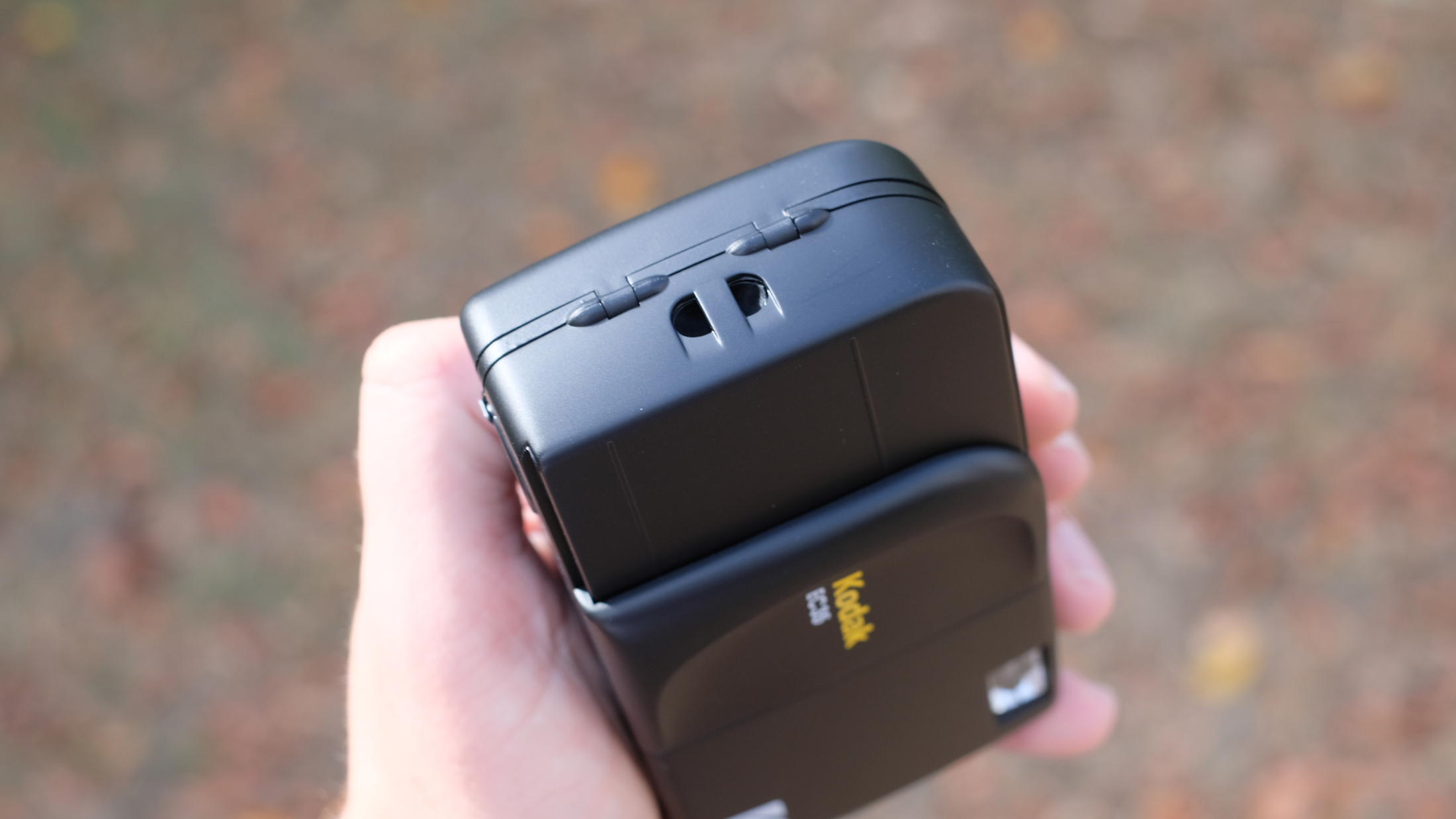
Weighing a mere 102 grams, the Kodak EC35 is built explicitly for one-handed operation and effortless pocket transport. Its dimensions make it an ideal companion for city breaks, day trips, and casual outings where carrying a heavier, more valuable vintage SLR or rangefinder feels impractical. Because all exposure and focus settings are completely fixed, the external controls are kept to an absolute minimum; the only button found on the top plate is the traditional shutter release.

Winding the film is handled via a disposable-style geared thumb wheel, while rewinding relies on a flip-out lever located on the base. A dedicated switch on the front panel toggles the built-in flash, which draws power from standard AA batteries. Notably, these batteries are required exclusively for the flash functionality, meaning the camera operates entirely fine without them if daylight shooting is preferred. Opening the film door reveals a straightforward loading mechanism on the right-hand side, where the user simply threads the film sprockets into the take-up spool. A small frame counter sits on the bottom of the body, which can occasionally prove difficult to read in bright outdoor daylight, though it represents a minor inconvenience rather than a functional flaw.
The camera’s most striking aesthetic feature remains its sliding lens cover. Beyond its visual nod to legendary vintage compacts, the cover serves the practical purpose of protecting the delicate plastic lens from pocket lint, scratches, and dust—a thoughtful inclusion often omitted on similarly priced modern plastic cameras. Furthermore, the shutter mechanism is mechanically locked when the cover is closed, preventing accidental blank exposures while stowed away.
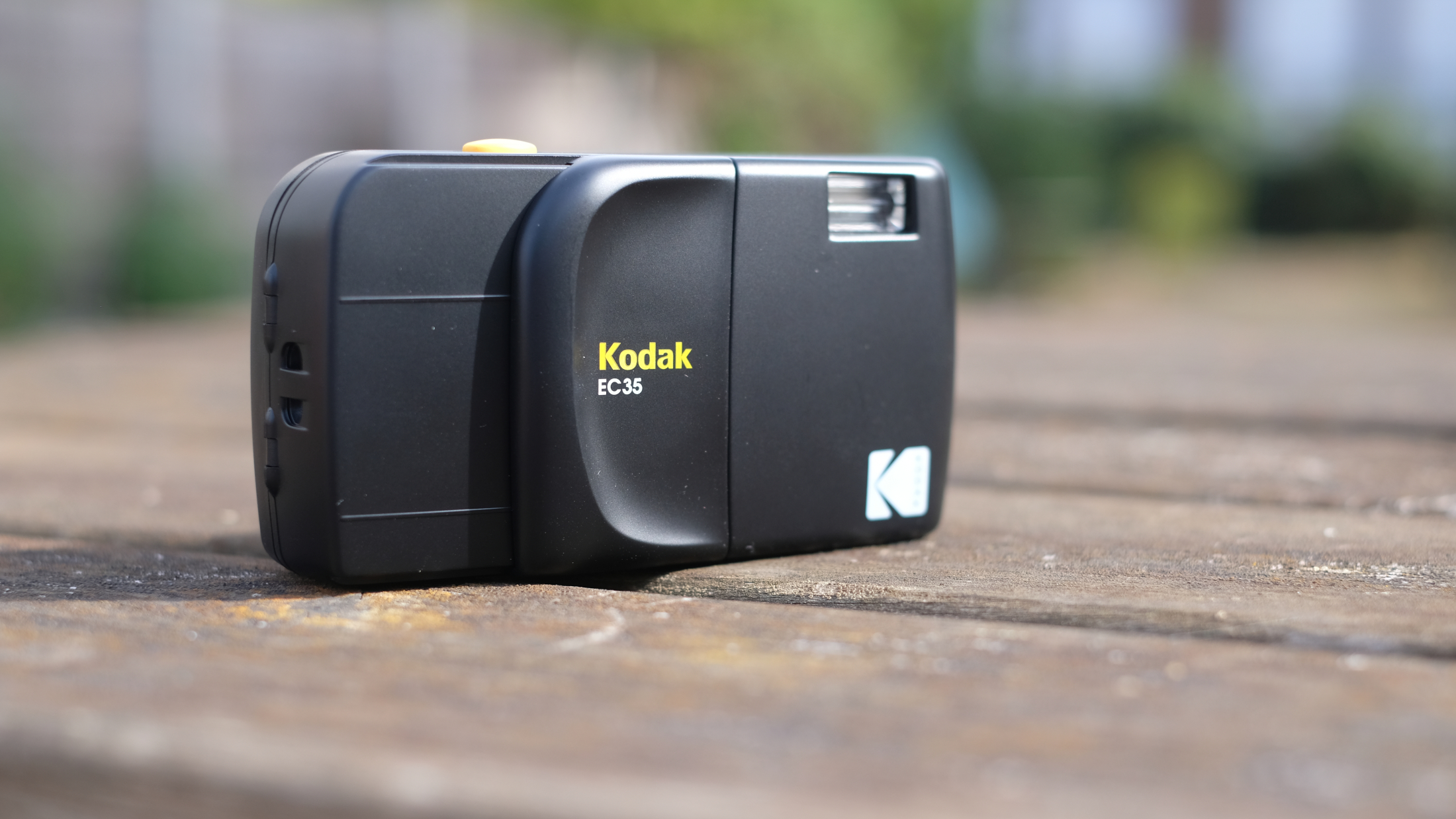
Reto has also leaned heavily into the psychological appeal of aesthetics by offering the EC35 in a broad selection of pastel colorways. Alongside Midnight Black, buyers can choose from Butter Yellow, Avocado Green, Vanilla White, Powder Blue, Blush Pink, and Lavender. This diverse palette underscores how well the manufacturer understands its target audience, appealing directly to casual shooters and style-conscious consumers looking for a fun accessory.
Performance
Understanding the compromises of the Kodak EC35 requires tempering expectations from the outset. Priced as cheaply as it is, the inclusion of a low-quality plastic lens inevitably imposes a strict ceiling on optical performance. Detail drops off rapidly away from the center of the frame, and corner sharpness is virtually non-existent.

The technical specifications are deliberately basic. The camera utilizes fixed settings of a 1/100-second shutter speed paired with a fixed f/10 aperture. The 25mm lens is set to a fixed focus with a minimum working distance of 1.5 meters, requiring users to mind their distance and avoid stepping too close to subjects. Unlike the more expensive Kodak Snapic A1, which incorporates a two-zone focusing system, the EC35 offers no such adjustments.
When evaluated purely through the lens of cost, the camera’s ultra-low retail price presents an interesting economic puzzle. While the hardware itself requires a minimal initial investment, the consumables required to operate it—namely film stock and laboratory developing services—are increasingly expensive. Consequently, ultra-cheap plastic cameras can occasionally function as a false economy. As a user continues to shoot roll after roll, the modest $60 savings achieved by purchasing the EC35 instead of a superior glass-lens alternative like the Snapic A1 is quickly eclipsed by the cumulative cost of processing blurry negatives.
For photographers prioritizing economy on a per-frame basis, the half-frame Kodak Ektar H35N represents a much more pragmatic alternative. While it carries a slightly higher price tag, it effectively doubles the shot count from a standard 36-exposure roll of 35mm film, yielding 72 smaller frames. Given that the optical output of a basic plastic lens rarely achieves pristine clarity anyway, the financial efficiency of half-frame photography makes a compelling case against full-frame budget models with inferior optics.
Overall Verdict
The Kodak EC35 is undeniably a fun device. Its playful pastel color options, nostalgic retro profile, and straightforward point-and-shoot mechanics make it accessible and entertaining for casual users. It delivers the best results when the photographer fully embraces its low-fi aesthetic rather than scrutinizing technical image quality, which remains inherently limited. However, given the rising cost of film and processing, a shooter must genuinely adore the lo-fi aesthetic to justify the ongoing expense of feeding the camera, even with its rock-bottom initial price.

For absolute beginners looking to experiment with analog photography for the very first time, the EC35 serves as a cute introduction, though most experienced reviewers would gently steer them toward a half-frame alternative like the Ektar H35N for better long-term economy. It is difficult to imagine many photographers sticking with the EC35 for the long haul. Within a few months of usage, users typically encounter a crossroads: either they find themselves chafing against the optical limitations and upgrading to a more capable vintage or modern camera with broader creative control, or the novelty fades, the cost of developing soft images begins to sting, and the camera is quietly retired to the back of a drawer.