Walk down any street in New York City today, and your likeness will be captured on camera dozens of times over. You will pass lenses affixed to the facades of commercial buildings and swaying traffic lights; step onto a subway platform, and more than 4,000 closed-circuit television cameras will track your every move. There are security gadgets planted discreetly in elevators and hotel lobbies, corner coffee shops and convenience stores, all of which maintain a watchful, unblinking eye on the urban populace.
Across the United States, an estimated 62 million security cameras monitor public and private spaces alike, meaning that at any given moment, an average citizen is almost certainly being watched without even knowing it. It functions almost like a dystopian, high-tech version of the classic fairy tale Hansel and Gretel, where everywhere you go, you leave a trail of digital breadcrumbs in your wake—pixels, data points, and video frames that mark your passage through the modern world.
Most of the time, urban residents do not see or actively think about these cameras. They blend into the architectural wallpaper of the metropolis. However, a compelling exhibition at New York City’s historic Park Avenue Armory puts this pervasive surveillance state overtly on display, forcing viewers to confront the invisible machinery that tracks them daily. For an ambitious immersive art project titled Hansel and Gretel, artist Ai WeiWei and Swiss architects Jacques Herzog and Pierre de Meuron transformed the Armory’s cavernous, industrial drill hall into an interactive surveillance park.
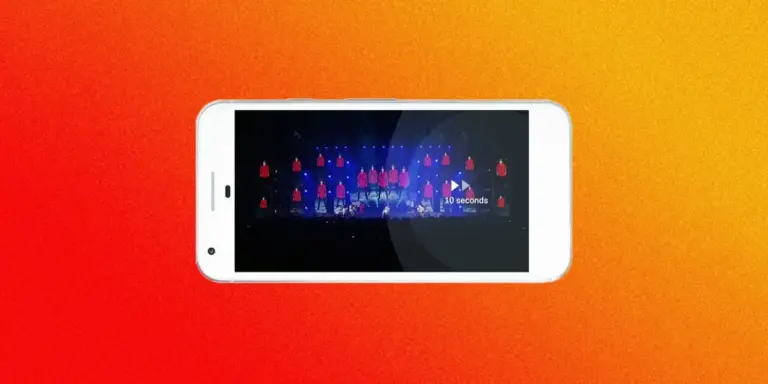
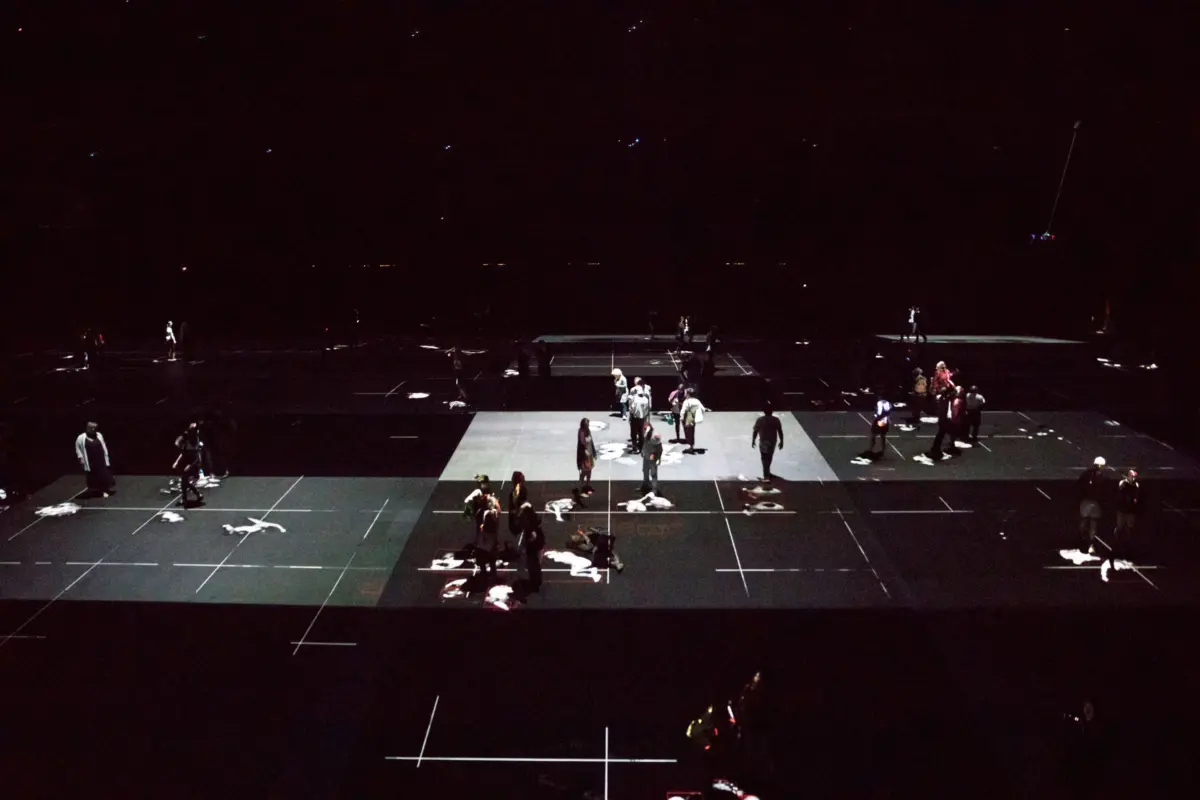
To achieve this unsettling yet fascinating effect, the creators suspended a series of 56 tiny computers attached to advanced infrared cameras and high-powered projectors directly from the soaring rafters of the building. Meanwhile, a handful of tethered drones buzz continuously overhead like mechanical insects, capturing real-time aerial footage of the visitors wandering below and feeding that raw visual data back into a live stream displayed throughout the venue.
As visitors wander through the darkened, cavernous room, the overhead cameras instantly capture their likeness and cast ghostly, transient renderings directly onto the concrete floor beneath their feet. A complex grid of projected red boxes and bright white lines frames each individual person in real time, serving as an unspoken, stark acknowledgement of modern technology’s uncanny ability to precisely pinpoint, track, and analyze a human being’s location within a public space.
"It’s the physicalization of surveillance," says Herzog, who, alongside his architectural partner de Meuron and dissident artist Ai, aimed to build a fully realized, interactive surveillance state inside the cultural institution. The core conceptual goal? To ensure that everyday people could see firsthand, and in a physical space, the exact kind of sophisticated technology that tracks, records, and categorizes them on a daily basis without their explicit awareness or active consent.
Surveillance on Display
Watchdog technology has proven to be a remarkably rich area for contemporary artists to mine, largely because it occupies a strange dual nature in modern society: it is simultaneously so pervasive that we take it for granted and so completely invisible that we forget it is there.
The knee-jerk, traditional response for artists exploring this theme is to use surveillance as a tool to elicit shock—a dramatic bait-and-switch that eventually reveals the delayed, uncomfortable truth that something has been watching you all along without your knowledge. With Hansel and Gretel, however, the artists seemingly sidestepped that familiar trope entirely. Instead, they made the technology an overt, undeniable component of the physical experience from the very first moment. The fundamental fact that visitors were being monitored constantly was no secret at all, a transparency that paradoxically made it remarkably easy for the public to work the technology in their own favor.
All around the vast, dimly lit hall, people eagerly paused for eerie, cyberpunk-inspired photo shoots. Standing with smartphones in hand, they posed deliberately as the overhead cameras snapped their pictures and instantly replicated their figures on the ground below.
Despite the enveloping darkness, the intermittent flashing of overhead lights, and the inherently ominous mood embedded within the physical space itself, the overall environment felt surprisingly convivial. Rather than inducing genuine fear, paranoia, or acute anxiety among the attendees, the immersive installation effortlessly turned the grim reality of mass surveillance into an extension of modern selfie culture.
"There seems to be an ambivalence [towards surveillance]," reflects Tom Eccles, the curator of the high-profile show. "Maybe that’s the way the world has changed."
The Final Step of the Experience
After exiting the main hall, visitors shuffle toward another entrance situated elsewhere in the Armory, where a polite usher greets them to continue the sequence.
"Hi there, could you put your toes on the line and look straight ahead for me?" the staff member cheerfully asks, adopting the tone of a routine security checkpoint official.
Direct another gaze straight ahead, and you find yourself facing yet another camera. This lens captures a direct, unblinking headshot that, just minutes later, will be projected onto the digital frames that line the walls of the Armory’s interior corridors. On the tables positioned directly below these glowing frames, a row of sleek iPads invite visitors to take yet another selfie. This newly captured image is immediately fed into an advanced facial recognition software program that rapidly searches a database for a matching image.
Within mere seconds, the visitor’s face pops up prominently on the screen alongside the photo taken just moments prior. Accompanying the image is a percentage metric indicating the system’s certainty: the computer’s software is 52% confident that it has correctly identified the individual.
For some people walking through the exhibition, the striking immediacy of this facial recognition technology will undeniably prove jarring and unsettling. Yet, the ambient creep factor of being identified by a machine tends to subside rather quickly when the next layer of consumer reality sets in. A pop-up box soon emerges on the screen, offering a mundane reminder of the commercial world outside: for $10, visitors can purchase a glossy print of their recognized photo, available directly in the museum’s gift shop on their way out.