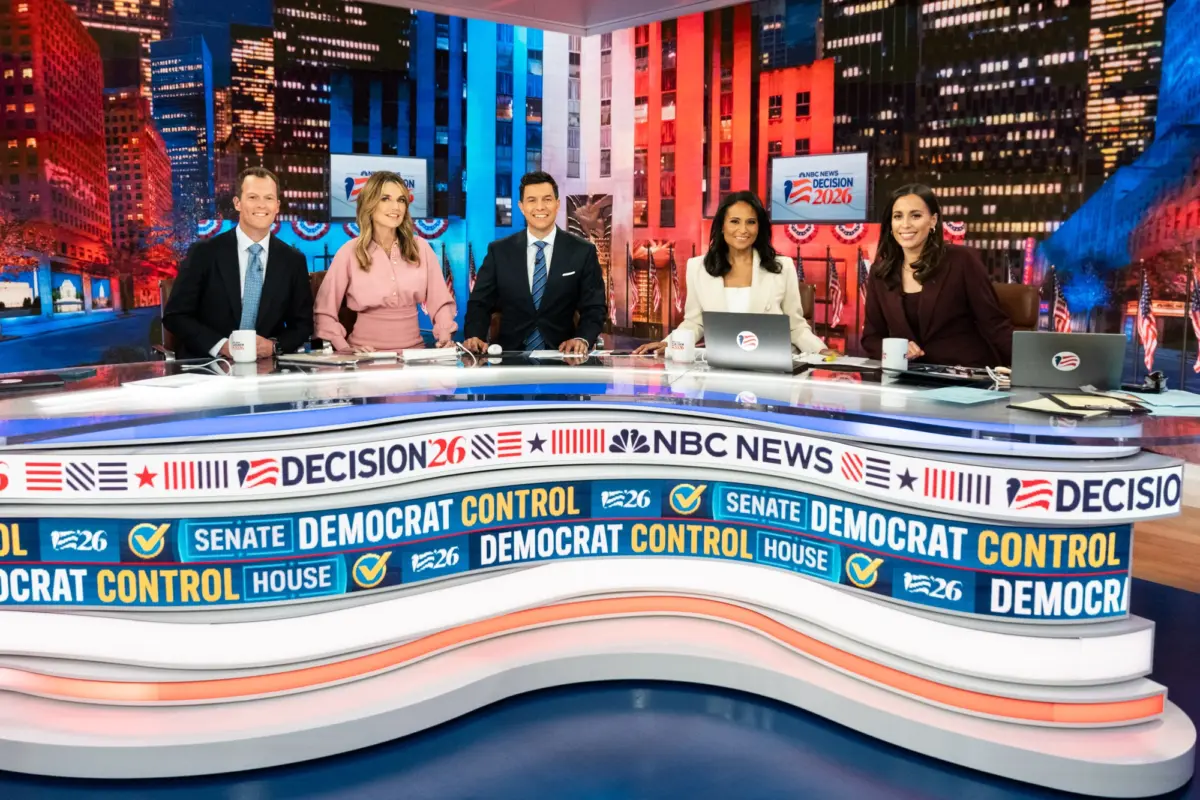
As the dust settles from a historic midterm election that saw the Democratic Party surf a blue wave to capture both the Senate and the House of Representatives, major news networks are downshifting from specialized round-the-clock coverage and settling back into their regular programming schedules. The monumental political shift played out in real-time before a massive audience, with an impressive 31 million viewers tuning in across 13 networks on Tuesday night to witness the unfolding results.
In the wake of the high-stakes evening, TVNewser sat down with key leaders from three of the industry’s top-performing networks to discuss the triumphs, the technical hurdles, and the unexpected twists of election night. The panel featured Marc Greenstein, executive vice president of creative, innovation, and field production for NBC News—whose network reigned supreme as the No. 1 network during primetime in both total viewers and the coveted Adults 25-54 demographic. Joining him was Abigail Crutchfield, senior vice president of Washington and special events programming for CNN, which claimed the crown as the most-watched cable news network in that same prized demographic. Rounding out the discussion was Chris Stirewalt, political director for NewsNation, whose network, in close coordination with Decision Desk HQ, made waves by being the first to call both the House and the Senate for the Democrats.
The post-election debriefing offered a fascinating glimpse into the intricate mechanics, advanced technology, and high-pressure decision-making required to deliver seamless live journalism on one of the most unpredictable nights in recent political history.
What Worked Well: Technology, Teamwork, and Trusted Talent
When asked about the standout successes from a coverage and technology standpoint, the network executives pointed to a mix of trusted on-air veterans, innovative studio designs, and cutting-edge data integration.
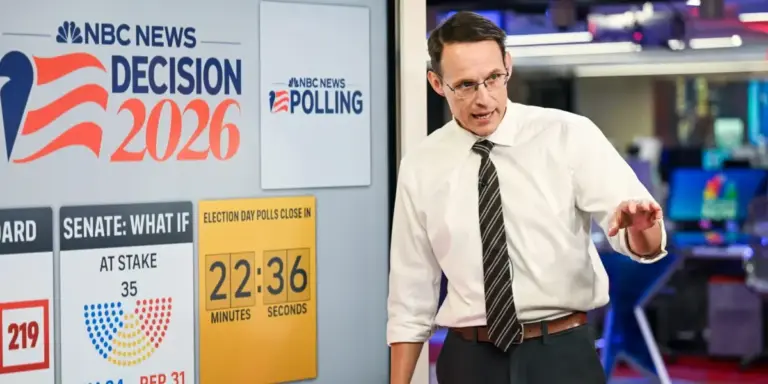
For NBC News, the secret weapon remained a familiar face. Marc Greenstein emphasized that Steve Kornacki continues to be unmatched when it comes to breaking down complex voting data, providing essential context, and helping viewers understand not just what is happening in the present moment, but where the entire night is headed. Beyond talent, NBC successfully bridged the gap between editorial vision and modern technology in a completely novel way this cycle.

According to Greenstein, the network enabled Kornacki to contribute seamlessly to the traditional linear broadcast while simultaneously hosting his own dedicated streaming feed. Remarkably, this was accomplished from the exact same studio space shared by anchors Savannah Guthrie and Tom Llamas. By setting up two distinct broadcasts just feet apart, NBC managed to tailor each experience to its specific audience without ever severing the vital editorial connection between their on-air talent.
Furthermore, extensive advance planning for a wide spectrum of potential election scenarios allowed NBC to react with lightning speed as race calls poured in. The network deployed multiple correspondents across nearly every critical battleground state, keeping a close eye on both local voting developments and candidate headquarters. This robust physical presence ensured a steady stream of firsthand reporting and immediate candidate reactions throughout the night. On the digital and visual front, NBC deployed more than 35,000 distinct graphics across its various zones and platforms, delivering results and deep analysis with striking speed and clarity. By unifying broadcast, streaming, and digital coverage under a cohesive editorial and visual identity—including the successful launch of a dedicated vertical video feed—NBC managed to reach younger and mobile-first audiences without ever compromising the depth or quality of its core journalism.
Over at CNN, Abigail Crutchfield credited the network’s success to bringing all of its resident experts and on-air talent together under one roof. The physical concentration of minds in the Washington bureau generated an electric energy that translated directly to the screen, making it compelling for viewers to watch reporters and anchors collaborate organically to unpack fast-moving election results.
CNN’s visual presentation also reached new heights thanks to director Reza Baktar, who designed a phenomenal studio set offering unprecedented mobility. This architectural flexibility made it exceptionally easy for anchors and analysts to access any data set at a moment’s notice. Crutchfield highlighted the triumph of giving veteran anchor John King the freedom to analyze data at his signature magic wall, or effortlessly bring his mini magic wall over to the analyst tables to integrate directly into group discussions. Additionally, King’s new vertical magic wall opened up fresh, innovative storytelling options that kept viewers engaged.
For NewsNation, the ultimate differentiator was speed and analytical precision, driven largely by their partnership with Decision Desk HQ. Chris Stirewalt noted that you simply cannot beat having reliable data at your fingertips. By having Decision Desk HQ firmly in their corner, NewsNation gained a massive competitive advantage that allowed them to stay far ahead of rival networks when it came to making critical race calls. Stirewalt also praised his team’s commitment to transparency, noting that bringing viewers directly into the analytical process and explaining the methodology behind the calls resonated strongly with the audience.

The Biggest Surprises of the Night
Even with months of rigorous planning and scenario mapping, election nights are notorious for throwing curveballs. For the networks, the surprises of the evening ranged from the unprecedented speed of voter decisions to unexpected geographic shifts in the political landscape.
Greenstein revealed that NBC’s biggest shocker was how rapidly control of the Senate was definitively called. While political analysts had a general sense that the midterms could shape up favorably for the Democratic Party, the sheer speed of the early call caught many industry veterans slightly off guard. Fortunately, because NBC had gamed out a wide array of potential outcomes, the production team was fully prepared to remain on air continuously across the main broadcast network, NBC News Now, and the dedicated Kornacki Cam.
Another unexpected triumph for Greenstein was the flawless performance of the network’s artificial intelligence audio technology. The new system enabled NBC to produce its simultaneous linear and streaming broadcasts out of the very same studio without interference. Because the team had only a limited window to rehearse with the technology prior to going live, anxiety levels backstage were understandably high. Ultimately, the system performed remarkably well, allowing the network to successfully pull off a complex, multi-platform broadcast feat they had never attempted before.
Crutchfield echoed similar sentiments regarding the timeline of the evening. She noted that while CNN always plans for every conceivable scenario, the speed at which voters delivered definitive answers on Tuesday night was astonishing. Instead of waiting days for protracted counts in key races, the network received clear answers from the electorate much sooner than anticipated.
For Stirewalt and the team at NewsNation, the surprise came in the form of preparation yielding unexpected paths. Stirewalt confessed that much of the meticulous preparation he had done for ultra-tight, nail-biting contests across traditional battleground states ultimately felt like wasted effort. Once the early returns began rolling in around 8:30 p.m. ET, it became abundantly clear that the real action—and the crucial deep-dive analysis—was required in unexpected places like Mississippi, shifting the network’s editorial focus in real time.

Fueling the Late-Night Marathon
Sustaining high-level concentration, editorial accuracy, and composure during a historic live television event requires sheer grit, exceptional teamwork, and, occasionally, unconventional forms of fuel.
For Marc Greenstein, staying awake and alert through the grueling hours came down to a classic combination: coffee, Diet Coke, and the pure adrenaline of sitting in the director’s chair. Greenstein noted that in his corporate role, he rarely gets the opportunity to direct live broadcasts, with his last stint behind the switcher coming during the 2024 presidential election. Stepping back into the chair to collaborate alongside some of the most talented professionals in the television industry—both on air and behind the scenes—brings an intensity that pushes him to operate at his absolute peak.
Over in the CNN control room, Abigail Crutchfield relied on a comforting mix of hot tea, a phenomenal support team, and a very large bag of gummy bears to keep her energy up through the overnight hours.
Meanwhile, Chris Stirewalt took a remarkably natural approach to overcoming fatigue. Rather than relying on caffeine or artificial stimulants, Stirewalt found himself sustained entirely by the sheer excitement of the broadcast. As the historical results poured in and validated the hard work of the Decision Desk HQ and the entire NewsNation team, Stirewalt described feeling practically high on life, powered purely by the thrill of executing successful journalism on a momentous night.