In a city celebrated for its grand hotels and centuries-old architecture, few addresses boast a lineage quite as intertwined with cross-channel history as the Hotel Westminster. Situated at 13 rue de la Paix—nestled prestigiously between the iconic Place Vendôme and the magnificent Palais Garnier—the historic Parisian landmark has recently completed a comprehensive restoration. Spearheaded by interior architect Laurent Maugoust, who redesigned the core living spaces, and British designer Helen Stephens, who reimagined the signature restaurant Le Céladon, the extensive project successfully preserves two centuries of built heritage while elevating the property to modern luxury standards, culminating in the award of its fifth star in 2025.
The result of this meticulous multi-year endeavor is a refined hospitality experience that gracefully marries authentic Haussmannian architecture with the sophisticated, welcoming ambiance of classic British club culture. Today, the Westminster enters its latest chapter carrying a delightfully distinct identity: a pocket of British heritage firmly planted in one of the most historically French and exclusive corners of Paris.
From Napoleon’s Paris to a Haven for British Travelers
The origins of the site date back to 1802, during the Napoleonic era, when Napoleon Bonaparte ordered the sale of land belonging to a former Capuchin convent. He commissioned visionary architects Charles Percier and Pierre Fontaine to develop an ambitious new urban district. The thoroughfare, initially baptized rue Napoléon before being renamed rue de la Paix in 1814, soon became a prime real estate destination.
In 1807, the Hôtel Wagram opened its doors on the land, serving as the direct predecessor to today’s Westminster. Over the ensuing decades, as British travelers, diplomats, and aristocrats increasingly settled, frequented, and traveled through the neighborhood, the area naturally acquired a reputation as a small piece of London in Paris. This distinct cultural cross-pollination eventually inspired the hotel’s enduring name.
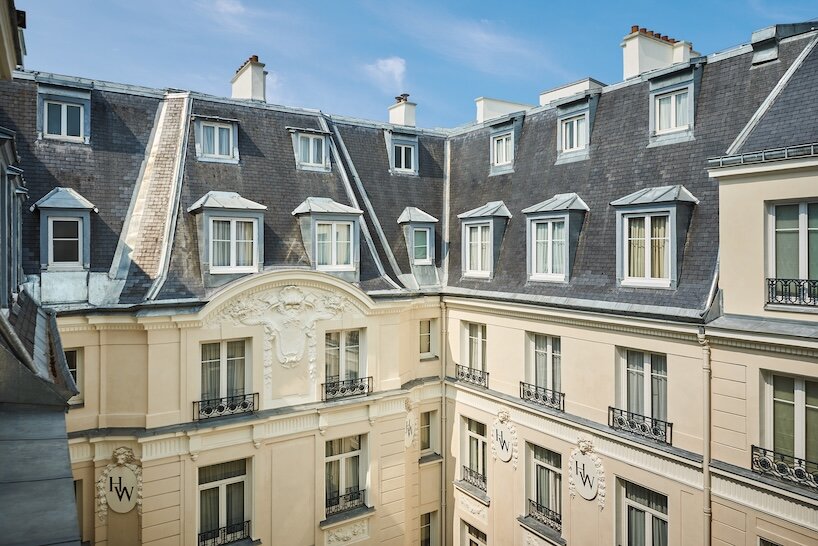
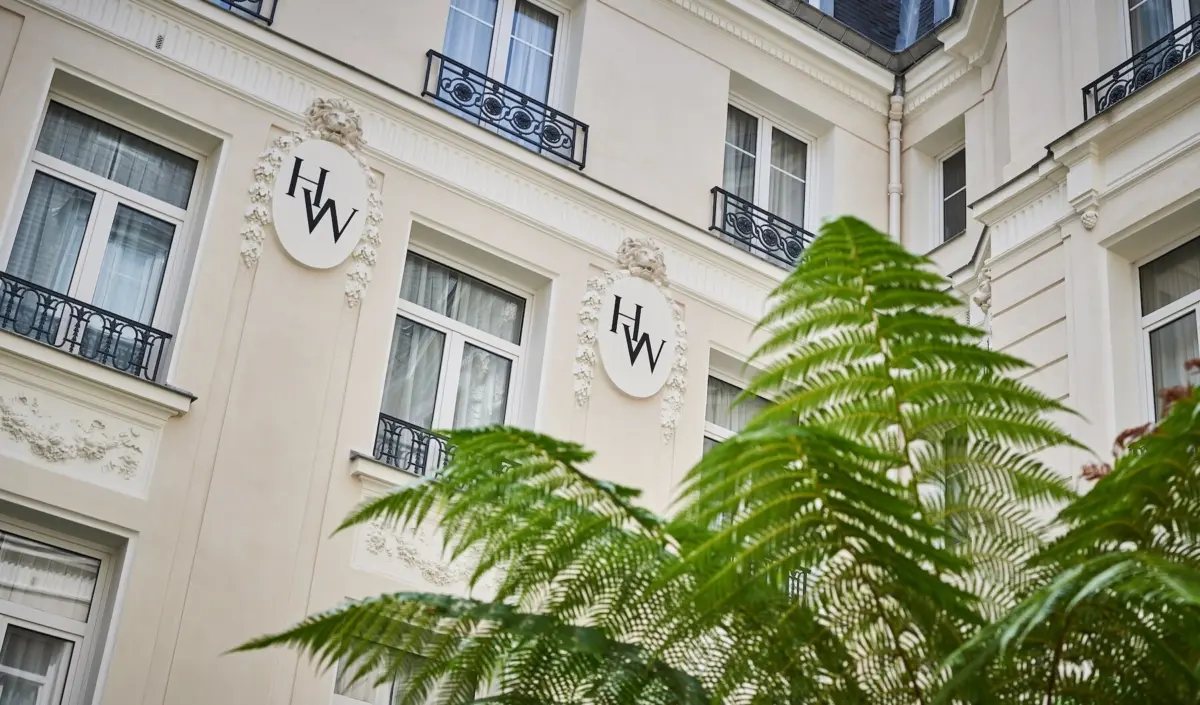
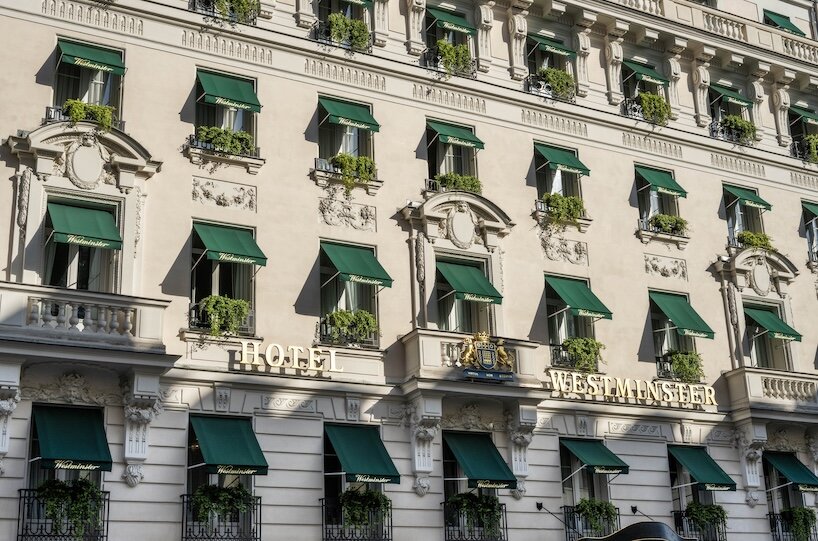
The physical structure itself refused to stand still, evolving continuously through successive extensions, additions, and architectural updates. The most transformative of these interventions took place between 1905 and 1907, when architect Jacques Marcel Aubertin completely overhauled the property, giving it the grand Haussmannian silhouette and facade that define it to this day. Characterized by its iconic green awnings stretching gracefully along rue de la Paix, the exterior remains an enduring symbol of turn-of-the-century Parisian elegance.
Laurent Maugoust Restores and Honors Haussmannian Interiors
For interior architect Laurent Maugoust, the mandate was not to artificially recreate a singular, frozen historical moment, but rather to curate a dynamic dialogue between the various architectural eras embedded within the building’s fabric. Across the hotel’s 102 rooms, which include 20 expansive suites, Maugoust’s design intervention prioritizes the preservation and celebration of original features.
Original marble fireplaces, intricate decorative moldings, and classic herringbone oak parquet floors have been carefully restored. These historical elements are paired harmoniously with contemporary furnishings, custom lighting, and a sophisticated textile palette dominated by soothing shades of beige, deep greens, and subtle violets. Maugoust’s overarching approach draws deeply from his extensive experience working with classic Haussmannian interiors, where rigorous proportions, high-grade materials, and traditional craftsmanship establish an unbroken visual continuity between the past and the present.
"I set out to reinterpret its style by bringing different eras into dialogue," Maugoust explains, outlining a design philosophy that builds respectfully on existing architecture rather than seeking to replace or mask it.
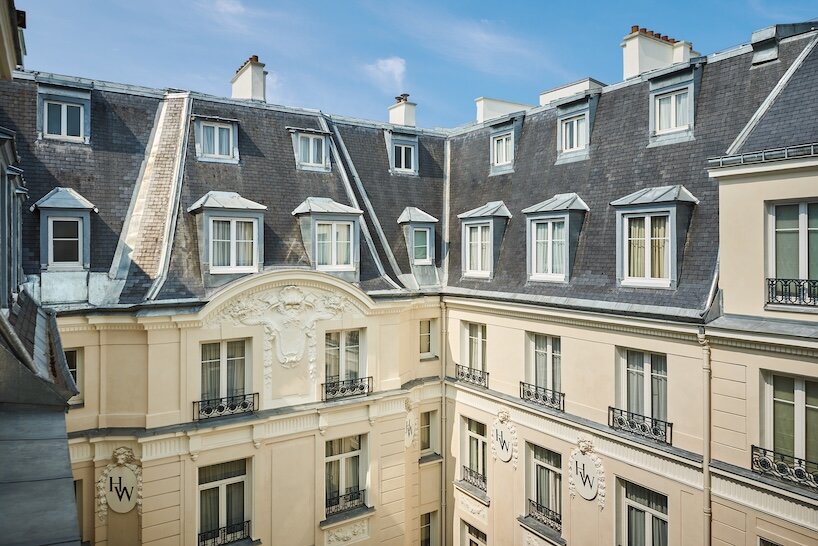
This respect for history extends to the smaller decorative details scattered throughout the property. The Westminster has organically accumulated a fascinating collection of objects and artworks over the decades. Antique clocks, some dating back to the 19th century, sit comfortably alongside period paintings, historical photographs, and vintage furnishings tied directly to the property’s rich past. Depending on their location, guests in the suites are treated to contrasting perspectives of central Paris: some look out directly onto the bustling, luxury-lined corridor of rue de la Paix, while others face a tranquil, flower-filled inner courtyard. These spatial variances serve as quiet reminders of the building’s complex history of expansions and reconstructions.
Duke’s Bar and Le Céladon: A Tapestry of Literary and Cultural Icons
Perhaps the hotel’s most tangible and famous connection to British culture survives inside Duke’s Bar. Styled after an exclusive English gentleman’s club, the intimate space is defined by rich dark wood paneling, deep leather armchairs, subdued mood lighting, and an original working fireplace.
During the Roaring Twenties, Duke’s Bar emerged as a premier gathering place for British aristocrats, diplomats, and political figures, gradually expanding its magnetic pull to draw in the titans of Parisian literary and cultural life. According to the hotel’s extensive historical archives, wartime Prime Minister Winston Churchill was among its most loyal regular visitors. He was joined over the years by a glittering roster of luminaries, including Coco Chanel, mystery writer Agatha Christie, Sherlock Holmes creator Arthur Conan Doyle, and novelist Françoise Sagan.
Today, sepia-toned and black-and-white portraits of Churchill, Chanel, Rudyard Kipling, and the Duke of Westminster line the wood-paneled walls, preserving the distinct, storied atmosphere that once bridged British high society and the French artistic avant-garde.
A complementary yet distinct interpretation of the hotel’s heritage unfolds at Le Céladon, the property’s signature restaurant. Redesigned by British designer Helen Stephens, the dining room establishes a visual bridge back to the club-like intimacy of Duke’s Bar while firmly rooting itself in its Parisian surroundings. Stephens deployed a sophisticated palette of greens that serves a dual purpose: it pays homage to the rich bronze tones of the nearby Vendôme Column while reflecting the lush foliage of the adjacent Tuileries Garden, effectively pulling the essence of the outdoors inside.
Beyond its physical spaces, the Westminster actively maintains its historic ties to Paris’s vibrant intellectual community. The hotel regularly hosts intimate musical evenings and literary events, partnering with Galignani—the legendary English-language bookshop located nearby—to celebrate literature and the arts.
More than two centuries after the first hospitality venture opened its doors on rue de la Paix, the Hotel Westminster stands as a fascinating bridge across cultures. It remains a rare and harmonious meeting point where French architectural majesty and British traditional comfort have lived side by side for generations, creating an identity that, after two hundred years, remains impossible to separate.