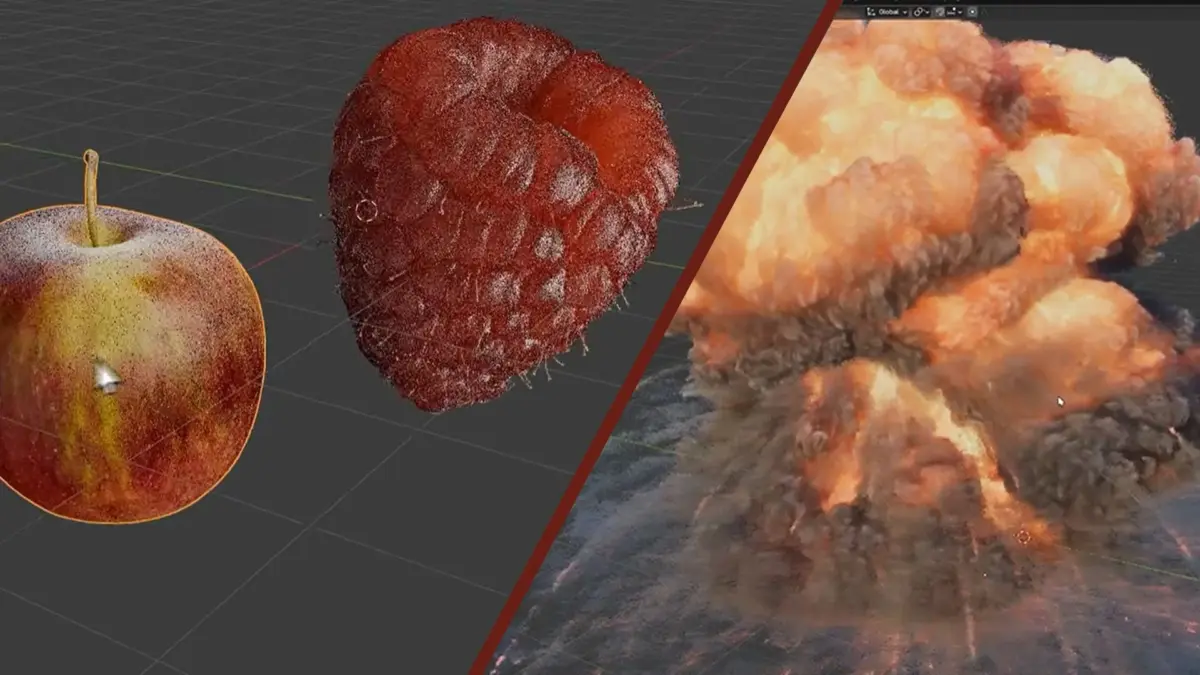
The open-source 3D creation suite Blender is preparing for its next major milestone with the development of version 5.3. Currently in its alpha testing phase, the upcoming release is already generating significant anticipation within the digital art and visual effects industries. While Blender has long been celebrated as one of the most powerful and accessible free tools for both 2D and 3D animation, the buzz surrounding this particular update centers on a groundbreaking technological integration. When the stable version of Blender 5.3 launches this November, it will officially introduce native support for Gaussian splatting, a modern technique that is rapidly reshaping how artists capture, manipulate, and render three-dimensional environments.
The decision to bring native Gaussian splatting into the core Blender ecosystem represents a major step forward for the software. Traditionally, integrating real-world environments into a 3D pipeline required intensive photogrammetry processes, which construct rigid geometric meshes out of thousands of overlapping photographs. While photogrammetry remains a staple of the industry, it often struggles with complex geometry, reflective surfaces, fine details like hair or foliage, and transparent objects. Gaussian splatting addresses these challenges by taking a fundamentally different approach to representing three-dimensional space, offering a highly photorealistic alternative that can be generated directly from standard video footage or a series of photographs.
Unlike traditional 3D models, which rely on a network of connected vertices, edges, and faces to form polygonal triangles, a Gaussian splat contains no rigid geometry. Instead, it is composed of millions of tiny, overlapping, semi-transparent 3D ellipsoids, often referred to as colored blobs. Each individual splat within the cloud stores critical data points, including its precise spatial position, size, orientation, color, and opacity. Furthermore, these splats contain directional appearance data, which allows them to change color depending on the angle from which they are viewed. This unique property enables Gaussian splats to convincingly replicate complex real-world lighting phenomena, such as specular highlights, reflections, and refraction, which are notoriously difficult to recreate using traditional real-time rendering methods.
Prior to the development of Blender 5.3, artists who wanted to incorporate Gaussian splats into their scenes had to navigate a fragmented and often cumbersome workflow. The process typically required relying on external software tools and command-line utilities, such as COLMAP or specialized web-based platforms like Brush, to process raw camera data and generate the initial splat point cloud. Once the splatting data was generated, artists had to install third-party, community-developed add-ons to parse the resulting files and force them to render within Blender’s viewport. While these community solutions demonstrated the immense potential of the technology, they were often prone to stability issues, lacked optimization, and did not integrate cleanly with Blender’s native lighting and rendering pipelines.
With the upcoming release of version 5.3, this friction is set to be greatly reduced. Blender will now allow users to import 3D Gaussian splat data directly into their
projects using standard PLY and SPZ file formats. The addition of SPZ support is particularly noteworthy, as it represents a highly compressed version of the standard PLY format, making it much easier for artists to manage large, highly detailed environments without exhausting their system’s memory. Although the initial release of this feature in Blender 5.3 will focus strictly on the import pipeline—meaning users cannot yet export or generate splats directly within the software—the ability to natively bring these files into the workspace is a massive leap forward for scene assembly and hybrid workflows.
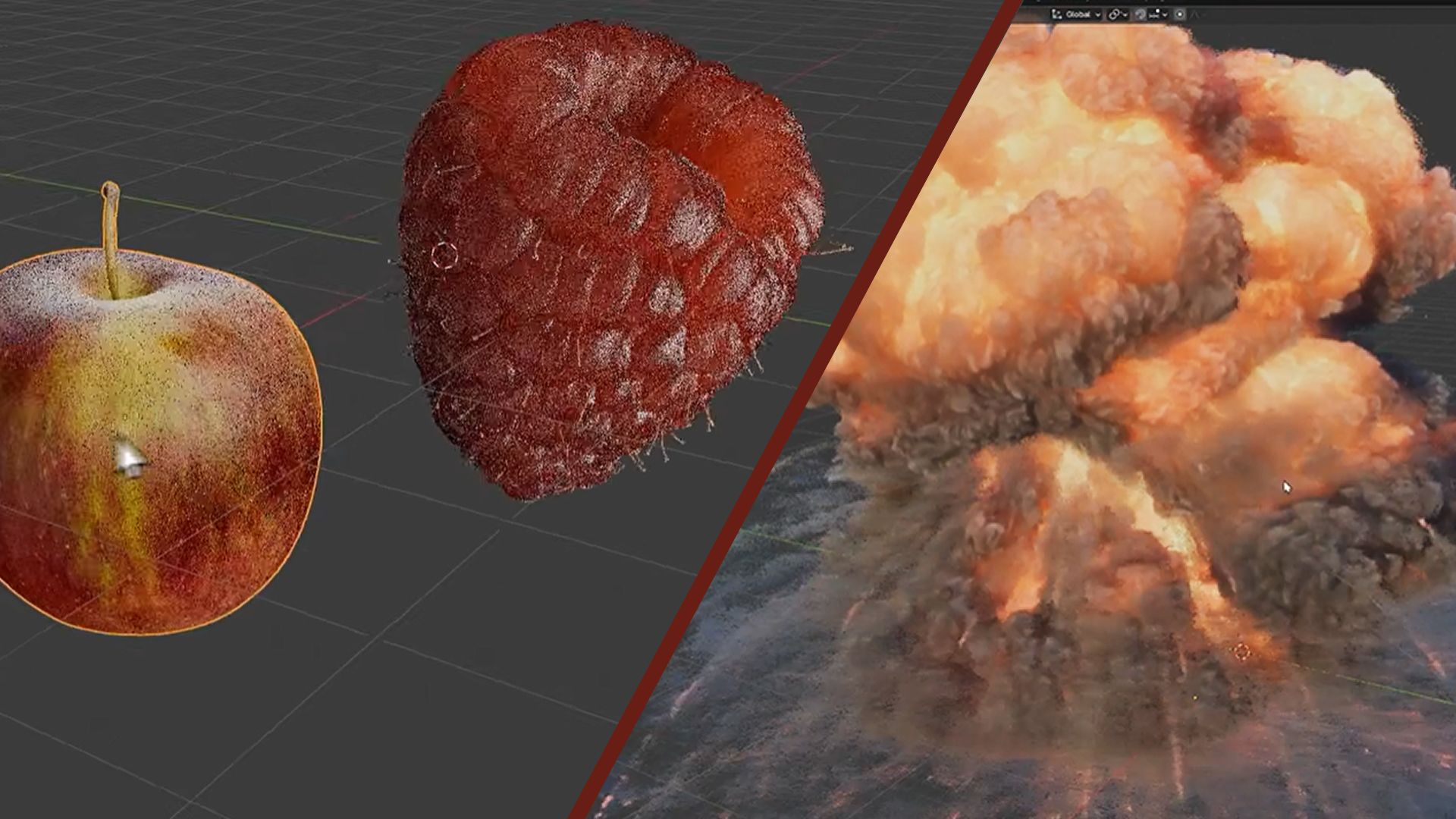
Once imported, these photorealistic environments can be rendered natively using Blender’s core rendering engines: Workbench, EEVEE, and Cycles. This integration opens up a world of possibilities for visual effects artists, architectural visualizers, and game developers. An artist can capture a real-world location using a smartphone, convert it into a Gaussian splat, import it directly into Blender 5.3, and immediately begin placing traditional polygonal 3D characters, vehicles, or props into the digitized real-world scene. The Workbench engine allows for fast, responsive viewport navigation during the layout phase, while EEVEE provides rapid real-time previews, and Cycles delivers production-quality, physically-based path tracing for the final output.
However, because this is the first iteration of native support, the development team has acknowledged several technical limitations that artists will need to navigate. According to the official developer release notes for Blender 5.3, there are four key constraints in the current alpha implementation. First and foremost, performance is not yet fully optimized, meaning that rendering dense splat clouds containing millions of points may put a significant strain on system hardware, particularly during real-time viewport manipulation. Artists working with complex scenes will likely need to rely on high-performance hardware configurations to maintain smooth frame rates.
The second and third limitations relate directly to color accuracy and how light is calculated across different rendering engines. The current import pipeline assumes the sRGB color space for the incoming splat data. However, Blender’s modern render engines, specifically EEVEE and Cycles, operate internally using a linear color space to ensure that light bounces and color blending behave in a physically accurate manner. Because of this discrepancy, areas within a Gaussian splat that feature low opacity combined with high radiance can render incorrectly. This can manifest as visual artifacts, color shifting, or unnatural glowing edges where the semi-transparent blobs blend with the background or other 3D elements in the scene.
The fourth major limitation involves spatial manipulation within the viewport. Currently, using the "Apply Transform" command on an imported Gaussian splat does not function correctly. In traditional 3D modeling, applying a transform bakes the object’s current scale, rotation, and position directly into its underlying geometry, resetting its object-level transform coordinates to default values. With Gaussian splats, this operation fails because the software does not yet possess the ability to correctly recalculate and update the unique scale, rotation, and spherical harmonics attributes associated with each individual ellipsoid in the cloud. As a result, artists will need to manage their scene layouts carefully without relying on baked transformations.
Despite these early limitations, the inclusion of native Gaussian splatting in Blender 5.3 aligns with a broader, industry-wide push to master this new medium. Other major players in the computer graphics industry are also dedicating significant resources to solving the inherent challenges of splatting technology. For example, the rendering software developer Chaos recently made headlines by addressing one of the most persistent issues associated with the format: the inability to dynamically relight captured scenes. Traditionally, because Gaussian splats bake the lighting conditions of the original capture environment directly into the color data of the blobs, changing the light source in a 3D scene would not affect the splat. Chaos’s breakthrough in relighting represents a parallel advancement that, when combined with Blender’s native integration, signals a rapid maturation of the technology.
As Blender 5.3 continues its journey through the alpha phase toward its stable public release in November, developers are expected to continue refining the toolset, addressing bugs, and optimizing performance. The creative community has already begun exploring the capabilities of the alpha build, sharing early tests and demonstrations on platforms like YouTube and X. For digital artists, the addition of native Gaussian splatting represents more than just a new feature; it is the beginning of a paradigm shift that blurs the line between physical reality and digital creation, making it easier than ever to bring the real world into the virtual space.