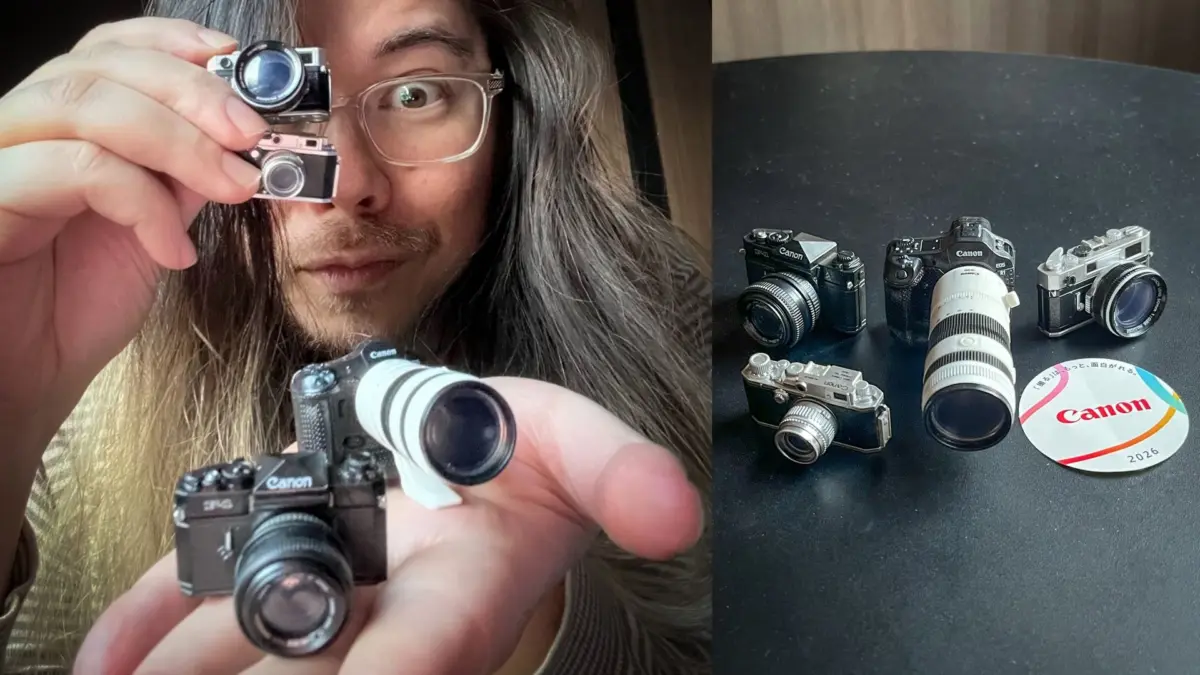
For photography enthusiasts, nothing quite matches the thrill of discovering rare gear, inspecting legendary bodies, or hunting down vintage glass. But for a fraction of the cost of a single professional lens cap, collectors in Japan have found an entirely different way to indulge their passion for iconic photographic hardware.
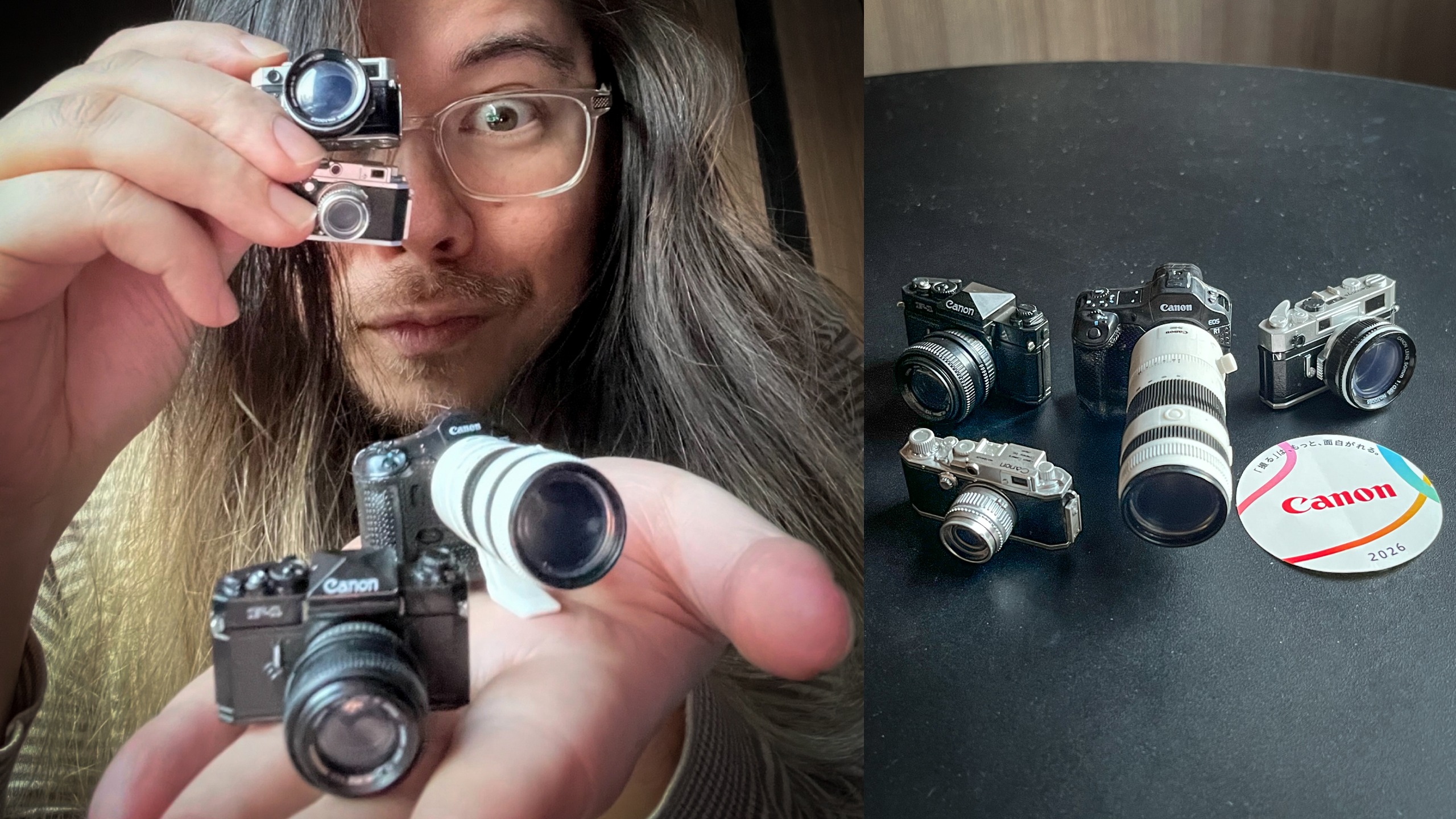
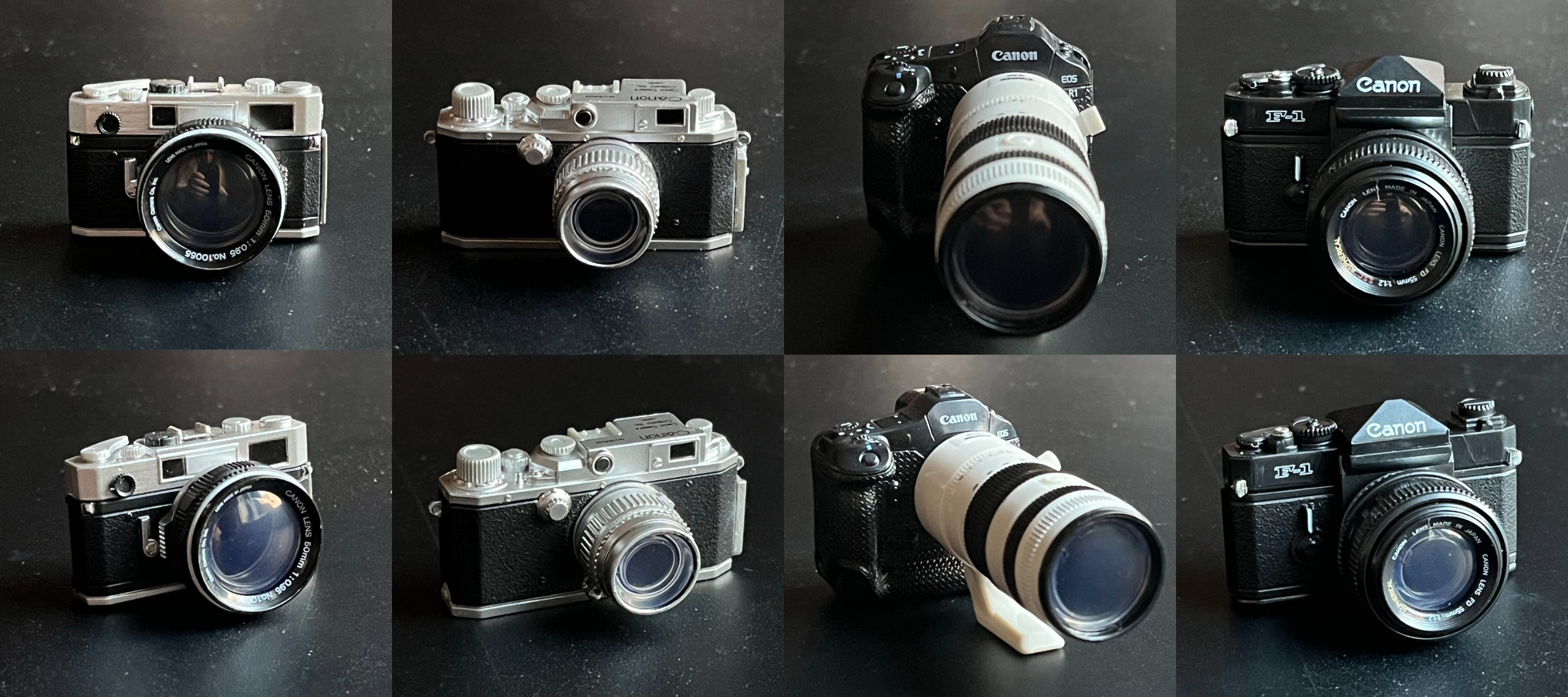
On a recent trip to Japan, photographic journalist and industry veteran James Artaius managed to acquire a full suite of legendary Canon hardware—including the professional Canon F-1, the classic Canon 7S, the vintage Canon IV, and the cutting-edge Canon EOS R1, complete with top-grade miniature lenses—for the astonishingly low price of just $15. There was, however, a massive catch: these fully detailed photography icons were not functional full-sized units, but rather miniature scale replicas measuring just an inch in size.
These tiny marvels are part of a wildly popular collaborative gashapon collection produced by Canon and legendary Japanese toy manufacturer Bandai. Best known for creating worldwide pop culture mainstays like Tamagotchi, Power Rangers, and the Gundam franchise, Bandai has turned its manufacturing prowess toward the world of high-end camera history, shrinking some of the most celebrated professional and consumer cameras ever made into pocket-sized collectibles.
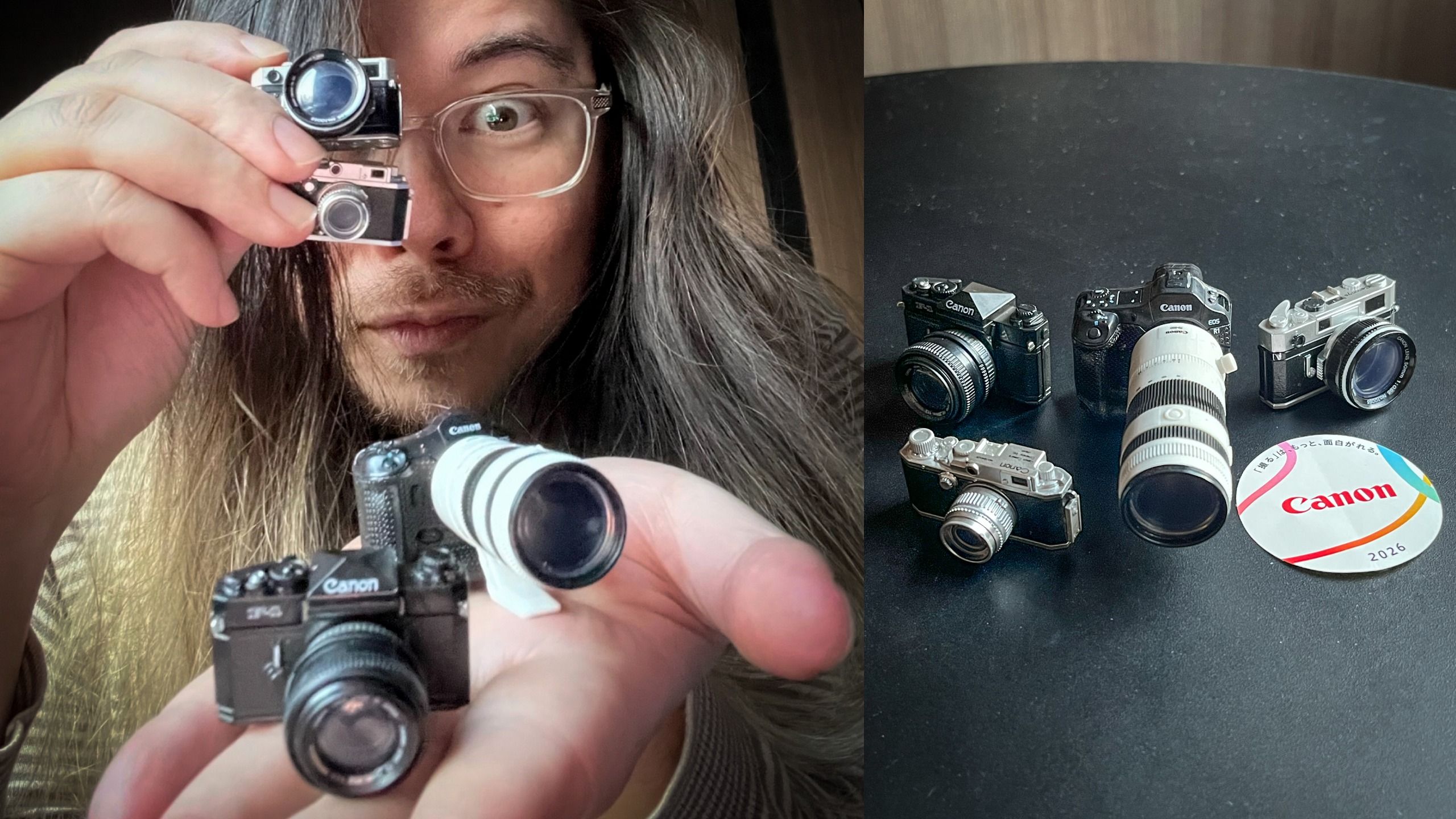
Gashapon, or capsule toy machines, are ubiquitous fixtures across Japanese urban landscapes. Operating much like traditional gumball dispensers, these machines accept coins—typically local currency—and dispense sealed plastic capsules containing random collectible items rather than candy. For fans of pop culture, anime, and niche hobbies, hunting down specific items from a gashapon set has become a cultural phenomenon.
In the case of the initial Canon series, feeding ¥500—roughly equivalent to $3.13, £2.37, or AU$4.62—into the machine yielded a random miniature replica of a historic Canon camera. During Artaius’s initial visit, the lineup featured five distinct collectibles to hunt down, culminating in a tiny recreation of the beloved Canon EOS 5D Mark IV alongside the F-1, 7S, IV, and EOS R1. Despite pumping coins into the machine repeatedly, completing the full set proved to be a challenging endeavor, highlighting the addictive nature of blind-box capsule collecting.
Now, Canon and Bandai are expanding the universe of miniature photography gear with an updated capsule collection. The fresh lineup introduces two brand-new camera models to the gashapon ecosystem, bringing both classic compacts and modern enthusiast favorites into the miniature fold. At the same time, the manufacturing approach has seen a slight adjustment, with the price point dropping to ¥400—approximately $2.50, £1.89, or AU$3.69—though early indications suggest a slightly simpler finish, such as lenses cast as single molds rather than featuring separate multi-part plastic lens elements.
According to reports from Digital Camera Watch, the latest capsule series cleverly reimagines the entire lineup of miniature cameras as keyring charms. Among the new additions are the popular Canon PowerShot G7 X Mark III, available in both classic black and sleek silver, and the vintage-styled Canon Ixy 210F—widely recognized in international markets as the PowerShot Elph 100 HS in the United States and the Ixus 115 HS in the United Kingdom—which comes in a vibrant array of colors including pink, orange, blue, and silver.
The updated miniatures were made available to pre-order directly from Bandai earlier this month as an exclusive offering for Japanese customers via the Bandai Namco online store, with official shipping slated to begin in February 2027. For international fans and travelers who happen to be visiting Japan around that time, it presents another prime opportunity to test their luck at local capsule stations.
For those unable to make the trip to Japan, secondary markets such as eBay offer an alternative route to securing the miniature collectibles. However, buyers face steep markups. Because gashapon items are produced as limited editions and hold immense appeal for dedicated collectors, prices on auction platforms routinely jump significantly higher than the original vending machine cost, often adding at least a zero to the price tag before factoring in international shipping fees from Japan.
For photographers looking for gear that can actually capture images rather than simply dangle from a keychain, the wider market continues to offer full-sized options across vintage and modern ecosystems, ranging from legacy DSLRs to advanced mirrorless RF-mount bodies and specialized optics.