Pearl Abyss, the South Korean studio behind major titles like Black Desert Online and the upcoming open-world action RPG Crimson Desert, is pressing forward with its adoption of artificial intelligence in game development. The studio’s leadership has signaled a deeper integration of AI-powered tools across its entire production pipeline, despite previous controversy earlier this year when players discovered unapproved generative AI artwork within Crimson Desert.
The renewed commitment to AI integration was outlined in Pearl Abyss’s Q3 financial earnings letter. In the communication to shareholders and the public, the studio detailed how artificial intelligence has already begun shifting its internal processes, moving away from purely manual system validation toward automated, rapid prototyping and design testing.
According to the earnings letter, Pearl Abyss previously validated game mechanics and systems only after they were fully implemented manually by developers. Under the updated workflow, the studio now utilizes AI to rapidly test and validate diverse design concepts prior to actual implementation in the game engine. Company executives argue that this technological shift enables a significantly more efficient allocation of development resources, reduces friction in early-stage prototyping, and enhances overall production speed across multiple concurrent projects.
At the same time, studio representatives have sought to reassure the gaming community that these implementations remain bounded by human oversight. Pearl Abyss immediately clarified in the documentation that artificial intelligence serves strictly as a tool to support concept validation and pipeline productivity. Gameplay mechanics, narrative design, creative direction, and core content creation remain fully driven by the human development team rather than automated algorithms.
Looking ahead, Pearl Abyss intends to expand this technological footprint while maintaining the same operational caveats. The studio noted that AI technologies will be integrated further to enhance development productivity and overall asset quality. Specifically, artificial intelligence is being deployed across various stages of development, including the automation of repetitive and mundane administrative tasks, content creation support for background elements, and test optimization to catch bugs earlier in the pipeline.
Management emphasized that it views AI not as a substitute for human developers, but rather as an assistive instrument designed to elevate development efficiency and final product quality. The overarching corporate goal remains focused on delivering higher-fidelity games to the global market more expeditiously without compromising the artistic integrity or creative vision established by the studio’s human creators.
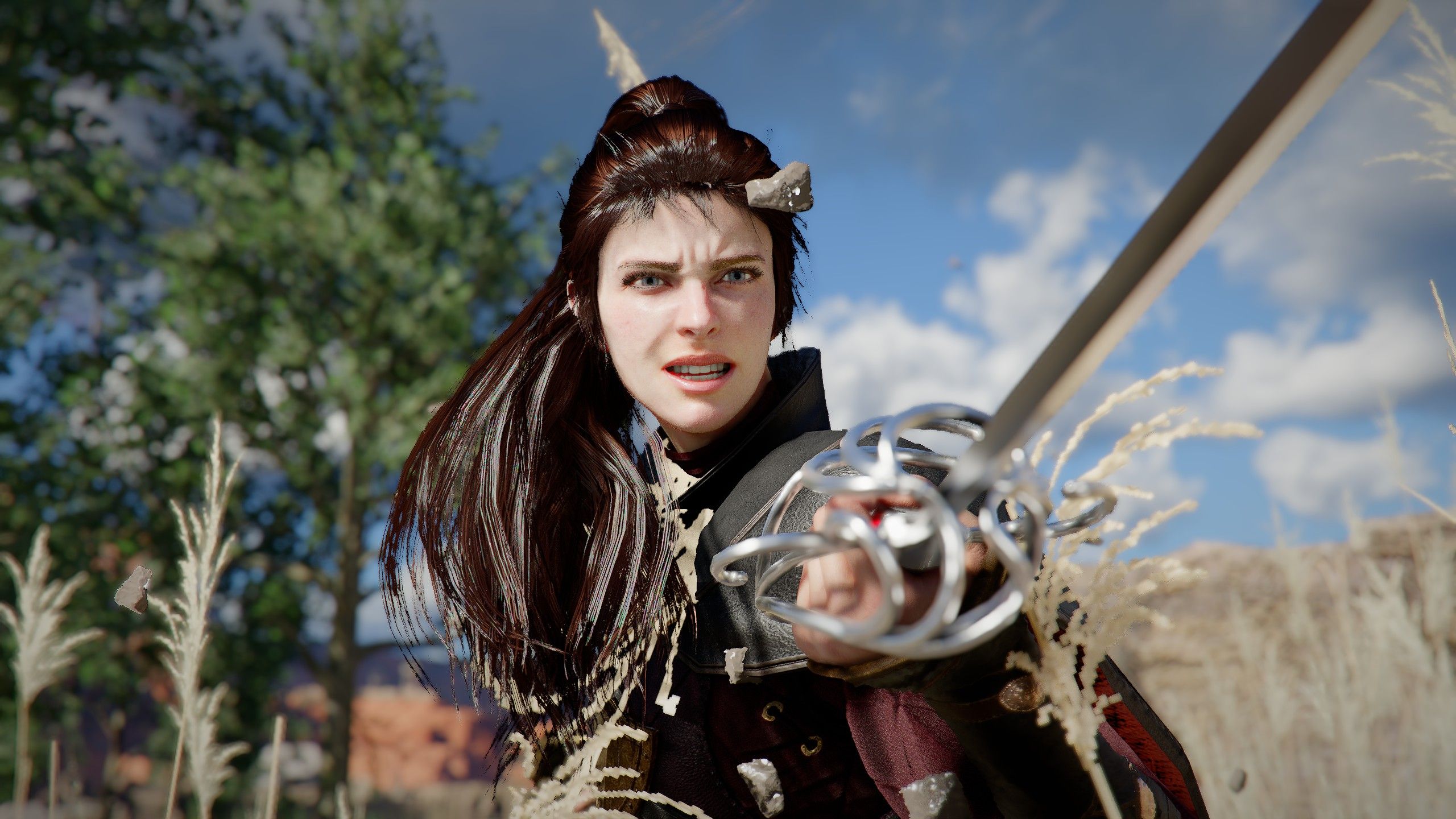
This forward-looking corporate stance largely echoes the explanations and apologies issued by Pearl Abyss earlier this year. In February, the studio faced sharp community criticism after players discovered the presence of generative AI art embedded within promotional materials and early builds of Crimson Desert. At the time, the development team acknowledged that certain two-dimensional visual props and placeholders had indeed been generated by artificial intelligence during the early stages of production.
However, the studio clarified that those temporary assets were never intended to remain in the final shipped product. According to previous statements from the team, the plan had always been for such preliminary placeholders to be completely replaced following final reviews by the internal art and development teams, ensuring that all final assets strictly aligned with the studio’s high-quality standards and specific creative direction.
During that initial controversy, Pearl Abyss also conceded that it had failed to clearly and openly communicate its internal use of AI tools during the development process. The studio promised at the time to adopt a much more transparent approach regarding its workflows moving forward. The detailed disclosures regarding AI integration found within the recent Q3 earnings letter are widely viewed as a concrete step toward fulfilling that promise of transparency, laying bare how the technology is utilized internally rather than keeping its implementation hidden from the public eye.
Beyond the ongoing development of Crimson Desert, Pearl Abyss also used the Q3 earnings communication to provide updates on its long-awaited open-world project, DokeV. Originally unveiled to the public in 2021 as a vibrant, creature-collecting adventure game often colloquially described by observers as a whimsical alternative to urban sandbox titles, DokeV has experienced a lengthy and shifting development cycle. In the recent earnings letter, Pearl Abyss confirmed that it currently aims to release the title sometime in the second half of 2028, giving eager fans a clearer, albeit distant, window for when they might finally get their hands on the colorful project.