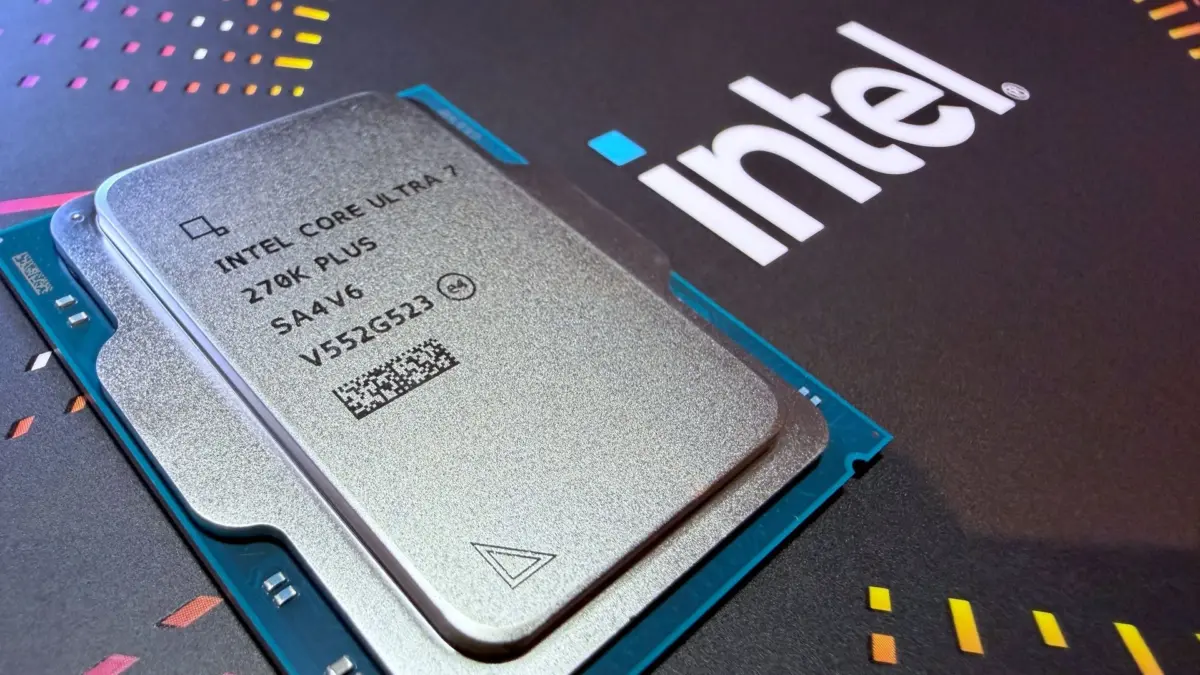
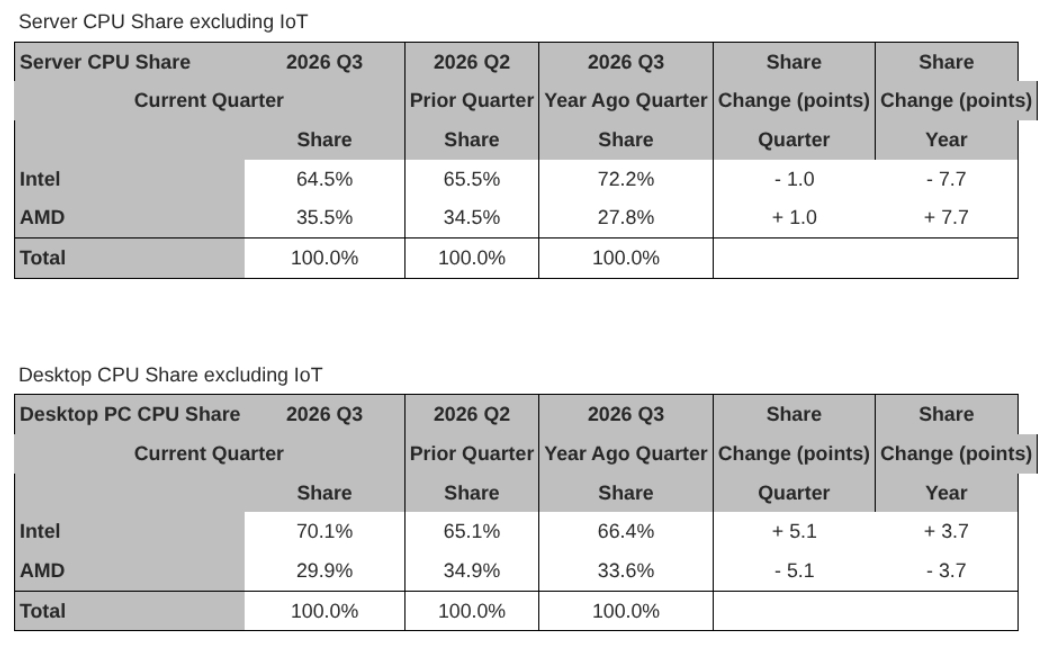
According to the Q3 2026 data, Intel experienced an increase in desktop CPU market share of 5.1 percentage points. Over the past decade, AMD has fought painstakingly to elevate its desktop market share to approximately 35 percent by the second quarter of 2026. However, the subsequent three-month period saw that figure retreat sharply down to 29.9 percent, triggering a massive lurch backward toward Intel. For an industry accustomed to a steady trajectory of AMD gains driven by successive generations of successful Zen architectures, the magnitude of this single-quarter reversal has prompted intense scrutiny and discussion.
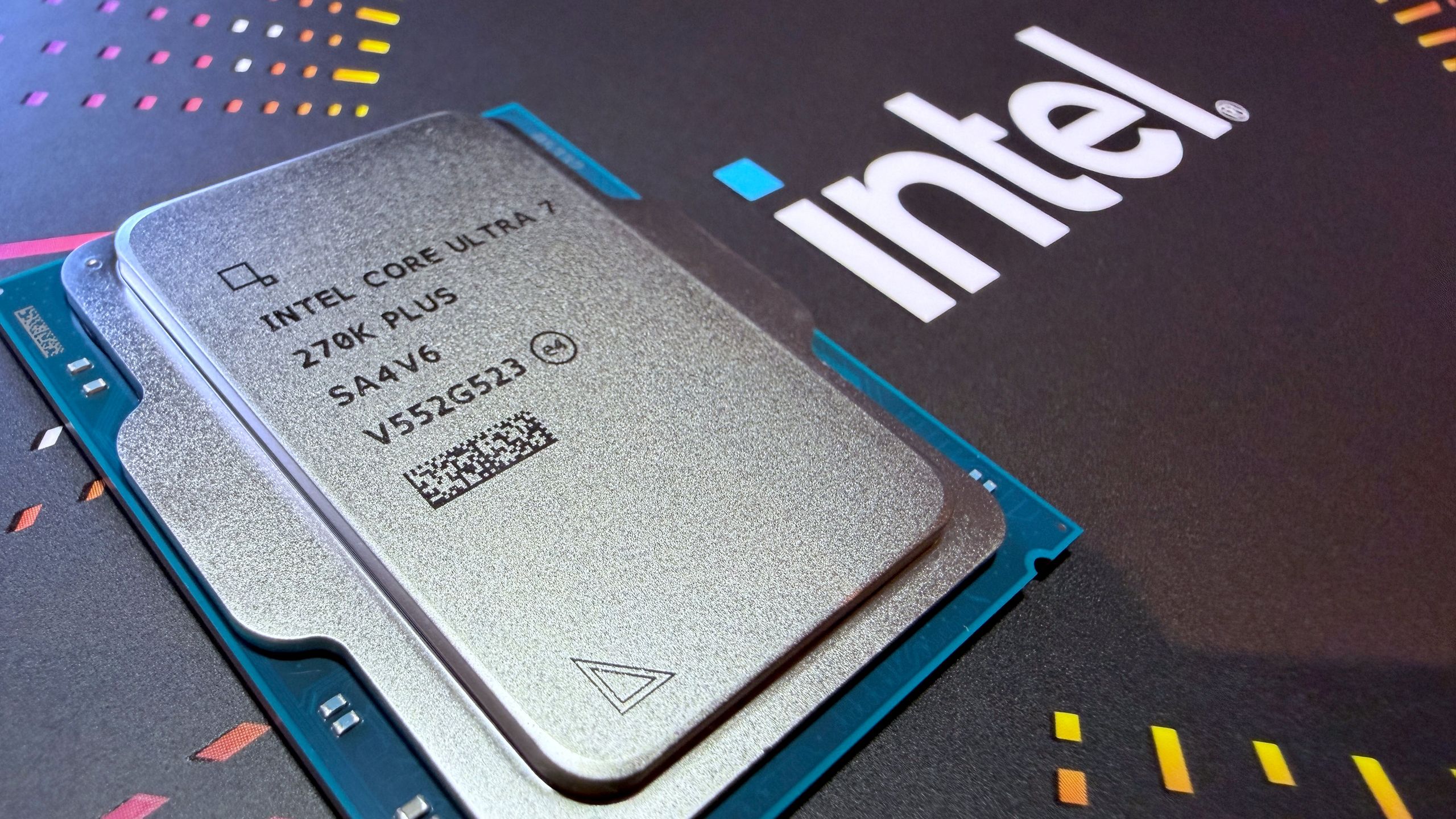
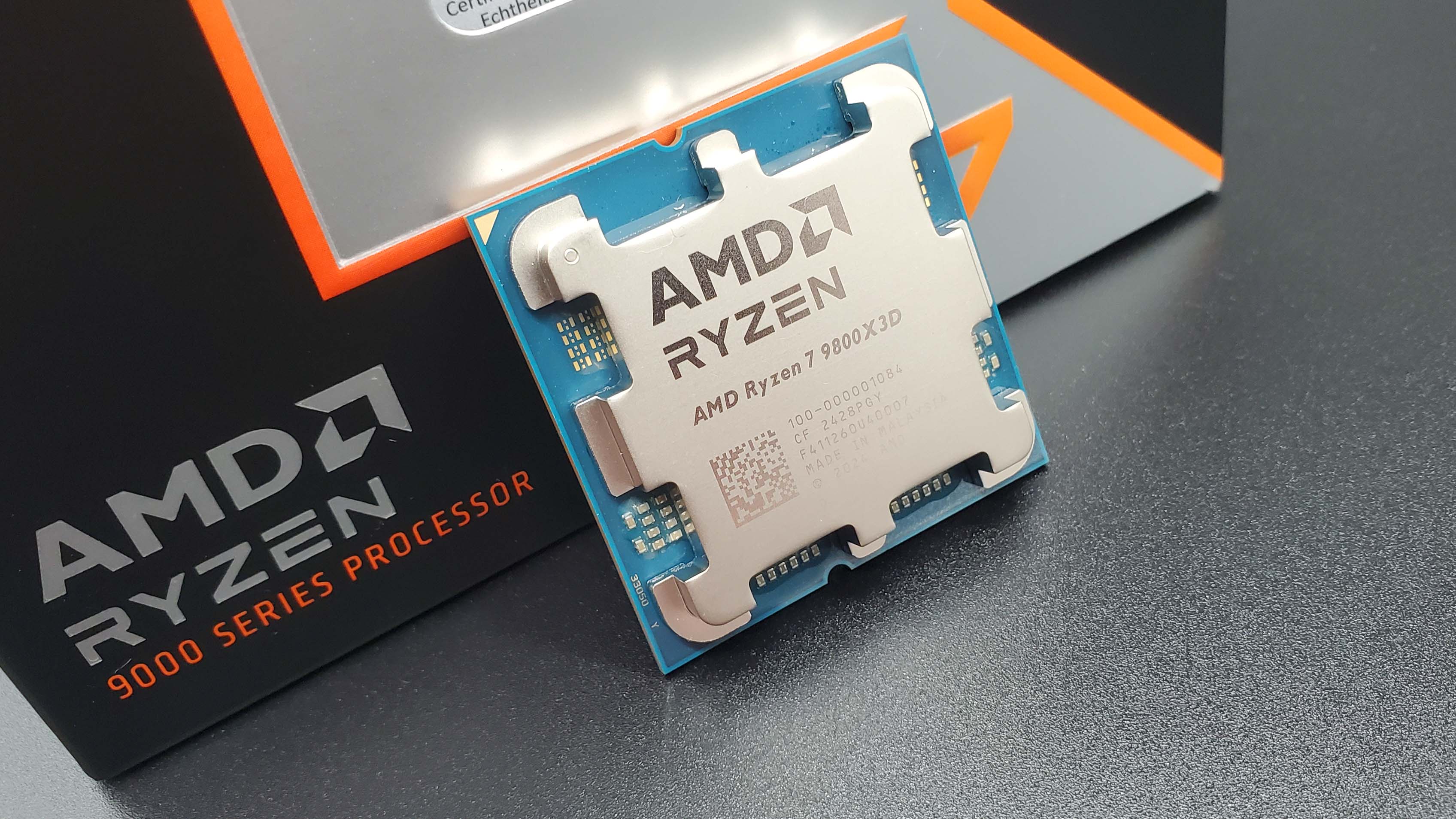
The paradox at the heart of this market shift is that AMD still maintains a commanding lead in gaming performance and consumer preference. Industry consensus consistently points to chips like the AMD Ryzen 7 9800X3D as the premier choices for gaming enthusiasts, alongside a broad ecosystem of other Ryzen processors dominating recommendations across tech publications. Conversely, Intel’s current desktop lineup, including options like the Core Ultra 5 250K Plus, has found traction primarily through competitive pricing and robust core counts rather than dominant gaming architectures. Arrow Lake processors have often struggled to match AMD’s top-tier gaming performance, and the platform itself is widely viewed by enthusiasts as a temporary destination ahead of upcoming Nova Lake chips and a forthcoming motherboard socket transition.
Given the sheer scale of the shift, questions naturally arose regarding the accuracy of the numbers or the potential for statistical anomalies, such as rounding errors or temporary data collection gaps. Mercury Research, however, maintains a long-standing reputation for rigorous tracking within the semiconductor industry, and both Intel and AMD frequently rely on these metrics when evaluating their relative positions in the market.
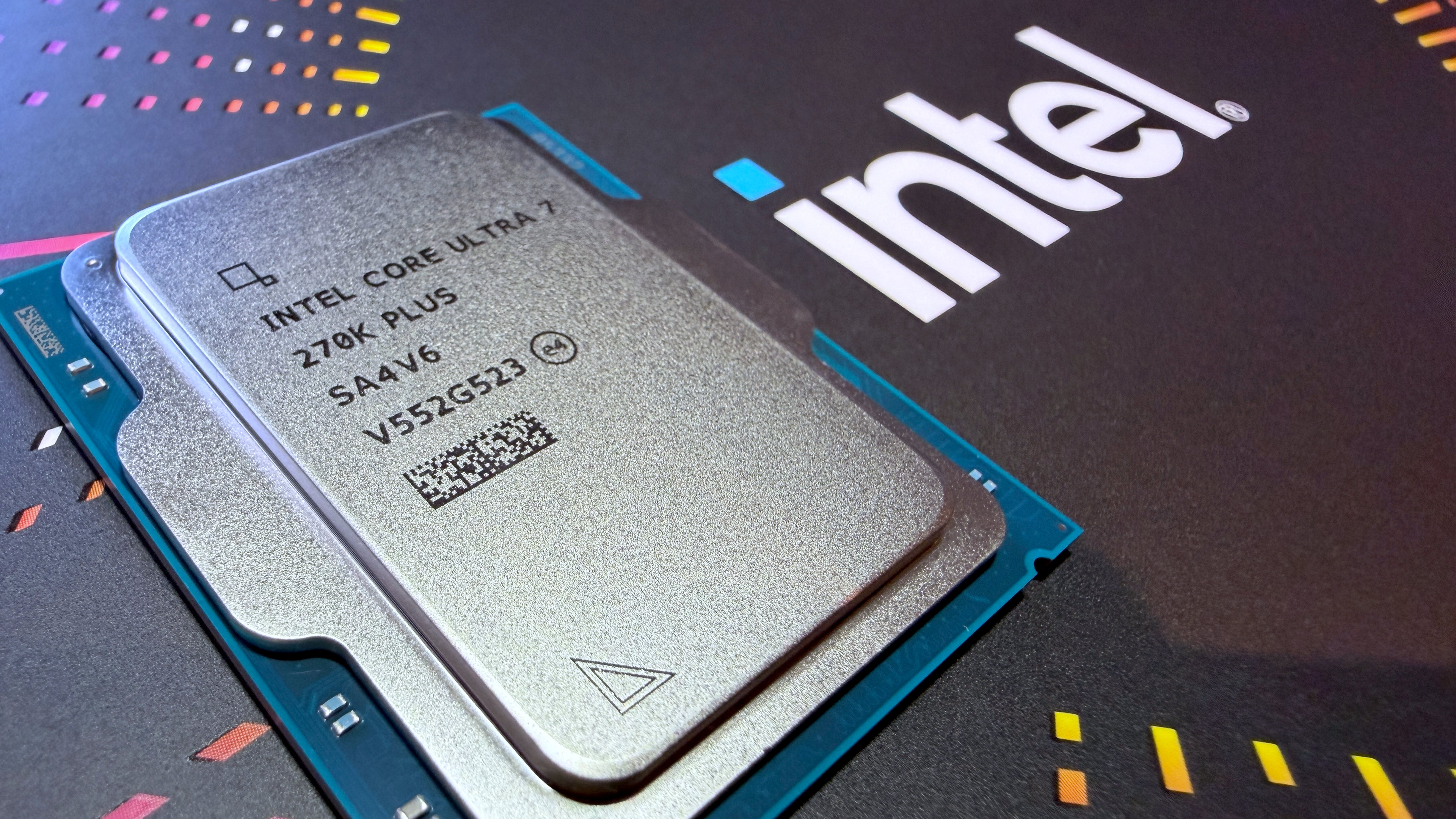
Addressing the unexpected dynamics behind the data, Mercury Research offered several explanatory theories. One primary hypothesis centers on the shifting allocation of manufacturing and supply resources. During the third quarter of 2026, demand for mobile CPUs experienced a notable softening. This contraction in the laptop sector allowed Intel to redirect a greater portion of its manufacturing output toward the desktop market. The desktop segment traditionally enjoys a seasonal demand surge in the third quarter, a period that also coincided with Intel recovering from earlier supply constraints that had limited its desktop availability through the first half of the year.
AMD, by contrast, did not experience the same seasonal upward trajectory in desktop shipments during that specific window. This divergence meant that Intel secured a remarkably large sequential and year-over-year gain in desktop CPU market share simply by capitalizing on improved product availability while overall market conditions fluctuated.
Another contributing factor highlighted by Mercury Research involves AMD’s heavier exposure to the PC gaming market. The broader enthusiast community has faced severe economic headwinds recently, characterized by exorbitant pricing for graphics cards, system memory, and high-speed storage. These steep component costs have contributed to a general consumer hesitation when it comes to investing in brand-new custom PC builds. Because AMD’s desktop strategy is heavily intertwined with the high-performance gaming demographic, any cooling off in that specific sector tends to impact its shipment volumes more acutely.
At the same time, Intel continues to maintain massive commercial relationships and supply arrangements with system builders and original equipment manufacturers. These large-scale commercial entities regularly purchase a mix of newer silicon and older, budget-friendly inventory—including DDR4-compatible processors—to assemble low-cost prebuilt systems for general office work, education, and entry-level computing. This diverse market presence provides Intel with a steady baseline of volume even when high-end enthusiast gaming hardware experiences a temporary slowdown.
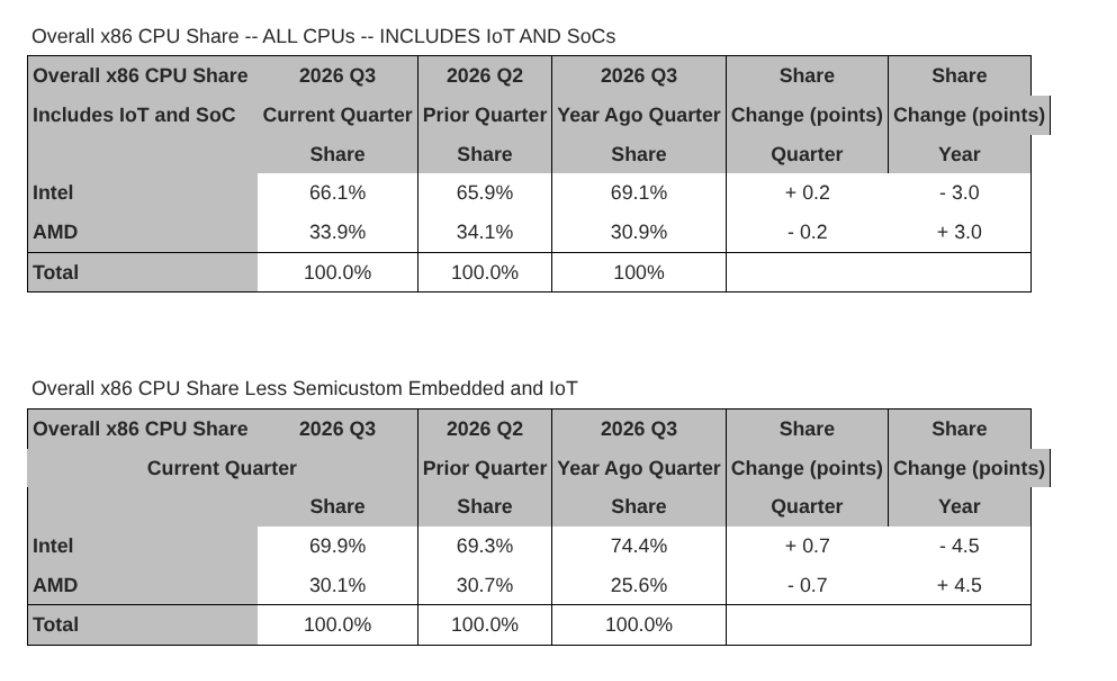
Furthermore, AMD has openly acknowledged facing supply deficits where consumer demand for its most popular processors has occasionally outstripped its manufacturing capacity. While the company is actively working to address these constraints, its strategic focus has increasingly shifted toward expanding its highly lucrative datacenter chip business, cementing its evolution into a major enterprise and server solutions provider.
Industry analysts emphasize that Intel’s recent uptick in desktop market share should not be misinterpreted as an indicator of robust financial health for the company as a whole, nor does it signal a broader resurgence for the consumer PC segment. Mercury Research noted that desktop CPU volumes suffered a substantial drop earlier in the second quarter of 2026, and both major chipmakers endured double-digit percentage declines in mobile chip shipments during the third quarter. Ultimately, both companies are currently navigating a challenging consumer market and fighting for a shrinking pool of retail shipments.
The broader corporate trajectories of the two giants further contextualize these quarterly figures. Intel’s share price has faced considerable downward pressure due to weaker-than-anticipated sales forecasts, driven by a sluggish overall PC market and shifting corporate spending priorities within the technology sector. Meanwhile, market projections indicate that AMD is on track to surpass Intel in total annual revenue for the very first time by the close of 2026, underscoring the profound structural transformation reshaping the semiconductor industry despite short-term fluctuations in quarterly desktop market share.