Until only a few years ago, painter Scott Kahn was navigating a quiet, solitary existence, living out of his cousin’s attic. Surrounded by a studio filled with canvases that had failed to find buyers or spark the interest of commercial galleries, Kahn continued to paint largely in obscurity. A self-taught artist whose unique aesthetic did not easily align with fleeting contemporary trends, he felt largely disconnected from the bustling machinery of the mainstream art market.
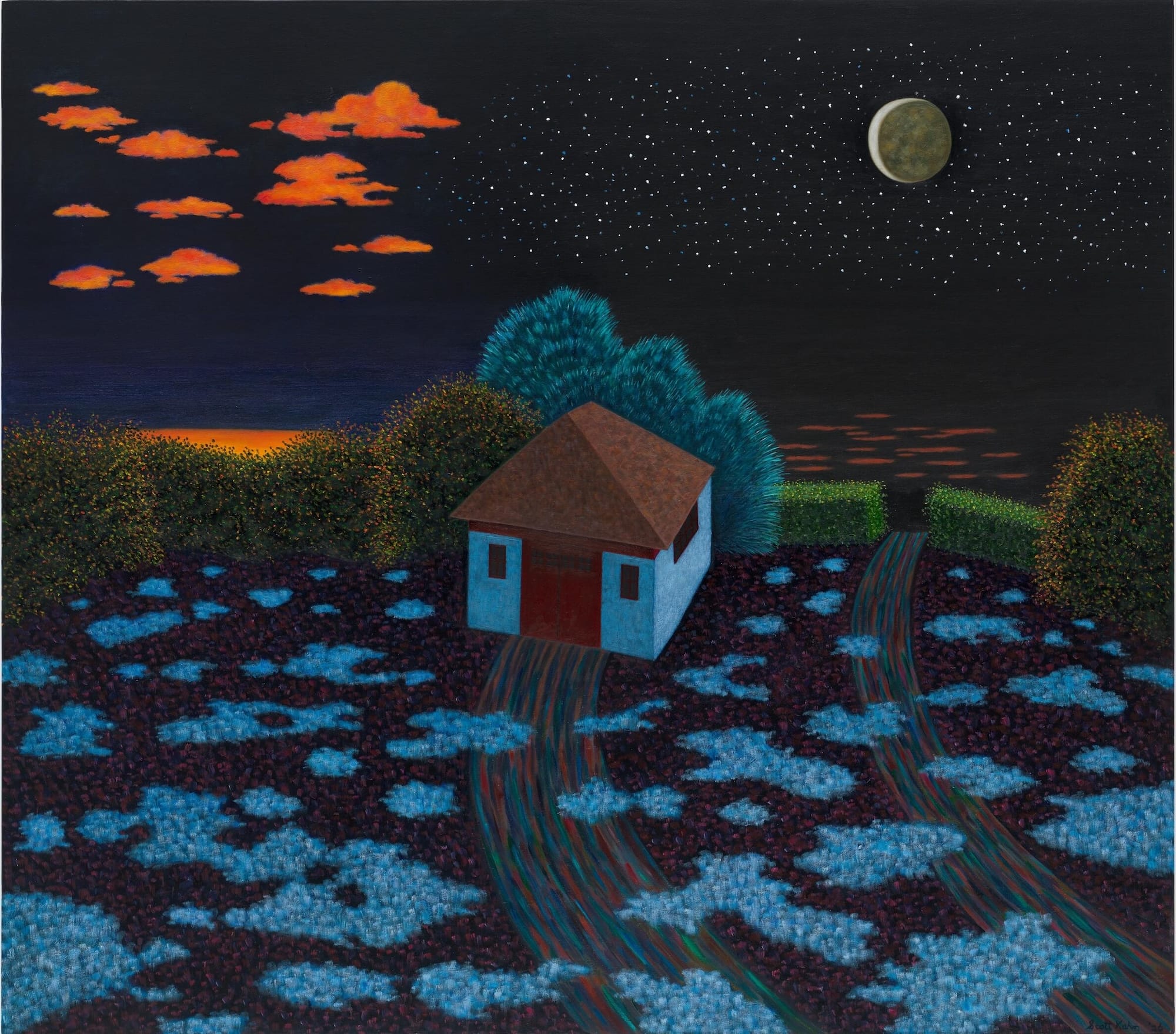
That trajectory shifted permanently following a chance correspondence with the late, acclaimed Canadian artist Matthew Wong. Sharing a mutual appreciation for magical realism and a kindred self-taught background, the two artists struck up an intense and supportive dialogue. "Matthew was really a great champion of my work," Kahn recalled in an interview with Artnet News. "The only way I can explain it is that we were soulmates."
When Wong’s own brilliant career experienced a meteoric rise in 2018, it cast a supportive spotlight on Kahn’s artistic universe. Suddenly, the broader art world began to take notice of Kahn’s atmospheric, deeply surreal landscapes, finding a profound emotional resonance in his nocturnal vistas and psychological spaces. Today, Kahn has transitioned from the attic to major international exhibitions, most recently showcasing his sweeping solo exhibition, Silent Night, at David Zwirner.
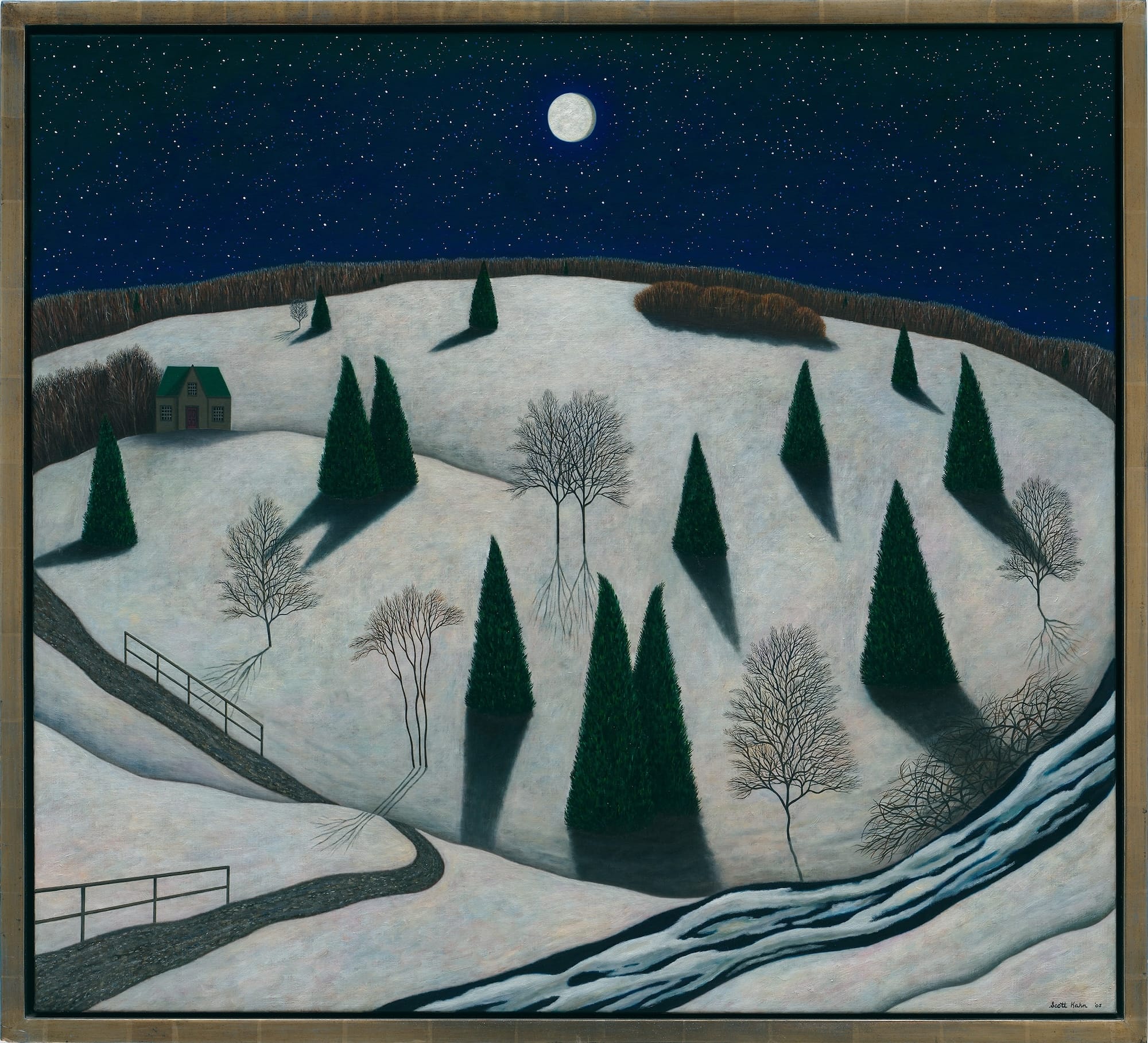
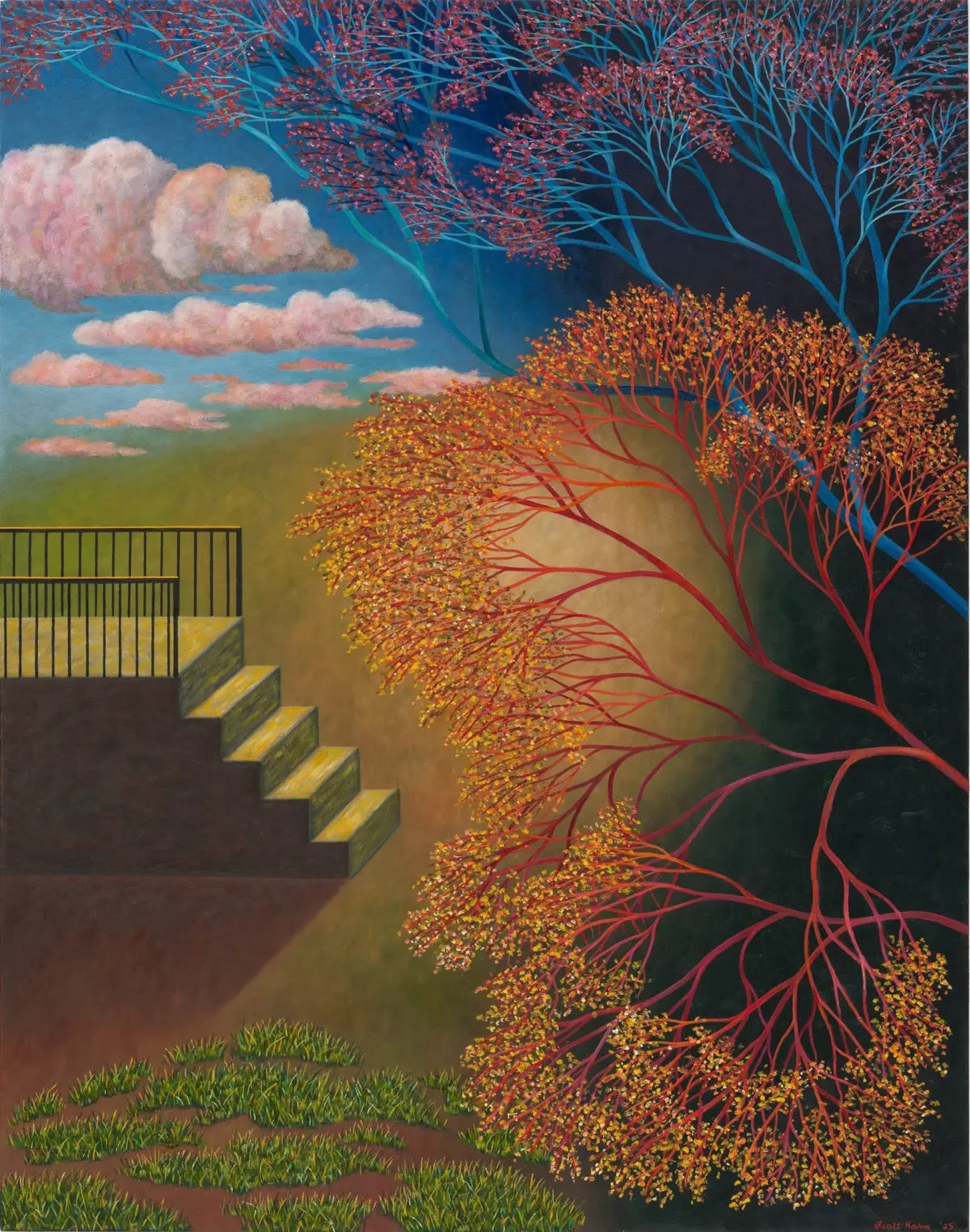
Working primarily in oil on linen, Kahn constructs meticulously detailed scenes that glow beneath the ethereal light of a bright moon or frame architectural elements through delicate, theatrical vignettes of interwoven trees and drifting clouds. His compositions feel at once intimately familiar and strangely unsettling, resting comfortably in the liminal spaces between memory and imagination, waking life and sleep.
Kahn’s body of work frequently incorporates subtle nods to American regionalism, a tradition deeply rooted in the depiction of localized American landscapes and rural life. This influence is particularly pronounced in pieces like "Berkshire Nightscape II," painted in 2005. The canvas bears a striking resemblance to Grant Wood’s iconic, bulbous, and meticulously cultivated hills of rural Iowa, capturing a sense of pastoral serenity charged with an underlying psychological intensity.
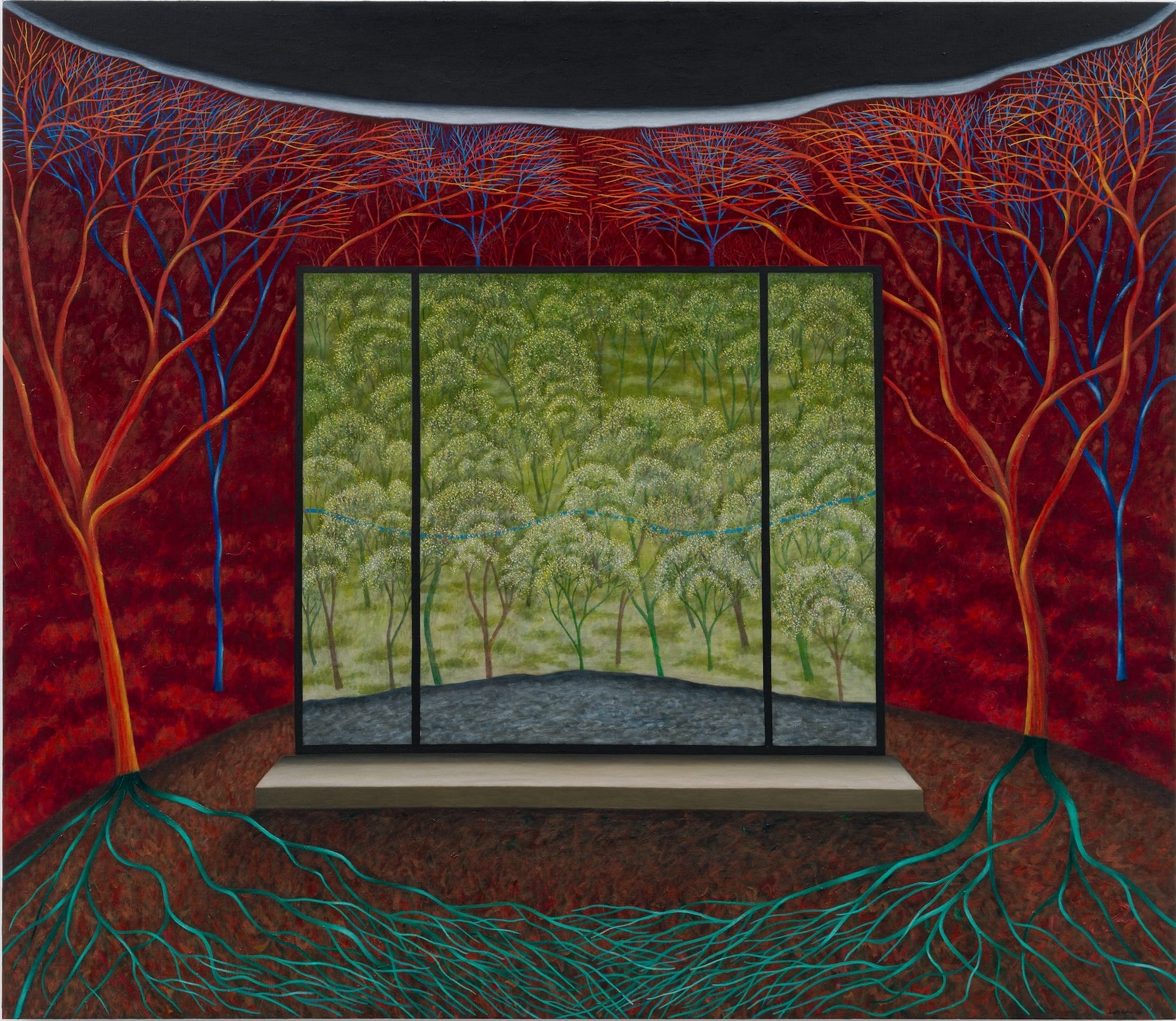
Yet, where regionalists often sought a form of stark realism or nostalgic documentary, Kahn pivots firmly toward the realm of the unconscious. Works such as "The Basement Window" tap directly into a recurring dream from the artist’s childhood, evoking the strange distortions of memory where domestic space and the natural world bleed into one another. In these canvases, trees appear paradoxically both inside and outside the home, thoroughly blurring the boundary between rigid architectural space and untamed nature.
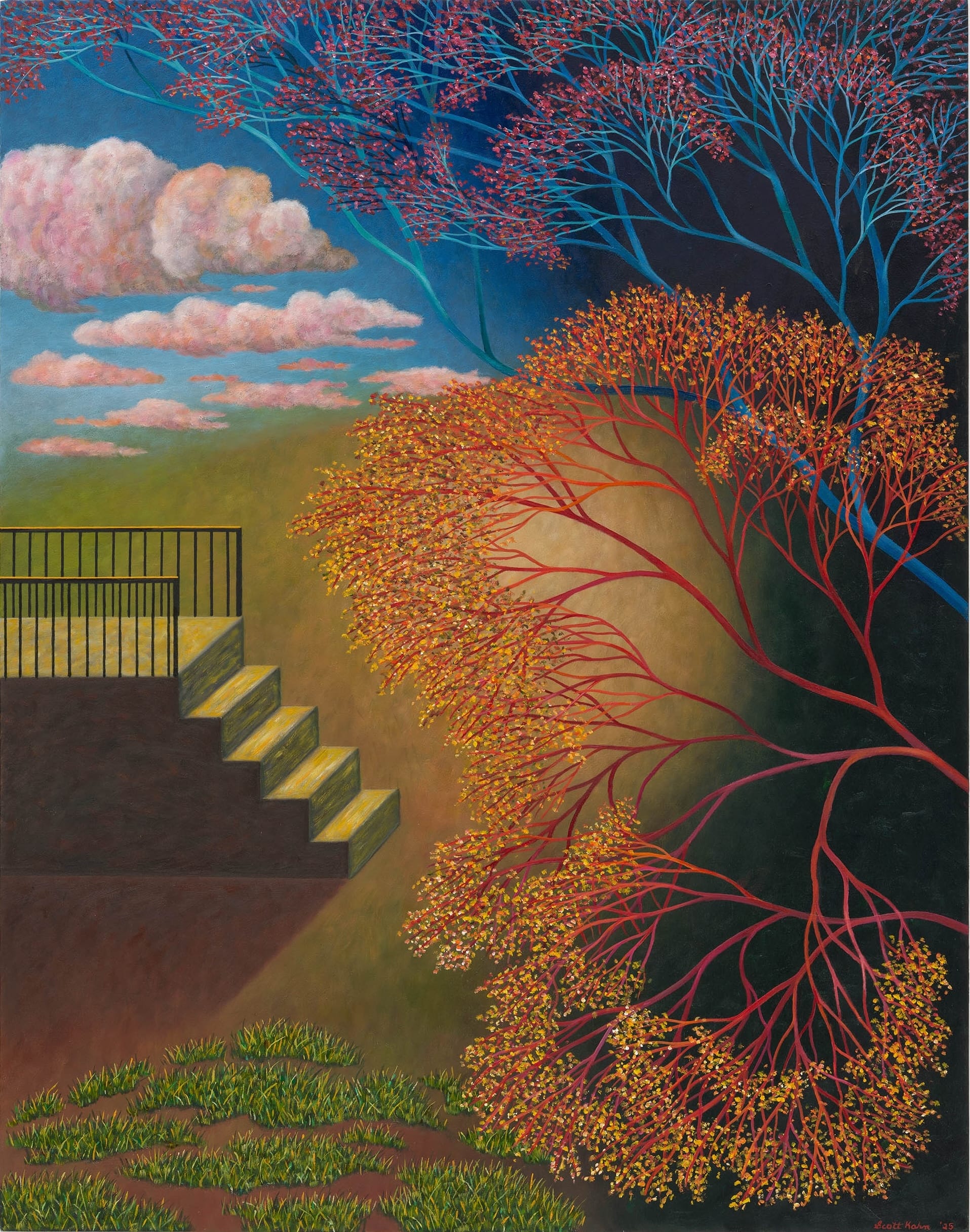
This thematic tension between safety and exposure, the domestic and the wild, is further explored in pieces like "The Stoop." In this work, a mysterious, deep-forest darkness seems to aggressively infringe upon the comforting sunniness of a set of front steps, turning an ordinary threshold into a point of psychological confrontation. Similarly, in "The Basement," Kahn establishes a subtle, uncanny connection to the interiority of the human body, rendering the twisting branches and roots of trees with a vein-like quality that suggests biological pulse and circulatory systems.
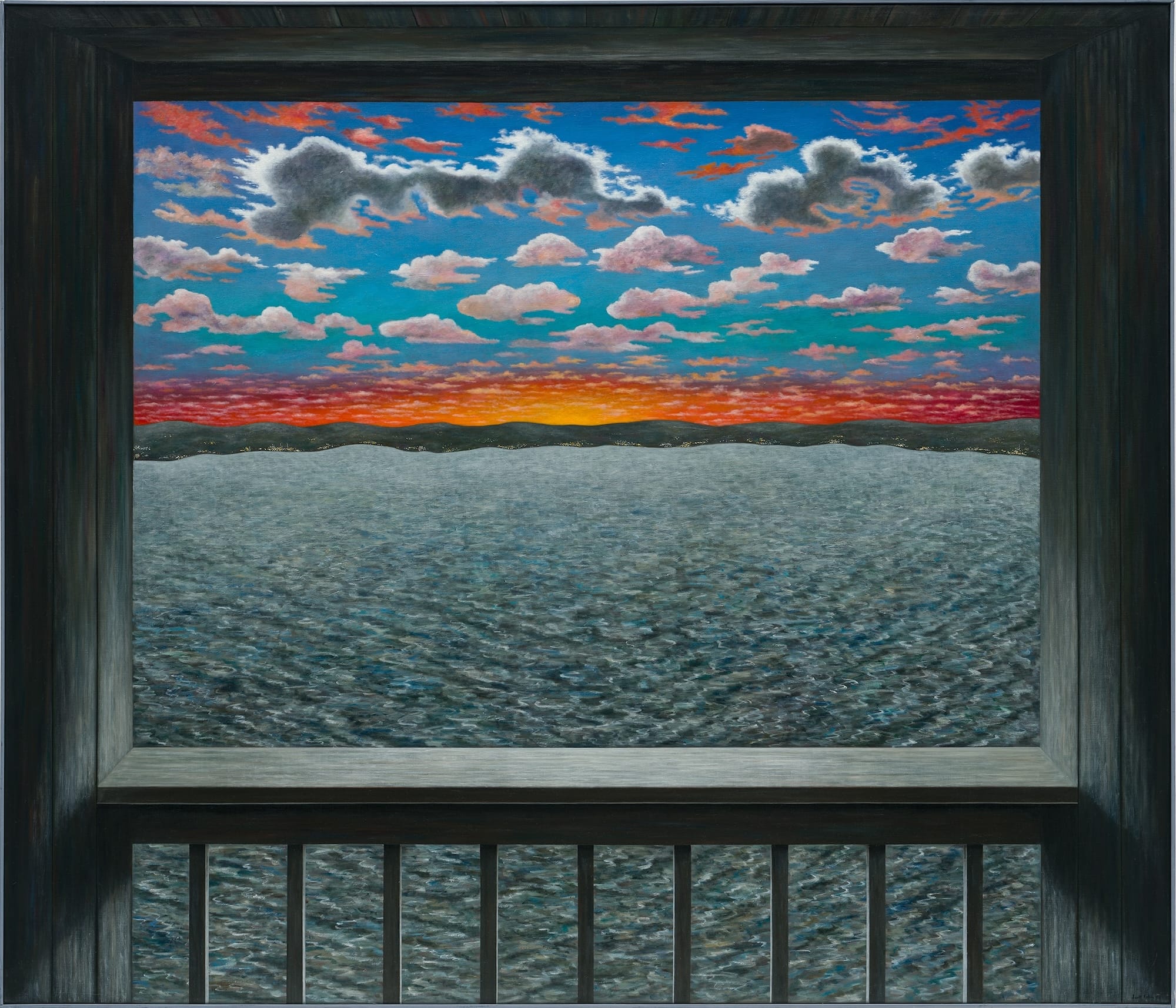
Across his oeuvre, Kahn utilizes structural apertures—such as windows, balconies, and doorways—as well as the inherent framing of the paintings themselves to dictate how the viewer engages with the environment. The surrounding world is continually laid open to us, yet it is always strictly limited. The compositions invariably feature a compelling edge, a distant horizon, a creeping shadow, or a disappearing path. These artistic choices deliberately prompt the viewer to question the limits of perception, leaving us to wonder whether we can ever truly comprehend what we see.
The optical experience of Kahn’s paintings is often heightened by stretched compositions that mimic the perspective of a wide-angle lens. This distortion amplifies an indelible sense of transition within the work. Whether capturing the exact moment when night surrenders to day, when consciousness shifts from sleeping to waking, or when the imagination collides with harsh reality, Kahn’s art thrives on ambiguity.
"I don’t get too bogged down in what a landscape actually is," Kahn reflects on his creative philosophy. "It’s more a vehicle to express a mood. That, to me, is the value of a landscape."
Through this vehicle, Kahn has successfully translated the quiet isolation of his earlier years into a universally recognized visual language, capturing the ephemeral moods of the human psyche and securing his place within the contemporary art landscape.