A decade after the initial wave of enterprise digital transformation exposed major flaws in corporate strategy, organizations appear to be repeating the exact same errors with artificial intelligence. According to digital strategy expert Paul Boag, author of the 2014 book Digital Adaptation, the current corporate rush to roll out generative AI tools frequently resembles a farce rather than a deliberate business strategy, driven by tech-centric rollouts that ignore human dynamics.
Revisiting the core lessons of digital transformation, Boag highlights a striking parallel between past technology mandates and present AI strategies. Ten years ago, executive leadership invested heavily in enterprise software—content management systems, customer relationship management tools, and internal networks—assuming that deployment alone would drive operational efficiency. Today, senior leaders are buying into artificial intelligence hype with a similar mindset, handing out enterprise software licenses and expecting immediate productivity gains without addressing organizational culture, employee motivation, or workflow adaptation.
The central flaw in both eras remains unchanged: treating an organizational and human challenge as if it were merely a technological upgrade.
It is About People, Not Technology
While artificial intelligence represents a profound technological milestone, technical implementation constitutes only a small fraction of what is required to achieve meaningful adoption. During the height of the digital transformation era, IT departments routinely deployed complex enterprise platforms, while customer-facing divisions built new websites and applications. Yet, organizations consistently failed to invest in understanding how employees and customers would interact with these systems. Consequently, internal platforms remained frustrating to navigate, while external tools frequently missed customer expectations.
A near-identical pattern is playing out across modern corporate environments. Executive suites are captivated by promises of AI-driven efficiency, prompting IT departments to distribute tools such as Microsoft Copilot Studio across entire enterprises. In many cases, leadership considers the rollout complete once licenses are issued and generic, organization-wide training sessions are conducted.
This surface-level deployment leaves employees struggling to determine how these tools fit into their specific day-to-day responsibilities, all while facing intense top-down pressure to deliver measurable output.
The situation is further complicated by widespread job anxiety. Unlike previous waves of software adoption, today’s workforce is inundated with news coverage suggesting that artificial intelligence is designed to replace human labor. When leadership mandates AI adoption without addressing these fears directly, reassuring statements from senior management do little to alleviate employee apprehension.
Organizations must recognize that artificial intelligence requires a cultural shift as significant as any technological transition, carrying far-reaching implications for workplace dynamics and staff morale.
Why Would Staff Want to Adopt AI?
To successfully integrate artificial intelligence, leadership must examine the transition from the perspective of their employees. For many workers, enterprise AI initiatives offer limited personal benefit, particularly when paired with underlying concerns that the technology may ultimately render their positions redundant.
From an executive standpoint, the primary appeal of artificial intelligence lies in heightened productivity—enabling teams to produce more output in less time. However, increased efficiency rarely translates into immediate benefits for individual staff members. Employees are typically expected to maintain standard working hours while producing higher volumes of work within the same timeframe, receiving neither additional compensation nor reduced hours. Without tangible personal incentives, staff have little reason to genuinely embrace the technology.
Before demanding widespread adoption, organizations must evaluate how they intend to motivate their workforce. A practical starting point involves helping employees identify repetitive or tedious tasks within their existing workflows and demonstrating how AI tools can make those tasks less burdensome. Employees tend to be far more open to operational change when it is framed as a direct improvement to their daily working conditions.
However, addressing daily friction is only a starting point. To sustain long-term engagement, organizations may need to structure clear incentives tied to AI adoption, such as accelerated career progression, adjusted compensation models, or flexible working hours.
Staff Need Time and Support to Adopt AI
Integrating artificial intelligence into daily operations requires employees to overhaul established working methods built over years or decades. Rebuilding this procedural knowledge—the subconscious familiarity with how work gets done—demands substantial cognitive effort and time.
Most employees operate in high-pressure environments, managing heavy workloads while attempting to keep up with competing priorities. They rarely have the leeway to pause, evaluate new software, and experiment with integrating complex AI tools into their existing responsibilities. Expecting staff to achieve mastery through a single introductory course is unrealistic.
Effective adoption requires structured, role-specific training tailored to individual discipline requirements, such as specialized workflows for user experience and research teams. Beyond initial instruction, organizations must establish comprehensive training initiatives that provide ongoing guidance, giving personnel the bandwidth to experiment and identify practical applications relevant to their tasks.
Formal training programs alone, however, are insufficient. Peer-to-peer support networks often serve as the most effective mechanism for driving meaningful organizational change. Rather than concentrating initial efforts on persuading skeptical employees, leadership should identify and support internal enthusiasts—workers who are already exploring AI applications independently.
By uniting these early adopters and providing them with dedicated time and space to share successful strategies, organizations can foster organic enthusiasm across departments. This approach mirrors effective digital transformation strategies from a decade ago, where internal showcase events allowed staff to demonstrate real-world applications to their peers. Employees are substantially more inclined to adopt new tools when they witness colleagues in similar roles using them successfully, compared to when mandates are issued top-down from executive management.
Setting up space for experimentation, however, inevitably leads to operational missteps that organizations must be prepared to absorb.
It Needs to Be Safe to Fail
Many corporate environments foster a risk-averse culture where operational errors are equated with professional incompetence. Yet, mastering emerging technologies like artificial intelligence inherently involves trial, error, and unexpected setbacks. A punitive culture stands as one of the largest obstacles to meaningful adoption.
During the digital transformation era, senior executives frequently expressed frustration over sluggish organizational change without realizing they were issuing contradictory directives. While demanding rapid innovation, management maintained rigid key performance indicators and penalized errors during performance reviews, leaving employees with zero margin for failure.
This dynamics is resurfacing in current AI initiatives. Employees report facing mixed signals from leadership—encouraged to adopt generative AI tools on one hand, yet reprimanded shortly after for exceeding software token budgets or breaching unadapted governance policies. Faced with contradictory expectations, employees naturally revert to familiar, traditional workflows where risk is minimized.
If leadership expects genuine engagement with artificial intelligence, it must establish psychological safety for experimentation. This requires adjusting performance metrics, revising review criteria, and temporarily relaxing restrictive controls while teams work through the learning curve.
Handle Governance With Care
While proper governance is necessary to manage data security and regulatory compliance, organizations frequently implement policies that choke innovation. Historically, digital transformation governance oscillated between total neglect and hyper-rigid bureaucracy, and current AI oversight is following a similar trajectory.
Employees require clear boundaries to understand institutional expectations and operational parameters. However, lengthy rulebooks detailing every technical restriction generate fear and push workers toward inaction.

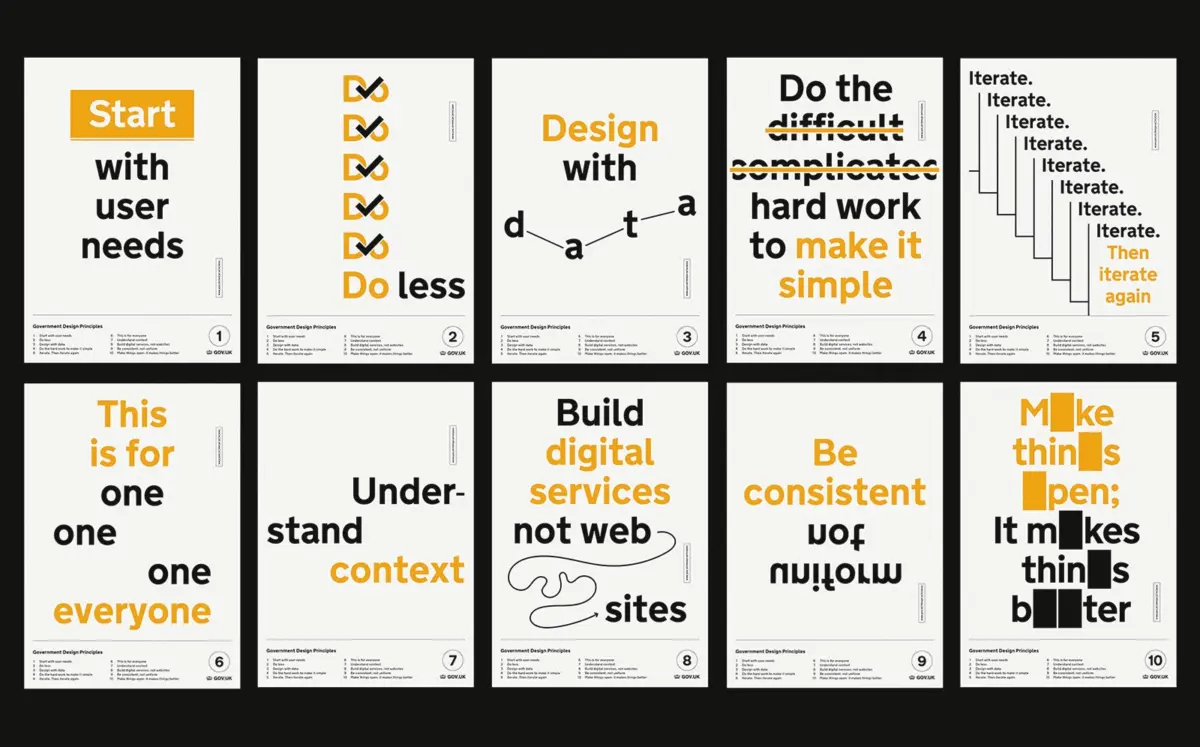
Rather than issuing restrictive manuals, organizations benefit from establishing concise, principle-based governance frameworks—similar to the streamlined design principles utilized by digital public services like GOV.UK. Management should publish clear core guidelines and rely on staff common sense for day-to-day execution, accepting that minor errors are an unavoidable cost of organizational evolution.
Adaptive Technological Rollout and Shadow AI
From an IT infrastructure perspective, centralized tech strategies can inadvertently stall progress. Overstretched IT departments often standardize on a single vendor suite, such as enterprise Copilot deployments, forcing all business units to conform to a uniform toolset regardless of specialized needs.
This rigid approach often falls short when applied to specialized workflows. For example, a user experience design team attempting to construct AI-driven research repositories or synthetic persona models may find broad enterprise tools inadequate for their technical requirements. When forced to seek approvals through central steering committees, teams frequently become trapped in bureaucratic delays, causing initial enthusiasm to wane.
When central IT infrastructure fails to support operational needs, employees inevitably seek workarounds. Just as the digital transformation era gave rise to "shadow IT"—where staff utilized unauthorized cloud storage services like Dropbox or Google Docs to bypass corporate restrictions—the current landscape is experiencing a surge in "shadow AI."
To complete their work efficiently, employees frequently bypass corporate IT, utilizing personal accounts on external platforms like ChatGPT or Claude via personal devices.
This unsanctioned use presents severe security risks. Sensitive corporate information is routinely uploaded to external platforms outside institutional control, leaving management with zero visibility or oversight. Ironically, heavy-handed restrictions intended to eliminate risk ultimately drive non-compliant behavior underground, compounding security vulnerabilities.
Clamping down with stricter prohibitions, domain blocking, and disciplinary threats rarely solves the underlying issue. Shadow AI is primarily a diagnostic indicator, highlighting precisely where official enterprise tools fall short of employee requirements.
Instead of attempting to stamp out unsanctioned tool usage through punitive measures, organizations should analyze the underlying causes. Engaging employees to understand why personal tools are being leveraged allows leadership to identify operational gaps and make informed decisions about future technology procurement.
While managing a diverse software stack introduces operational complexity, organizations must tolerate a degree of flexibility during early adoption stages. Permitting staff to explore various applications allows business units to identify tools best suited to their specific functions, establishing a foundation for structured consolidation once core use cases are established.
Navigating Cultural Shift in a High-Risk Environment
For leadership accustomed to top-down control, adopting an flexible, human-centered strategy can feel inherently risky. Centralized oversight offers a sense of security, encouraging management to enforce tight controls to prevent compliance breaches.
However, in a rapidly evolving technological landscape, the operational risk of moving too slowly due to institutional inertia far outweighs the managed risks of early experimentation.
Artificial intelligence adoption cannot succeed if treated merely as a software upgrade managed by IT departments. Just like digital transformation before it, AI integration is fundamentally an exercise in organizational change management, workplace culture, and human behavior. Organizations that prioritize supporting their workforce through this transition will be far better positioned to realize the genuine potential of artificial intelligence.