New York City is no stranger to captivating avian spectacles. From the citywide grief and fascination that followed the escape and eventual life of Flaco, the Eurasian eagle-owl, to the resilient red-tailed hawks that call urban skyscrapers home, Gotham’s concrete canyons frequently intersect with the natural world. Yet, even among the seasoned bird-watchers and urban naturalists who comb the city’s green spaces for rare sightings, a new late-night phenomenon has taken the Upper West Side by storm.
As dusk settles over Manhattan near the iconic border of Central Park, crowds of eager photographers, local residents, and curious bird enthusiasts have begun gathering night after night. The source of their fascination is not a rare architectural marvel or a passing celebrity, but a remarkably unexpected family of nesting barn owls.
According to ornithological experts, including researchers at the Cornell Lab of Ornithology, this urban family represents what is believed to be the first recorded instance of barn owls successfully nesting within the borough of Manhattan in modern history. The discovery has transformed a quiet residential stretch of the Upper West Side into an impromptu wildlife observation post, capturing the imagination of a city constantly surprised by the resilience of nature.
The unexpected residency first came to light in mid-September, when neighborhood residents began reporting strange, unfamiliar sounds echoing through the evening air. Described by locals as distinct, piercing screeches, the nocturnal noises initially baffled those living near West 75th Street and Central Park West. It was not until a sharp-eyed resident investigated the source of the commotion and reported the sightings that the true identity of the neighborhood’s newest inhabitants was confirmed.
Subsequent observations by local bird-watchers revealed an astonishing domestic scene: at least one adult barn owl alongside five active fledglings, making their home around a classic Manhattan water tower. Perched high above the bustling sidewalks and glowing streetlights, the raptors have chosen one of the city’s most densely populated districts as an unlikely nursery.
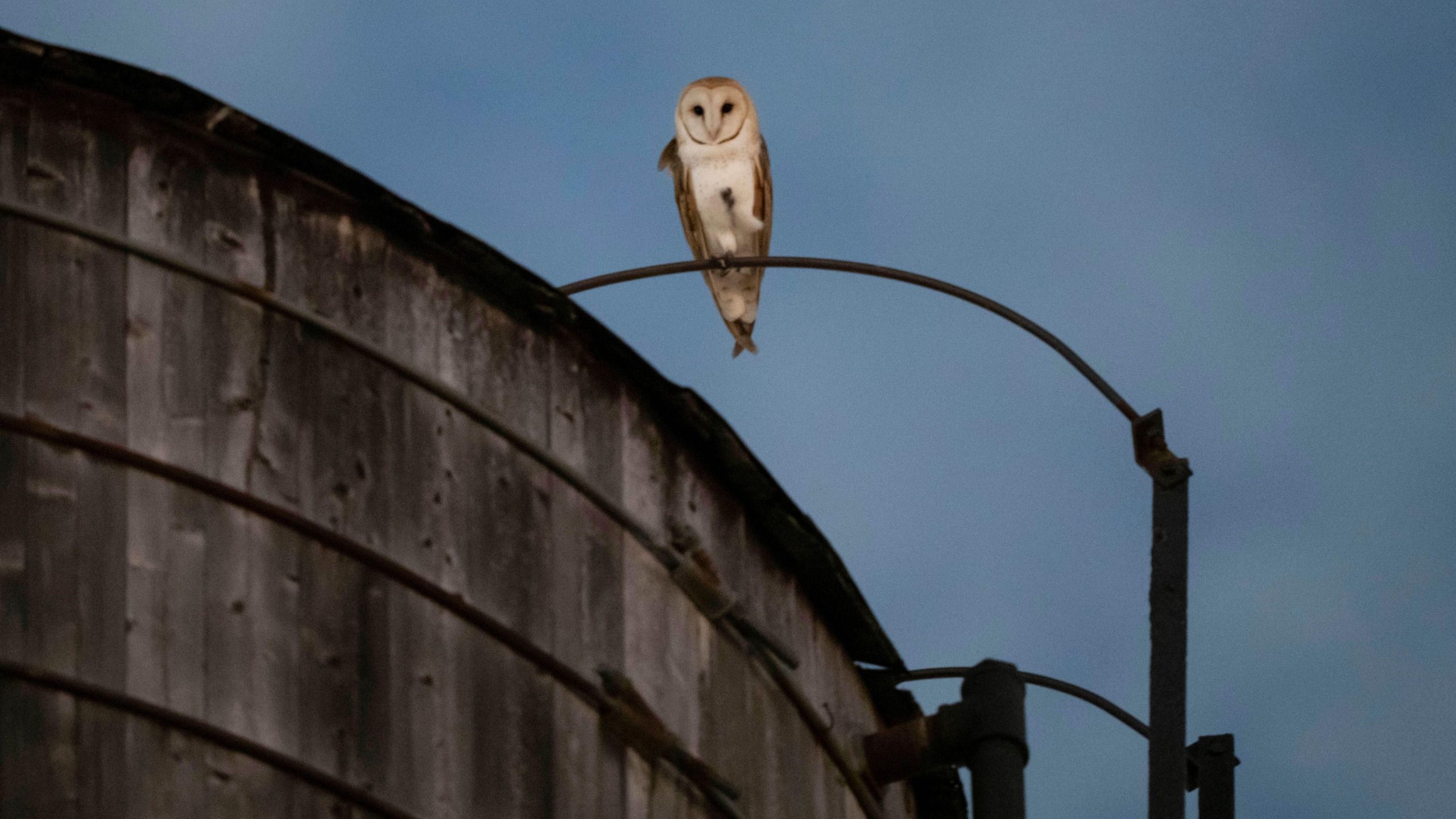
The presence of the barn owls in Manhattan is particularly extraordinary because New York City sits strictly on the outer periphery of the American barn owl’s standard geographical range. While sightings of other raptor species—such as eastern screech owls, barred owls, and northern saw-whet owls—are occasionally documented by the New York City Department of Parks and Recreation, barn owls remain exceedingly rare visitors to the five boroughs, let alone breeding residents within the tight confines of Manhattan.
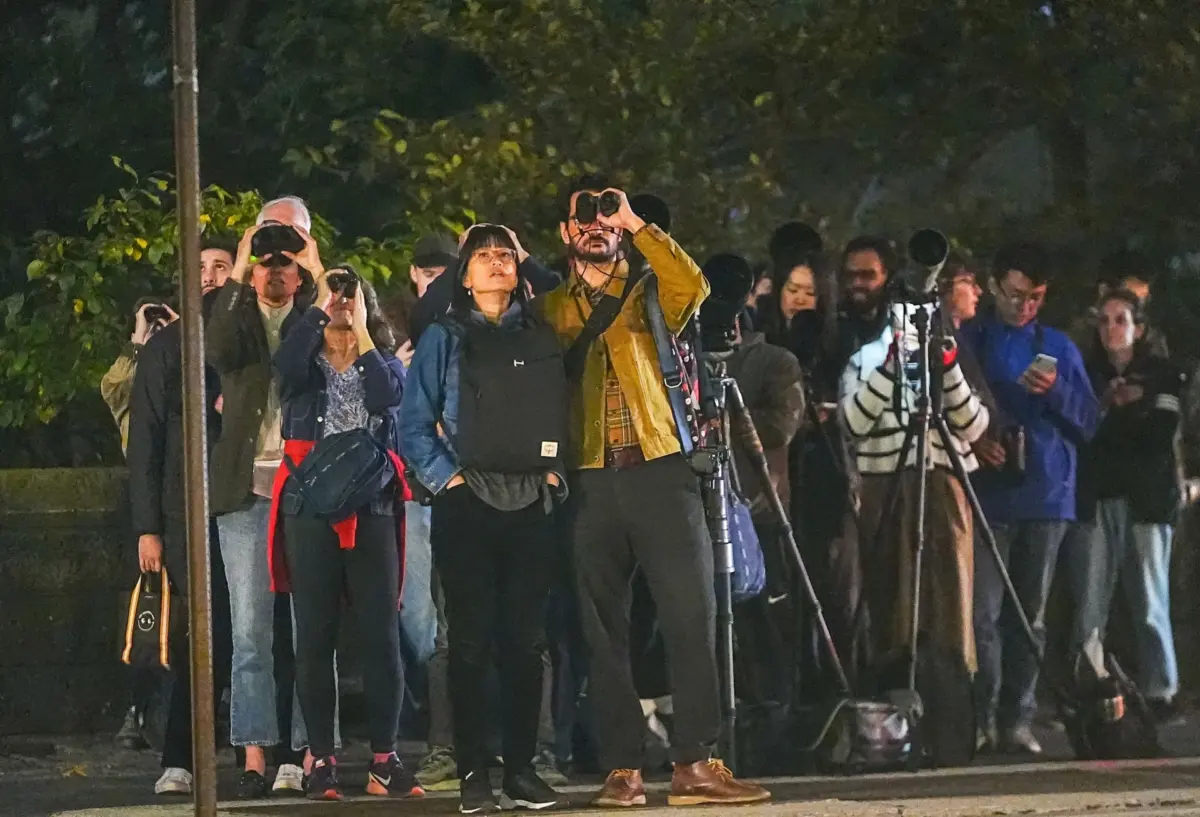
As word of the nesting family spread through local birding networks and social media channels, the owls achieved a swift and undeniable celebrity status. Every evening as the sun dips below the horizon, clusters of people armed with heavy camera gear and binoculars line the sidewalks. They crane their necks upward, hoping to catch a fleeting glimpse of the pale, heart-shaped faces of the barn owls cutting through the urban twilight against a backdrop of historic brownstones and modern high-rises.
However, this sudden surge of intense public interest has also raised significant concerns among wildlife conservationists and ethical nature photographers. The transition of a wild animal habitat into an urban tourist attraction carries inherent risks for the creatures themselves. Organizations dedicated to raptor welfare, including the International Owl Center, have issued urgent reminders regarding the importance of respectful and cautious observation.
Wildlife experts emphasize that while the temptation to get a closer look is strong, crowds and excessive noise can cause undue stress to nesting birds, particularly growing fledglings. Photographers and bird-watchers are strongly advised to maintain a generous distance from the nesting site, utilizing long telephoto lenses rather than attempting to close the physical gap. Wildlife ethics dictate that observers should always move slowly and quietly in the vicinity of owls, and under no circumstances should anyone attempt to pursue or chase the birds to secure a better angle.
Furthermore, conservation groups and Audubon advocates have issued strict warnings against the use of artificial illumination. Flash photography, in particular, poses a severe hazard to nocturnal raptors by temporarily destroying their specialized night vision, disrupting their natural behavioral patterns, and potentially compromising their ability to hunt and navigate safely in the dark.
As the barn owl family continues to draw nightly crowds, the phenomenon underscores the delicate balance between urban wildlife appreciation and conservation responsibility. For now, the historic Manhattan residents continue to navigate their towering urban ecosystem, serving as a reminder of the wild resilience that occasionally finds a foothold in the heart of the city.