While the name Victoria’s Secret might rarely be uttered in the same elite, hushed breaths as heritage houses like Ralph Lauren or Calvin Klein, a compelling case can certainly be made for the brand standing proudly as one of America’s greatest and most influential fashion exports. Despite the inherently skimpy nature of its core output—comprising bras, underwear, and other barely-there underpinnings—the retail giant casts an outsize, nearly hypnotic spell over consumers, while simultaneously shaping a distinct segment of the national sense of self. The sheer scale of its economic and cultural footprint is hard to ignore. Last year alone, Victoria’s Secret raked in an impressive $6.5 billion, marking a solid 5% increase year-over-year. Meanwhile, its tentpole marketing bonanza, the long-running Victoria’s Secret Fashion Show, effortlessly attracted an estimated 2.9 million pairs of eyeballs. While competing luxury and contemporary brands may frequently claim bragging rights for hosting the most exclusive, invite-only runway presentations, Victoria’s Secret can handily and definitively boast about hosting the absolute biggest.

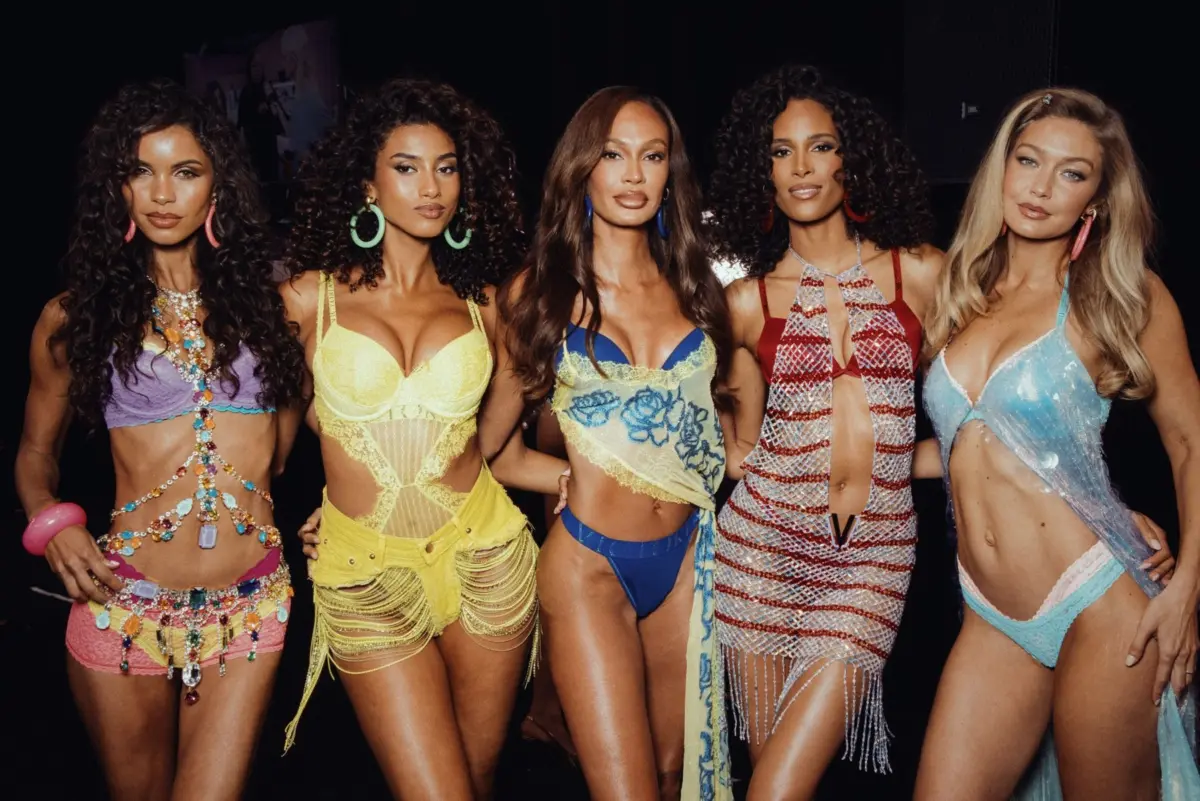
Now, the iconic Victoria’s Secret Fashion Show is back once again, marking a high-profile return that has officially touched down on the West Coast. This year’s massive, star-studded blowout takes place on the historic Sony lot in Los Angeles. Against this cinematic backdrop, an elite lineup of A-list models—featuring industry heavyweights such as Gigi Hadid, Paloma Elsesser, Adriana Lima, Candice Swanepoel, Ashley Graham, Joan Smalls, and many more—traipsed the long stretch of the runway. Their grand processions were punctuated by high-energy performances from a roster of au courant pop stars who collectively underscore the brand’s enduring cultural and financial might. The musical bill included powerhouse acts like Tate McRae, KATSEYe, Megan Moroney, and Megan Thee Stallion. And, of course, the evening would not have been complete without the triumphant return of the brand’s much-ballyhooed Fantasy Bra, a breathtaking, curve-hugging piece of luxury lingerie heavily encrusted with diamonds, revealed to the world on a VIP model.

Bringing this massive cultural machine into a modern era requires a delicate balancing act, one that falls squarely on the shoulders of leadership. "I think that we’re sort of this idea of the American dream, and certainly the American fantasy," says Adam Selman, who has held the vital titles of executive vice president and chief creative officer at Victoria’s Secret for around a year and a half. Under his creative purview, the brand has been forced to execute a remarkably tricky dance: striving to be sexy without ever crossing the line into prurient, remaining playful without slipping into the realm of the cheesy, and achieving widespread desirability without coming across as condescending to its diverse consumer base. "I think that along the brand’s journey, it’s done an amazing job of capturing that cultural relevancy," Selman continues, reflecting on the historical weight and pop-culture gravity of the label. "And the show really did that. It cut through. It still does that today as being one of the biggest fashion shows in the world and something that millions and millions of people tune into."

Selman’s personal history with the brand adds an interesting layer of perspective to his current professional mandate. He vividly recalls his mother actively averting his eyes from the glowing Victoria’s Secret storefronts when he was growing up outside Waco, Texas. He remembers later tagging along simply to accompany his female friends when they would make their routine pilgrimages to one of its bustling mall outposts. Selman, whose impressive industry résumé includes previous collaborations with the influential costume designer Zaldy as well as global megastar Rihanna on her own groundbreaking lingerie line, Fenty, was officially named executive vice president and chief creative officer last year. Under his tenure, he notes, his primary goal has been to keep "the joy of the brand" front and center, while carefully maintaining a healthy, self-aware sense of humor about its history. "The brand has its own kitschy past and its own sense of humor—everything with a wink and a nod," he observes. "And I love that."

It is certainly no secret that Victoria’s Secret has long been a deeply divisive cultural touchstone—viewed by some critics as inherently misogynistic, while celebrated by others as a source of old-fashioned, harmless fun. To navigate this polarized landscape, Selman has successfully introduced an overarching layer of camp, lending the brand’s traditional boudoir-romp ethos a sophisticated layer of knowingness and self-awareness. "I don’t want to dress women up like dolls or in costumes," Selman emphasizes, clarifying his design philosophy for the modern era. "I want it to be fun, and I want it to be serious at the same time, but always with the utmost respect for women."

This philosophy underpins the broader corporate and creative evolution currently taking place behind the scenes at the company’s headquarters. For Selman and his team, modernizing the brand does not require erasing its storied past or abandoning the core visual language that made it a household name across the globe. "We don’t have to lose what the brand inherently stands for without being a modern, inclusive version of that," he adds, offering a clear vision for the future. "The two can exist together."

Ahead of the big day, as the finishing touches were being placed on the elaborate sets and the final fittings were locked in for the Los Angeles extravaganza, we sent our photographer behind the scenes to capture the intricate, high-stakes backstage prep that goes into producing one of the absolute biggest and most-watched fashion shows in the entire world.