More than fifty years after the original Stanford psychology department basement became a symbol of academic overreach and ethical failure, the infamous social experiment is returning to the spotlight. "The New Stanford Prison Experiment," a new series debuting on October 21 on Netflix, attempts to do what Dr. Philip Zimbardo’s 1971 study failed to accomplish safely: examine the dynamics of power, conformity, and institutional environments under rigorous modern oversight.
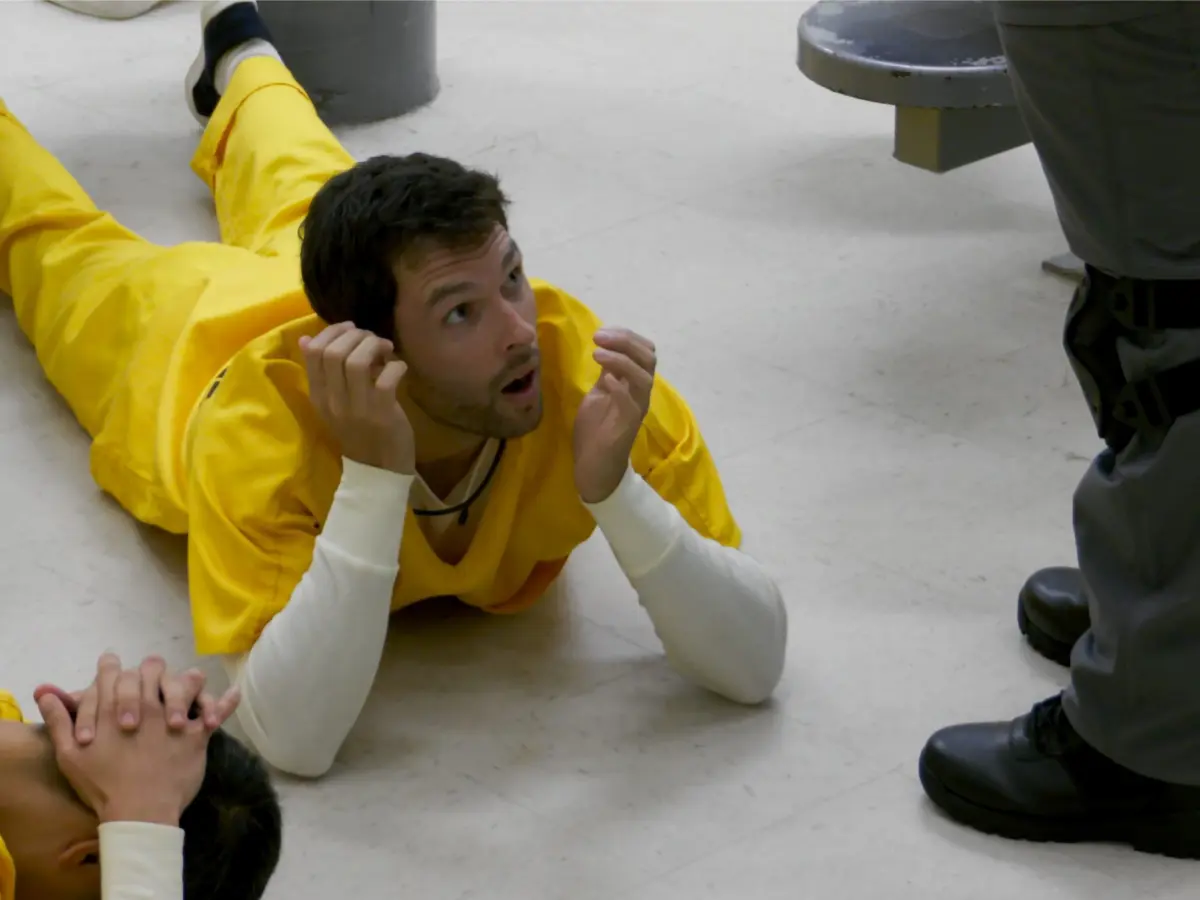
Executive produced by Jane Lipsitz and Dan Cutforth through their Alfred Street Industries production company—best known for hit unscripted programs like "Top Chef" and "Project Runway"—the series transports thirty diverse participants into a decommissioned section of a real working prison, the Adult Detention Center in Cherokee County, Georgia. Over the course of two weeks, the participants are dropped into a simulated prison environment, with eight assigned as guards (divided into separate day and night shift teams) and 22 assigned as prisoners.
The original 1971 study, funded by the U.S. Office of Naval Research, recruited 24 male college students who passed psychological screenings and possessed no criminal records or medical conditions. Participants were paid $15 a day—equivalent to about $124.79 in 2026—and were randomly assigned to the roles of guards or prisoners. The psychology department building at Stanford was hastily transformed into a mock prison with small cells, a corridor acting as a prison yard, and a closet designated for solitary confinement. To foster dehumanization, participants were referred to only by the numbers sewn onto their uniforms, and guards were instructed to maintain order by any means necessary.

That environment quickly devolved. By the second day, inmates staged a rebellion by barricading themselves inside their cells with their beds. The guards responded by spraying them with fire extinguishers and forcing them to strip and sleep on cold concrete floors. As guards escalated their punishments and multiple prisoners suffered severe mental breakdowns, the study was abruptly terminated on its sixth day. Today, the original experiment is widely condemned as a colossal ethical failure due to inadequate participant safeguards, vague parameters, poor oversight, and a glaring conflict of interest: Dr. Philip Zimbardo himself served as the prison’s superintendent.
Attempting a project with such a troubled legacy understandably gave the production team pause. Taking on a premise with a history of catastrophic failure is a nerve-wracking position for any filmmaker, yet the core questions it raises remain deeply relevant to modern society. The producers admit that during production, there were moments when they genuinely wondered if their own version would collapse on the exact same day the original study did.
Despite these anxieties, "The New Stanford Prison Experiment" was constructed with extensive safeguards designed to protect participants and ensure the situation never spiraled out of control. The production implemented rigorous background checks and thorough psychological testing for everyone involved, along with informed consent agreements, 24/7 on-call medics and psychologists, and confidential confessional interviews. Participants were even given a safe word—"pineapple"—if they felt they needed to leave or speak immediately with a therapist or producer.
Unlike the isolated academic setting of the original study, the Netflix production funded a presence of off-duty correctional professionals on-site to handle any emergencies. This included Major Boughner, who served as commander of both the active side of the correctional facility and the experimental pod. Furthermore, an independent panel of experts observed the inmates and guards continuously, advising the production on ethical boundaries. This panel included Alison Wood Brooks, a behavioral scientist at Harvard Business School; Michael Cantrell, a former federal corrections officer; and Trymaine Lee, a Pulitzer Prize-winning journalist.

Demographically and procedurally, the new iteration differs sharply from its predecessor. While the 1971 study was composed almost entirely of white male college students from similar economic backgrounds, the Netflix series features participants from a wide variety of races, socioeconomic backgrounds, and life experiences, including three women. To eliminate outside influence and preserve authenticity, the production crew remained entirely outside the pod, capturing all footage via remote-controlled cameras without crew members present in the living spaces.
The participants were paid for their time, though the producers chose not to disclose exact compensation figures. Lipsitz noted that they deliberately avoided paying amounts that would incentivize participation purely for financial gain, as that would undermine the integrity of the behavioral observations. Surprisingly, despite the lack of a grand cash prize or romantic matchmaking elements, thousands expressed interest. The producers found that applicants were driven by a desire to test their own integrity, morality, and resilience under extreme pressure, or simply to see how they would cope with fourteen days of institutional confinement and prison food.
The psychological weight of the environment established an uneasy tone from the very beginning. Upon entering the facility, the 22 inmates were immediately greeted by the loud yelling and heckling of real prisoners housed on the other side of the facility walls. That ambient hostility was entirely authentic, and the producers note that it had an immediate and unsettling effect on the participants. Hearing real inmates scream made it clear to the group that the simulation was not a trivial exercise, serving as a contributing factor for some individuals who ultimately chose to leave.
Six participants ultimately dropped out after finding the intensity of the environment overwhelming, though not all of those departures made the final edit. In another departure from the original study, the Netflix series permitted individuals with past criminal histories to participate, provided they met strict psychological criteria. Among them was "Scary" Larry Foy, who estimated he had spent over 300 days in jail and shared stories of past violent conflicts with his cellmate. While his inclusion raised eyebrows, producers defended the decision by pointing to his extensive rehabilitation and current work as a reform advocate, emphasizing that thorough vetting ensured no active threats were introduced into the population.

Without revealing too much of the narrative arc, the experiment takes a distinctly dark turn on day six—the exact day the 1971 study was shut down. One guard shift responds to a potential uprising by imposing a form of punishment deemed extreme even by the opposing guard team. From there, the production introduces several structured interventions, ranging from reasserting the hierarchy to a striking role-reversal that upends group dynamics. However, the producers maintain that the situation remained safe, characterizing the intensity as primarily emotional rather than physical, with professional guards never needing to intervene directly.
Reflecting on the conclusion of the series, Lipsitz and Cutforth express satisfaction with what the project ultimately revealed about human behavior and decision-making under duress. While the original experiment was framed around testing whether power inherently corrupts, the producers suggest that the new iteration proves that may have been the wrong question to ask altogether. By opening up the process to a broader cross-section of society and applying modern ethical frameworks, the series leaves room for viewers to draw their own conclusions about human nature when placed behind bars.