Across the corporate landscape, the current rush to roll out artificial intelligence is increasingly taking on the characteristics of a farce rather than a coherent strategy. To outside observers, the implementation strategies deployed by management teams can appear almost incomprehensibly flawed. Yet, despite the immense investments poured into advanced tools, business leadership continues to repeat structural and operational mistakes that have already been documented in detail over the past decade.
Digital strategy expert Paul Boag highlights that the current struggles with artificial intelligence mirror the exact missteps organizations made during the height of the digital transformation era. In 2014, Boag authored Digital Adaptation, a book published by Smashing Magazine that analyzed how institutions were mismanaging digital transformation and outlined how they should adapt their operational structures instead. A decade later, the structural parallels between the early days of corporate web adoption and today’s AI gold rush are remarkably striking.
According to Boag, the single largest mistake organizations made during digital transformation—and continue to make with AI today—is framing a fundamental organizational shift purely as a technological challenge.
It’s About People, Not Technology
While both digital transformation and artificial intelligence rely on technological innovation, technical deployment represents only the visible tip of a much larger organizational iceberg.
During the height of digital transformation, enterprise IT departments routinely focused on rolling out content management systems (CMS), customer relationship management (CRM) platforms, and internal intranets. On the external side, organizations deployed new websites, mobile applications, and early personalization features. However, leadership spent minimal effort understanding how staff and customers would actually interact with these platforms. Internal systems remained convoluted and difficult to navigate, while external customers frequently ignored the new features or demanded entirely different capabilities.
A nearly identical pattern is playing out with artificial intelligence. Senior management, eager to capitalize on the surrounding market hype, frequently instructs IT teams to purchase and deploy company-wide software licenses, such as Microsoft Copilot Studio, and treats the implementation process as complete. Beyond a brief, generic organization-wide training session, employees are provided with little context or guidance.
Just as they were during the digital transformation era, staff are left bewildered by the new software, operating under immense top-down pressure to adopt the tools and generate immediate operational results. Crucially, organizations must realize that AI adoption is as much a cultural shift as it is a technical deployment, carrying severe implications for workforce dynamics and employee psychological well-being.
The current situation is arguably more precarious than past digital shifts because employees today harbor deep anxieties about job security. Workers read the same news headlines as corporate leadership regarding potential layoffs driven by automation, and general assurances from executive management do little to alleviate those concerns.
Why Would Staff Want To Adopt AI?
From the perspective of an individual employee, artificial intelligence often presents very little direct personal benefit, particularly when paired with implicit fears that management intends to use the technology to reduce headcount.
The primary driver behind executive enthusiasm for AI is enhanced productivity—the capability to produce more output in less time. However, this efficiency gain rarely accrues to the worker. Under standard corporate structures, employees are still required to work their full contractual hours; the only functional change is an expectation to process higher volumes of work within the same timeframe. Because employees receive neither reduced working hours nor higher compensation in exchange for using these tools, they have little practical incentive to embrace the technology.
Before demanding that staff integrate AI into their daily workflows, leadership must address how they intend to genuinely motivate their workforce.
One effective entry point is identifying the specific administrative tasks that employees find most tedious or frustrating, and demonstrating how AI can perform those duties faster and with less effort. When artificial intelligence is presented as a concrete tool to improve daily working conditions rather than a mechanism to raise output quotas, staff receptivity increases significantly.
Beyond improving daily workflows, institutions must consider offering tangible incentives for adoption. These can include linking AI integration to accelerated career progression, financial compensation, or offering reduced working hours for those who optimize their departmental processes.
Staff Need Time And Support To Adopt AI
Integrating artificial intelligence into daily routines is a complex undertaking that requires employees to dismantle working practices built over years, or even decades. Overhauling this entrenched procedural knowledge places a severe cognitive load on workers—a challenge that requires dedicated time and resources to resolve.
In reality, most corporate employees are already overextended, struggling simply to manage their existing daily workloads. They lack the discretionary time required to sit down, learn unfamiliar software applications, and figure out how to naturally incorporate those tools into their established processes.
Overcoming this barrier requires far more than dispatching staff to a single, brief training course. Achieving meaningful capability demands structured experimentation and tailored guidance. At a minimum, organizations must provide role-specific training designed around actual daily tasks, rather than relying on high-level administrative overviews.
To achieve sustained results, enterprises need to build comprehensive training programs tailored to how distinct departments utilize technology within their specific functional boundaries. Workers require dedicated time away from standard duties to experiment with tools, make mistakes, and determine optimal workflows.
Furthermore, formal top-down training has inherent limitations. Practical support often originates from peer networks rather than administrative directives. Organizations should identify and empower early adopters—enthusiastic employees who are often already experimenting with AI tools on their own initiative. By bringing these internal champions together, giving them dedicated space to share working methods, and encouraging peer-led demonstrations, organizations can leverage social proof to drive adoption naturally.
This approach yielded measurable results during the digital transformation era. Internal showcases where employees presented practical applications directly to their peers proved significantly more effective at driving systemic adoption than executive memos or mandatory corporate mandates. Employees are far more inclined to adopt a new workflow when they observe colleagues in identical roles demonstrating practical success.
It Needs To Be Safe To Fail
A major barrier to organizational change is the prevalence of corporate fear cultures, where operational errors are viewed as evidence of personal failure or professional incompetence. Because mastering new tools inevitably involves a learning curve marked by initial mistakes, strict punitive environments actively discourage innovation.
This phenomenon was widespread during digital transformation. Senior executives routinely demanded rapid digital adoption yet grew frustrated when progress stalled. Management failed to realize they were issuing conflicting mandates: demanding radical change while continuing to enforce strict key performance indicators (KPIs) and penalizing minor errors in annual performance reviews. Deprived of a safe environment to learn, staff defaulted to traditional, low-risk methods.
Similar friction is evident in modern AI rollouts. In extreme cases, staff are reprimanded for high software token usage or minor technical oversights shortly after receiving broad instructions to adopt AI. When governance over-emphasizes restrictions and penalties, workers conclude that utilizing the technology carries unnecessary personal risk, making adherence to legacy workflows the safest choice.
If executive management genuinely expects employees to adopt AI, they must cultivate psychological safety. This requires actively adjusting performance metrics during transition periods, altering review criteria, and temporarily relaxing strict operational governance while staff build familiarity with the systems.
Handle Governance With Care
Establishing operational boundaries is necessary when introducing new technology, but enterprise governance is frequently executed in a manner that harms adoption.

During the digital transformation era, organizational policies typically swung between two unhelpful extremes: a total lack of guidance, or an oppressive web of strict bureaucracy that stifled innovation entirely. AI governance is currently falling into the same trap. While clear guardrails help employees understand security parameters and professional expectations, exhaustive policy manuals containing dozens of restrictive guidelines generate confusion and fear.
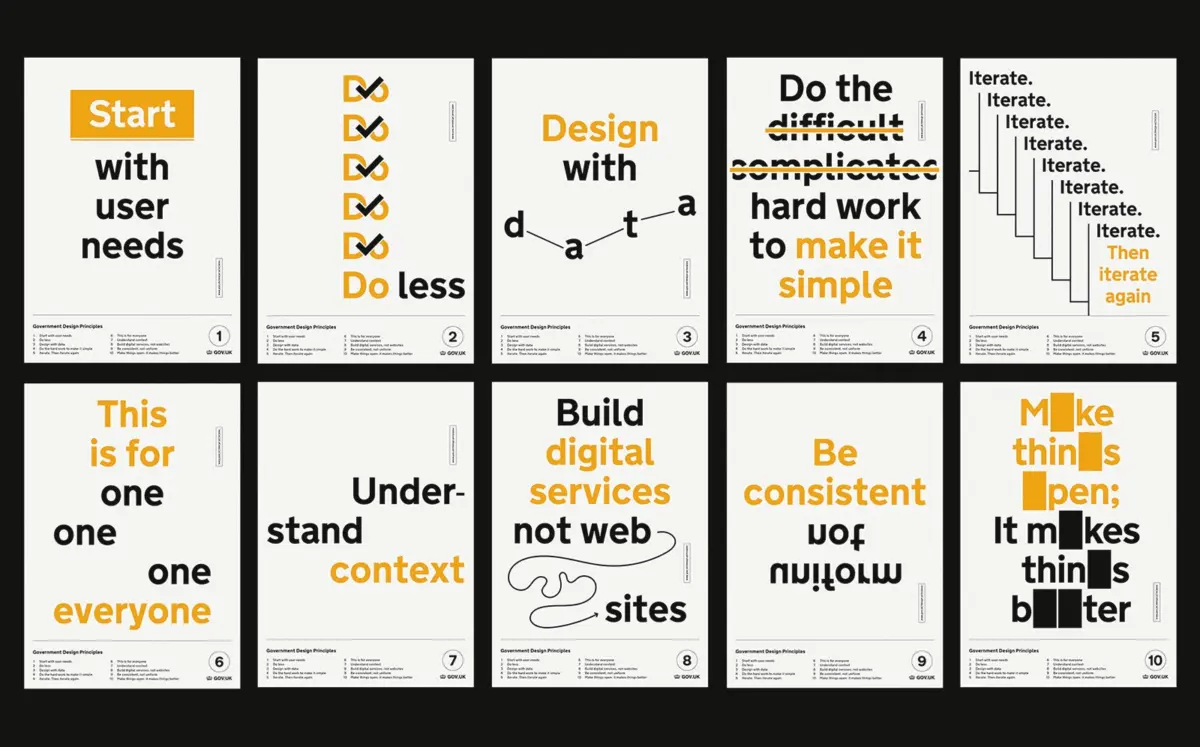
Rather than issuing long lists of prohibitions, institutions should establish concise, principle-based governance frameworks that can be easily digested and remembered—similar to the approach taken by the UK government’s design principles. Beyond a clear set of fundamental guidelines, leadership must trust their staff to apply basic professional common sense.
Inevitably, minor mistakes will occur during the adoption phase. Accepting this operational friction as a necessary cost of change allows organizations to design rollout strategies that contain risk without extinguishing workforce initiative.
Adaptive Technological Rollout
From an IT infrastructure perspective, rigid technology rollouts present a significant obstacle to long-term success. Overburdened IT departments frequently mandate a single, corporate-wide software tool without consulting the frontline employees who must use it. Deviating from the standardized stack often requires navigating complex approval processes managed by slow-moving steering committees, severely delaying technological adaptation.
Today, many enterprise IT departments elect to standardise entirely on generic tools like Copilot, assuming the deployment meets all departmental requirements. In practice, generic solutions often fail to satisfy specialized operational needs.
For example, a user experience (UX) team attempting to build an AI-powered research repository and dynamic customer personas may find that standardized corporate AI offerings lack the specific technical capabilities needed to execute the project. When forced to apply for exceptions through enterprise governance boards, the resulting bureaucratic delays routinely erode employee enthusiasm, stalling promising initiatives before they begin.
When official corporate infrastructure fails to meet operational needs, employees frequently bypass official channels entirely—replicating the "shadow IT" trend seen during the digital transformation era, where workers turned to unsanctioned personal cloud storage services to complete daily tasks. Today, this manifests as "shadow AI," with employees utilizing personal ChatGPT or Claude accounts on personal hardware to execute company work.
Shadow AI exposes organizations to severe security vulnerabilities, as sensitive proprietary data is processed through personal applications completely outside enterprise visibility or control. Attempting to suppress shadow AI purely through punitive measures, network blocks, or disciplinary warnings rarely succeeds, and typically drives the behavior deeper underground.
Crucially, leadership should view shadow AI as a diagnostic signal rather than merely a compliance violation. Unsanctioned tool usage highlights precisely where official enterprise offerings are failing to support daily operational tasks. Instead of attempting to ban the practice, managers should engage directly with staff to understand why personal tools are being used, using those insights to refine and guide future corporate software procurement.
Allowing a degree of flexibility in software choices during the early stages of adoption enables departments to identify tools best suited to their specific duties. As practical organizational needs become clear over time, centralized IT can gradually standardize the software landscape around proven, real-world use cases.
A Dangerous Time
For risk-averse institutions, granting flexibility and relaxing rigid controls can feel inherently unsafe. Executive leadership naturally seeks to centralize administrative authority to minimize operational exposure. However, navigating major technological transitions involves unavoidable risk, and moving too slowly often presents a far greater long-term threat to competitiveness than moving too fast.
The most critical mistake an organization can make is treating artificial intelligence strictly as a software installation project while ignoring the human element. Successful AI integration is ultimately a change management challenge centered on organizational culture, worker motivation, and workplace trust. Until business leaders shift their primary focus from technology procurement to supporting the people using the tools, enterprise AI investments will continue to fall short of expectations.