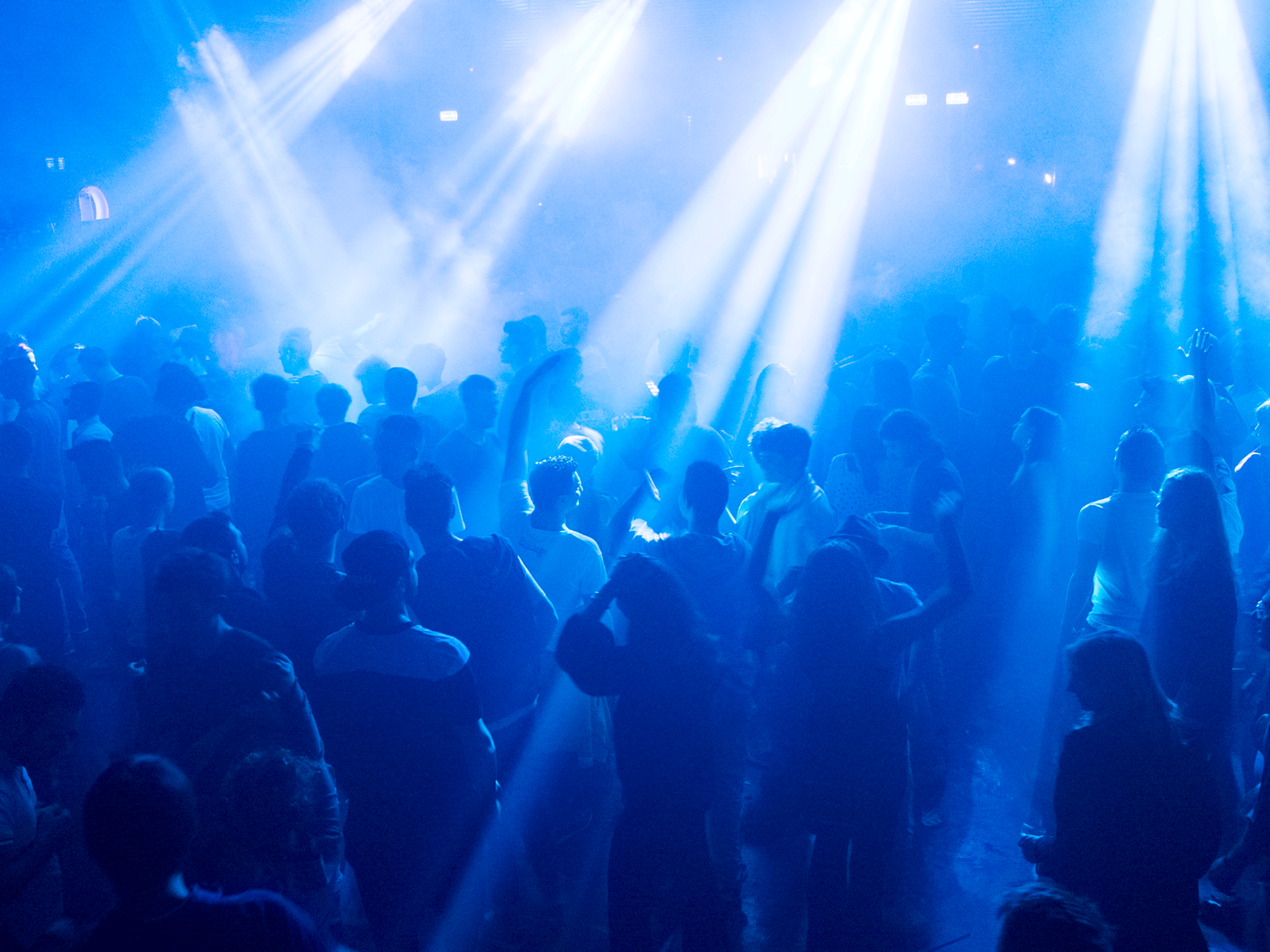
Italian photographer Giovanna Silva has spent years training her lens on the ephemeral, high-energy spaces of nocturnal leisure. What began as an academic commission for the Venice Architecture Biennale has evolved into a comprehensive examination of club culture through her book, NIGHTSWIMMING: Discotheques from the 1960s to the Present. In a reflective essay shared with designboom, Silva shares her journey of documenting the changing physical landscape of nightlife—tracing the trajectory from grand Italian discotheques of the late 20th century to the raw, improvised dance floors of contemporary European capitals.
The Genesis of an Unconventional Architectural Study
Silva’s entry into the world of nightlife architecture was entirely accidental. When the Monditalia section of the 2014 Venice Architecture Biennale commissioned her to document the architecture of Italian nightlife, she found herself stepping into a domain with which she had almost no personal familiarity.
"I must admit this was a completely unknown subject to me, which I am just beginning to get familiar with now, when the exhibition in Venice has closed and our project has become a book," Silva reflects.
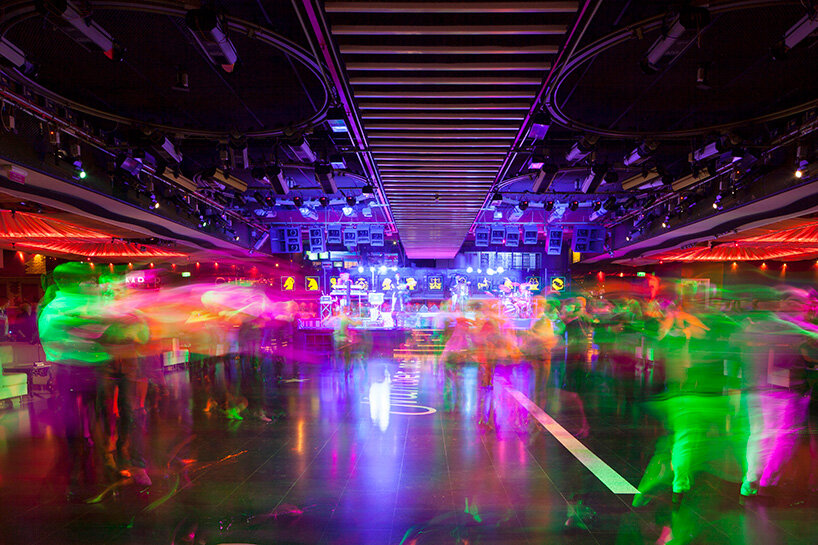
This initial unfamiliarity turned out to be an asset. Operating without preconceived notions or nostalgic attachments, Silva approached the spaces with an unconventional and detached eye. However, the sheer fluidity of the subject matter demanded a rigorous approach. Unlike static historical monuments or residential buildings, discotheques are hyper-adaptive spaces. They are engineered to constantly transform themselves to keep pace with shifting fashion trends, evolving musical genres, and rapid advancements in lighting and sound technology.
Faced with this constant state of flux, Silva and her collaborators began by assembling an archive of existing literature on club architecture. Because many of the historical venues had already been altered, remodeled, or demolished, published books served as critical visual windows into the past. More importantly, this archival research populated her project with the human agents of the night: the architects, critics, art directors, DJs, and club owners whom she describes as the "night swimmers."
Expanding the Scope: From Italy to the Urban Core of Europe
After mapping the architectural landscape of Italy—highlighting legendary establishments such as Number One in Cortefranca and Cocoricò in Riccione—the project expanded to encompass four major European cultural hubs: Berlin, London, Paris, and Barcelona.
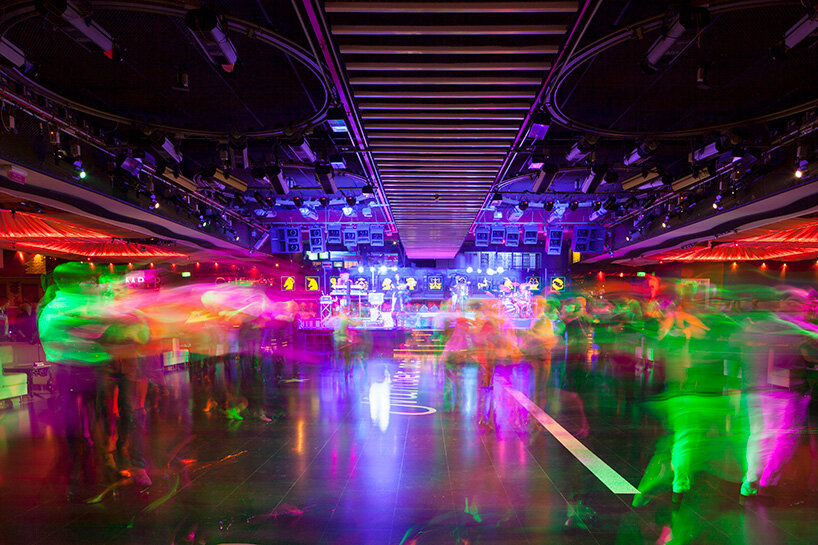
Selecting locations across these sprawling metropolitan areas proved to be a challenging editorial task. While the initial research presented at the Venice Biennale required exhaustive cataloging, the subsequent publication demanded selectivity. Silva focused on identifying venues that held profound social and musical significance while possessing distinct architectural merit.
Through her lens, these discotheques tell a story about how society perceives the night. Silva notes a distinct contemporary shift: increasingly, spaces that were never originally intended to function as nightclubs are being occupied, adapted, and temporarily transformed into party venues. This phenomenon acts as a modern, legalized echo of the rave culture that emerged during the 1990s.
By capturing these spaces both empty and full, Silva’s photography highlights a fascinating spatial paradox. When filled with revelers, the dense crowds and shifting bodies effectively erase the underlying architecture, temporarily rewriting the physical dimensions of the room through collective movement.
The Sensory Markers of the Night: Smell and Light
Photographing these venues presented unique sensory experiences, particularly because Silva typically accessed the spaces during daylight hours, long after the crowds had dispersed and the music had stopped.
Entering a silent, empty club brought an immediate sensory trigger—an olfactory constant that acted like a spatial Proustian madeleine. Whether it was the lingering chemical trace of intensive cleaning routines or the composite aroma of the night itself—a lingering blend of human presence, stale smoke, and industrial detergents—the scent remained remarkably uniform across different cities and decades.
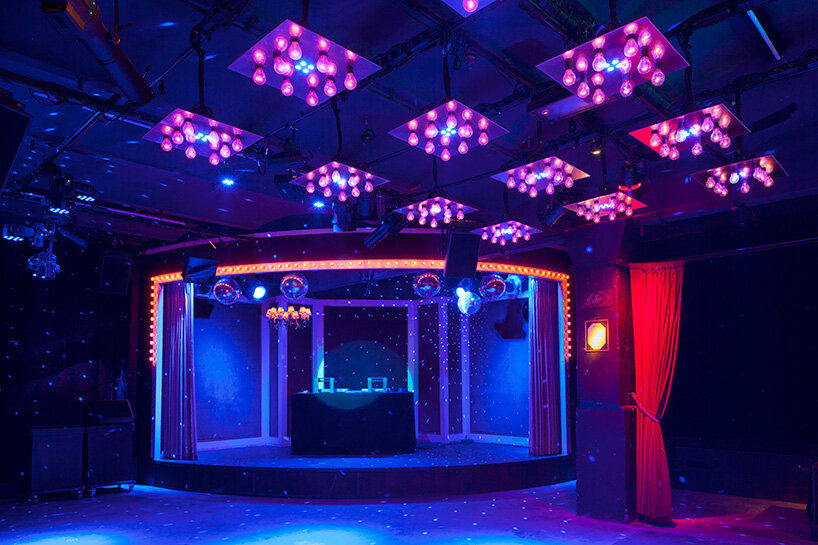
Beyond smell, however, light reigns supreme in the architecture of the night. Clubs, as Silva notes, are frequently compared to old ladies who should never be seen without their makeup. Light provides that transformative cosmetic layer. With the simple flick of a switch, illumination can completely alter the geometry, mood, and perception of a space.
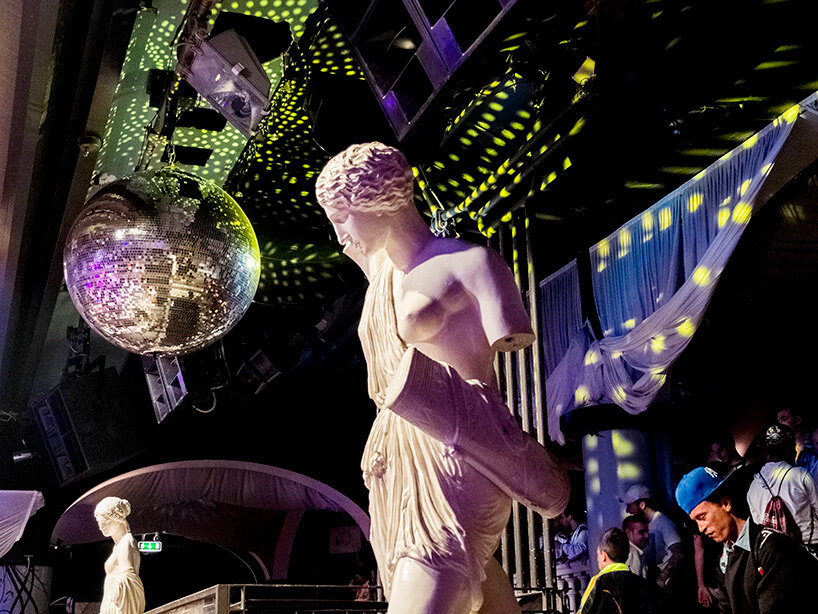
To capture the raw architecture beneath the theatricality, Silva occasionally shot using stark white light. This clinical, unsparing illumination flattened the environment, stripping away the hazy illusions usually cast by lasers and strobe systems. Yet, through this detached, objective documentation, the spaces slowly revealed their hidden logic. What began as an academic exercise in architectural taxonomy gradually transformed into a familiar, deeply understood landscape, shaped by the patience of those who guided her through the hidden mechanics of nocturnal culture.
Born in 1980 and based in Milan, Silva has built a diverse career bridging photography, publishing, and architectural theory. Her extensive bibliography features titles exploring urban environments, conflict zones, and shifting cultural landscapes across the globe. Alongside her photographic work, she is the founder of Humboldt Books and San Rocco Magazine, and she teaches at NABA Milan and ISIA Urbino.
Silva’s ongoing exploration of discotheques forms part of designboom’s SPECTATOR AND SPECTACLE chapter, presented in partnership with SolidNature. The thematic series investigates how moments of wonder are constructed within contemporary culture, turning passive onlookers into active participants and disrupting the predictable routines of everyday life.