Beneath the bright blue sky of a crisp autumn day in Regent’s Park, the white tents of Frieze London have risen once again, welcoming an influx of collectors, curators, and cultural figures for the UK’s most important contemporary art fair. On opening day, the VIP preview was so densely packed with invite-only guests that it prompted a familiar question among attendees: where had so many influential figures been hiding for the rest of the year?
For months, the narrative surrounding the global art market has been one of caution and correction. Observers have repeatedly warned that the market is not what it once was, pointing to macroeconomic headwinds and shifting buyer habits. Yet, the vibrant atmosphere inside the Regent’s Park tents suggests that resilience, curiosity, and capital are still very much alive. Whether the fair represents a genuine turning point for the broader market or simply an unmatched opportunity for elite people-watching, the opening days have injected a much-needed dose of optimism into the UK capital’s cultural season.
At one end of the park, Frieze Masters—the dedicated section of the fair showcasing works created before the year 2000—offers a sprawling and fascinating narrative of human craft, history, and natural evolution. Stepping inside reveals a diverse array of exceptional artifacts that stretch far beyond traditional fine art, including meteorite fragments, ancient dinosaur skulls, and historic weaponry displayed alongside masterworks of painting and sculpture.
Emanuela Tarizzo, the director of Frieze Masters, notes that the section aims to capture a grander scale of history. Explaining the curatorial vision, Tarizzo notes that the displays tell the story of the universe rather than just focusing exclusively on mankind and human creativity. She points out that fair organizers are seeing a growing number of people collecting art alongside natural history specimens, reflecting a sophisticated mode of collecting that dates back at least 500 years to the traditional Kunstkammer, or cabinet of curiosities. According to Tarizzo, it is particularly rewarding to see this historic approach to collecting resonate so strongly with modern generations today.
What makes Frieze Masters truly unique, and what has been masterfully realized in this year’s edition, is the savvy curatorial approach underpinning the commercial booths. At the booth of rare books dealer Daniel Crouch, visitors are met with an extraordinary and esoteric single lot: a set of 10,000 satirical prints drawn from the personal collection of the late British restaurateur Andrew Edmunds. Shown alongside an authentic 17th-century French printing press, the comprehensive archive is priced at a modest £45,000, roughly equating to €53,000.
Nearby, historic and contemporary dialogues are forged by hanging works across centuries. A 17th-century still life by Jan Brueghel the Elder—which commanded early sales at approximately £5 million, or about €5.9 million—hangs in compelling proximity to a contemporary painting by rising British star painter Flora Yukhnovich. This thoughtful juxtaposition offers fairgoers a rare chance to view both historical mastery and modern technique in a completely new light.
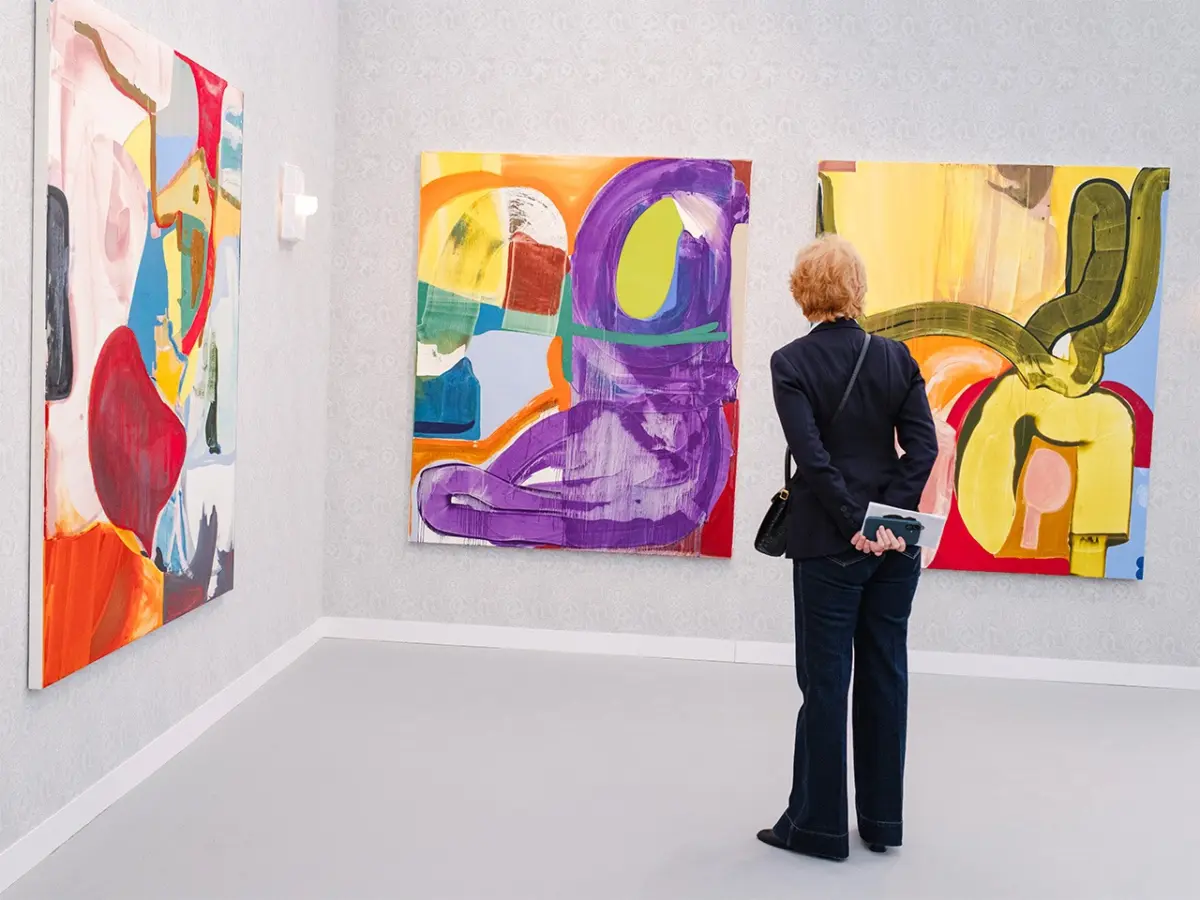
Cross the park to Frieze London itself, and the focus shifts sharply toward contemporary works produced after the year 2000. While many booths are occupied by established blue-chip galleries and familiar market stalwarts, the fair continues to serve as an essential launching pad and a vital international North Star for galleries making their debut.
For Jennifer Carvalho, founder of the New York-based Carvalho gallery, participating in the fair for the first time has been an illuminating experience. Describing her long-held admiration for the event, Carvalho notes that Frieze London has consistently remained her absolute favorite art fair internationally for as long as she has worked in the industry.
For its inaugural outing, Carvalho gallery presented a thoughtful selection of new works by artists Corinna Gosmaro, Guillaume Linard Osorio, and Rachel Mica Weiss. The presentation features a dynamic mix of sculptures, paintings, and immersive installations utilizing unconventional and tactile materials, including marble, delicate thread, and industrial polycarbonate.
Carvalho expressed pleasant surprise at the immediate commercial response, particularly noting the swift sale of two works by Rachel Mica Weiss during the very first hour of the fair. Each piece commanded £22,000, or roughly €26,000, adding to momentum for an artist who already maintains a dedicated waitlist in the United States. Admitting she did not necessarily expect such an immediate uptake, Carvalho reflected that while she has always found the US market to be exceptionally resilient, the London edition has proven that the strongest and most compelling works will inevitably find their dedicated collectors regardless of geography.
This peppy sentiment and sense of international resilience is mirrored by the robust energy pulsing across the entire fairgrounds this year, supported by remarkably healthy sales sheets reported by participating galleries. Major institutional and private transactions announced during the opening days include the high-profile sale of three distinct paintings by Alice Neel for a combined total of $5 million, equating to approximately €4.5 million. Additionally, collectors snapped up a striking new painting by Michaël Borremans for $1.5 million, roughly €1.3 million, alongside a museum-quality second-century mottled red sandstone sculpture that changed hands for just over $1 million, or approximately €890,000.
Ultimately, the early success of Frieze London and Frieze Masters validates the core belief that great works will always command the attention of serious buyers. By bringing their absolute highest-quality inventory—whether that entails a delicate bronze sculpture by William Turnbull or a prehistoric sabre-cat skull—galleries have given collectors compelling reasons to open their wallets. The bright blue skies that greeted visitors at Regent’s Park may well have been an auspicious portent, proving that Frieze is once again painting the global art market in a decidedly positive light.