Italian photographer Giovanna Silva has spent years investigating the physical spaces that shelter human nocturnal behavior, charting the evolution of club culture from the engineered discotheques of mid-century Italy to the improvised, transient dance floors of contemporary European capitals. Her ongoing exploration of nightlife architecture—originated for the 2014 Venice Architecture Biennale and later expanded into a book titled NIGHTSWIMMING: Discotheques from the 1960s to the Present—offers a rare look at how buildings transform under the influence of music, fashion, and light.
Silva’s entry into the world of clubs was initially marked by complete unfamiliarity. Commissioned by Monditalia for the Venice Architecture Biennale to research the architecture of Italian nightlife, she approached the subject with no prior personal connection to club culture. While this lack of background required an immense amount of self-restraint and concentrated effort, it ultimately provided her with an unconventional, detached perspective. Rather than viewing spaces through the nostalgic lens of a regular attendee, she observed them as an outsider examining the intersection of social ritual and structural design.
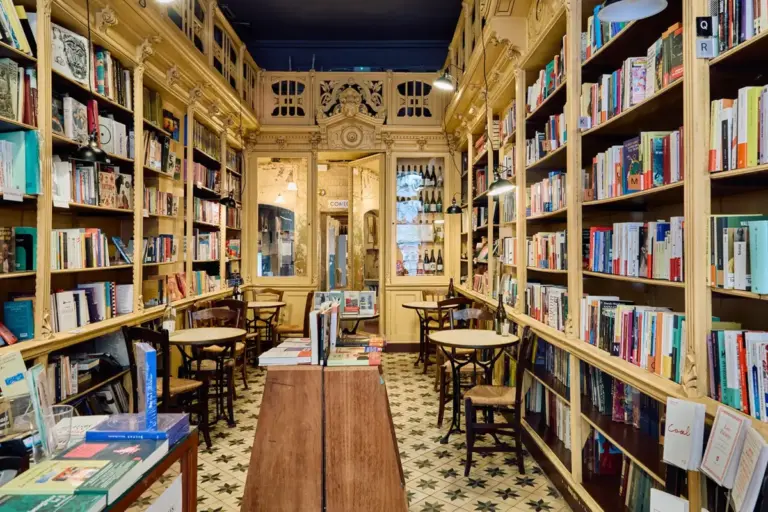
To build a foundation for the project, Silva and her collaborators began by reviewing the existing literature on discotheques. This research proved essential because nightclubs are inherently mercurial buildings. Unlike museums, civic centers, or residential structures designed to withstand decades of static use, discotheques must constantly adapt to shifting fashions, evolving musical genres, and rapid advancements in lighting and sound technology. Because many historic venues had been remodeled or closed entirely by the time the project began, books served as the primary archive for discovering how these environments once appeared. Through these printed records, Silva began to encounter the architects, critics, DJs, art directors, and club owners who shaped these nocturnal landscapes—figures she describes as the "night swimmers."
Following her examination of Italy, Silva expanded her scope to analyze the state of club architecture in four major European cultural hubs: Berlin, London, Paris, and Barcelona. Selecting the locations within each city presented a distinct challenge. While her research for the Venice Biennale required an exhaustive survey, the subsequent phases demanded careful selectivity. She focused on identifying clubs that held significant musical and social influence while also possessing compelling architectural characteristics.
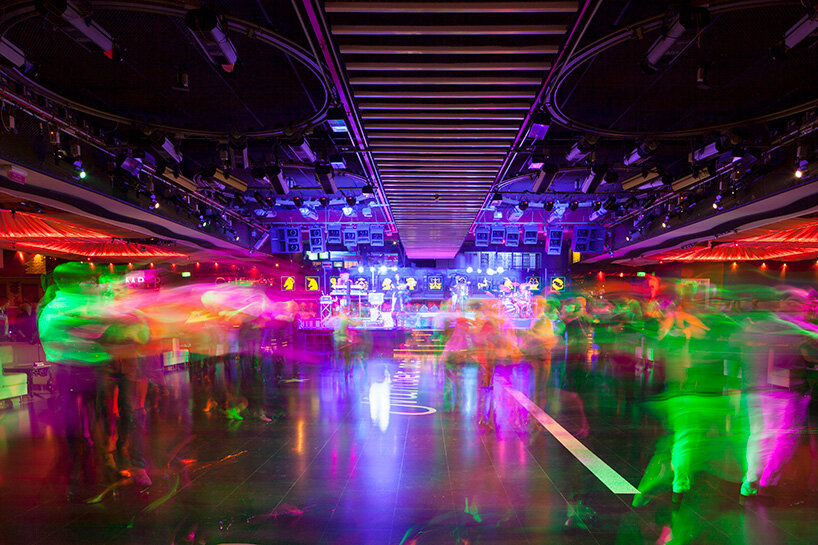
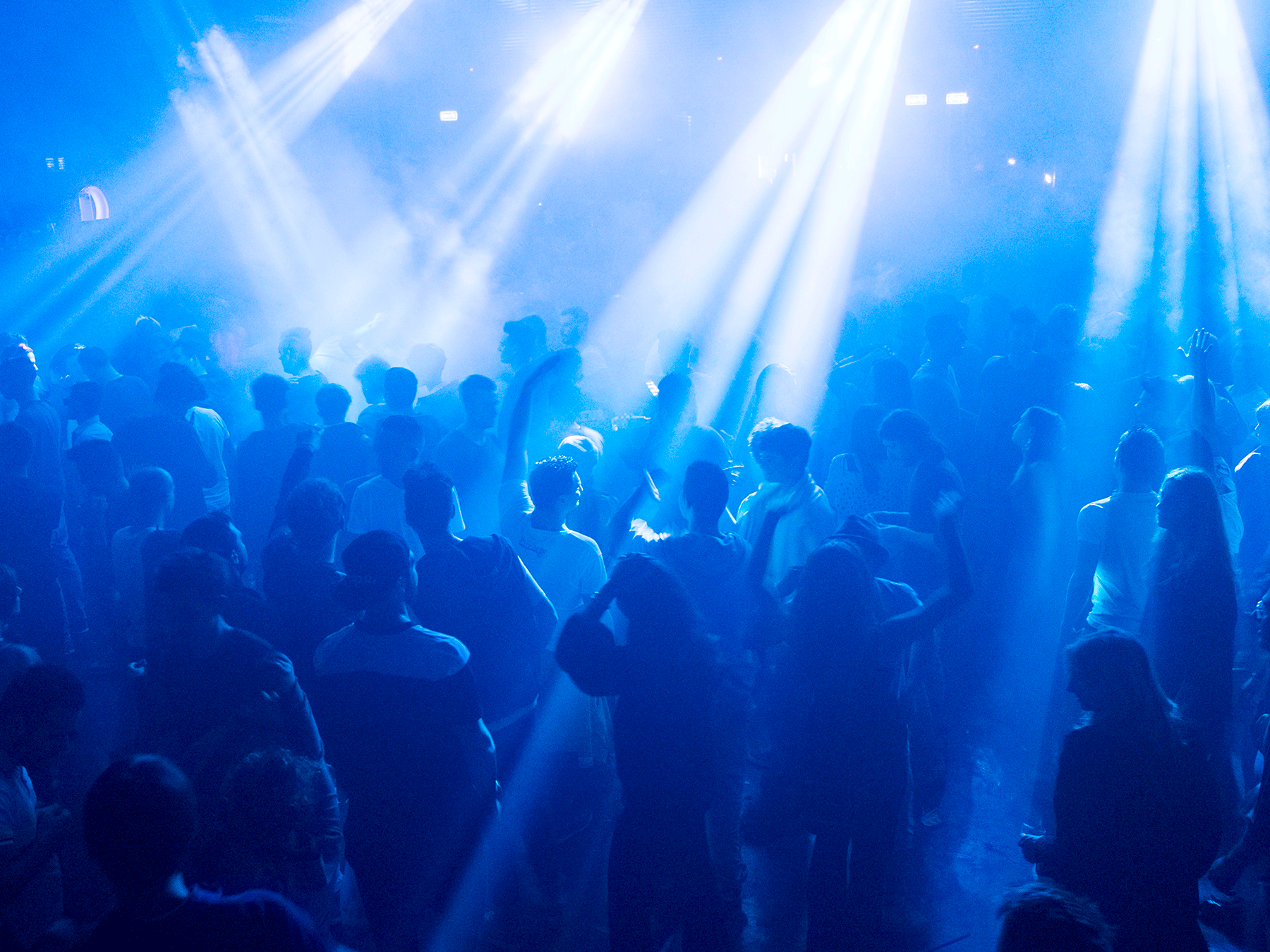
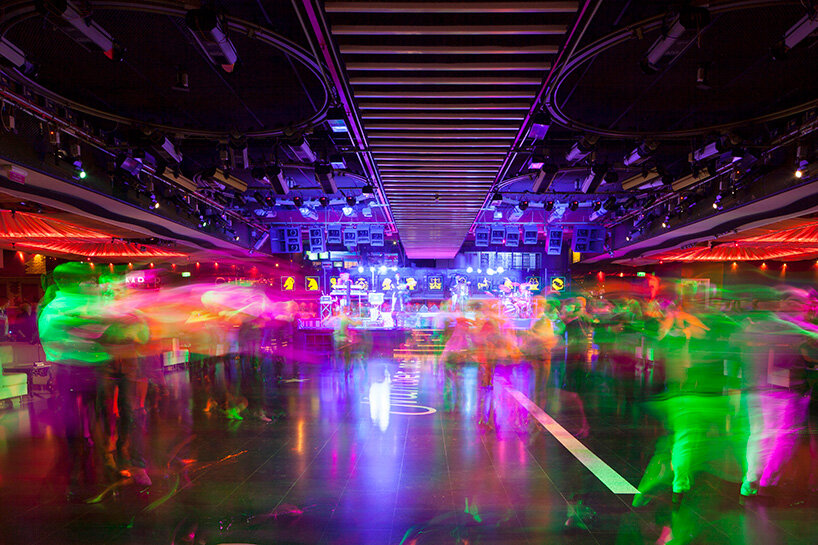
The resulting photographs capture a profound shift in how nightlife is perceived and spatialized. Today, many party locations occupy spaces that were never originally designed to function as discotheques. Abandoned warehouses, industrial ruins, and unconventional urban pockets are routinely repurposed for single-night events, representing a formalized, legal evolution of the underground rave culture that first surged in popularity during the 1990s. Silva’s photographs, which capture these locations both empty and overflowing with people, highlight a central paradox of contemporary nightlife: the crowds actively erase the architectural boundaries of the space, transforming static rooms into fluid, reactive environments.
Entering these spaces for photographic documentation offered sensory impressions distinct from the typical nocturnal experience. Because Silva photographed the vast majority of the clubs during daylight hours, out of their operational context, her first encounter with a venue was almost invariably olfactory. Every location shared a persistent, underlying scent—a distinct aromatic madeleine composed of lingering human presence, smoke, and industrial cleaning detergents. Whether this characteristic smell belonged to the cleaning crews or represented the fundamental scent of the night itself remained a recurring question throughout her travels.
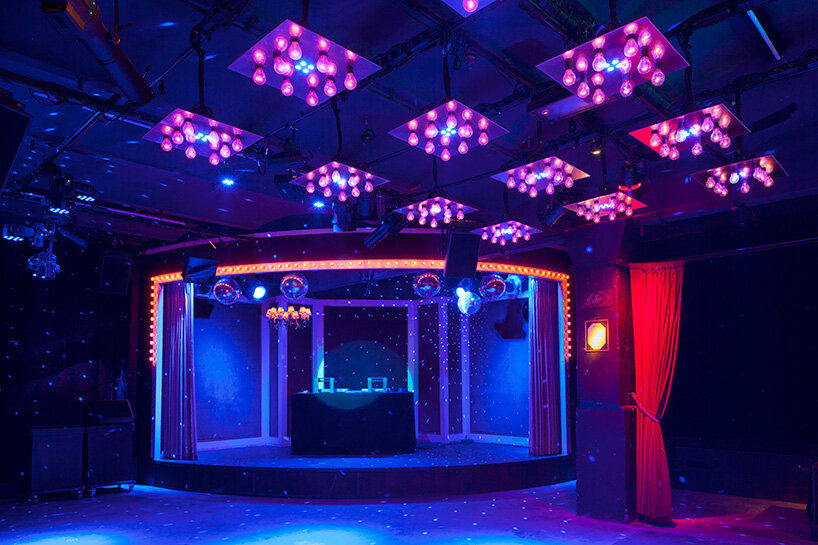
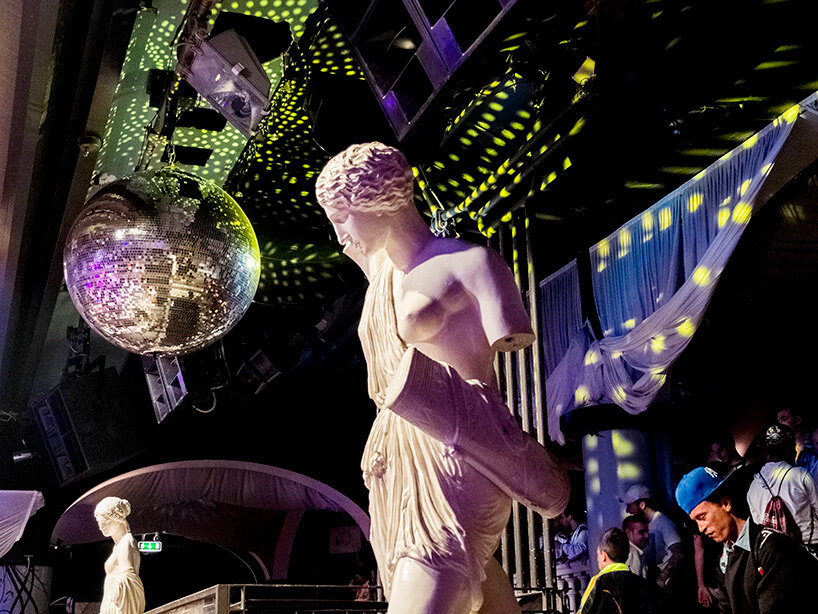
Beyond scent, the defining element of any club interior is light. Silva notes that discotheques are frequently compared to aging actors who should never be seen without their stage makeup. Light performs a vital theatrical function, completely altering the architectural perception of a room at the flick of a switch. To demystify these spaces, Silva deliberately shot several photographs under harsh, flat, and clinical white light. This stark illumination stripped away the illusions cast by lasers, strobes, and fog machines, exposing the raw structural bones of the rooms.
What began as an academic, detached commission gradually transformed into a familiar landscape for the photographer. Through extensive documentation and conversations with those who built and maintained the scene, Silva gained a deep appreciation for the complex mechanics of the night.
Born in Milan in 1980, Silva has built a diverse career bridging photography, publishing, and architectural theory. Her work frequently investigates the built environment and urban landscapes across the globe, resulting in numerous publications including Days without Number, *Napoli*, Islamabad Today, and Baghdad: Red Zone, Green Zone. In addition to her photographic practice, she is the founder of Humboldt Books and San Rocco Magazine*, and she teaches at NABA Milan and ISIA Urbino. Her documentation of discotheques continues to serve as an important architectural archive, preserving the physical and cultural ephemera of spaces designed solely for the dark.