Tokyo’s autumn cultural calendar is currently operating at a remarkable peak, offering residents, international visitors, and design aficionados an expansive look into the city’s vibrant creative ecosystem. From site-specific spatial audio installations to deep explorations of material culture and philosophical architectural responses to historical texts, the Japanese capital continues to solidify its reputation as a global nexus for contemporary art and design.
This season, cultural commentators and curious observers alike are finding much to ponder across the city’s premier galleries and institutions. Among the most talked-about presentations are a hauntingly atmospheric collaboration by the late musician Ryuichi Sakamoto and visual artist Shiro Takatani, an extensive retrospective celebrating the multifaceted paper-based works of art director Yoshihisa Tanaka, and a thought-provoking group exhibition that reimagines a classic 13th-century Japanese literary essay through the lens of tiny, contemporary architecture. Each of these presentations offers a distinct vantage point on the intersection of memory, materiality, and the spaces we inhabit.
“Ryuichi Sakamoto + Shiro Takatani: Ambient Kyoto”
Azabudai Hills Gallery
At the newly prominent Azabudai Hills Gallery, audiences are currently encountering a profound spatial experience through the latest presentation of a site-specific collaborative work by the late, revered musician and composer Ryuichi Sakamoto and renowned visual artist Shiro Takatani. Titled "Async Immersion," this installation is rooted deeply in Sakamoto’s critically acclaimed 2017 studio release, Async. The work directly builds upon the composer’s conceptual framework of secchi-ongaku, a Japanese term translating roughly to "installed music," which describes the deliberate spatial experience of sound that Sakamoto actively envisaged and experimented with during the production of the album.
Within the gallery’s expansive confines, Sakamoto’s evocative 14-track record is paired with a sweeping, 26.4-meter-wide screen that projects a mesmerizing array of visuals curated by Takatani. The imagery unfolding across this massive canvas includes intimate glimpses of pianos, various technical equipment sourced directly from Sakamoto’s personal studio, and natural landscapes that slowly drift past. Intriguingly, these visual elements remain deliberately out of sync with the accompanying soundtrack, creating a compelling tension between what the eye perceives and what the ear absorbs. The cumulative effect is a tranquil, transportive spatial experience that feels a world away from the relentless pace of urban life thriving just beyond the gallery’s walls.
Reflecting on the nature of the installation, Takatani has noted the fluid, meditative quality of the project. "Experiencing the work within the flow of the ever-changing interplay of sound and image is like watching waves or ripples in the rain," he writes, describing it as "an experience that, while repetitive, never happens in the same way twice." This delicate balance between repetition and variability captures the essence of Sakamoto’s late-career exploration of time, space, and impermanence. For those wishing to immerse themselves in this atmospheric union of sound and vision, the exhibition is on view until 25 October 2026.
“Yoshihisa Tanaka: Archive / Achieve”
Ginza Graphic Gallery
Meanwhile, in the historic shopping and cultural district of Ginza, the prolific 46-year-old art director Yoshihisa Tanaka takes centre stage this month with a major solo exhibition at the prestigious Ginza Graphic Gallery. Over the past two decades, Tanaka has built an illustrious career spanning contemporary art, architecture, photography, and fashion. In recent years, however, his creative boundaries have notably expanded to include rigorous explorations of paper not merely as a passive surface for print, but as a living, breathing material and medium in its own right.
Tanaka’s material investigations have recently manifested in high-profile international collaborations, including experimental paper trainers designed in partnership with New Balance, as well as a striking runway installation for Issey Miyake’s spring/summer 2024 show in Paris. For that presentation, he utilized pleated and folded traditional Japanese washi paper to construct undulating, sculptural forms that transformed the runway environment.
These ongoing enquiries into the physical and expressive possibilities of paper permeate the entire gallery survey. The basement level of the gallery is densely populated with a comprehensive collection of publications, posters, and exhibition invitations spanning the past twenty years of Tanaka’s professional output. Upstairs, the ground-floor space shifts focus toward the functional and preservationist aspects of design, presenting archival materials sourced from businesses and universities. These documents are housed within custom containers, display fixtures, and storage units meticulously designed by Tanaka and constructed from washi. Through this innovative approach to reimagining the archive, Tanaka prompts viewers to consider the deeper cultural value of preserving graphic design heritage and thoughtfully passing it on to future generations. The exhibition remains open to the public through 21 October 2026.
“Learning from ‘Hojoki’: Tiny Architecture Reweaves Life”
21_21 Design Sight
Further west in Roppongi, the design institution 21_21 Design Sight is currently hosting an exhibition that bridges centuries of Japanese literature with contemporary spatial urgency. The presentation draws its inspiration from the celebrated 13th-century essay "Hojoki" ("The Ten Foot Square Hut"), a seminal nonfiction text written by Kamo no Chomei. Penned during a period of immense societal upheaval marked by natural disasters and political instability, the essay details the circumstances that compelled Chomei to abandon conventional society and retreat to a secluded, minimalist ten-foot-square hut in the mountains of Hino near Kyoto.
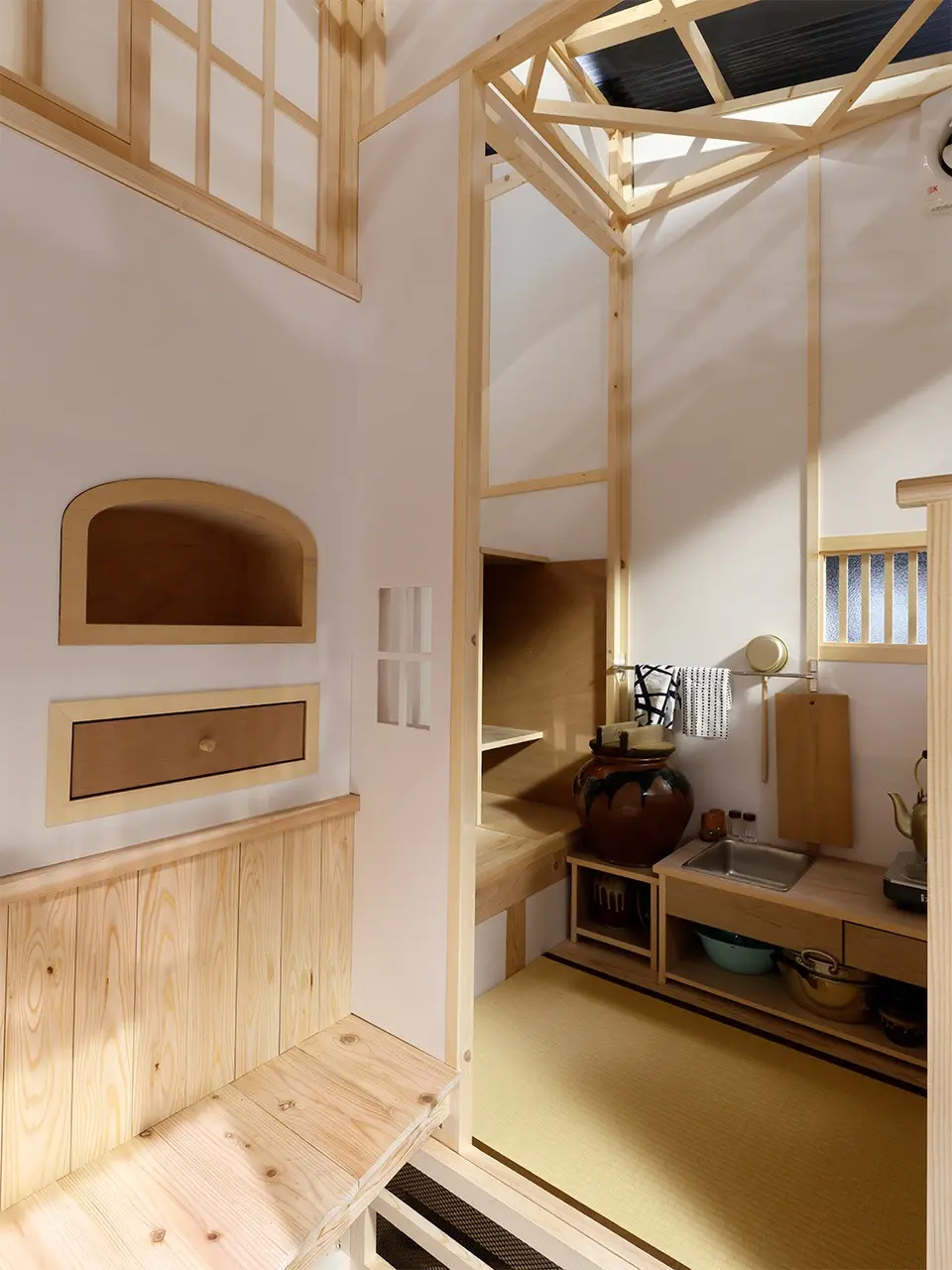
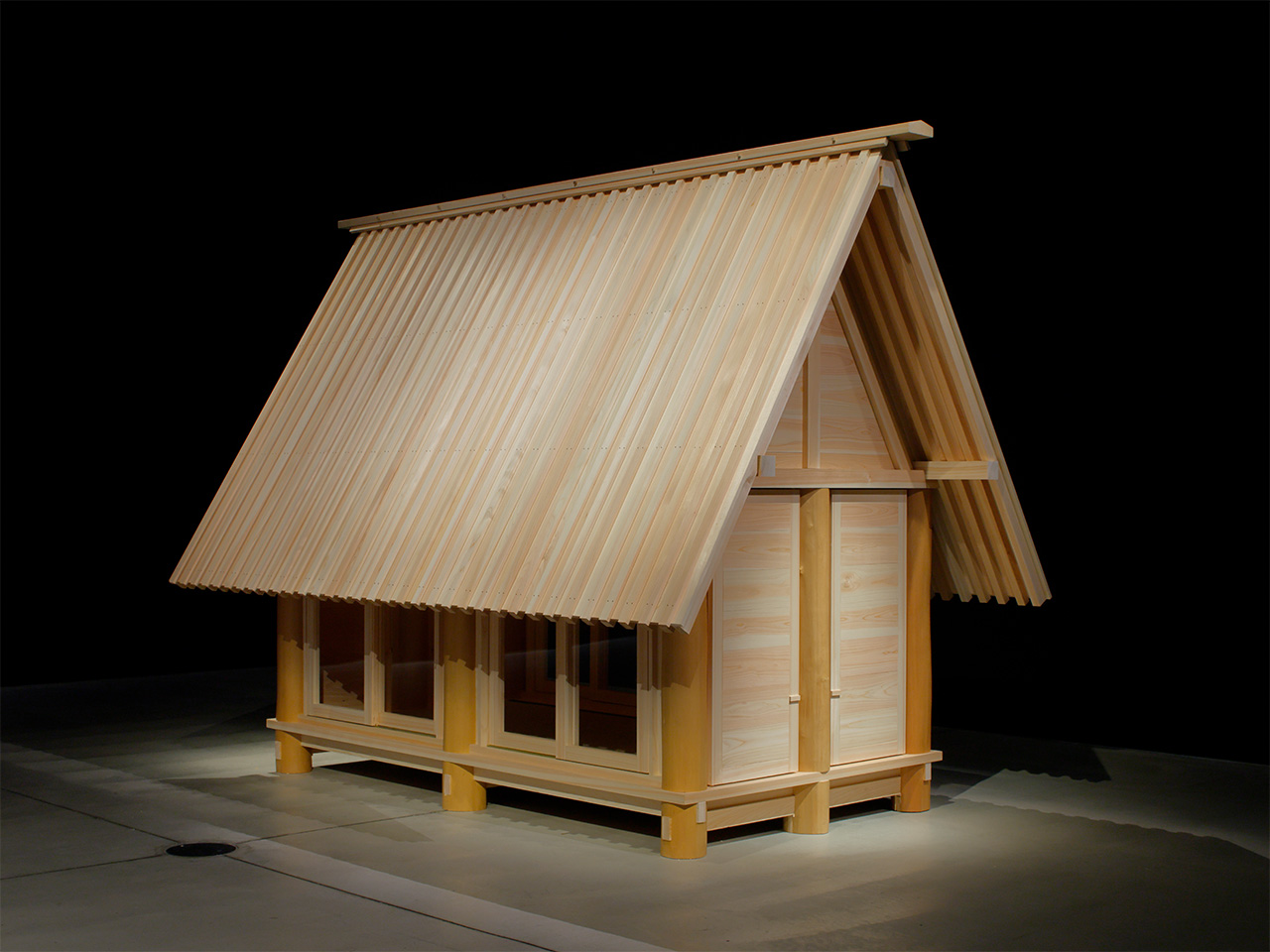
More than eight centuries after Chomei chose a life of deliberate seclusion, his philosophical musings on inhabiting an impermanent, fragile world have served as a vital touchstone for this new exhibition. Directed by Atelier Bow Wow co-founder Yoshiharu Tsukamoto, the show uses Chomei’s historic retreat as a critical lens through which to examine the fundamental essence of modern architecture and human habitation. The exhibition invited a diverse cohort of contemporary designers, builders, artists, and architects to conceptualize and construct their own modern interpretations of Chomei’s diminutive dwelling, filtering the historical concept through their unique professional tools, materials, and perspectives on 21st-century life.
Among the standout contributions, designers Yusuke Obuchi and Jun Nakamura refashioned an abandoned agricultural feed silo into a piece of experimental "walking architecture," while Yusuke Omuro and Kawacho-Gumi collaborated on a specialized storage shed informed directly by the writings of the late novelist Chotaro Kawasaki. Each of the tiny dwellings on display probes complex questions regarding modern society, sustainability, and human shelter in the face of contemporary challenges.
Summarizing the core philosophy behind the exhibition, Tsukamoto notes the necessity of looking backward to move forward: "In order to overcome such dilemmas and anxieties, we would do well to fundamentally rethink the lifestyles to which we have become so accustomed." By bringing historical introspection into dialogue with cutting-edge architectural experimentation, the exhibition provides a compelling blueprint for sustainable living. "Learning from ‘Hojoki’: Tiny Architecture Reweaves Life" is open to visitors through 11 January 2027.