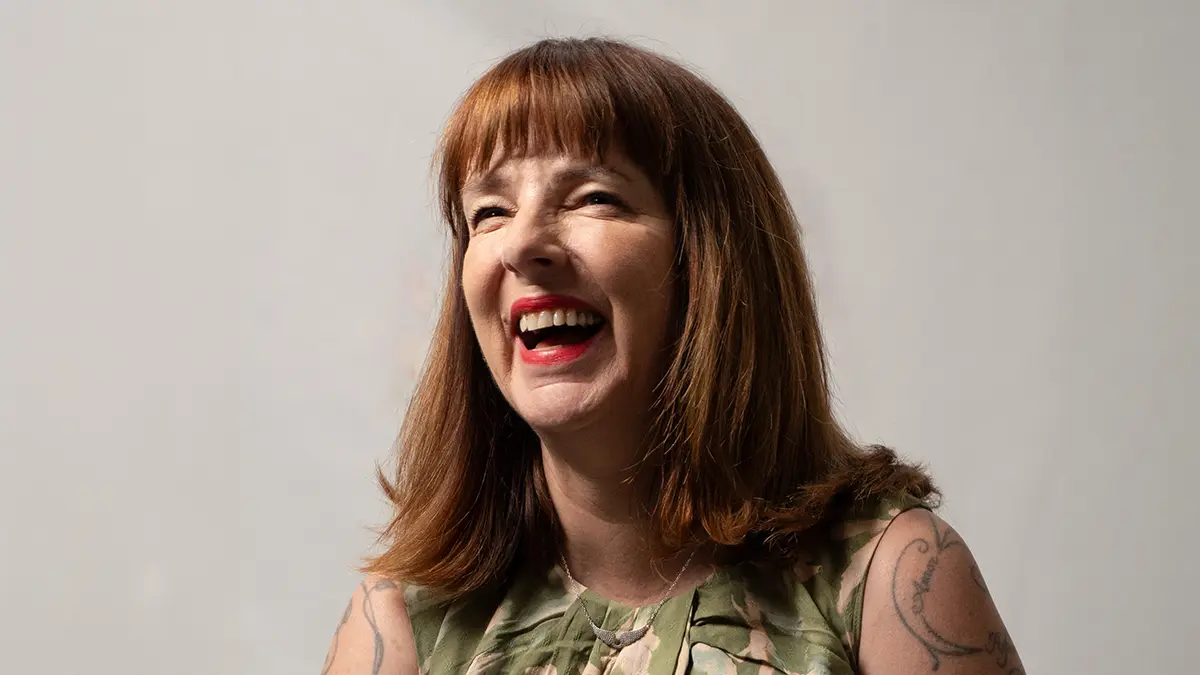
When most people think of Land O’Lakes, their minds instantly go to the familiar image of its butter, a staple in kitchens across the country. Yet, as a major farm-owned agricultural cooperative, the company boasts a footprint that extends far beyond dairy products, reaching deep into data-driven crop protection tools and a sizable animal nutrition division that impacts agriculture on a massive scale.
The scope of the enterprise was a central theme during a recent industry event, where Land O’Lakes Chief Marketing Officer Heather Malenshek took the stage at Marketing Vanguard’s invite-only session during ADWEEK’s September Brandweek event. Seated before an audience of marketing leaders, Malenshek discussed the reality of managing a sprawling agricultural enterprise with a diverse portfolio that frequently surprises consumers.
Even though the public largely knows the organization for its dairy products, butter, and cheese, Malenshek noted that this consumer-facing segment actually represents the smallest part of the overall business. Emphasizing the vast reach of the cooperative’s agricultural operations, she highlighted that the company feeds approximately 100 million animals a day, supplying nutrition products that even extend to zoo animals around the world.
That immense expansiveness presents as much of an operational opportunity as it does a strategic challenge. For a corporate brand with such a wide variety of diverse business interests, finding an authentic way to go to market cohesively is notoriously difficult—particularly when the enterprise attempts to actively participate in broader cultural conversations. Malenshek sat down with ADWEEK’s chief brand and community officer, Jenny Rooney, for an onstage conversation detailing how her team has successfully navigated and cracked that complex problem.
Bringing Legacy Brand Experience to Modern Agriculture
Discussing her professional journey, Malenshek shared insights into her extensive career working with some of the most prominent legacy brands in corporate history. Prior to joining Land O’Lakes, she served as the chief marketing officer at Harley-Davidson for approximately six and a half years, making history as the company’s first female CMO and one of only two top marketing executives at the time.
Throughout her career, Malenshek has had the unique opportunity to helm marketing and brand strategy for iconic names across different industries. She worked on the Jeep brand during her time on the agency side, managed the Budweiser brand, and spent significant time working on Bud Light—an experience she humorously likened to dealing with a daily frat party. Eventually, her path led her to Harley-Davidson, a brand she connected with deeply on a personal level as a rider at heart.
When the opportunity at Land O’Lakes presented itself, Malenshek admitted she initially had little awareness of the true breadth of what the cooperative had to offer. That changed rapidly after speaking with CEO Beth Ford. Malenshek shared that she fell in love with Ford’s leadership style almost immediately, noting how deeply the chief executive cares about the organization’s mission and the people it serves.
Unifying Siloed Businesses Through a Shared Foundation
Faced with the challenge of leading transformations within brands that possess deeply loyal and fiercely protective audiences, a primary task for any incoming executive is learning to distinguish between what is authentically core to the enterprise and what simply represents historical habits. Land O’Lakes, boasting a history spanning over a century, has naturally accumulated numerous entrenched practices over its 106 years of operation.
When Malenshek joined the company six years ago, she was immediately struck by the vast diversity of its business units. The organization encompassed three distinct businesses, each operating with separate audiences and unique goals, creating an environment that felt heavily siloed. Despite these internal divisions, the entire enterprise shared a foundational, unwavering commitment to supporting farmers.
To bridge the gap between these disparate arms, Malenshek engaged with people across every level of the organization, including the dedicated employees working inside manufacturing plants and production facilities. By listening to their experiences, she worked to unearth the authentic stories of the organization. Collaborating with a cross-functional team that extended far beyond the marketing department, they sought to define a unified story and establish a shared brand platform.
The result of this collaborative effort was the creation of a platform called "Rooted in Tomorrow." Developed alongside operational experts, finance professionals, supply chain leaders, and marketing teams, the initiative recognized a fundamental truth about their core audience: farmers are constantly evolving because market and environmental conditions require them to do so, and the cooperative must follow that same path of continuous adaptation.
Drawing the Line Between Genuine Participation and Overreach
When navigating the fine line between genuine cultural participation and corporate overreach, Malenshek emphasized that brand initiatives must remain authentically tied to the people and communities they serve. If a company attempts to engage in a cultural moment without genuine alignment, audiences will detect the disconnect almost immediately.
At Land O’Lakes, marketing and outreach efforts remain deeply rooted in the organization’s core purpose: serving farm owners, their families, and their rural communities. Over the years, this commitment has driven tangible advocacy efforts, such as CEO Beth Ford’s vocal campaigns for expanding broadband internet access in rural America. During the height of the COVID-19 pandemic, the lack of reliable connectivity for millions of Americans became an acute crisis, with children frequently forced to sit in parking lots to access Wi-Fi just to complete their schoolwork—a reality Malenshek described as fundamentally unacceptable.
Recognizing a persistent disconnect between how rural America is portrayed in popular culture and the actual lived experiences of its residents, the company developed the Modern Rural Collective. This initiative serves as a collaborative model bringing together brands, individuals in film and entertainment, media companies, and other organizations to help reshape and modernize the cultural narrative surrounding rural communities.
For Malenshek, the combination of the "Rooted in Tomorrow" platform, a respect for agricultural heritage, and active advocacy for rural America represents an authentic path forward. She noted a simple rule of thumb for evaluating potential campaigns: if a brand requires a lengthy, complicated explanation to justify why it is participating in a particular initiative, it serves as a clear warning sign that the effort lacks genuine alignment.
Balancing Innovation with the Realities of a Cooperative Structure
CMOs operate under constant pressure to continually innovate, uncover new avenues for growth, and secure greater visibility for their brands. Balancing those demands requires strategic discipline, particularly within the structure of an agricultural cooperative where financial resources are managed with careful stewardship.
Malenshek explained that because the organization does not operate with an unlimited budget, marketing teams must ensure that every single dollar makes a measurable impact. That financial reality necessitates bolder, more memorable creative approaches designed to stand out in an increasingly crowded marketplace.
In recent years, the company has experimented with new ways to engage with modern culture, exploring social media platforms like TikTok and executing unexpected partnerships, such as a collaboration with a sneaker company that capitalized on popular internet color trends like "butter yellow." These out-of-the-box approaches initially raised questions internally, with colleagues asking why a historic agricultural cooperative would pursue such initiatives. However, backed by solid data and performance metrics, the marketing team has gradually earned greater institutional permission to innovate.
Building Culture Across an Entire Organization
Integrating a culture-building capability into a legacy enterprise requires fundamentally shifting how the marketing function is perceived within the corporate hierarchy. Drawing from her previous experience at Harley-Davidson, Malenshek worked to elevate the status of marketing at Land O’Lakes, securing a more influential seat at the leadership table by taking greater accountability for business outcomes and tying all creative output directly to overarching business strategies.
Culture building, in Malenshek’s view, should never be confined strictly to the marketing department; it must function as an organization-wide exercise. When the company partnered with a Hollywood production company as part of the Modern Rural Collective initiative, some internal stakeholders questioned the relevance of such an endeavor to an agricultural enterprise.
Addressing those concerns required demonstrating the immense power of media in shaping cultural perceptions. Acknowledging the real-world influence of entertainment platforms like Netflix, Malenshek pointed out that altering public misconceptions about rural America requires engaging directly with the creators who build mainstream culture. This mission-driven focus resonates deeply within Land O’Lakes, much like Harley-Davidson’s foundational purpose of fulfilling dreams of personal freedom.
Fostering Internal Trust and Radical Transparency
Building the internal credibility required to pursue unconventional marketing strategies is a challenge familiar to many marketing executives. Malenshek stressed that trust must be cultivated long before a crisis or high-stakes pitch arrives, highlighting her close working relationships with the chief financial officer, chief strategy officer, chief technology officer, and the CEO.
Establishing that trust relies heavily on grounding marketing proposals in data and demonstrating confidence through past successes. Furthermore, Malenshek emphasized the importance of radical transparency and humility. Admitting that the marketing team does not possess all the answers, and openly discussing initiatives that failed rather than constantly filtering for a polished success story, has been instrumental in strengthening internal relationships and building enduring credibility.
When it comes to measuring the true impact of cultural contributions, Malenshek advised that marketers must learn to speak the language of business. Relying solely on internal marketing jargon, abstract insights, or trendy tactics without a strategic framework fails to convince executive leadership. For long-term projects like the Modern Rural Collective, success is measured methodically through adoption over time.
Spotlighting the Innovation Within Rural Communities
Reflecting on broader cultural conversations, Malenshek pointed out that rural communities remain an underappreciated audience that is frequently misunderstood by mainstream media. Rather than being accurately portrayed, rural areas are often romanticized, idealized, or depicted solely as isolated and in decline.
In reality, Malenshek noted, these communities are hotbeds of innovation, entrepreneurship, and creativity. By actively hiring individuals from rural hometowns—including members of her own team who bring vital perspectives to daily operations—the company strives to support local economies and help younger generations find prosperity and growth opportunities close to home.
For marketers attempting to transition their own organizations from traditional storytelling to active culture shaping, Malenshek offered a straightforward piece of concrete advice for the quarter: do not be afraid to involve colleagues from entirely different departments. Building a network of cross-functional advocates across operations, finance, and supply chain has proven invaluable in securing institutional support when bold new ideas require a champion.
Away from the corporate office, Malenshek maintains a lifelong passion for motorcycling as a personal hobby. Describing her collection of motorcycles, she shared that her favorite bike for long journeys is a Harley-Davidson Road Glide, a large touring model she frequently takes out on scenic American highways. Whether navigating complex brand transformations in the boardroom or exploring small towns on two wheels, Malenshek continues to champion authentic connections and the enduring stories of the communities that power American agriculture.