Tokyo’s creative and cultural calendar is currently in full, vibrant swing this autumn, offering residents and international visitors alike a rich tapestry of thought-provoking exhibitions across the metropolis. Known globally as a dynamic hub where traditional craftsmanship seamlessly intersects with cutting-edge contemporary design, the Japanese capital is once again proving its status as a premier destination for art and architecture enthusiasts. This season, prominent galleries and design institutions are presenting carefully curated programmes that span multiple disciplines, bridging the gap between historical literature, spatial sound design, and experimental material exploration.
From expansive multi-sensory audio-visual installations to deeply introspective retrospectives of contemporary graphic design and visionary architectural interpretations of ancient philosophy, this month’s cultural highlights capture the restless innovation of Tokyo’s creative community. Three distinct exhibitions stand out as focal points for this season’s cultural dialogue: a site-specific presentation by late musical luminary Ryuichi Sakamoto and visual artist Shiro Takatani, a comprehensive career survey celebrating the material versatility of art director Yoshihisa Tanaka, and a collaborative architectural exploration inspired by a classic 13th-century Japanese essay on impermanence and simplicity.
“Ryuichi Sakamoto + Shiro Takatani: Ambient Kyoto” at Azabudai Hills Gallery
At the heart of the newly developed Azabudai Hills complex, the Azabudai Hills Gallery currently serves as the striking venue for a major presentation of a site-specific installation by the late, globally renowned musician and composer Ryuichi Sakamoto and celebrated visual artist Shiro Takatani. The exhibition brings together two visionary creative forces in an environment meticulously designed to transport visitors away from the bustling urban rhythm of the Japanese capital and into a state of profound contemplation.
The installation, titled "Async Immersion," is fundamentally rooted in Sakamoto’s acclaimed 2017 studio album Async. During the production of the record, Sakamoto conceptualized a unique approach he termed secchi-ongaku, or "installed music"—a term designed to describe the deliberate spatial experience of sound within a physical environment. Rather than serving merely as background accompaniment, the audio is treated as a physical, architectural element that interacts directly with the listener and the surrounding space.
In this iteration, Sakamoto’s deeply introspective 14-track album unfolds in tandem with a massive, 26.4-meter-wide panoramic screen displaying Takatani’s evocative visual creations. The imagery projected across the expansive display is deliberately heterogeneous and contemplative, featuring intimate close-ups of pianos, various technical equipment sourced directly from Sakamoto’s private studio, and sweeping natural landscapes that slowly shift and unfurl across the room. Crucially, the visuals remain purposefully out of sync with the musical soundtrack, creating a complex, multilayered perceptual environment.
The resulting spatial experience is designed to feel a world away from the fast-paced realities of modern life existing just beyond the gallery’s heavy doors. Explaining the fluid, ever-shifting nature of the project, Shiro Takatani notes in his accompanying statement that experiencing the work within the continuous interplay of sound and image resembles watching natural phenomena, such as waves rolling onto a shore or ripples dancing in the rain. It is an artistic encounter that, while inherently repetitive in its foundational components, refuses to manifest in the exact same way twice, ensuring a deeply personal and fleeting experience for every visitor who enters the gallery space.
“Ambient Kyoto” is scheduled to remain on view at the Azabudai Hills Gallery until 25 October 2026, offering extended opportunities for audiences to immerse themselves in this hauntingly beautiful tribute to Sakamoto’s enduring sonic legacy.
“Yoshihisa Tanaka: Archive / Achieve” at Ginza Graphic Gallery
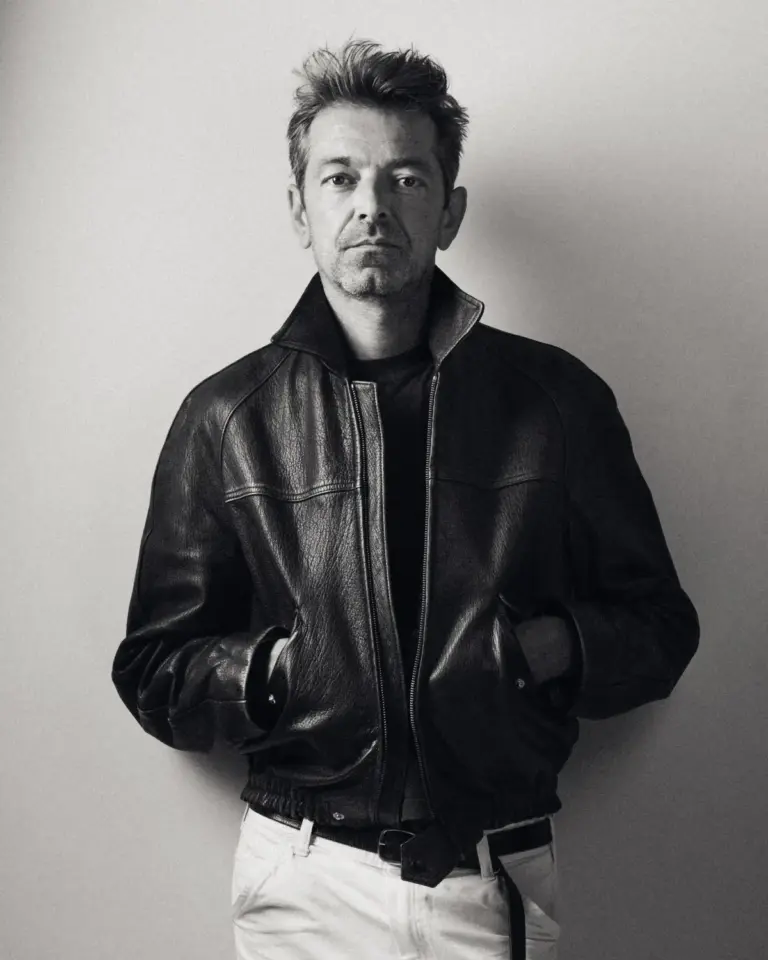
Shifting focus from soundscapes to the tactile world of print and material culture, the Ginza Graphic Gallery (ggg) is currently hosting a comprehensive and striking retrospective dedicated to the prolific 46-year-old art director Yoshihisa Tanaka. Over the course of the past two decades, Tanaka has established himself as a towering figure in Japan’s contemporary design landscape. His professional footprint extends far beyond traditional graphic design, encompassing ambitious projects within contemporary art, architecture, photography, and the upper echelons of international fashion.
In recent years, Tanaka’s artistic inquiry has increasingly focused on the physical properties of paper, pushing the boundaries of the medium to treat it not merely as a passive surface for ink, but as a dynamic, sculptural material in its own right. This experimental spirit has yielded high-profile international collaborations, including the creation of experimental paper trainers developed alongside athletic footwear brand New Balance. Furthermore, Tanaka’s mastery of material manipulation was recently demonstrated when he designed an intricate, large-scale installation using pleated and folded traditional Japanese washi paper to produce undulating, organic forms for fashion house Issey Miyake’s spring/summer 2024 runway show in Paris.
These ongoing explorations into the versatile nature of paper permeate the entire gallery layout. The basement level of the Ginza Graphic Gallery is densely populated with a rich archive of publications, posters, and exhibition invitations that chronicle Tanaka’s diverse professional output over the last twenty years. In stark contrast, the sunlit ground-floor space shifts the narrative toward institutional memory and preservation. Here, visitors encounter design materials salvaged from the corporate archives of prominent businesses and universities, meticulously housed within custom containers, display fixtures, and storage units designed by Tanaka himself and fabricated entirely from washi.
Through this innovative presentation, Tanaka reimagines the traditional concept of the archive, prompting viewers to critically reflect upon the cultural value inherent in preserving graphic design artefacts and safeguarding them for future generations of creators and historians. “Archive / Achieve” is open to the public through 21 October 2026.
“Learning from ‘Hojoki’: Tiny Architecture Reweaves Life” at 21_21 Design Sight
Rounding out Tokyo’s prominent autumn trio of exhibitions is a timely and deeply reflective exploration of architecture, human scale, and societal resilience hosted at 21_21 Design Sight in Roppongi. The exhibition takes its primary inspiration from "Hojoki" ("The Ten Foot Square Hut"), a celebrated 13th-century Japanese essay penned by the poet and recluse Kamo no Chomei. Written during a turbulent era marked by devastating fires, earthquakes, and political upheaval, Chomei’s seminal nonfiction work details the series of profound personal and environmental crises that ultimately motivated him to abandon urban society and retreat to a humble, easily dismantled dwelling in the secluded mountain forests of Hino, near Kyoto.
More than eight centuries after Chomei chose to step away from conventional societal structures, his timeless musings on living mindfully within an impermanent world have been revived to interrogate the pressures of modern urban existence. The exhibition is directed by architect Yoshiharu Tsukamoto, co-founder of the influential Tokyo-based studio Atelier Bow Wow, who utilizes Chomei’s historical lifestyle as an investigative lens through which to examine the fundamental essence and purpose of architecture today.
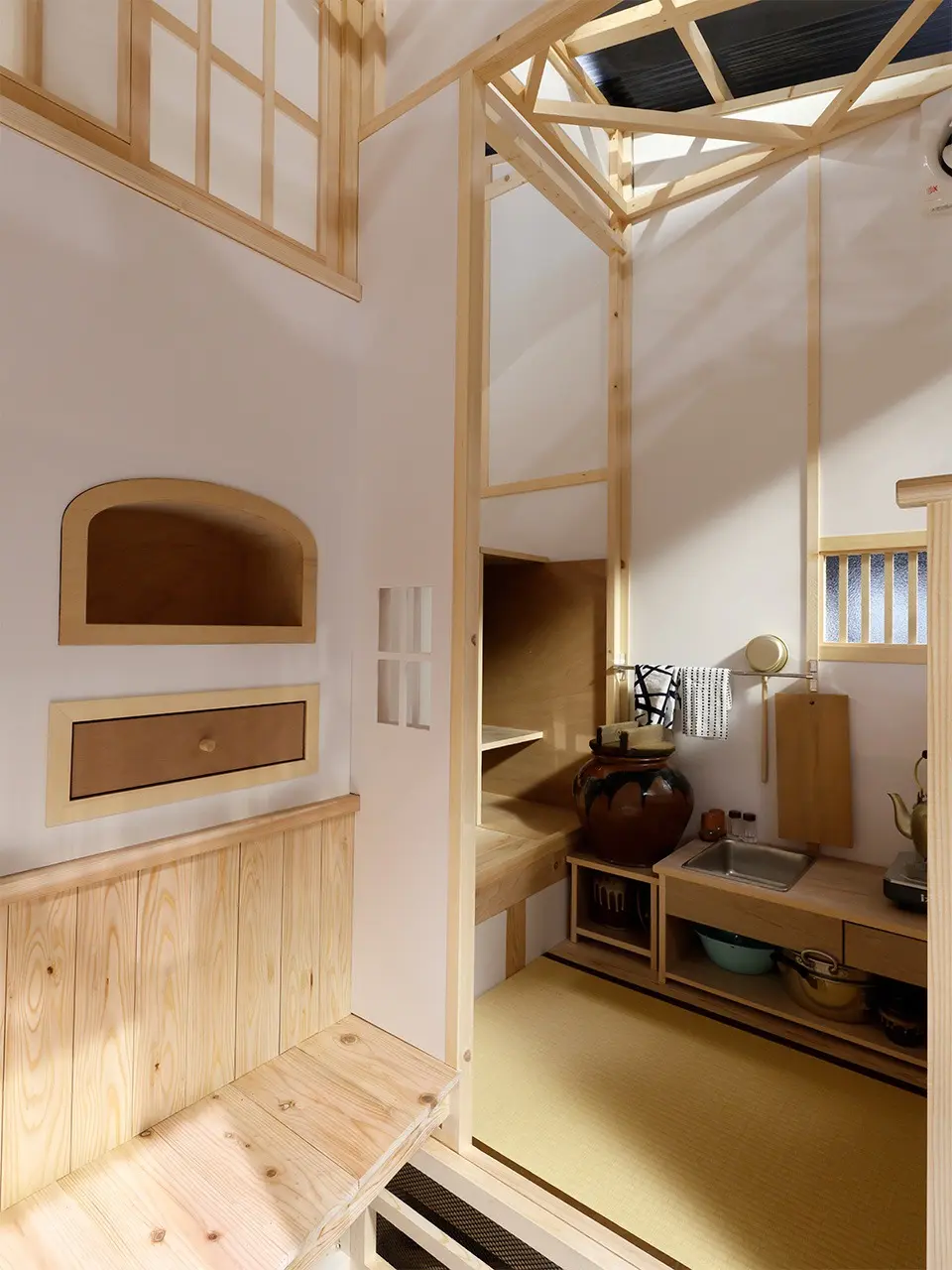
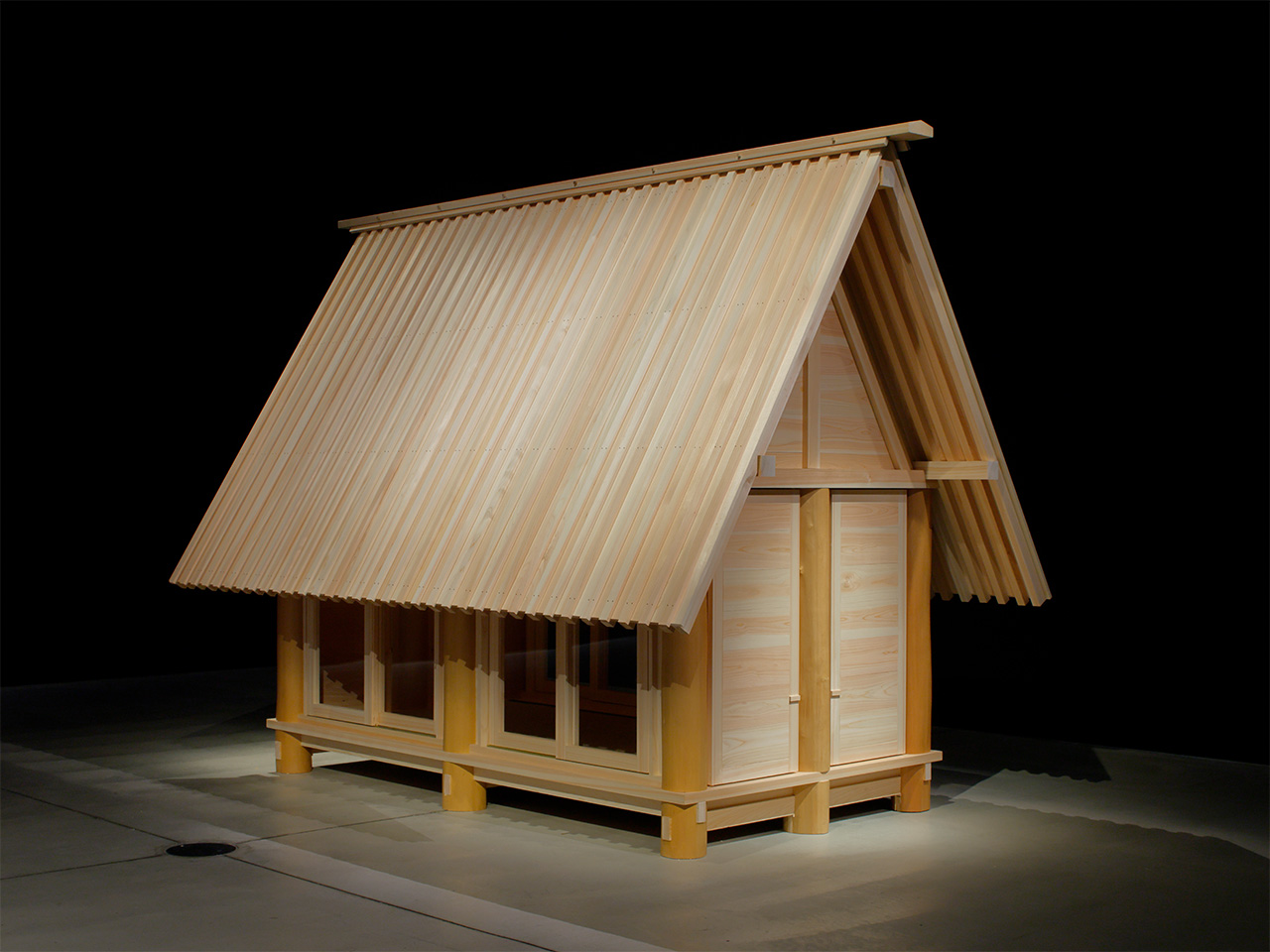
To bring this conceptual framework to life, the exhibition invited a diverse roster of contemporary designers, builders, artists, and architects to conceive their own modern interpretations of Chomei’s legendary ten-foot-square dwelling. Operating from their individual professional tools, preferred materials, and distinct perspectives on contemporary life, the participants have populated the gallery with an array of provocative, scaled architectural models and full-sized prototypes.
Among the standout contributions, architects Yusuke Obuchi and Jun Nakamura have refashioned an abandoned agricultural feed silo into a piece of mobile "walking architecture," challenging conventional notions of land ownership and permanence. In another corner of the exhibition, a collaborative effort by Yusuke Omuro and Kawacho-Gumi resulted in a specialized storage shed directly inspired by the gritty, observant writings of the late Japanese novelist Chotaro Kawasaki.
Each tiny structure on display offers a unique critique of contemporary society and urban housing pressures, reminding visitors that architecture can serve as an active tool for personal and collective recalibration. As exhibition director Yoshiharu Tsukamoto observes in the accompanying curatorial notes, humanity must fundamentally rethink the high-consumption lifestyles to which it has become so deeply accustomed if it wishes to successfully navigate the complex dilemmas and anxieties defining the modern era.
“Learning from ‘Hojoki’: Tiny Architecture Reweaves Life” is an extensive presentation that will remain on view at 21_21 Design Sight through 11 January 2027, inviting extended public discourse on sustainable living, spatial economy, and the enduring relevance of classical Japanese philosophy.