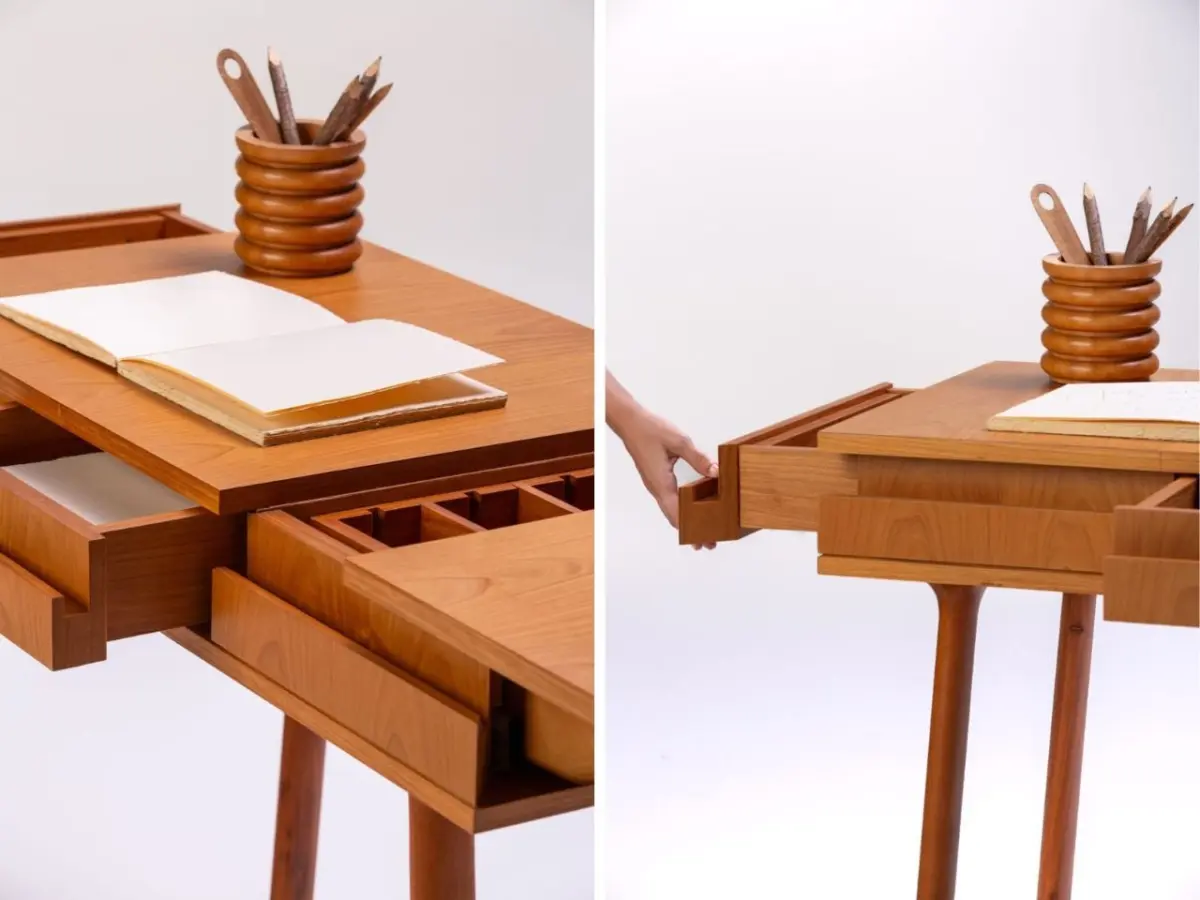
A desk is traditionally understood as a fixed and stationary surface—a designated place where professional or creative work takes place and where objects gradually accumulate over time. However, Brazilian architect and designer Lia Siqueira approaches this familiar and ubiquitous piece of furniture with an entirely different proposition. Her newly introduced Open Sesame Desk is conceived not merely as a passive platform, but as a dynamic object that changes and evolves alongside its user, expanding organically through a carefully choreographed series of openings to reveal hidden surfaces, specialized drawers, and concealed compartments. What initially appears to be a sleek, compact wooden desk gradually unfolds into a much more elaborate and functional workspace, transforming the simple, everyday gesture of opening a drawer into an engaging tactile experience of its own.
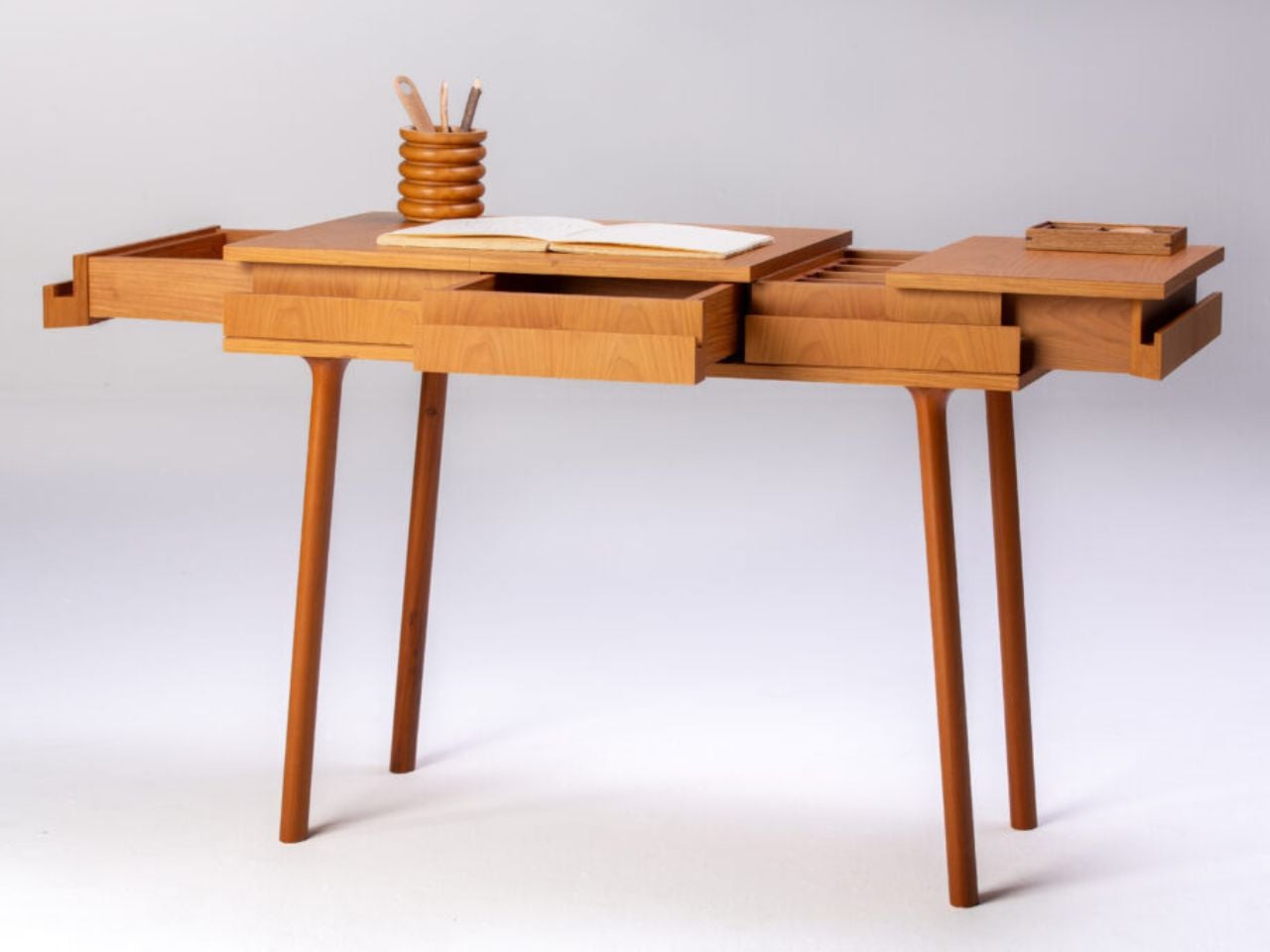
Designed in 2025 for the renowned Brazilian furniture brand ETEL, the desk derives its evocative name from the famous magical expression found in the classic Middle Eastern folktale of Ali Baba and the Forty Thieves. In the legendary story, the iconic words “Open Sesame” serve as the verbal key that magically unlocks a hidden cave brimming with unimaginable treasures. Siqueira brilliantly translates this familiar moment of literary discovery into contemporary furniture design, replacing the mythical cave with a meticulously organized wooden structure. Within this design, the contents of the desk remain fully protected, secure, and completely concealed until the user intentionally chooses to reveal them. This clever historical and cultural reference lends the physical piece a subtle, playful character, while the underlying design itself remains firmly and practically grounded in the real-world needs of a modern, fast-paced working environment.
The desk’s most striking and distinctive quality lies in the sharp visual and functional contrast between its two primary configurations. When completely closed, the piece maintains a remarkably restrained and minimalist profile, neatly containing its various operational functions within a discreet, self-contained volume that takes up very little visual room in a space. However, the physical act of opening the piece introduces an entirely different spatial arrangement and architectural layout. Previously hidden drawers, cubbies, and specialized compartments suddenly become readily accessible, while additional auxiliary surfaces smoothly extend outward to dramatically increase the available working area. Each successive opening reveals another distinct layer of utility and craftsmanship, allowing a single, unified piece of furniture to effortlessly accommodate complex activities that might otherwise require several separate storage solutions, cabinets, or organizers.
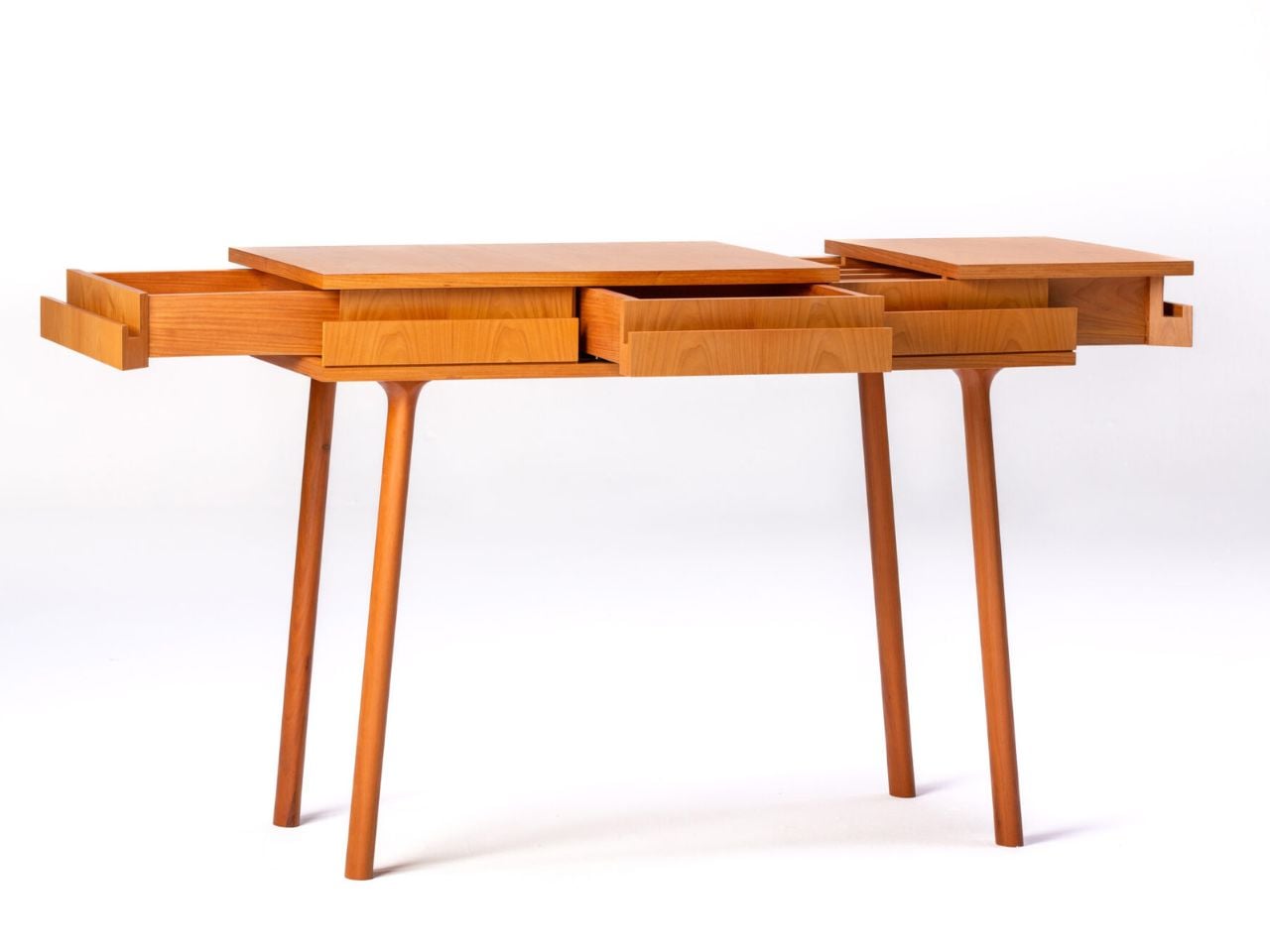
This sophisticated physical transformation is particularly relevant to the way contemporary workspaces are occupied and utilized in daily life. In the modern era, a desk rarely serves just one single purpose throughout the course of a demanding workday. It may need to hold a slim laptop and a cup of coffee in the morning hours, transition seamlessly into a dedicated writing or sketching surface in the afternoon, or accommodate voluminous drawings, physical documents, technical blueprints, and personal belongings as different professional tasks and creative phases unfold. The Open Sesame Desk responds directly to these frequently changing daily requirements through its inherent physical adaptability. Rather than permanently exposing every single storage space and working surface to the room—which can quickly lead to visual clutter and distraction—the furniture allows these elements to be accessed strictly when needed and completely concealed away afterward, restoring order and peace of mind.
Measuring 100 centimeters wide by 50 centimeters deep and 76 centimeters high—which translates to approximately 39.4 inches in width, 19.7 inches in depth, and 29.9 inches in height—the solid wooden desk maintains a relatively compact and modest footprint that fits comfortably into smaller rooms, urban apartments, or executive offices. Because of these modest exterior dimensions, the internal arrangement becomes especially significant to the overall success of the piece. The design cleverly creates an abundance of additional usable space through intelligent mechanical movement and clever spatial origami rather than relying on a permanently larger, bulkier structural form. This seamless expansion is deeply integrated into the furniture itself, perfectly preserving the harmonious relationship between its graceful proportions and its surprising functional capacity.
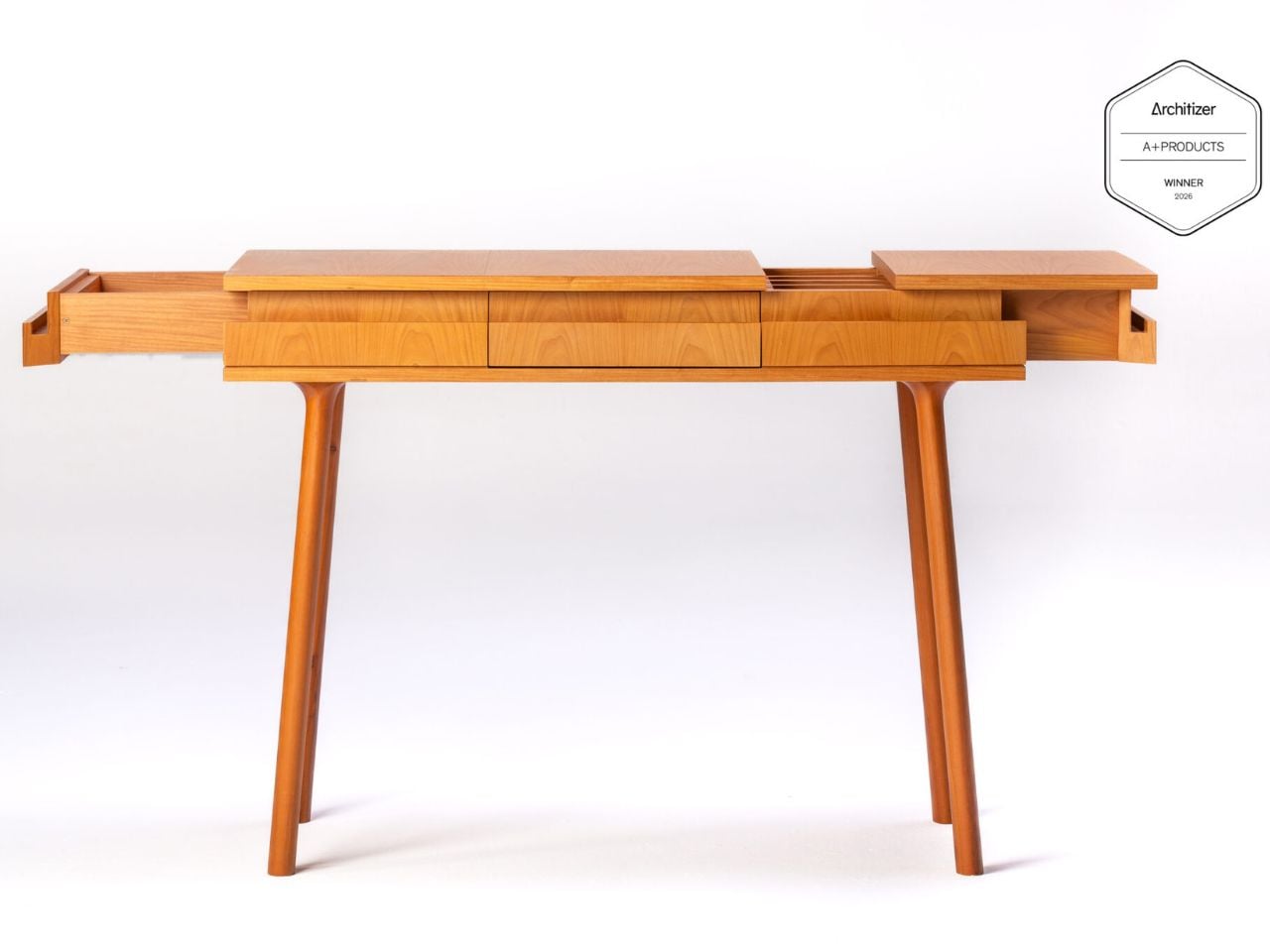
There is also a deeply considered philosophy of visibility and visual calm embedded within the design. Conventional office desks often leave their working contents entirely exposed to the elements and the eyes of visitors, with organization frequently dependent upon an assortment of external desktop accessories, plastic bins, or separate filing cabinets. Siqueira thoughtfully builds that necessary organization directly into the core of the object itself, giving each stored item the capability of remaining completely out of sight until the exact moment it is required. Everyday papers, specialized tools, stationery, and other professional essentials can comfortably occupy the internal compartments without constantly crowding or sharing the primary working surface. The user retains absolute control, deciding precisely when the desk should reveal its hidden contents and when it should gracefully return to its quieter, closed state of serene minimalism.
Perhaps one of the most engaging and delightful aspects of the Open Sesame Desk is the profound importance it places on physical human interaction. The furniture actively encourages a specific sequence of mindful gestures that makes accessing its contents feel deeply deliberate rather than purely mechanical. Opening a specific section fundamentally changes the physical arrangement of the desk, introduces fresh spatial possibilities, and invites the user to physically explore its intricate construction and joinery. This intimate relationship between movement, touch, and discovery gives the piece a rich character that extends far beyond its basic functional specifications. Its transformation becomes an organic part of the daily routine rather than an occasional, gimmicky feature.
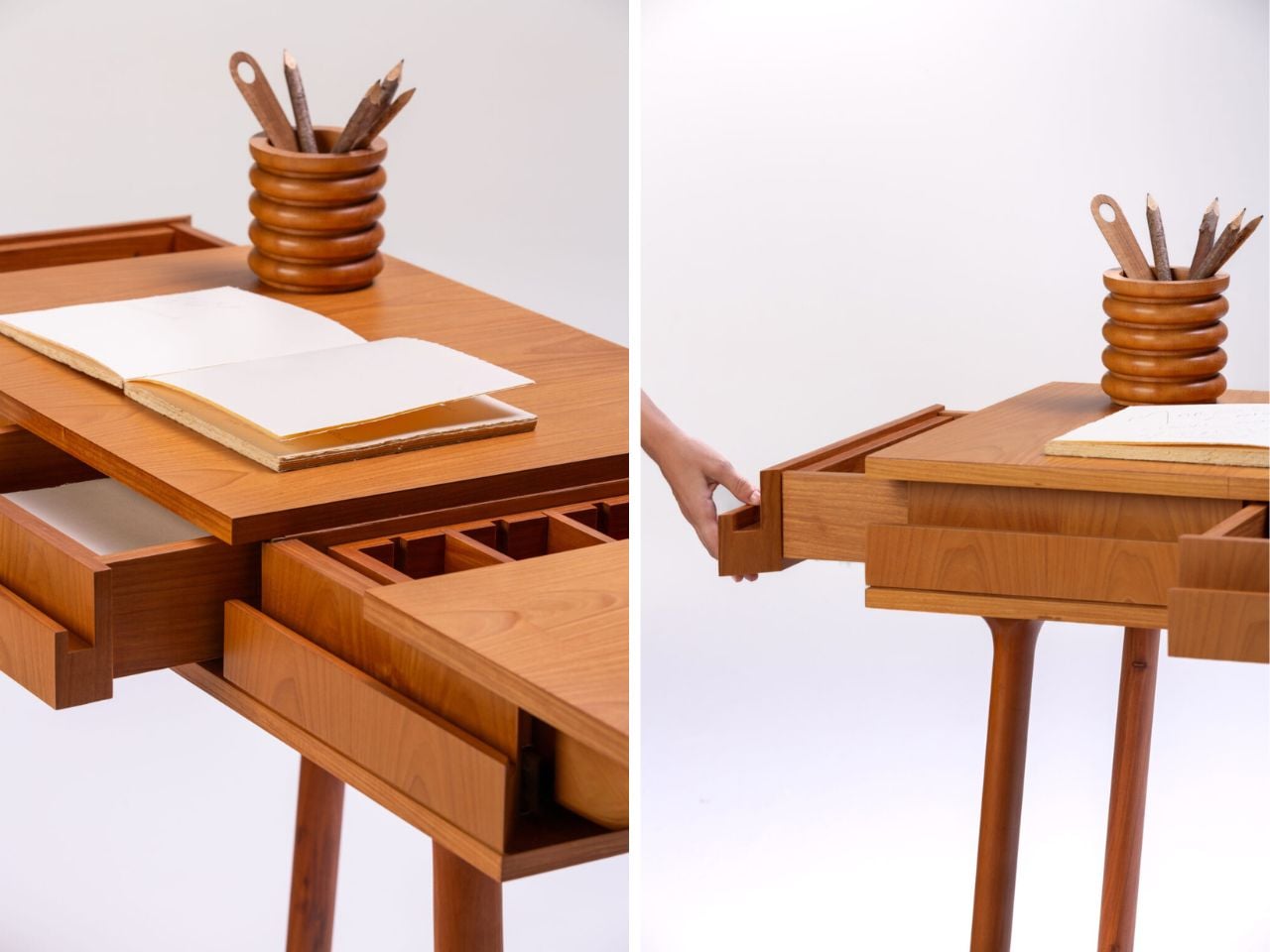
Furthermore, the desk brilliantly reflects a broader architectural approach to furniture design in which storage is treated not as an afterthought, but as an integral architectural element. Its compartments are expertly concealed within the overall composition of the wood, and their gradual revelation dramatically changes how the object is perceived by anyone in the room. The distinct boundary between the exterior shell and the intricate interior world becomes essential to the object’s core identity. From the outside, the desk communicates quiet restraint, elegant simplicity, and calm; from within, it offers a surprisingly rich and intricate arrangement of surfaces and spaces designed to cater to the user’s workflow. These contrasting qualities allow the piece to effortlessly balance visual simplicity with an unexpectedly generous range of practical uses.
Ultimately, the appeal of Lia Siqueira’s design stems just as much from the tactile experience of using it on a daily basis as it does from its striking visual appearance. Siqueira successfully gives the simple act of opening a piece of furniture a meaningful, almost ceremonial role, transforming an ordinary, mundane interaction into a small, pleasant moment of daily anticipation. Much like the timeless literary story that inspired its clever name, the Open Sesame Desk suggests to its user that what remains hidden away can often be just as intriguing, valuable, and rewarding as what is immediately visible on the surface.