The widespread birdwatching boom that captured public interest in 2020 proved to be one of the more enduring and meditative hobbies to emerge from a turbulent era. Millions of households discovered a quiet satisfaction in tracking local wildlife, identifying visiting species, and observing the daily dynamics of backyard feeding stations. As consumer demand grew, the technology sector responded by establishing a distinct category of smart bird feeders. Brands like Bird Buddy and Netvue Birdfy introduced camera-equipped, artificial intelligence-powered devices capable of identifying bird species and transmitting video clips directly to user smartphones. However, these existing products shared a fundamental limitation: they were engineered with the assumption that users wanted to monitor wildlife strictly within the confines of their own backyards, well within the reliable range of a home Wi-Fi router. For suburban homeowners with routers close to the garden, this design choice worked well. For everyone else, it presented a frustrating barrier. Enter the FEED 1, developed by Wyoming-based company BirdVue, which was specifically engineered to break free from the limitations of traditional home networks.
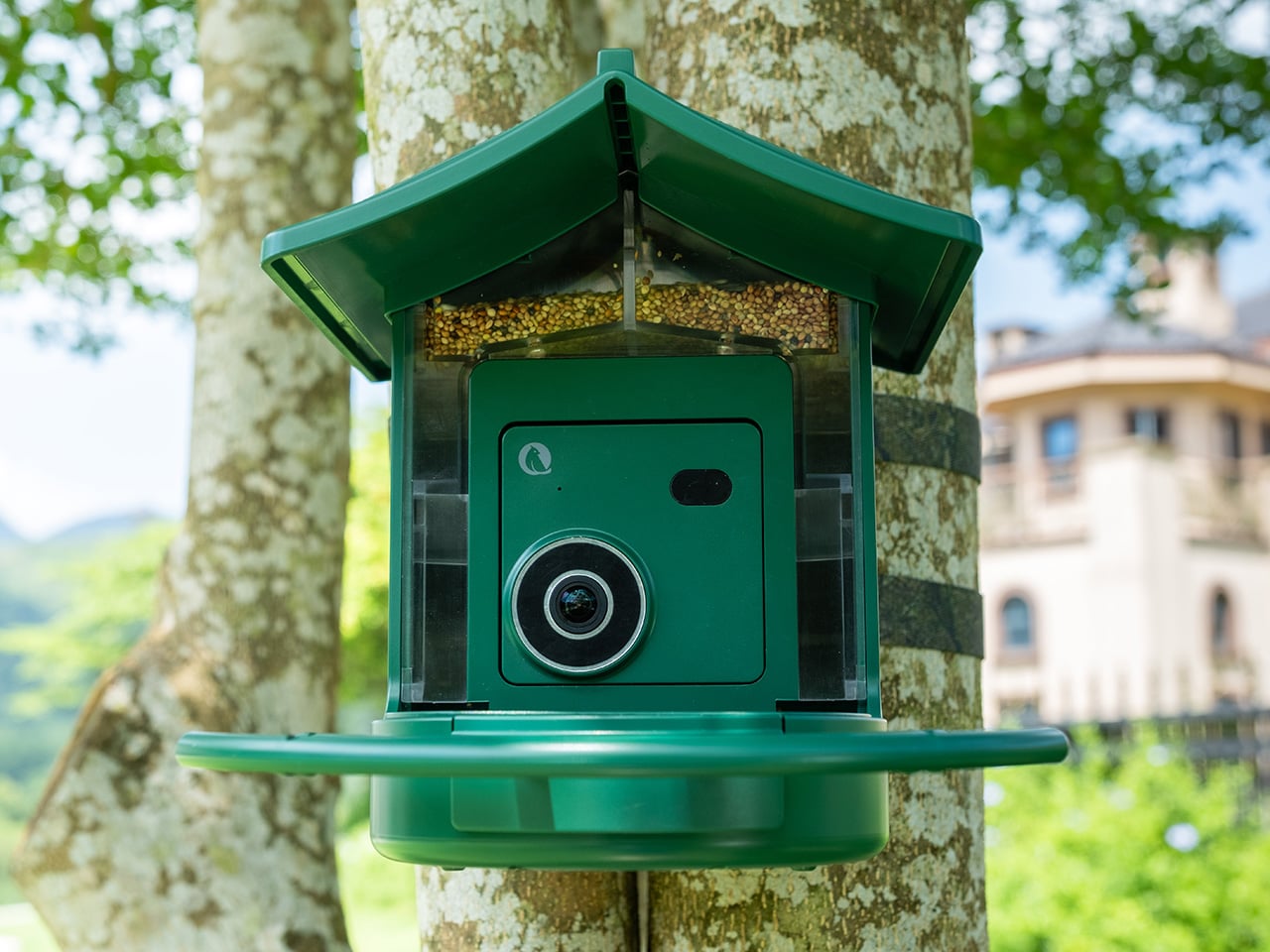
Operating on 4G LTE and dual-band Wi-Fi connectivity supported by a built-in eSIM, the FEED 1 functions wherever a cellular signal is available, expanding the potential monitoring zone far beyond the reach of a standard router. To elevate its technical capabilities further, BirdVue integrated millimeter-wave radar technology into the device, ensuring that the camera initiates recording the moment a bird approaches rather than after it has already landed. An advanced artificial intelligence layer handles species identification, visit logging, automated highlight reel generation, and real-time food level monitoring, while also granting users the ability to remotely dispense seed via a dedicated mobile application. Power is managed through dual three-watt solar panels that replenish an internal 5200 milliamp-hour battery. Encased in an IP65-rated weatherproof shell designed to withstand year-round outdoor exposure, the device also includes integrated GPS tracking to pinpoint its exact location at any given time. All of this sophisticated hardware is housed within a forest-green birdhouse silhouette that blends naturally into a garden environment rather than resembling a piece of modern consumer electronics.
The most prominent advantage the FEED 1 holds over its market competitors lies in its radical placement flexibility. By supporting both 4G LTE and dual-band Wi-Fi simultaneously, and utilizing a built-in eSIM to manage cellular connectivity without requiring a physical SIM card, the feeder can be positioned wherever birds naturally congregate. This capability allows users to place the device deep within expansive gardens, along remote tree lines, beside rural lakes, or anywhere on a large property with cellular coverage, completely untethered from the geographical boundaries of a home router. Installation options are equally versatile, featuring an included hanging hook, mounting straps, and a base bracket. This array of mounting accessories enables the FEED 1 to be suspended securely from a tree branch, strapped firmly to a tree trunk, or mounted atop a dedicated post, ensuring that the feeder is placed where the birds actually live rather than where a Wi-Fi signal happens to reach.
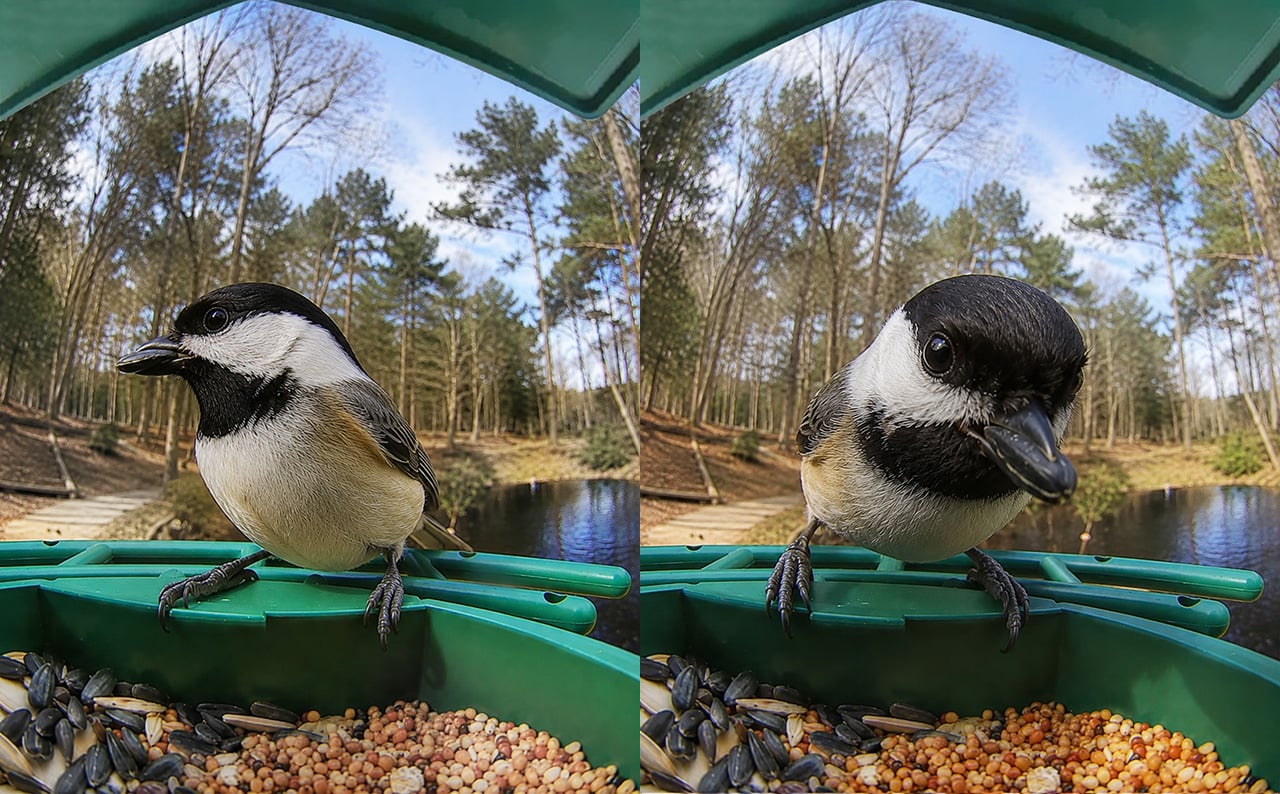
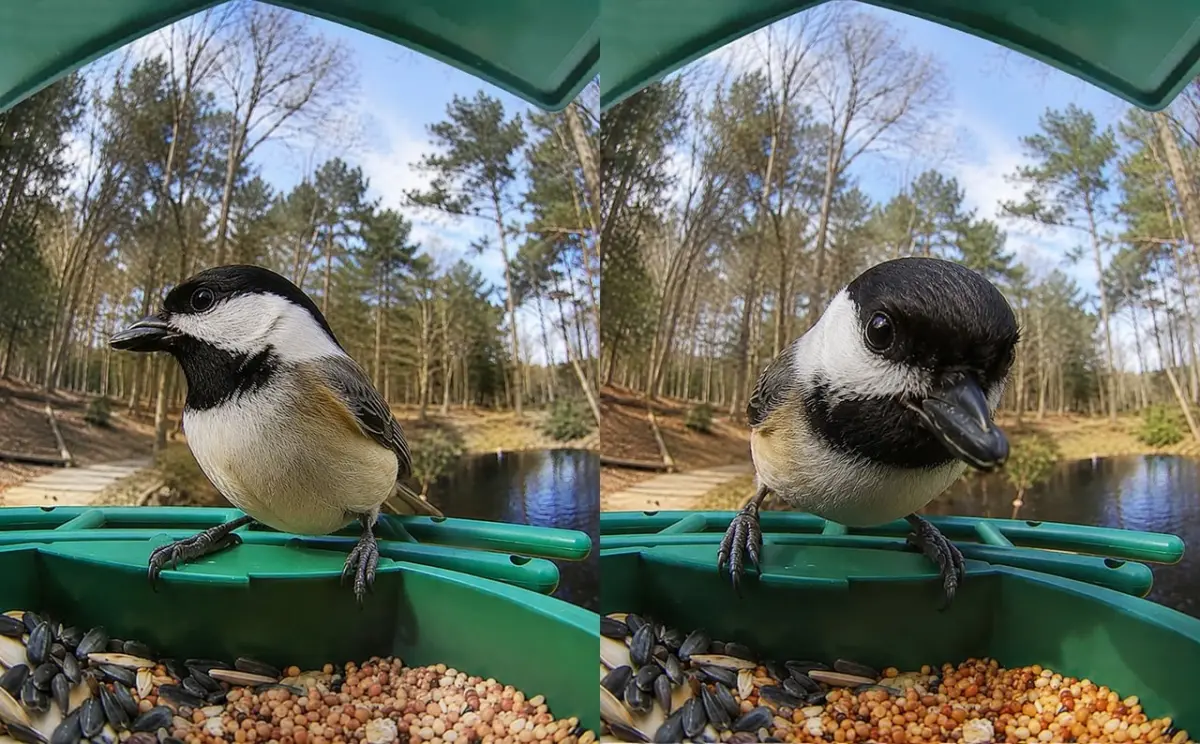
The integration of millimeter-wave radar represents a significant technological departure from standard wildlife monitoring hardware, fundamentally changing how a bird visit is captured. Most conventional smart feeders rely on passive infrared sensors, which react strictly to heat signatures only after an animal has already settled onto the perch. Similarly, camera-based motion detection systems often suffer from timing delays and are prone to false triggers caused by wind-blown foliage or fluctuating sunlight conditions. BirdVue’s radar system operates at millisecond speeds the moment a bird enters its detection perimeter, initiating video recording during the initial approach and landing phase rather than after the bird has already begun feeding. Furthermore, this radar technology performs consistently in adverse weather conditions such as heavy rain, fog, and low-light environments, where passive infrared and camera-based triggers frequently fail or misfire. The resulting footage captures the entire dynamic interaction, beginning with the bird in mid-flight.
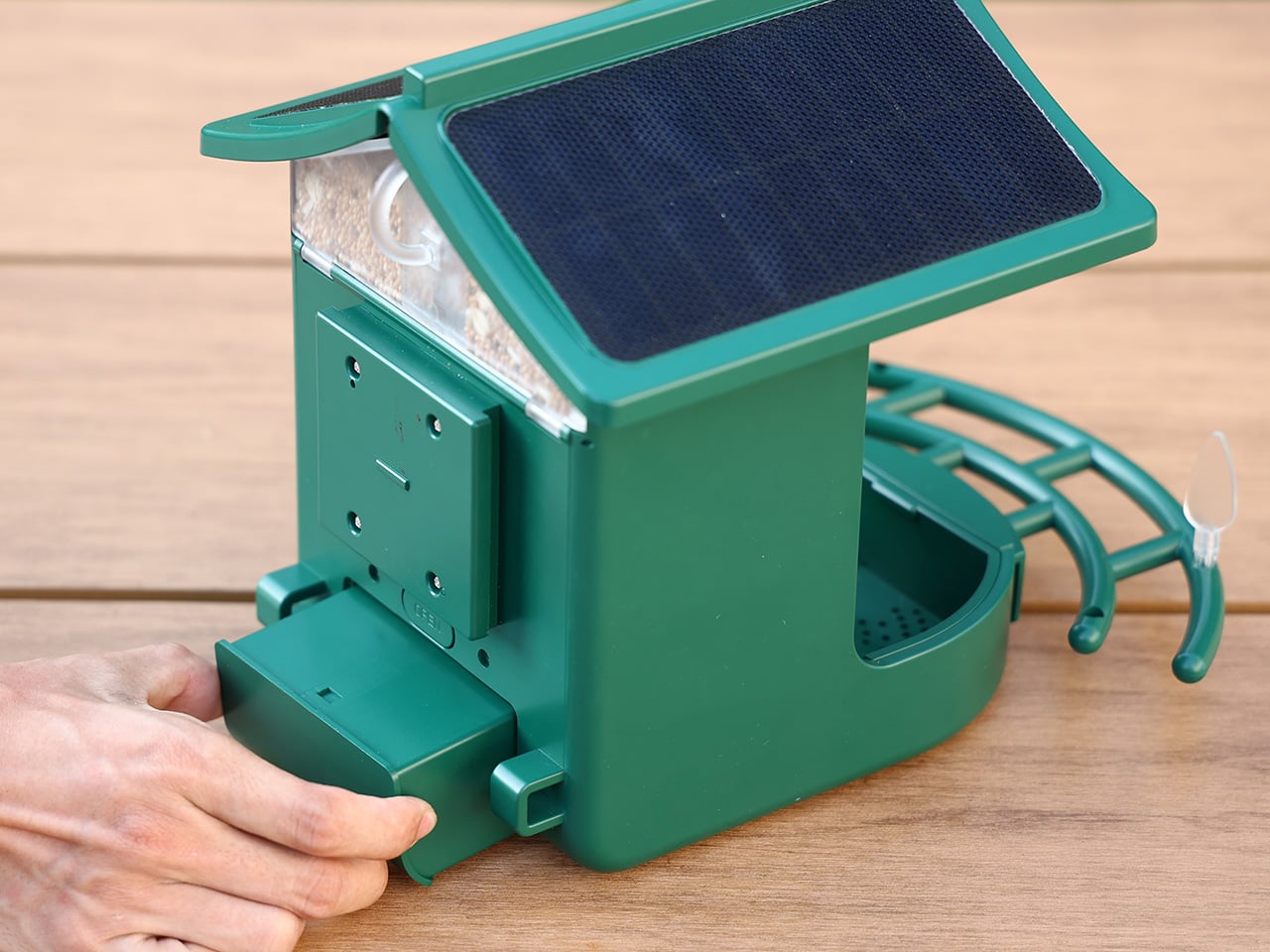
Aesthetics and physical design were clearly prioritized during the development of the FEED 1, with its forest-green birdhouse shell standing in stark contrast to competing products in the smart feeder category. Many alternative devices resemble outdoor security cameras retrofitted with a small seed tray, featuring angular plastic housings and an unmistakably technological appearance. In contrast, the FEED 1 adopts a traditional pitched roof silhouette with dual solar panels integrated flush across the surface, a wide perch tray situated at the base, and a camera lens positioned discreetly beneath the roofline to mimic a front window. Measuring approximately 7.8 by 7.9 by 8.8 inches and weighing 3.8 pounds, the unit is proportioned like a genuine birdhouse, while its dark green exterior allows it to pass for conventional garden furniture. This careful attention to industrial design achieves a harmonious balance between heavy-duty technology and natural outdoor integration.
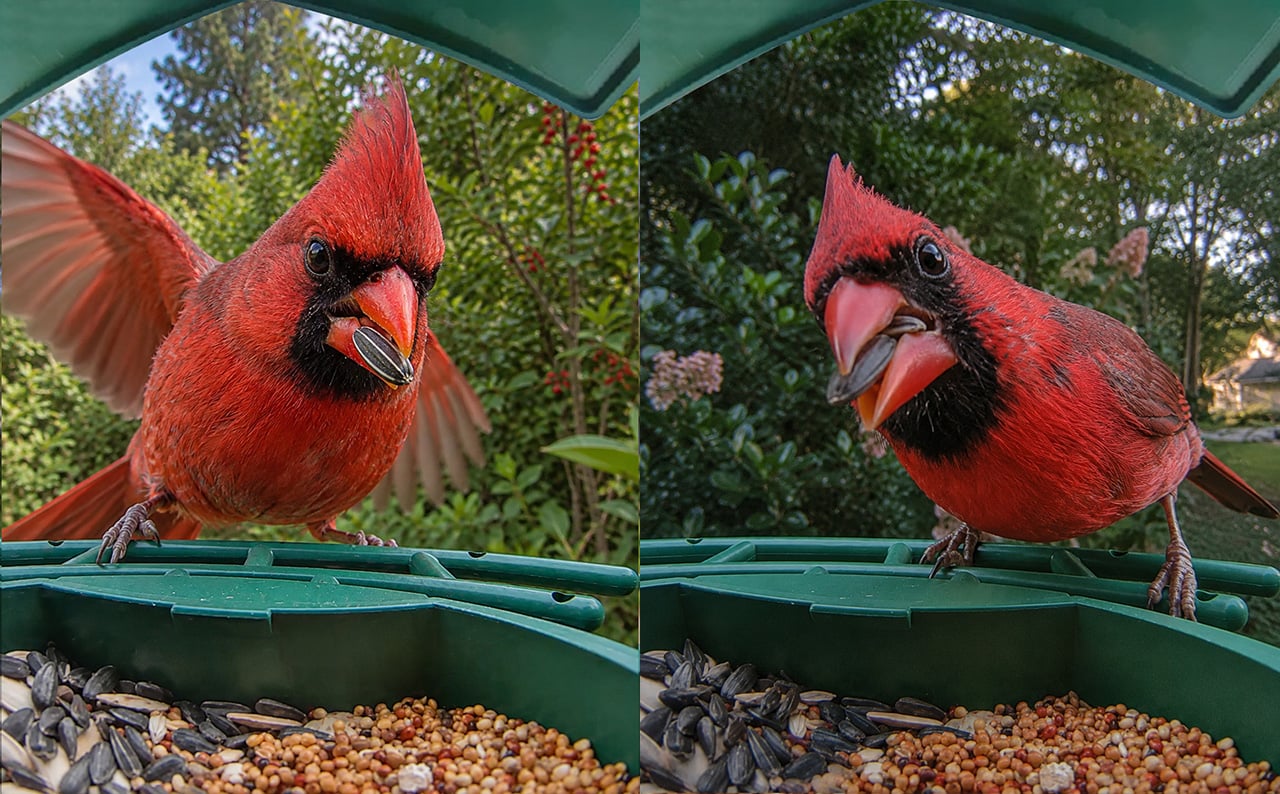
Species identification serves as the foundational baseline rather than the limit of the FEED 1’s artificial intelligence capabilities. The system identifies bird species in real time, distinguishing rare visitors from regular neighborhood regulars and dispatching instant push notifications when an unusual species appears. The companion application tracks complex behavioral patterns, documenting specific activities such as feeding, wing stretching, and territorial disputes over perch space. Additionally, the software monitors indicators of avian health and potential illness in visiting wildlife, an unexpected diagnostic feature that provides valuable context for backyard ornithologists. An automated AI Bird Story Engine compiles the best captured footage into curated highlight reels, filters out low-quality or obstructed captures, and organizes the data into a searchable digital bird journal equipped with seasonal trend tracking tools.
Food management and hygiene are addressed through an enclosed dual-bin feeding system designed to keep seed fresh and prevent mold accumulation, all while remaining manageable via smartphone controls. Each feed bin is monitored independently by the artificial intelligence, which assesses food levels in real time and alerts the user when a specific chamber runs low. Owners can trigger a manual seed dispensing cycle with a single tap or enable an automated feeding mode that releases seed in response to detected bird activity. This enclosed configuration resolves a common hygiene issue in smart feeders, where open trays accumulate moisture and encourage rapid mold growth that can negatively impact bird health and discourage return visits. Additionally, an integrated community feature within the app allows users to browse highlights and activity feeds from nearby BirdVue devices, maintaining engagement even on days when local wildlife activity is low.
Power autonomy and durability round out the hardware specifications, ensuring reliable operation across diverse geographic regions. The dual three-watt solar panels embedded in the pitched roof continuously charge the internal 5200 milliamp-hour battery, and an optional 10,400 milliamp-hour removable backup battery is available for extended periods of overcast weather or harsh winter conditions. With an IP65 weatherproofing rating and an operational temperature range spanning from negative four degrees Fahrenheit to 140 degrees Fahrenheit, the device is engineered to endure demanding outdoor environments. GPS tracking provides added security and convenience, allowing owners to locate the feeder via the app if it is positioned at a distance from the primary residence. The onboard three-megapixel camera records high-definition video at 1440p resolution, offering flexible storage choices between local media and cloud services. With a total seed capacity of approximately 2.3 cups distributed across its dual bins, the FEED 1 is complemented by BirdVue’s companion trail camera, the IP67-rated TRAIL 5, which offers expanded remote monitoring capabilities beyond the immediate feeding station.
The BirdVue FEED 1 is available for purchase starting at $179, reflecting a promotional discount from its standard manufacturer’s suggested retail price of $299. Global shipping for the smart bird feeder is scheduled to commence in November 2026.