Berlin-based artist and inventor Niklas Roy has long been fascinated by the intricate convergence of art and technology. Spanning everything from robotics to interactive gaming systems, his creative output consists of quirky yet deeply thought-provoking sculptures and installations designed to investigate the complex relationships between human creativity, scientific principles, and modern engineering. His mechanical contraptions are frequently infused with a distinct, lighthearted twist, a signature approach that actively prompts viewers to think critically, question their assumptions, and get physically involved with the artwork. For his most recent project, Roy decided to draw inspiration from one of the most fundamental types of technology that human civilization has ever developed: the simple, yet profound, act of telling time.
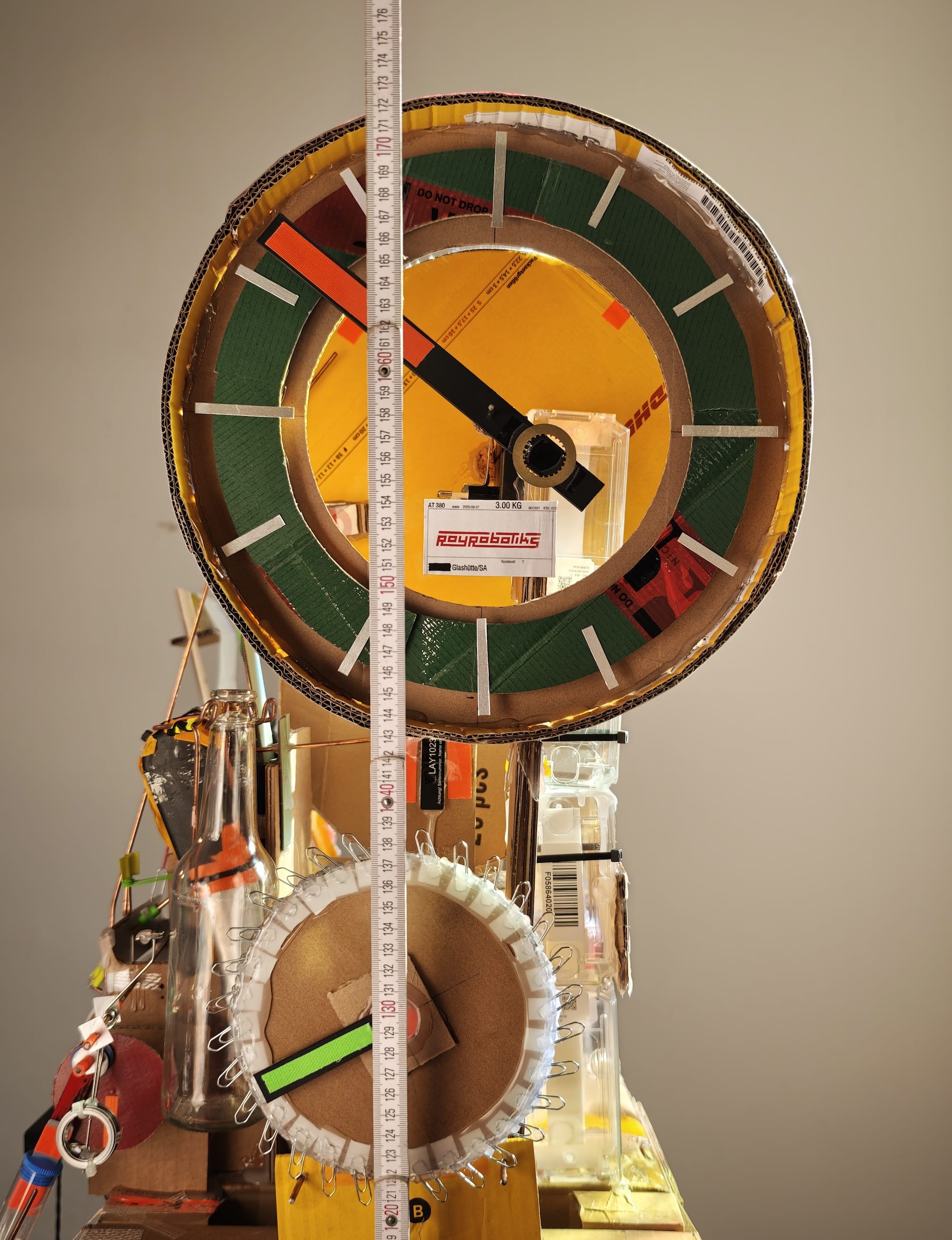
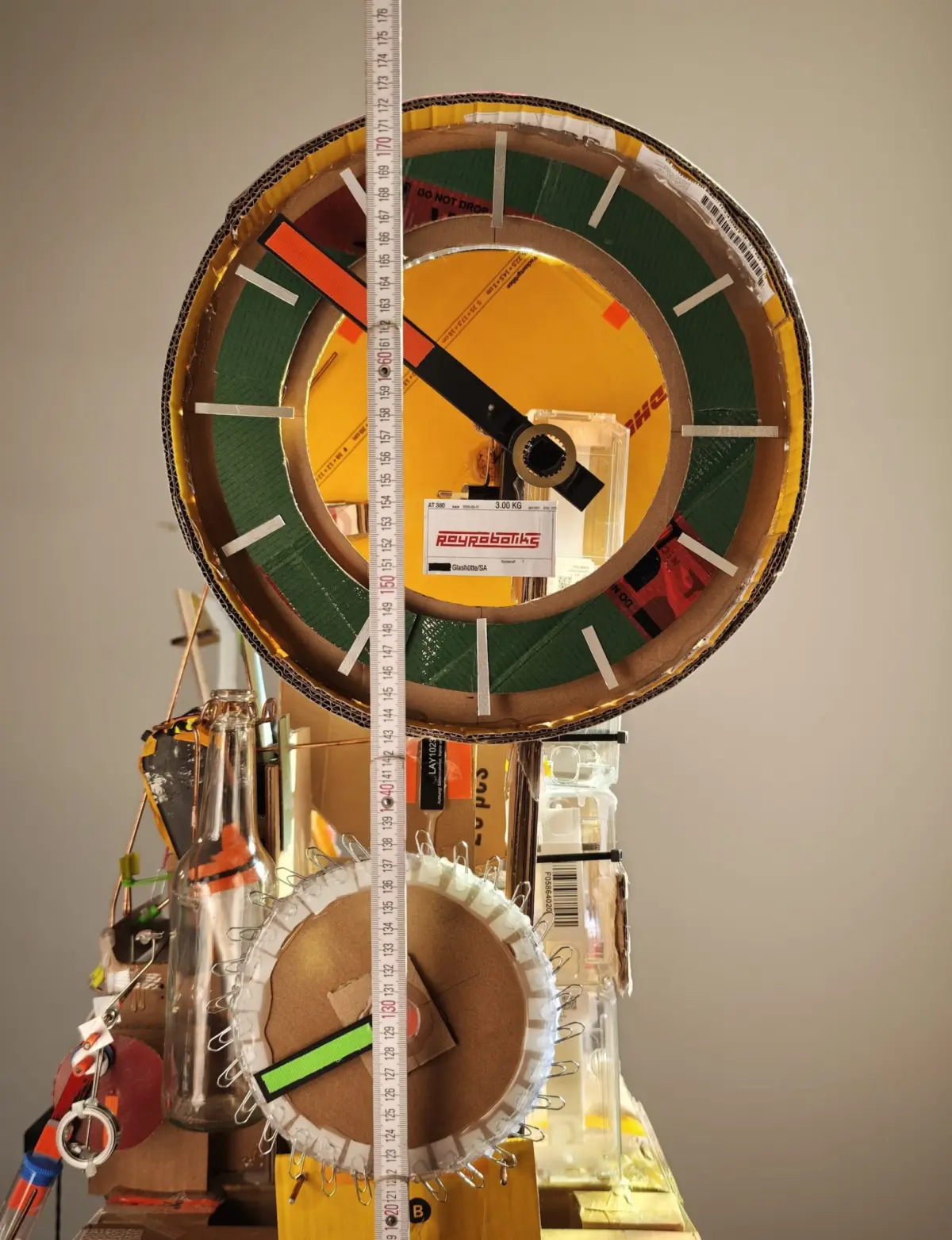
The resulting creation, aptly titled the "Glashütte Trash Clock," derives its name directly from the historic town of Glashütte in Saxony, Germany. It was in this picturesque municipality that Roy participated in an artist residency this year, immersing himself in the local culture and environment. Notably, Glashütte holds a legendary status as the undisputed birthplace of Germany’s renowned, centuries-old watchmaking industry. It is a place historically synonymous with microscopic precision, elite craftsmanship, and generational mastery of gears, springs, and dials. Yet, true to his subversive and playful artistic spirit, Roy decided to take everything the region stands for and turn it completely on its head. "Glashütte is synonymous with precision and centuries-old watchmaking craft, and I wanted to make the opposite," Roy explains, setting the conceptual foundation for his unconventional timepiece.
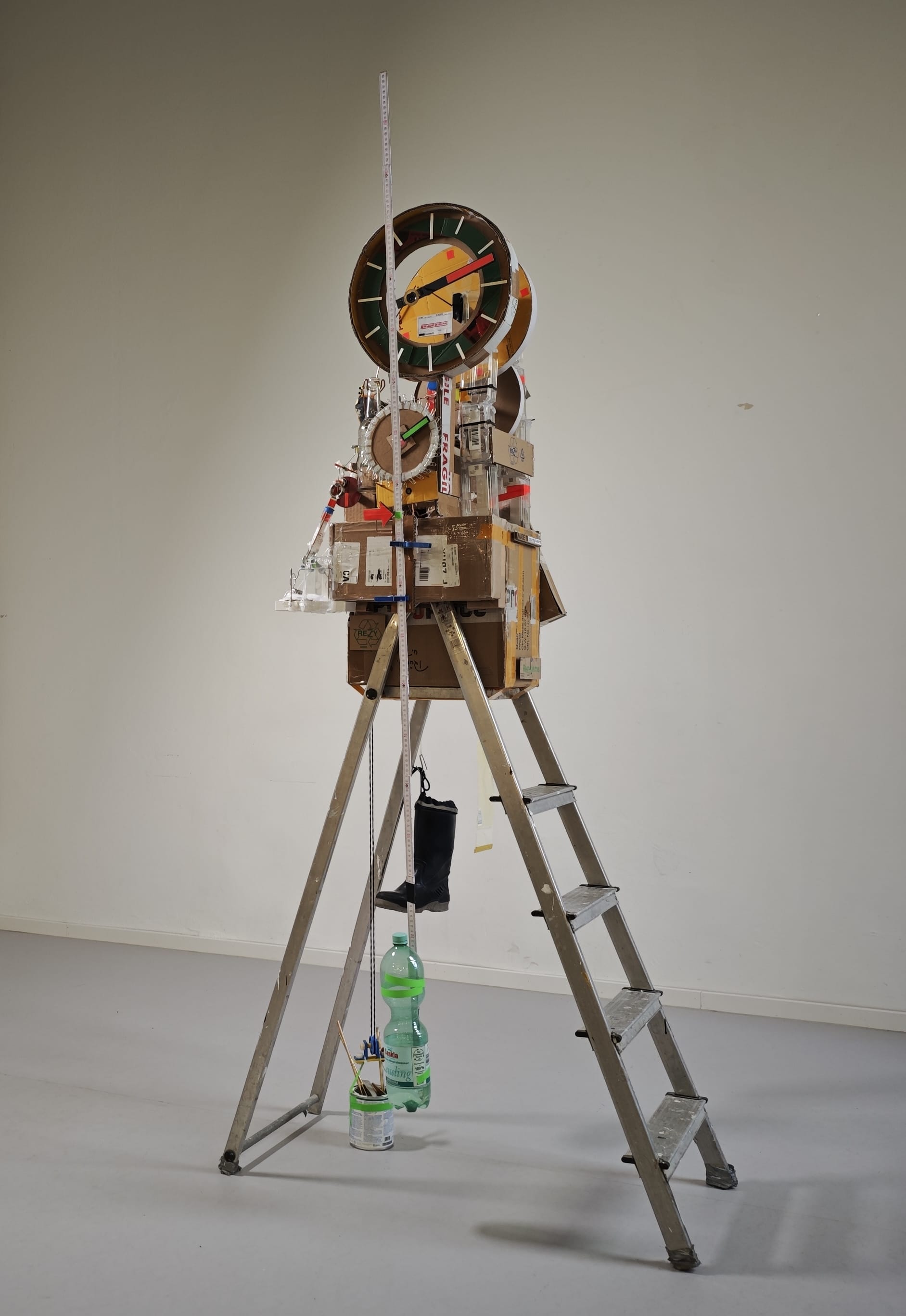
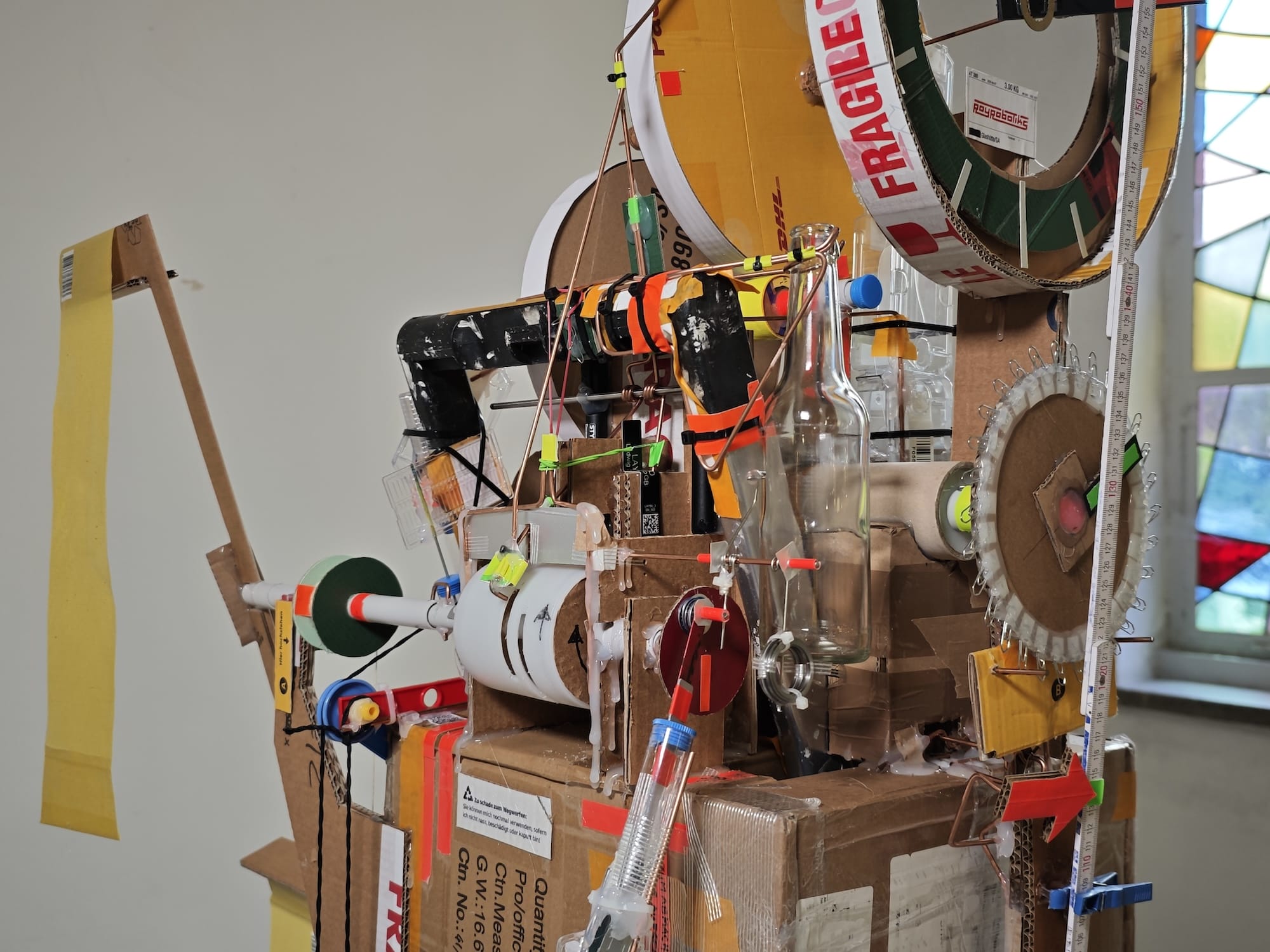
Rather than relying on polished brass, delicate rubies, tempered steel, or specialized watchmaking tools, the Berlin-based artist imposed a strict logistical limitation on himself. He constructed the entire clock using only items and materials he could scrounge up locally as discarded waste. The resulting apparatus is an eccentric assembly of everyday detritus, featuring common items such as ordinary tape, plastic zip ties, hot glue, discarded cardboard, an old yardstick, stray pieces of plastic, and an assortment of other random objects found lying around. Despite its humble and chaotic material origins, the clock actually functions, albeit on a uniquely compressed and fragile schedule. "It runs for about half an hour, features a paperclip-escapement, a glass bottle gong, and a ‘random complication’—which answers the fundamental question, ‘Now or Never?’" Roy notes, describing the inner workings of his ephemeral sculpture.
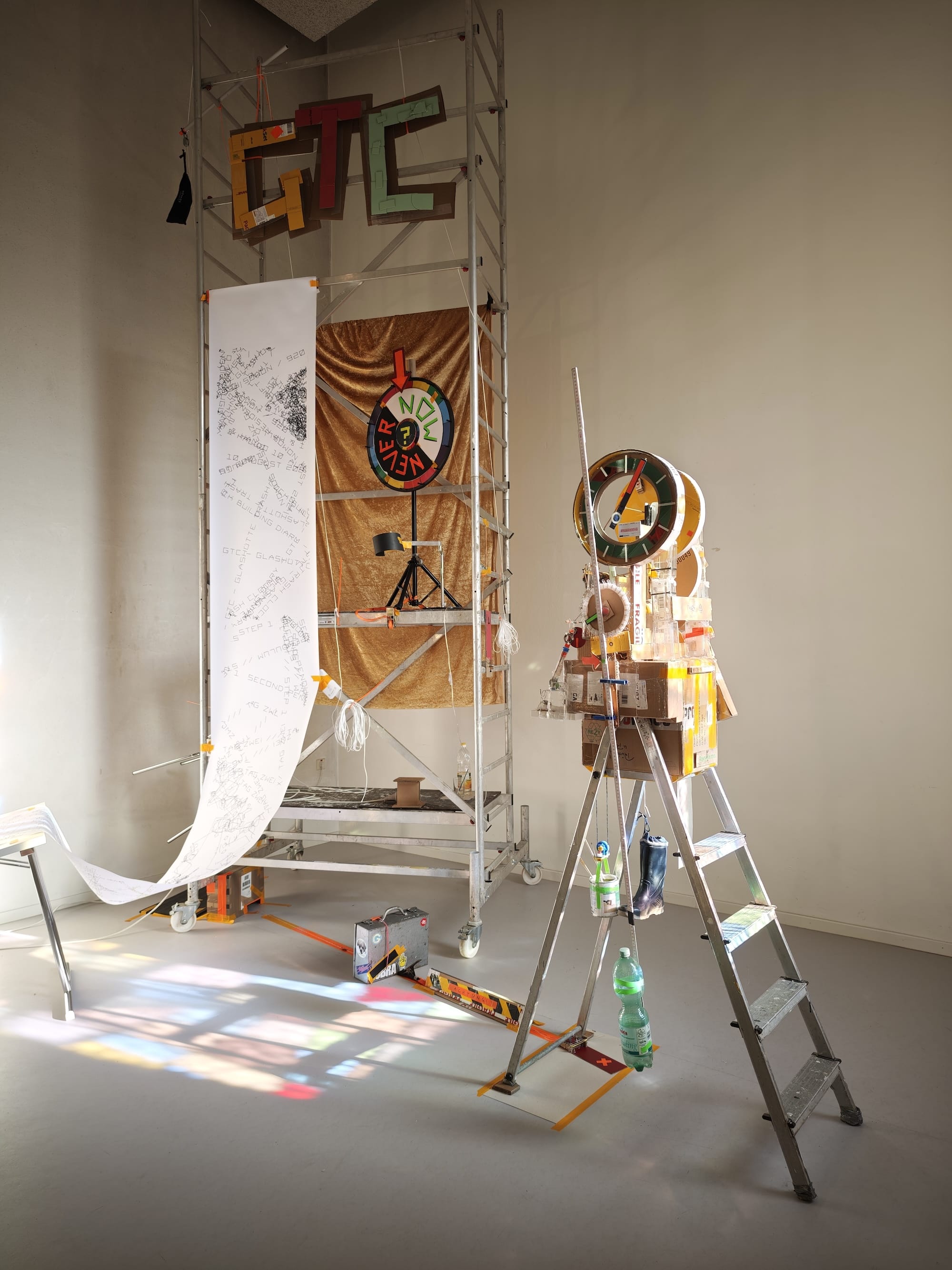
For observers who might be less familiar with the intricate mechanics of traditional timepieces, an escapement is a vital, tiny mechanism commonly found in pendulum clocks and mechanical watches. Its primary job is to repeatedly release a gear as the system moves, which in turn helps to steadily advance the hands of the clock at a measured pace. In Roy’s iteration, this sophisticated engineering feat is humorously brought to life using ordinary paperclips bent to purpose. Furthermore, the acoustic element of the clock—traditionally a carefully tuned chime or bell that signals the passing hours or half-hours—is replaced here by a humble glass bottle serving as a gong.
Perhaps most intriguingly, the inclusion of a "random complication" subverts traditional horological terminology. In high-end watchmaking, complications refer to additional functions beyond simple timekeeping, such as perpetual calendars, moon phases, or chronographs. Roy’s "random complication," however, has nothing to do with traditional clock references; instead, it leans heavily into the realms of games, chance, and existential philosophy. While humanity has long perceived the passing of time as a steady, predictable, and methodical march forward, the artist’s added existential element generates a playful tension, injecting a sense of wonder, unpredictability, and absurdity into the mechanical routine. Through this whimsical juxtaposition of high-precision heritage and low-brow scavenging, the "Glashütte Trash Clock" invites audiences to reconsider not only how we measure time, but the value we assign to the materials we discard every day.