Artificial intelligence has plenty of serious questions to answer, ranging from copyright battles and escalating environmental costs to fundamental data privacy concerns. Beyond those macro challenges, however, there is a more everyday hurdle that technology companies continue to grapple with: for many everyday users, AI still feels inherently impersonal. While a digital assistant might be undeniably useful for executing a quick task or summarizing a document, it rarely feels like something you would genuinely want to carry around with you as a constant companion.
Meta’s upcoming hardware venture, the Muse Charm, takes a radically different design approach to solving this psychological barrier. Instead of keeping artificial intelligence trapped inside a smartphone application or tethered to a desktop browser, Meta is packing its Muse AI agent into a tiny, keychain-sized device and giving it a distinct, interactive character that users can get to know over time.
The Muse Charm is conceptualized as a dedicated handheld hardware accessory built specifically to house and interact with Muse, Meta’s proprietary AI agent. Rather than requiring users to unlock their smartphones, navigate through a crowded home screen, and open a specific application, the hardware pitch is that you can simply reach into your pocket or bag for the Charm whenever you want to talk, touch, or interact with Muse.

While the agent will still be fully accessible through standard smartphone software—meaning the physical keychain device is not meant to be a mandatory gateway—the physical product is designed to offer a simpler, friction-free mode of access. It promises contextual, conversational help that is close at hand the moment a question pops into your head or a practical task arises during your day.
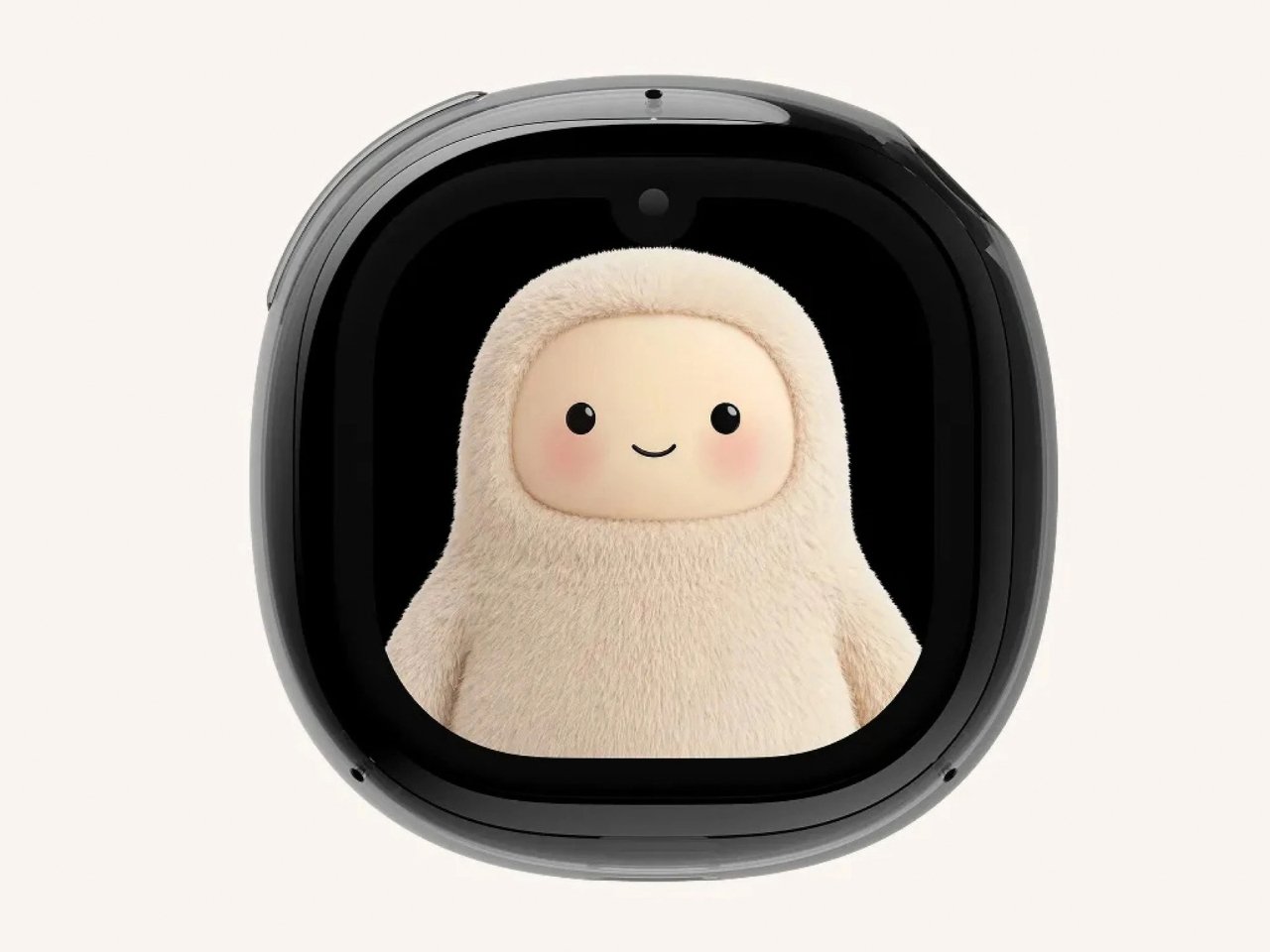
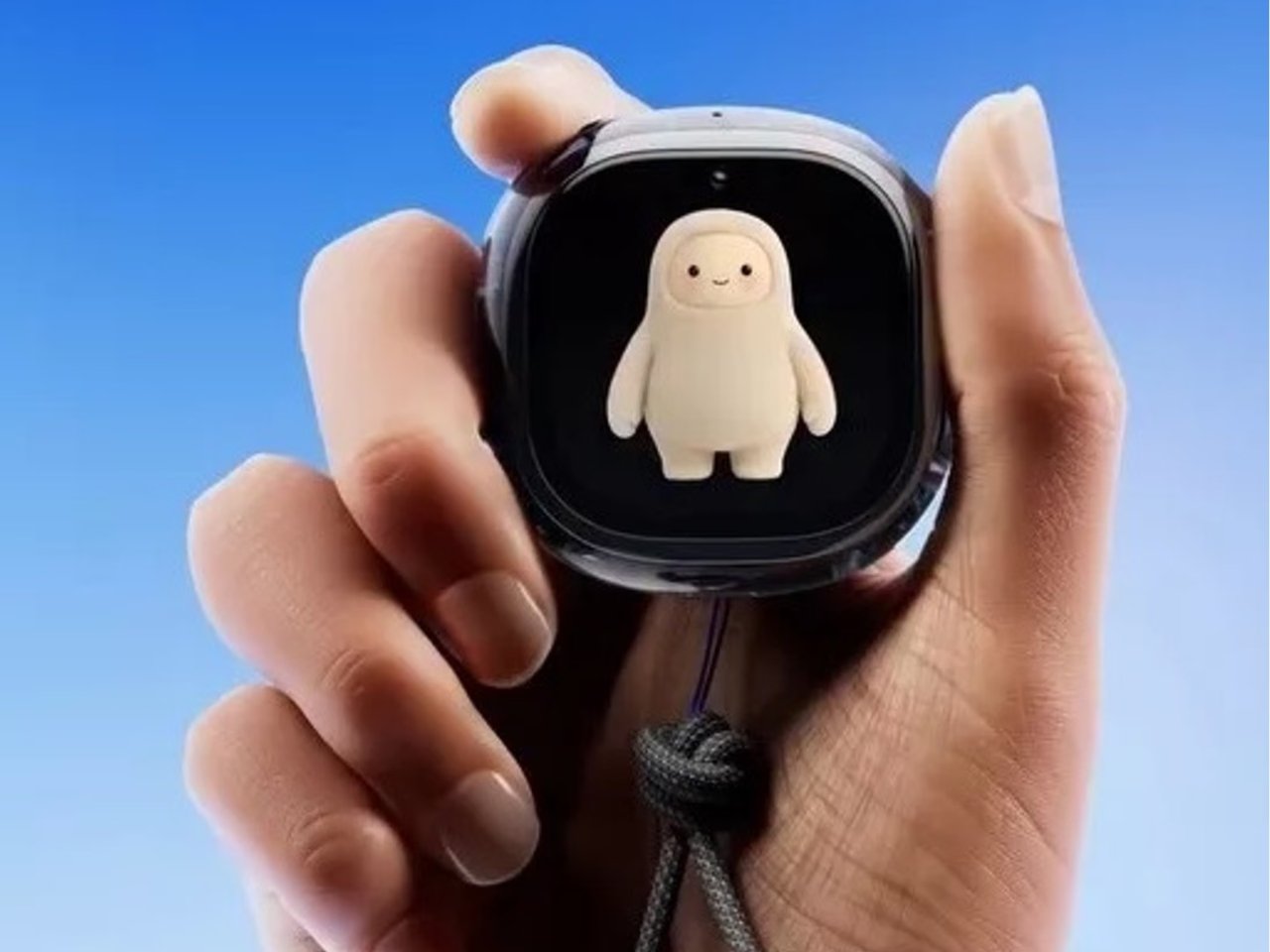
The physical aesthetic of the Charm heavily borrows from nostalgic handheld digital toys, featuring a rounded-square, or "squircle," shape that immediately evokes memories of a classic Tamagotchi. In promotional imagery released by Meta, a compact dark display screen and a smooth rounded casing frame a small beige digital character, while a delicate cord hangs from the top of the body. It looks unmistakably like a playful lifestyle accessory rather than a shrunk-down miniature smartphone. That distinction is central to Meta’s strategy: the company is not merely trying to cram another screen into our pockets, but rather attempting to make an advanced AI assistant feel approachable, friendly, and safe enough to integrate into the rhythms of daily life.
Importantly, the character displayed on the hardware is an on-screen digital mascot rather than a physical plush covering wrapped around the device. Users will have the ability to give the character a custom name, injecting a personal touch into an assistant that might otherwise manifest as sterile text on a screen or an abstract application icon. Meta describes the Charm as a multi-modal interface designed to connect users with Muse through voice commands, physical touch, and an onboard camera. Together, the expressive character and the miniature form factor transform what would otherwise be a strictly practical productivity tool into something that closely resembles a digital companion—at least in appearance and interaction style.
This focus on cuteness and character design is doing significantly more work than simply making the product photogenic for tech blogs. It provides the underlying Muse agent with a recognizable, endearing identity and offers a much gentler introduction to powerful technology that many consumers still find unsettling or intrusive.
At the same time, industry analysts note that a friendly face is fundamentally a design choice rather than a technological solution to ongoing anxieties regarding artificial intelligence. Whether everyday consumers ultimately come to trust Muse will depend far less on how charming its digital avatar looks on a keychain screen and far more on what the autonomous agent actually does behind the scenes with the digital access and permissions they grant it.
Beneath its playful exterior, Muse is intended to handle robust, practical work. The agent is engineered with capabilities that include reading through personal emails, booking classes, drafting complex documents, and executing online purchases—though high-profile friction has already emerged, with platforms like Amazon reportedly blocking purchases through the agent. These advanced capabilities belong to Muse as a software platform and agent, and they should not be mistaken for a guarantee that every complex multi-step task can be completed entirely on the miniature Charm without occasionally falling back on a traditional smartphone or computer. Instead, the primary benefit for users is expected to be getting rapid assistance with minor jobs the exact moment they arise, rather than hoarding tasks for a later desk or phone session.
Consider the common scenario of remembering a forgotten errand while walking down the street, or wanting to look up a complex piece of information without pulling out your smartphone, only to get instantly waylaid by a cascade of distracting notifications, social media alerts, and text messages. That specific friction is the precise problem the Charm is designed to address.
The hardware could also potentially appeal to digital minimalists who are actively trying to spend less time staring at glowing phone screens, although industry observers note it is far too early to tell whether carrying around an entirely separate secondary screen would genuinely reduce overall daily screen time. Ultimately, the product’s long-term utility will come down to how smoothly and reliably these quick, spontaneous interactions function in real-world environments.
Of course, instant convenience almost always carries a trade-off, particularly in the realm of consumer technology. In order to function effectively across email management, shopping, scheduling, and other digital services, Muse will inevitably require deep access to personal accounts, private communications, and sensitive information. Prospective users will naturally want absolute clarity regarding what specific permissions they are granting the device and how much ongoing control they retain over the agent’s automated actions. Furthermore, the inclusion of a camera on the Charm makes privacy an urgent, critical question that requires rigorous exploration, rather than something that can be hand-waved away by a cheerful design aesthetic.
As it stands, the Muse Charm remains a forthcoming product currently making its way through the final stages of development. When Meta initially revealed the device, the company was still actively finalizing its hardware materials and internal components, had not yet announced official pricing details, and was setting an ambitious target to ship the product in time for the 2026 holiday shopping season.
This leaves the most significant overarching question wide open: will everyday consumers ultimately find a dedicated keychain gadget easier and more appealing to use than the powerful smartphone they already carry everywhere? If Meta manages to nail that delicate balance of utility and form, the cute digital mascot may successfully draw curious buyers through the door. It will be the day-to-day usefulness of the Muse agent, however, that ultimately gives them a compelling reason to keep it close by.