In the contemplative traditions of Tibetan Buddhism, mandalas have long served as profound devotional imagery, functioning as visual maps of the universe. Characterized by precise, symmetrical geometry and intricate motifs, these sacred compositions depict holy realms while establishing a deep sense of cosmic order through symbolic references to astrological phenomena and the elemental forces of nature. For centuries, Tibetan Buddhist monks have practiced the painstaking art of creating vibrant, multi-colored sand mandalas as a core element of their spiritual mindfulness and meditation. Once these elaborate pieces are finally completed—often after days or weeks of intense, focused labor—they are ritualistically destroyed. The colored sand is customarily swept up and returned to a moving body of water, a powerful physical demonstration illustrating the fundamental Buddhist concepts of impermanence, the transience of all physical life, and the ever-shifting nature of the cosmos.
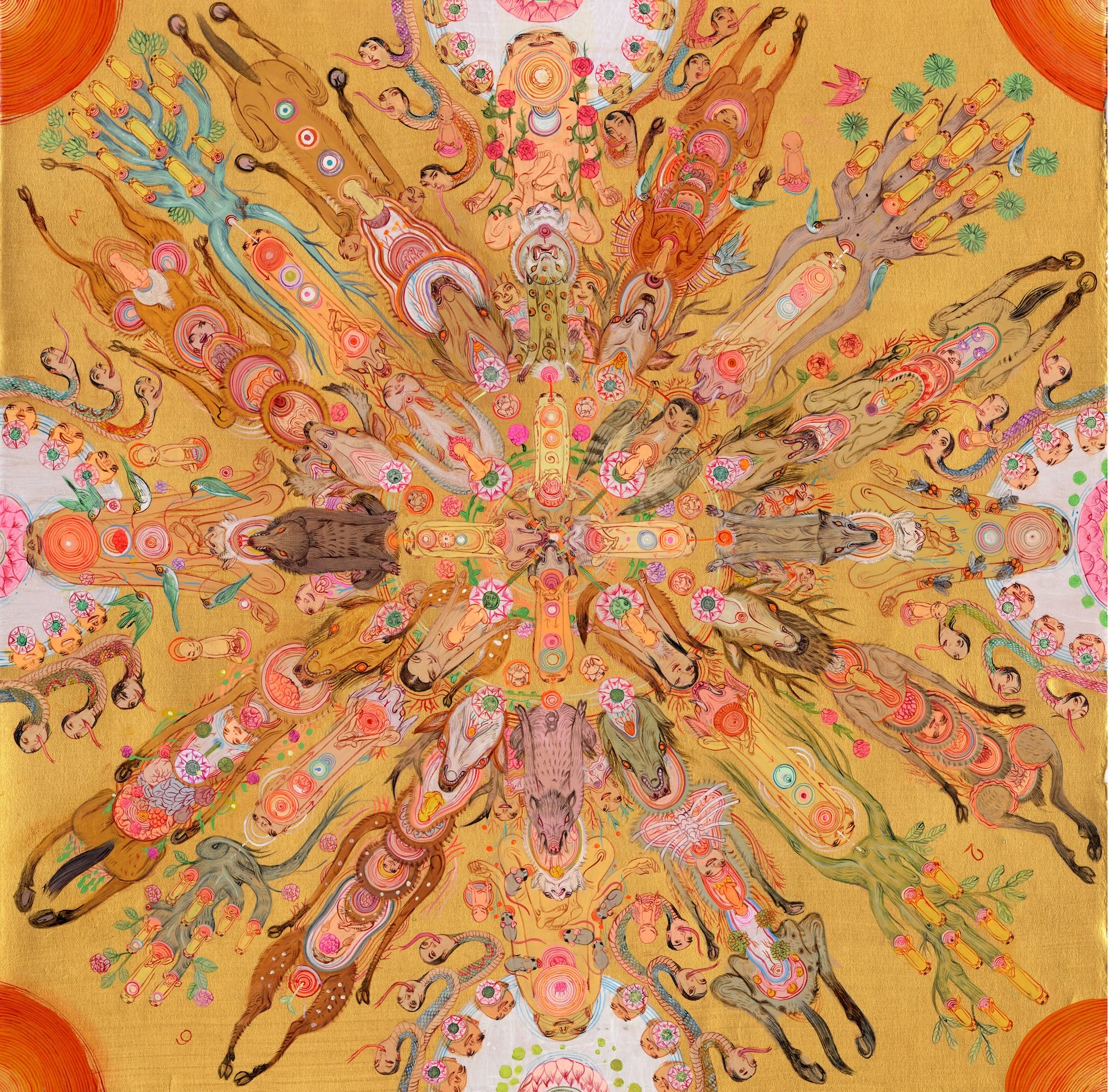
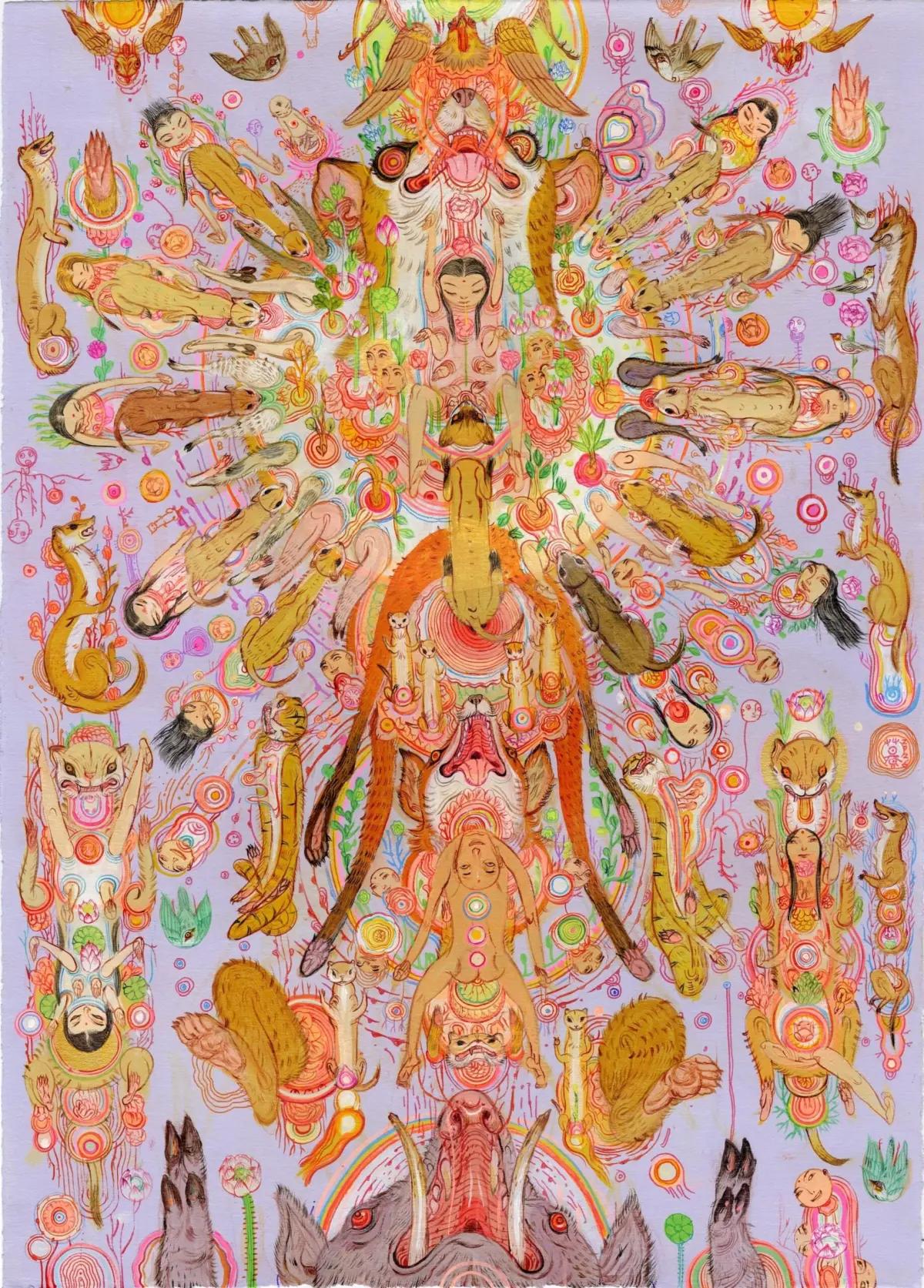
This ancient spiritual framework and aesthetic philosophy now provide the conceptual scaffolding for a striking new body of work by contemporary artist Mu Pan. In his current solo exhibition, titled Micro MUniverse and hosted by Hashimoto Contemporary, the Brooklyn-based artist bridges traditional sacred forms with eccentric, highly contemporary narrative storytelling. Rather than working with traditional iconography alone, Pan composes explosive, dynamic scenes rendered at what the exhibiting gallery aptly describes as a "molecular level." The resulting collection of works on paper and wood panel invites viewers to peer into meticulously detailed miniature universes where chaos and order continuously collide.
At the heart of this new exhibition lies a fascinating philosophical inspiration: a traditional Chinese Buddhist adage teaching that a single cup of water contains countless microscopic lifeforms, and that because of this hidden abundance, great care and mindfulness must be practiced even in the simple act of drinking. Drawing upon this concept of invisible plenitude, Mu plunges headfirst into a fantastical realm governed by symmetry and surrealism. Within his compositions, animals, human figures, and botanical elements converge and hybridize in bizarre, uncanny configurations. Some of these figures dissolve into near-abstract bursts of color and shape, while others retain a distinct, slightly grotesque personality that startles and fascinates the viewer in equal measure.
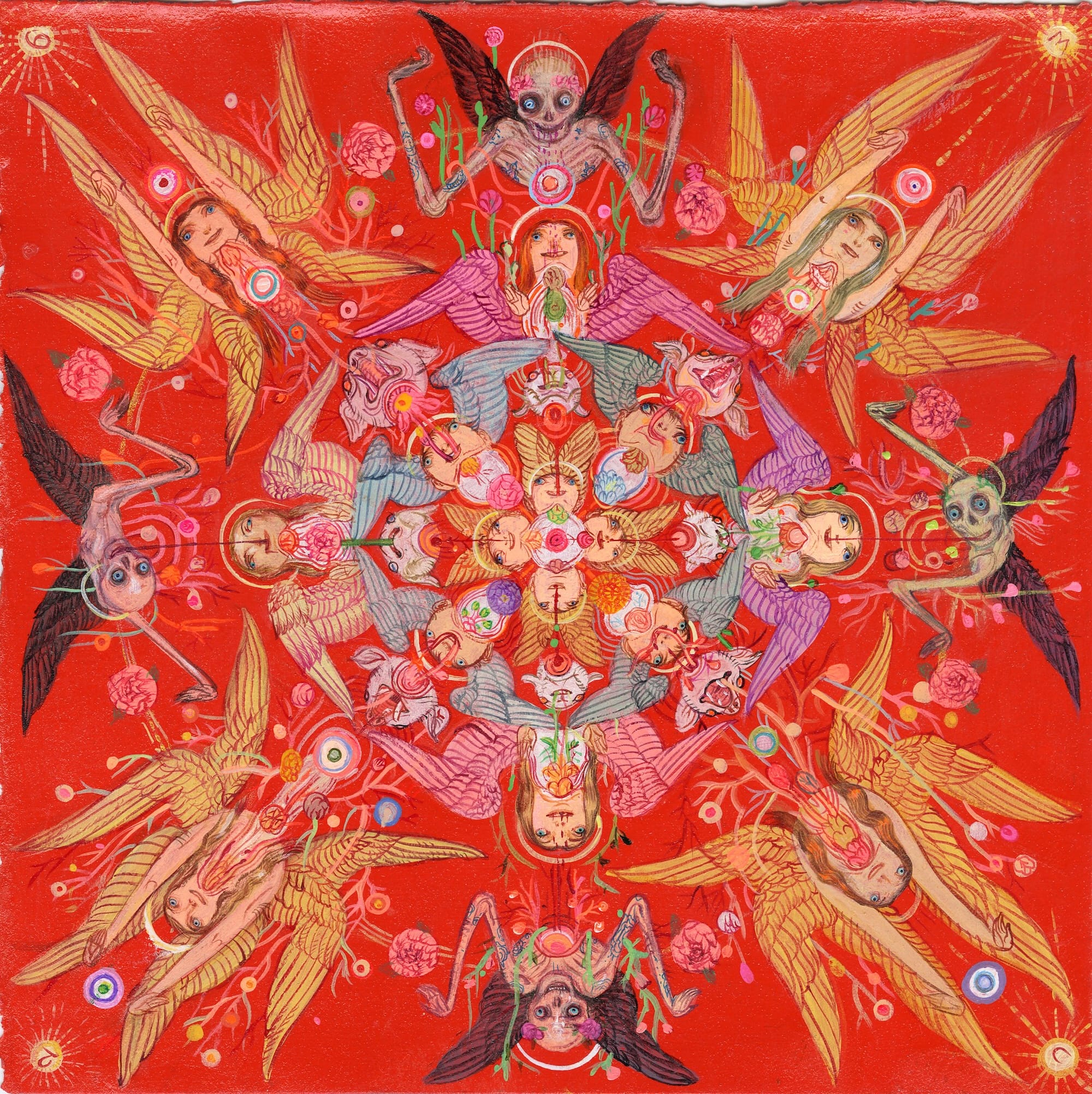
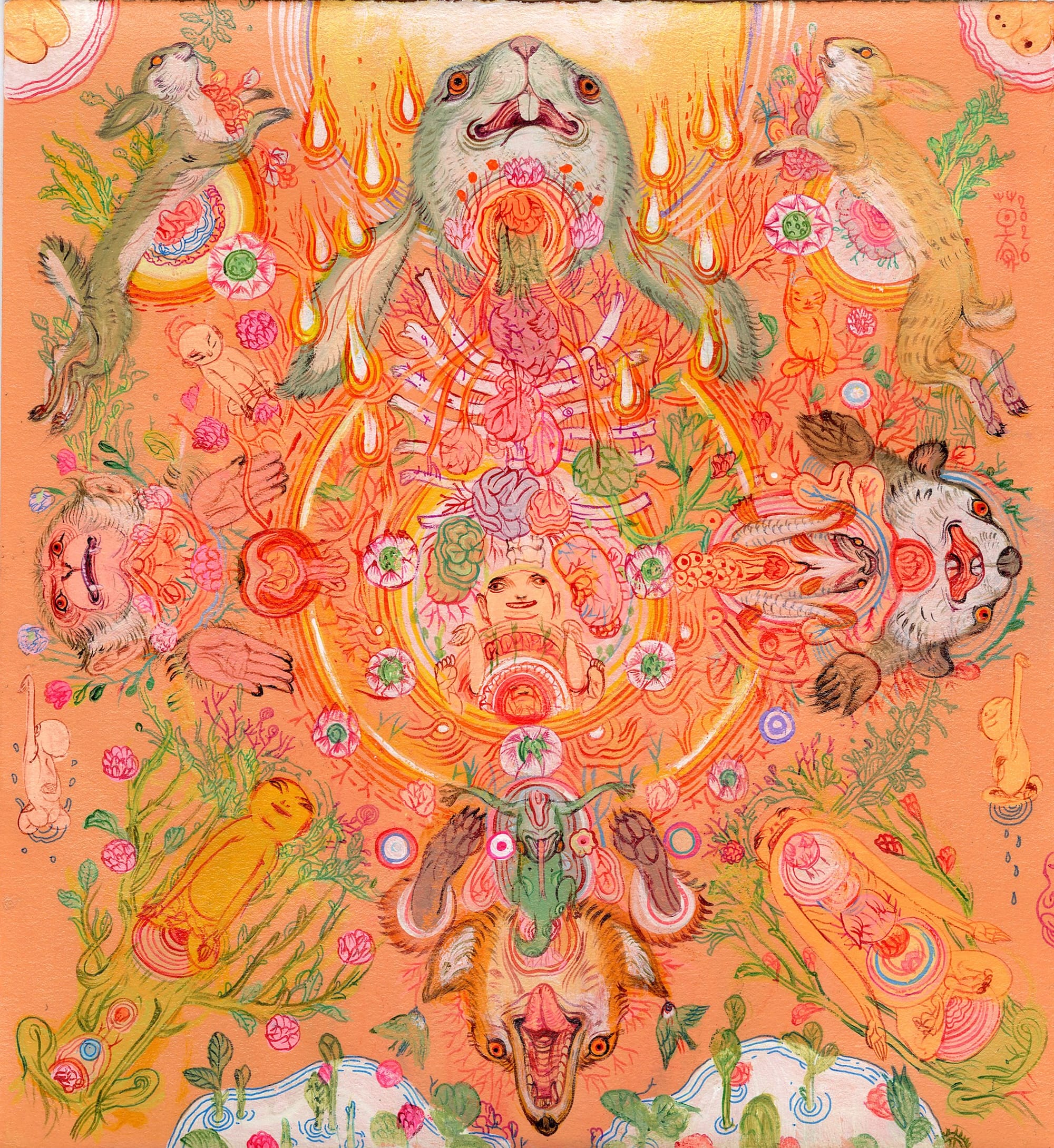
The emotional range of the figures populating Pan’s microscopic worlds is as varied as their physical forms. They shift fluidly between states of ecstatic joy, devious mischief, and serene contemplation. In the striking piece titled "18 Angels," black-winged skeletal figures mingle seamlessly with sublime, ethereal beings, creating an eerie yet captivating tension between mortality and transcendence. Elsewhere, in a painting aptly named "Burning Rabbit," a dramatic and chaotic scene featuring woodland creatures erupts with divine, fiery energy, transforming a familiar pastoral motif into a celestial spectacle of transformation and decay.
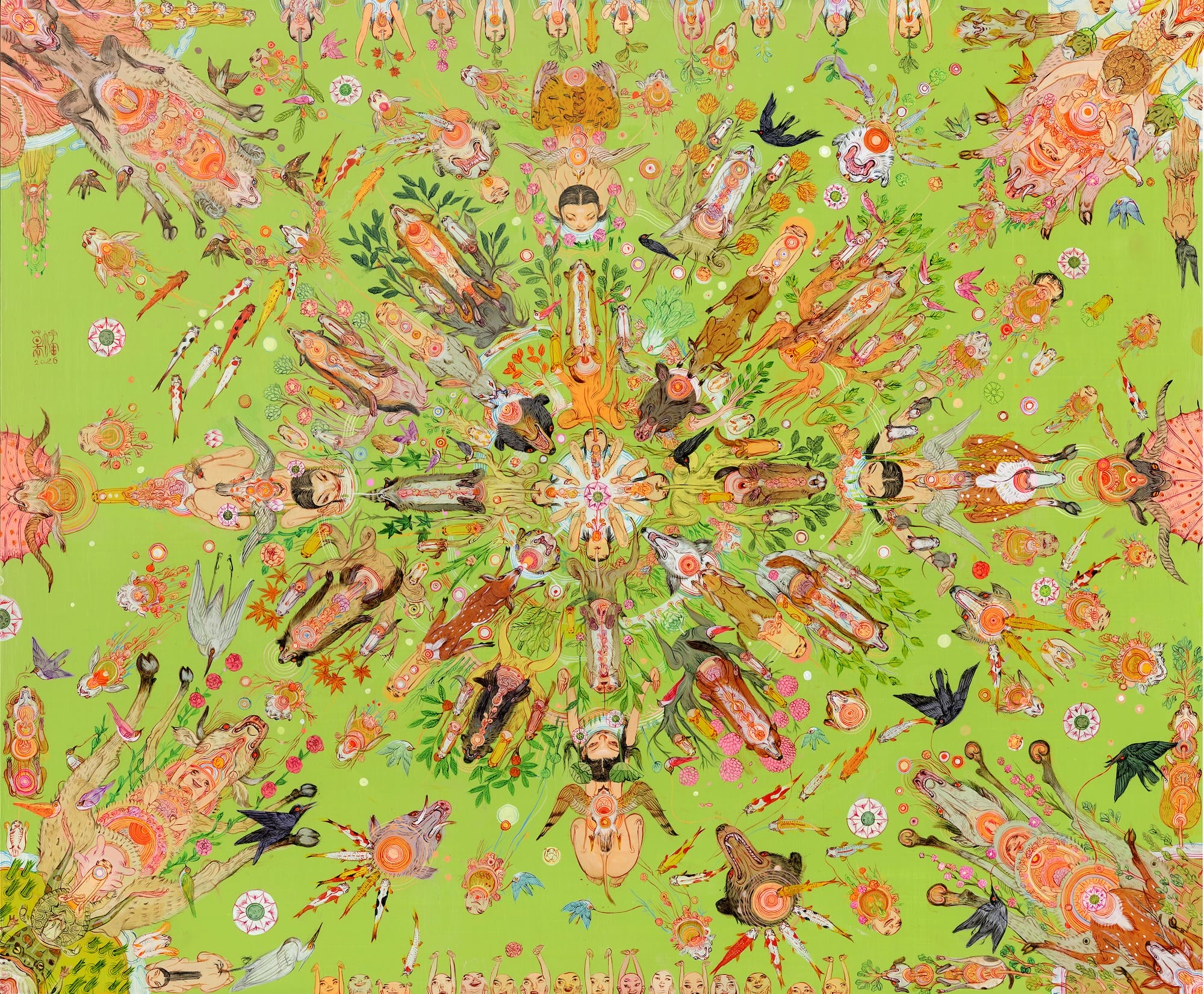
Scale plays a critical role in the impact of Micro MUniverse. The vast majority of the works featured in the exhibition are remarkably diminutive, measuring less than a foot wide. The sole exception in the current collection is a slightly larger painting executed on a wood panel titled "4 Brutes," which stretches approximately two feet across. Because of these intimate dimensions, Pan is forced to compose his lines, forms, and microscopic expressions with an astonishing degree of precision and detail. Every millimeter of the paper or panel is densely packed with narrative incident, requiring viewers to step in close and examine the work with the kind of intense scrutiny usually reserved for scientific specimens or ancient illuminated manuscripts.
Reflecting on his deliberate choice of scale and the philosophy driving the exhibition, the artist emphasizes the hidden depths contained within physically small objects. "I want to focus on the concept of being small, because whatever is small actually contains way more than it appears," Pan explains. "Therefore, each small image is like a drop of blood, and each drop of blood contains multiple universes."
This philosophy directly mirrors the Buddhist understanding of mandalas as micro-cosmological representations of a macro-cosmic reality, yet Pan translates the idea through a distinctly secular, fiercely imaginative lens. By shrinking his panoramic storytelling down to dimensions that can easily fit in the palm of a hand, he forces the audience to reconsider their relationship with scale, attention, and the hidden layers of existence that constantly surround them in daily life.
The exhibition Micro MUniverse remains on view through October 10 in New York City, drawing art enthusiasts and collectors eager to witness the meticulous craftsmanship and boundless imagination of the Brooklyn-based artist. For those unable to visit the gallery in person, additional details, previews of the works, and updates on Mu Pan’s ongoing projects can be found through his official online platforms and social media channels.