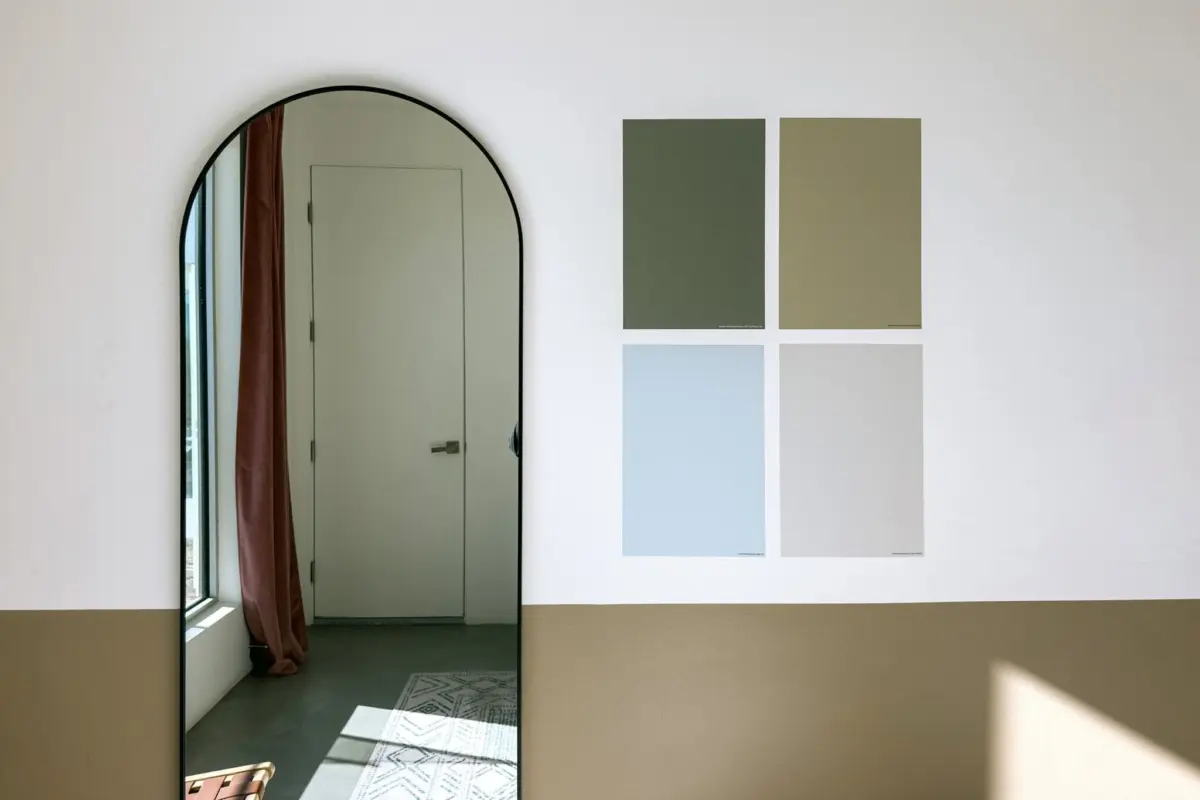
This insightful premise serves as the foundation for the inaugural Samplize American Paint Color Report, a comprehensive data-driven study that analyzes millions of paint samples ordered across the United States during the first six months of 2024, 2025, and 2026. By examining consumer behavior across industry giants such as Benjamin Moore, Farrow & Ball, and Sherwin-Williams, the report provides a rare window into the decision-making process of American homeowners. Instead of relying on hindsight or aspirational marketing, the data reveals precisely which colors individuals place side-by-side on their walls to test lighting, undertones, and compatibility before committing to a final paint can.
Makenna Lutz, partnerships lead at Samplize, explains that analyzing this crucial sampling phase unlocks vital information that traditional sales data often misses. According to Lutz, tracking the sampling stage reveals three distinct pieces of the puzzle: the full shortlist of colors a person actually weighed during their deliberations, which specific shades get tested against each other in real-world lighting conditions, and how those curated shortlists effortlessly span across competing paint brands rather than remaining loyal to just one manufacturer.
When looking broadly across those millions of samples, one overarching shift stands out above all others. Warm colors have grown nearly three times faster than cool colors over the observed three-year period. Today, warm shades account for a commanding 69.4 percent of everything tested on the Samplize platform, marking a notable increase from 64.3 percent just two years prior. Furthermore, the data highlights a decisive polarization in consumer shortlists: half of all American paint shortlists now contain zero cool colors at all, compared to 43 percent at the beginning of the study’s timeline.
While it would be easy for casual observers to interpret this phenomenon as merely another predictable pendulum swing back toward pale beige, stark creams, and minimalist minimalism, the underlying data points toward a far more nuanced design narrative. The genuine surprise uncovered by the research team lay not in the overall temperature shift, but rather in the specific breakdown of color depth. Lutz notes that while the industry initially expected the overall warming trend to manifest primarily as a lightening of interiors, the numbers proved otherwise. Warm tones outgrew cool tones across every single depth category, and perhaps most surprisingly, the deepest warm tones experienced the fastest growth of all, surging roughly six times faster than deep cool tones.
This unexpected embrace of deep warmth is vividly illustrated across the spectrum of major paint lines. At one end of the design spectrum are delicate blush-toned plasters and soft, welcoming warm creams, exemplified by Farrow & Ball’s Setting Plaster, Benjamin Moore’s Proposal, and Sherwin-Williams’ Malted Milk. At the exact opposite end of the spectrum is Benjamin Moore’s Classic Burgundy, standing out as one of the darkest and most dramatic colors included in the study, yet growing at a remarkably comparable pace. This juxtaposition suggests that American homeowners have certainly not lost their appetite for moody, dark, and dramatic interiors; rather, the underlying temperature of that drama is undergoing a fundamental transformation, moving away from cool charcoal grays and midnight blues toward rich, cocooning warmth.
Brown shades further reinforce this sweeping shift in consumer preference, growing faster than any other major color family and now appearing in 13.4 percent of all analyzed shortlists, up significantly from 9.2 percent. Interestingly, the specific shades driving this notable growth are not traditional saturated chocolates or fiery terracotta tones that defined previous decades of warm design. Instead, homeowners are overwhelmingly gravitating toward nuanced, understated alternatives such as Sherwin-Williams’ Warm Stone and Urbane Bronze, Farrow & Ball’s London Clay, and Benjamin Moore’s Smokey Taupe. These driving forces are muted greiges, sophisticated warm grays, and earthy stone-like shades rather than conventional, heavy browns.
Meanwhile, green appears to have officially moved past its initial trend cycle to settle comfortably as a permanent fixture in the modern American palette. After experiencing a sharp rise in popularity in recent years, green has successfully held its elevated position and now consistently appears in 34.6 percent of shortlists. The breadth of this category remains wide, encompassing everything from soft sage and muted moss to much deeper, moodier botanical greens that bring a sense of the outdoors directly into residential spaces.
The underlying behavioral patterns captured in the report also suggest that color temperature may ultimately matter far more to consumers than individual color families alone. The data reveals that two-thirds of all consumer shortlists contain colors drawn from only a single temperature group. Specifically, half of all shortlists are entirely warm from start to finish, while only about a third of shortlists attempt to mix warm and cool shades together during the testing phase.
Additional indicators suggest that this warming palette may also be growing increasingly colorful and diverse over time. Pink and red have emerged as the fastest-growing color families when measured from smaller historical starting points, while the warm-and-deep combination proved to be the single fastest-growing pairing of temperature and depth across the entire dataset.
While this upward trajectory does not automatically mean that burgundy is destined to replace beige as the default neutral of the decade, nor does a three-year snapshot of sample data definitively predict exactly what American walls will look like years down the road, it highlights a clear evolution in taste. The current design shift is not simply a quiet retreat toward lighter, more unobtrusive neutrals. From soft plaster pinks and weathered stone browns to deep, brooding reds, homeowners across the United States are actively exploring the vast spectrum of warmth in their living environments.