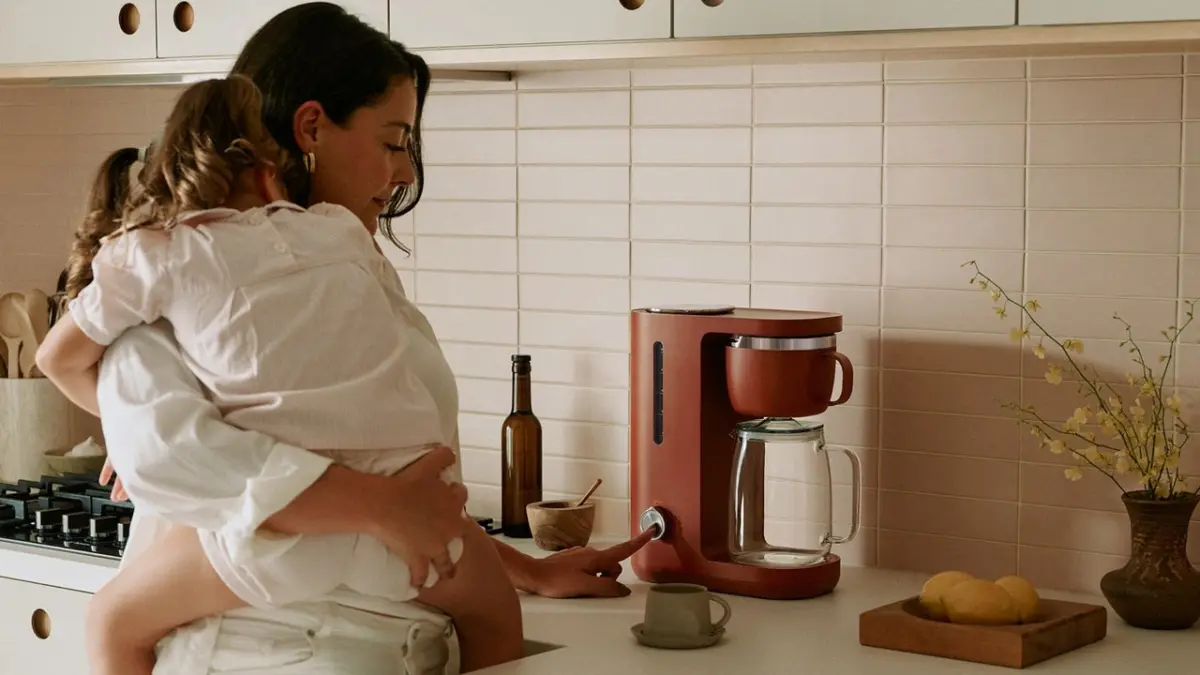
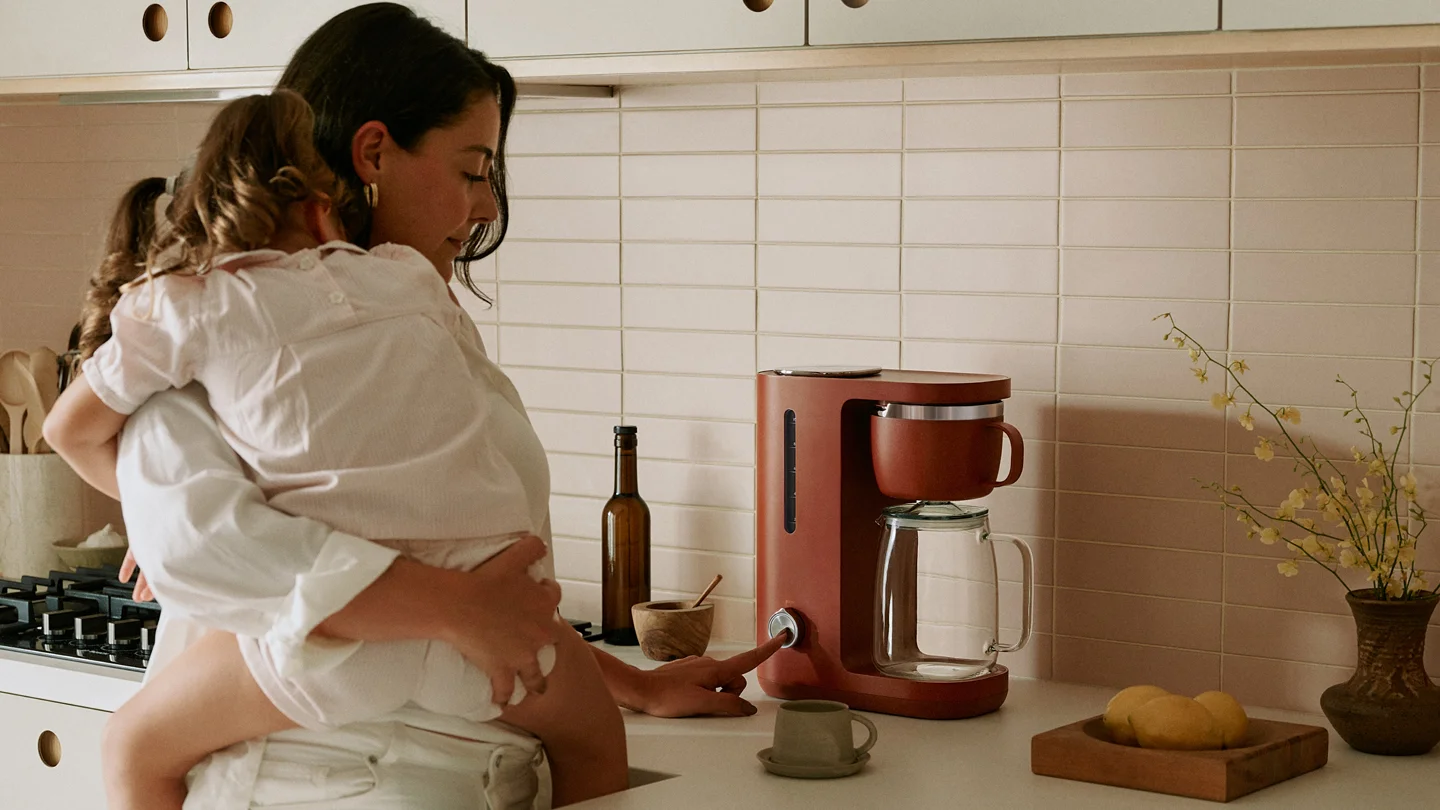
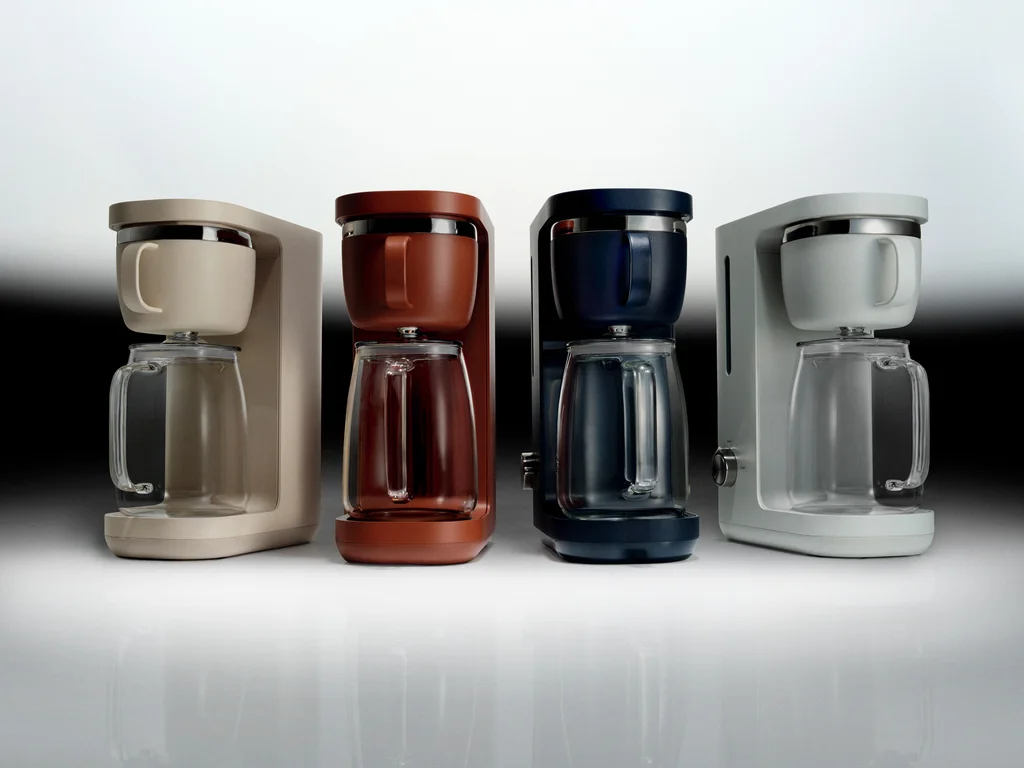
After spending years transforming the cookware market with vibrant, aesthetically pleasing pots and pans free of toxic coatings, Caraway is setting its sights on the morning routine. The direct-to-consumer brand is officially launching its very first household appliance: a sleek, 10-cup coffee maker designed to eliminate a hidden kitchen culprit—plastic in the brew path.
Retailing for $495 online and at select Crate & Barrel stores, the new appliance represents a massive engineering undertaking for the company. The product took five years to develop and currently has 10 pending patents. Unlike almost every traditional drip coffee maker on the market, which typically relies on internal plastic water reservoirs, tubing, and filter baskets that heat water and come into direct contact with consumable beverages, Caraway’s machine features zero plastic components in its brew path.
For the brand, this latest release is not a random pivot, but rather the logical continuation of a much broader corporate mission. Caraway was founded in 2019 by Jordan Nathan, a move sparked by an unpleasant personal health scare. Nathan experienced what is commonly known as “Teflon flu,” a temporary illness caused by inhaling fumes emitted when polymer products—in his case, a standard nonstick frying pan—are overheated.
Determined to find a safer alternative, Nathan launched the company with a line of Teflon-free, ceramic-coated pots and pans defined by their bright, color-coordinated exteriors and minimalist aesthetic. The success of those initial products established a blueprint for the brand. In the years since, Nathan has steadily expanded Caraway’s footprint far beyond the stovetop, introducing lines of kitchen knives, cutting boards, food storage containers, and even design-forward trash cans.
“Our mission is really simple: to create the first generation of nontoxic homes,” Nathan says.
Caraway’s entire business model rests on a specific thesis: that there is a rapidly growing consumer demographic willing to invest more money into home goods that prioritize both personal health and sophisticated interior design. So far, market data suggests that bet has paid off tremendously. Since its inception, the company has accumulated a loyal base of more than 2.5 million customers. It has also successfully raised $40 million across several rounds of financing, expanding its retail footprint from its own direct-to-consumer website to major retail heavyweights including Target, Crate & Barrel, Walmart, Amazon, and Costco.
Despite this rapid scaling, Nathan shows no signs of slowing down. His long-term vision involves building an expansive, cohesive ecosystem of Caraway-branded home goods designed to cement the company’s presence for the next century. To achieve that longevity, he decided to tackle what he considers the most glaring eyesore in contemporary domestic life.
“Ever since I started Caraway, the coffee maker has always been the most offensive item in the kitchen from a design perspective,” Nathan notes. Believing the market lacked a machine that successfully bridged high-end industrial design with rigorous health standards, he and his team set out to engineer a solution from the ground up.
Engineering a healthier coffee maker
Take a close look inside almost any standard coffee maker sitting on a kitchen counter today, and the material composition quickly becomes apparent: plastic, plastic, and more plastic.
For decades, consumer appliance manufacturers have relied heavily on plastics for internal water lines, heating chambers, and brew baskets due to their low production costs and ease of manufacturing. However, as awareness grows regarding the potential health implications of hot water interacting with plastics—particularly the leaching of microplastics and chemical additives under high temperatures—health-conscious consumers have begun looking closer at what their morning routines entail.
Caraway’s five-year development cycle was largely dedicated to solving this structural problem without sacrificing the convenience, brewing performance, or modern aesthetic that consumers expect from a high-end countertop appliance. By engineering a brew path entirely devoid of plastic, the company hopes to set a new standard for small kitchen appliances, paving the way for further product category expansions as Caraway continues its quest to eliminate toxins from the modern home.