Modern digital cameras and smartphones capture images in fractions of a second, freezing fast-moving action and fleeting expressions instantly. Yet, the earliest days of photography required immense patience, immobility, and enduring exposure times that stretched anywhere from fifteen minutes to several hours for a single frame. This tedious paradigm changed forever in 1840, when an English chemist and pioneering scientist made a discovery that shortened photographic exposure times to a minute or less, laying the foundational blueprint for modern analog film photography.
William Henry Fox Talbot stands as one of the towering early figures in the history of photography. Some historians suggest that had he shared his breakthrough research just a few weeks earlier, he might widely be celebrated today as the sole founder of photography. During the mid-1830s, Talbot’s initial experiments focused on creating "photogenic drawings." By treating ordinary writing paper with a salt and silver nitrate solution, he produced light-sensitive sheets capable of recording silhouettes and botanical specimens when placed under direct sunlight.
Talbot formally presented his concept of photogenic drawing to the Royal Society in London just three weeks after the French artist and inventor Louis Daguerre publicly displayed the world’s first daguerreotypes in 1839. While Daguerre’s gleaming, mirror-like silver plates captured astonishingly crisp and detailed images, Talbot’s early paper-based process initially fell short of matching that level of sharp definition. Faced with this technical disparity, Daguerre largely returned to his work as a painter once his groundbreaking process gained worldwide acclaim. Talbot, however, remained deeply committed to refining his paper-based method. Less than two years later, his relentless experimentation yielded a patented process that would fundamentally transform how humankind captured visual reality.
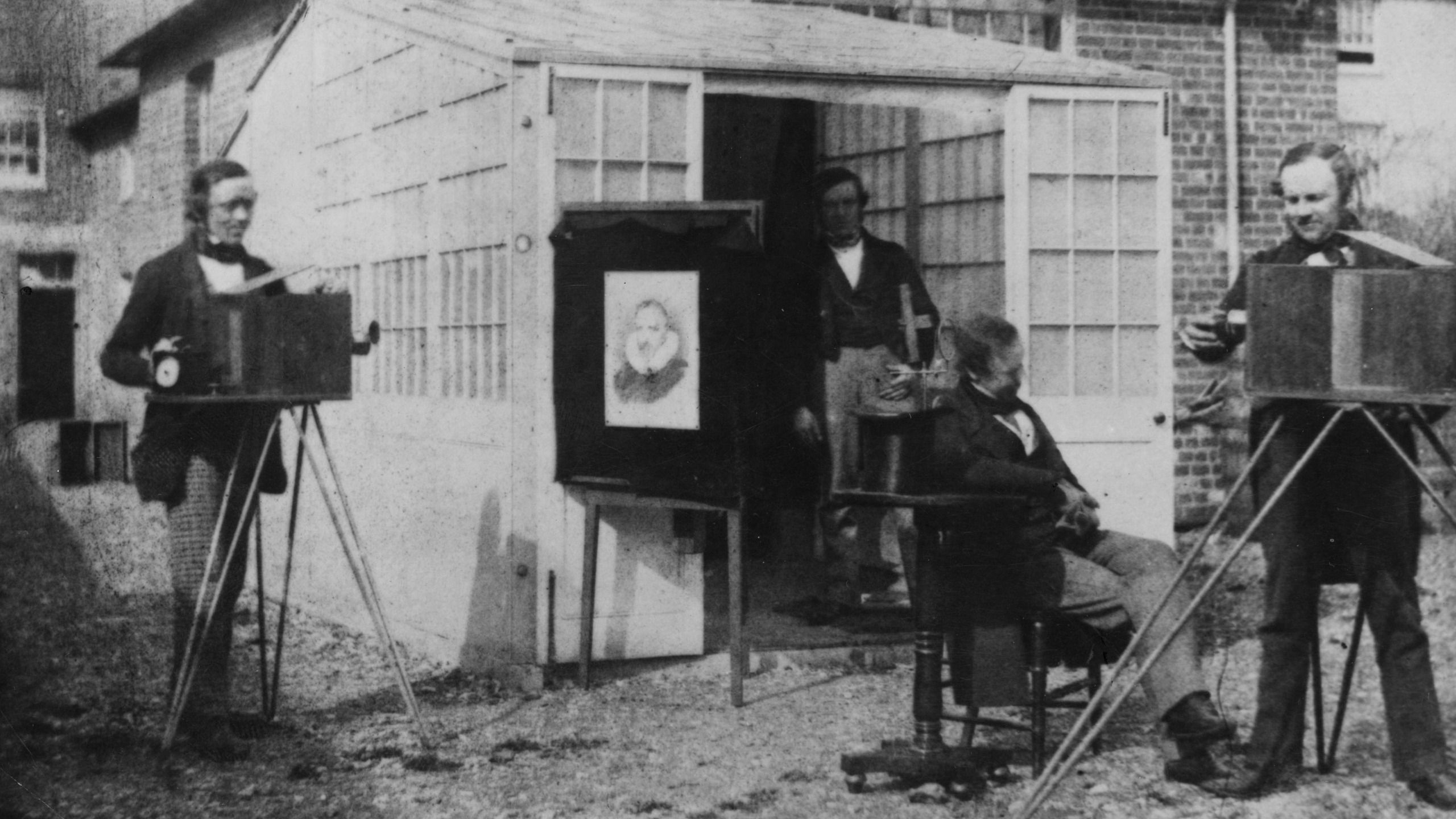
The earliest photographs produced by Nicéphore Niépce—known as heliographs—demanded exposure times lasting several hours, and in some conditions, entire days. While Daguerre’s process sped up that timeline considerably, it still necessitated exposing the heavy silver-plated copper sheet inside the camera for anywhere from three to fifteen minutes. This lengthy duration meant that living subjects, particularly human portraits, required metal headrests and iron discipline to prevent any blurriness caused by subtle movements.
The breakthrough occurred sometime between September 21 and 23, 1840, when Talbot made a critical realization. He discovered that exposing light-sensitive paper inside a camera for just a few seconds left no immediately visible change on the surface, but treating that seemingly blank paper with a chemical solution of gallic acid caused a fully formed image to magically emerge. Historical records suggest that Talbot may have initially discovered this latent, invisible image by accident when examining a paper negative that had received only a fleeting exposure to light.
By combining his earlier techniques for creating light-sensitive paper with the innovative additional step of rinsing exposed sheets in a developing solution, Talbot drastically reduced photographic exposure times from agonizing minutes down to mere seconds. He initially referred to this transformative developing agent as an "exciting liquid." Although contemporary photography and modern film processing long ago moved beyond nineteenth-century chemistry, the fundamental concept of a chemical developer remains an essential pillar of analog photography to this day.
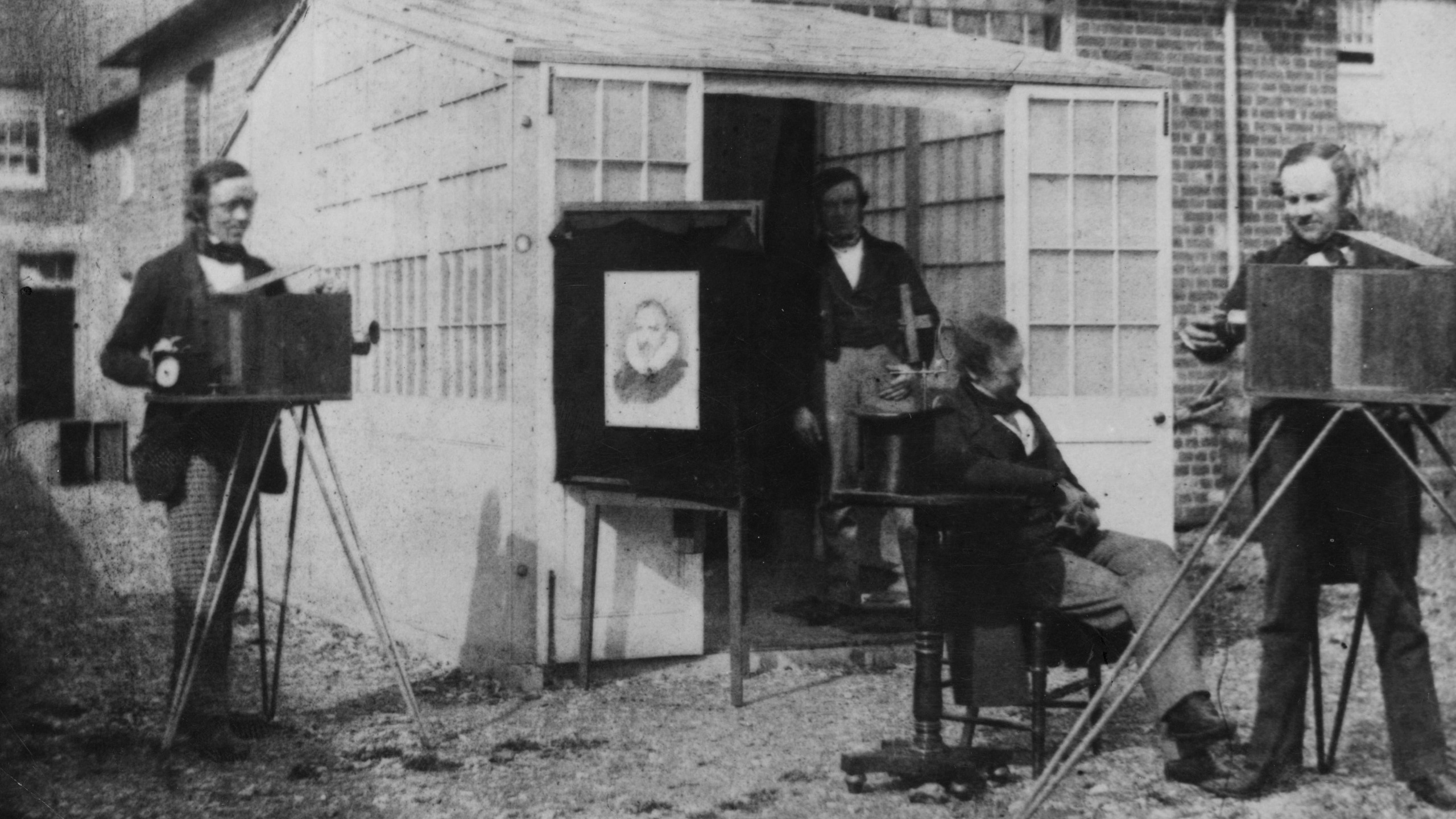
Early iterations of Talbot’s process faced significant hurdles, particularly regarding permanence. His earliest experimental images tended to fade rapidly when exposed to ambient room light. Fortunately, Talbot’s close friend and scientific peer, Sir John Herschel, proposed using a hyposulfite of soda solution to dissolve unexposed silver salts and stop the paper from continuing to react to light. This crucial collaboration introduced the concept of the "fixer" into the photographic workflow, ensuring that images could be preserved indefinitely.
Having refined the chemistry and the apparatus, Talbot patented his revolutionary paper-based photographic process under the name "calotype"—derived from the Greek words for "beautiful" and "impression"—in February 1841. The cameras used by Talbot during this era of discovery were notably compact and portable. His wife famously remarked that the diminutive wooden box cameras looked remarkably like mouse traps, and the affectionate nickname "mouse trap cameras" stuck among his circle of assistants and family members.
Talbot’s scientific leap forward did more than merely shorten exposure times for early photographers. Daguerreotype photographs were entirely unique, physical objects that could not be duplicated. If a daguerreotype portrait was damaged or lost, it was gone forever. The calotype, conversely, produced a translucent negative image on paper. By placing this negative over another sheet of light-sensitive paper and exposing them to light, photographers could create an unlimited number of positive duplicate prints.
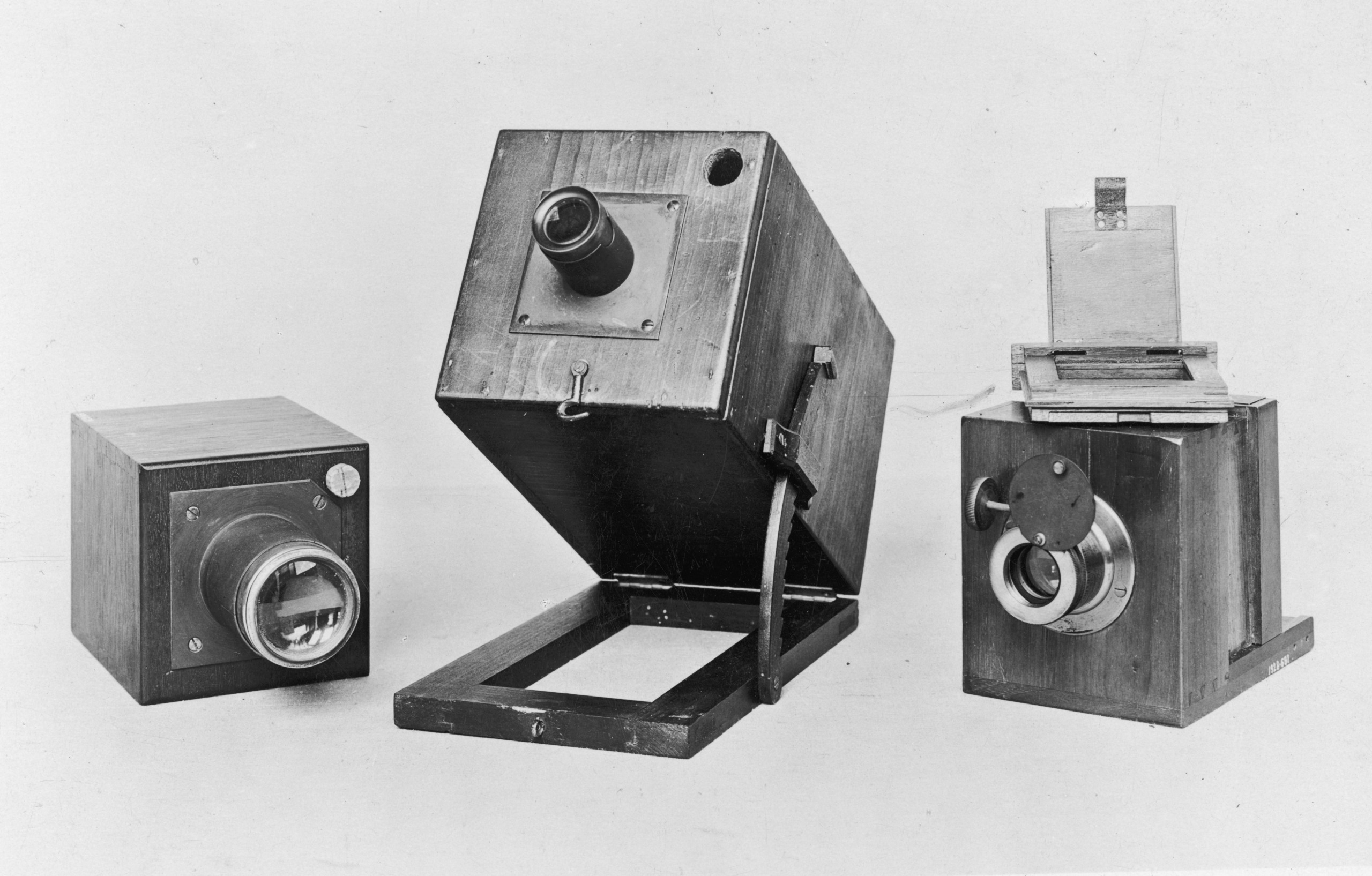
In a single stroke, the calotype introduced the three foundational concepts that would govern film photography for the next century and a half: developing a latent exposure, fixing the image for permanence, and printing or reproducing multiple copies from a master negative.
Despite the profound technological advantages introduced by the calotype, the daguerreotype retained greater commercial popularity for many years, largely prized by the public for its striking sharpness and exquisite portrait detail. Furthermore, the commercial adoption of the calotype was hindered by legal hurdles; Talbot heavily enforced his patent rights and required expensive licensing fees for anyone wishing to practice the process professionally, whereas Daguerre’s French invention had been released as a free gift to the world.
While the daguerreotype ultimately reigned supreme during the initial consumer photography boom, the underlying methodology of the calotype—developing a negative, chemically fixing the plate or film, and transferring it to create positive prints—remained the undisputed backbone of analog photography. Even as the calotype itself was gradually superseded by the albumen silver print and glass plate negatives during the 1850s, William Henry Fox Talbot’s ingenious chemical discoveries permanently liberated the camera from the constraints of time, allowing humanity to capture the fleeting moments of the world with unprecedented speed.