Most side tables are, fundamentally, structural fabricators of clutter. They arrive in a living room looking sleek, minimalist, and orderly, only to gradually devolve into the default domestic surface for everything nobody planned a home for: towering stacks of unread magazines, rogue charging cables, a rotation of three different remote controls, and that one ambitious book you have genuinely meant to finish for the past six weeks. Traditionally, the table itself offers no architectural solution to this inevitable tide of surface chaos. It simply provides a flat top and, occasionally, a shallow drawer that rattles loudly on wooden tracks whenever it is opened. The resulting clutter is rarely a behavioral failing on the part of the homeowner; it is a fundamental failure of furniture design. Most modern pieces simply refuse to acknowledge how people actually live with their belongings.
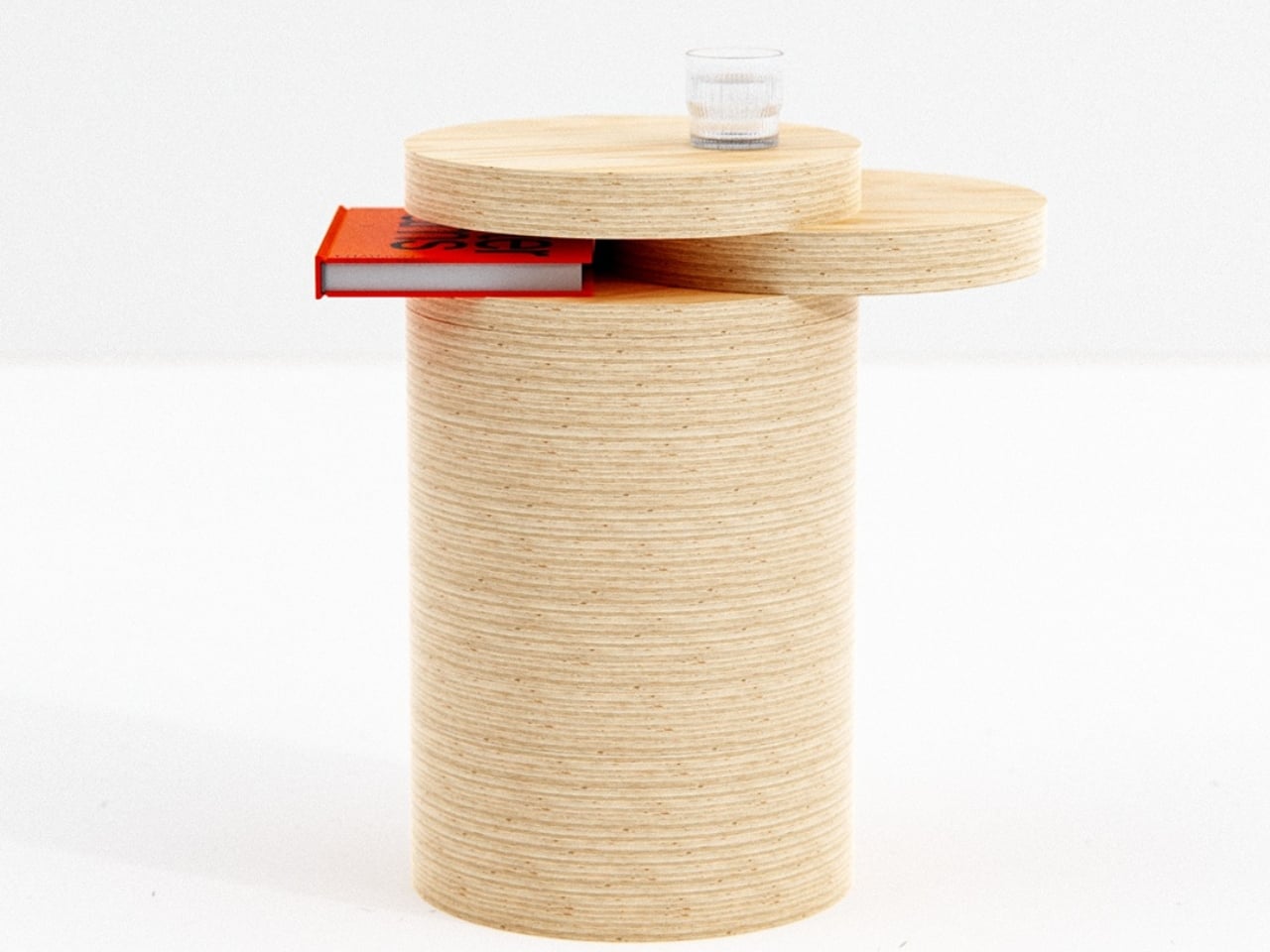
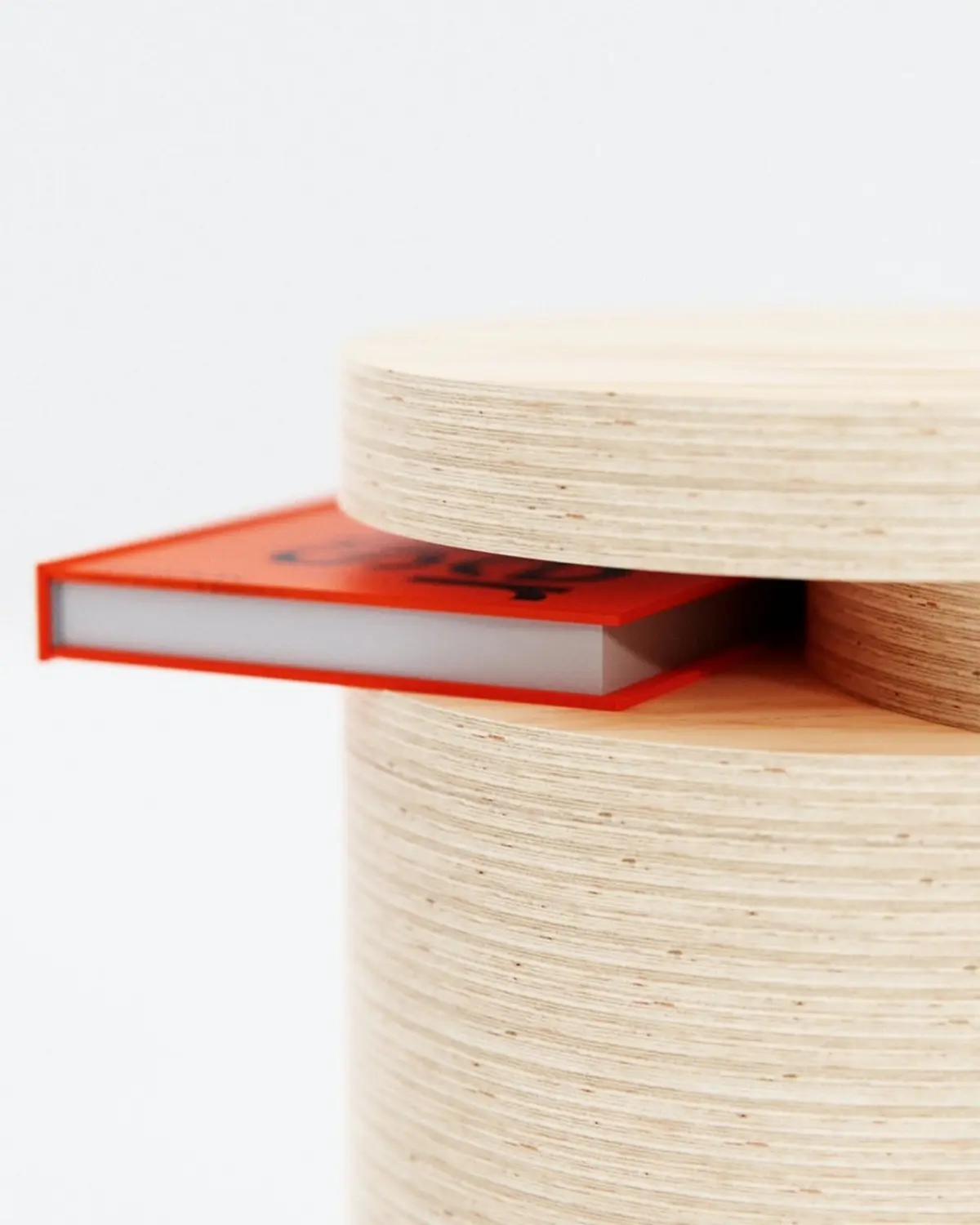
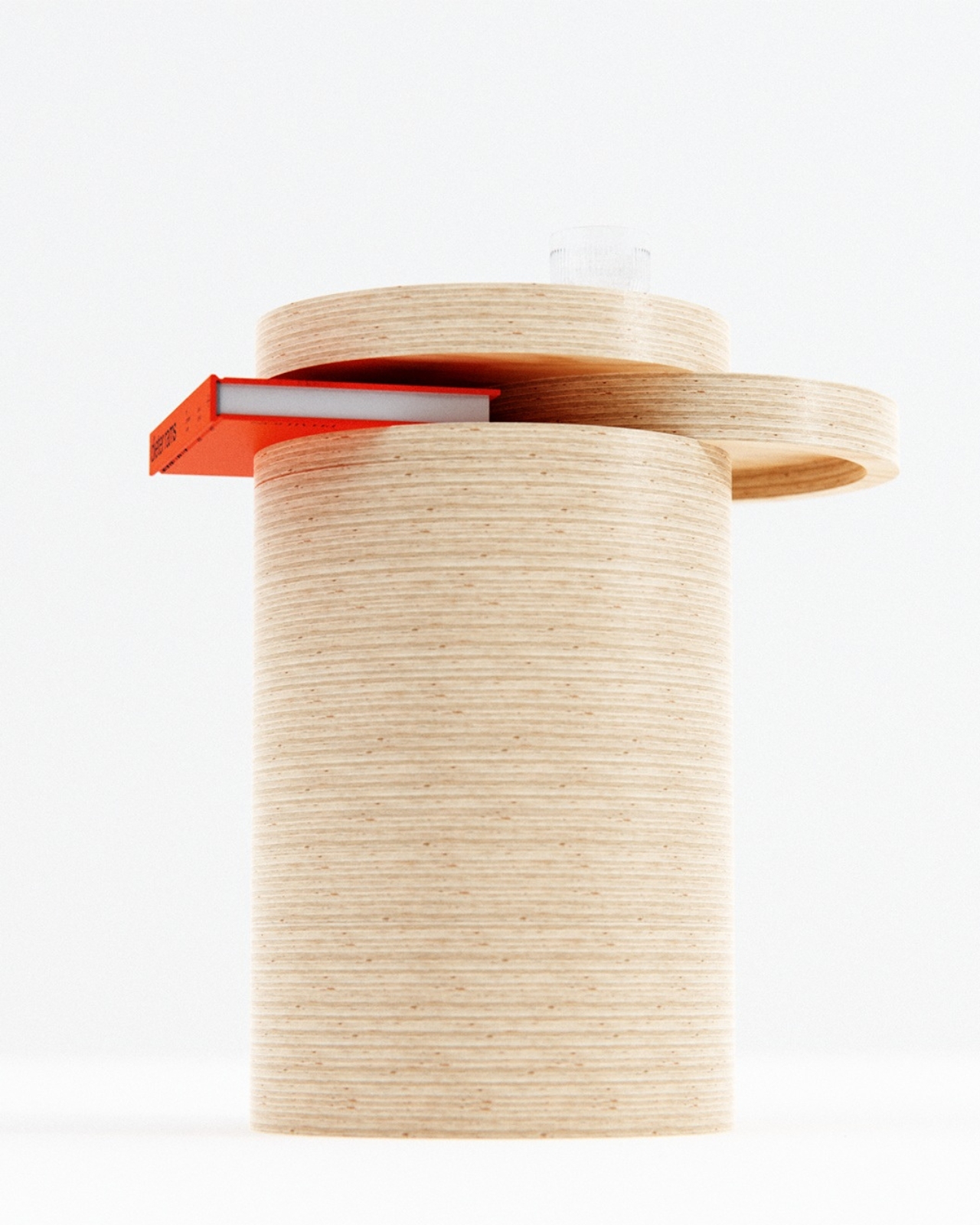
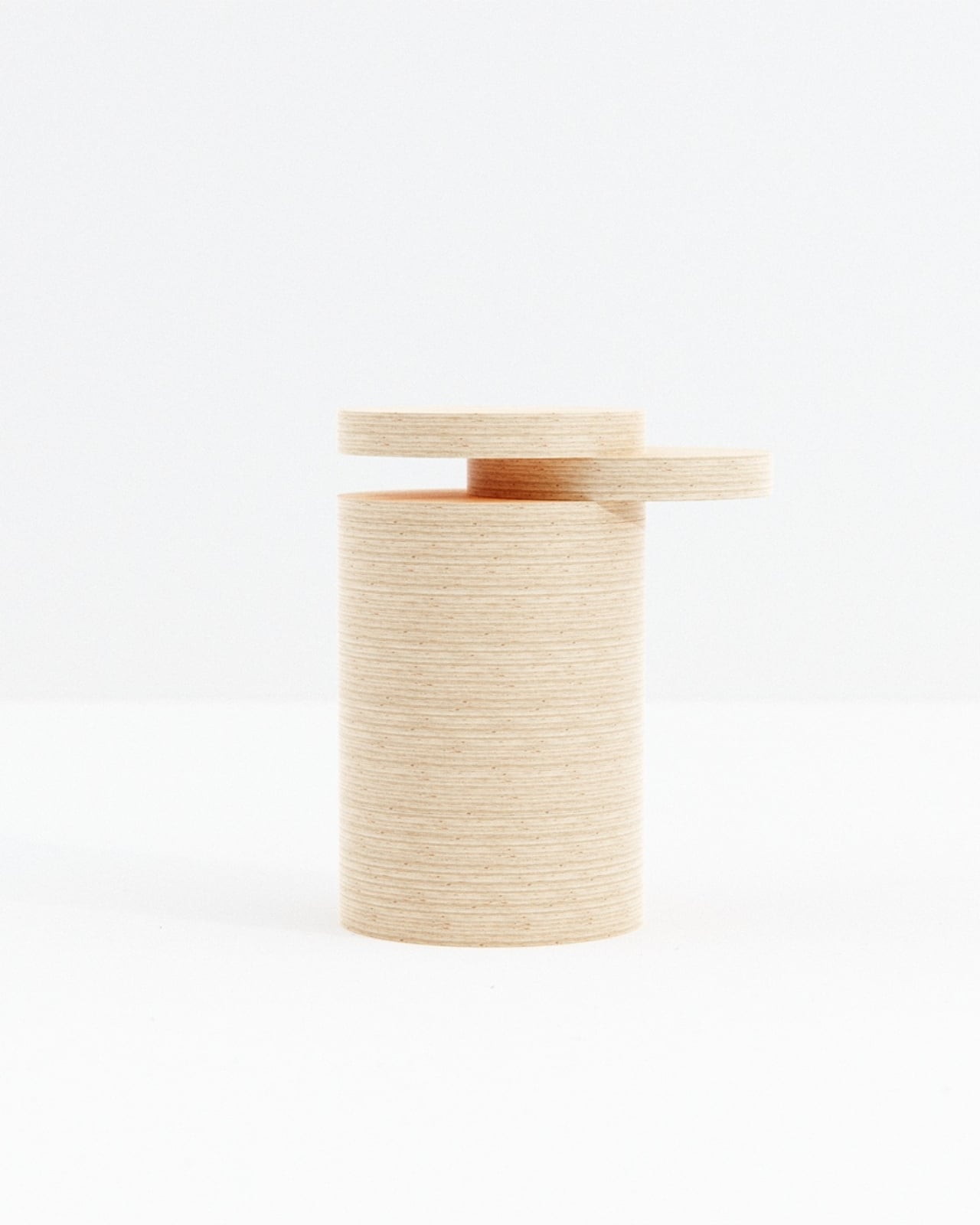
Liam de la Bedoyere, the furniture designer behind Bored Eye Design, is challenging this long-standing domestic oversight with a radically functional approach. His latest creation, the Nudge Side Table, is built around a single, cohesive premise: the storage should not be an accessory added onto the table as an afterthought. The storage must be the table itself. Rising directly from the floor is a thick, substantial cylindrical column made entirely of stacked plywood discs. Near the top of this column, the structural logic shifts in a subtle yet brilliant way. Two large circular platforms sit at slightly different heights, deliberately offset from one another just enough to carve out a clean, horizontal slot between them. That slot is custom-built to fit a book. There are no concealed drawers, no metal shelf brackets, and no mechanical hinges. The gap does all the heavy lifting, and that gap exists solely because one disc was intentionally nudged out of alignment with the other.
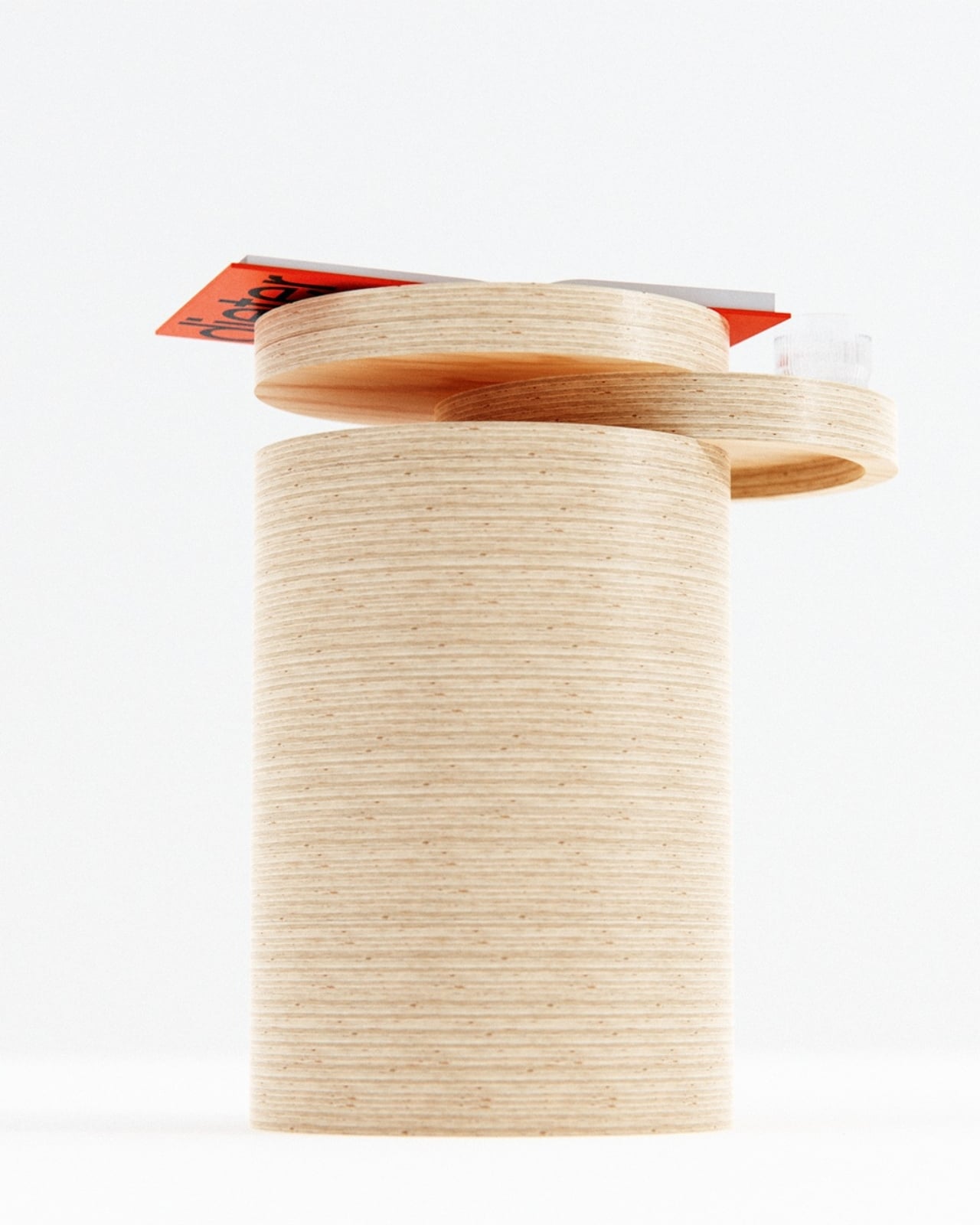
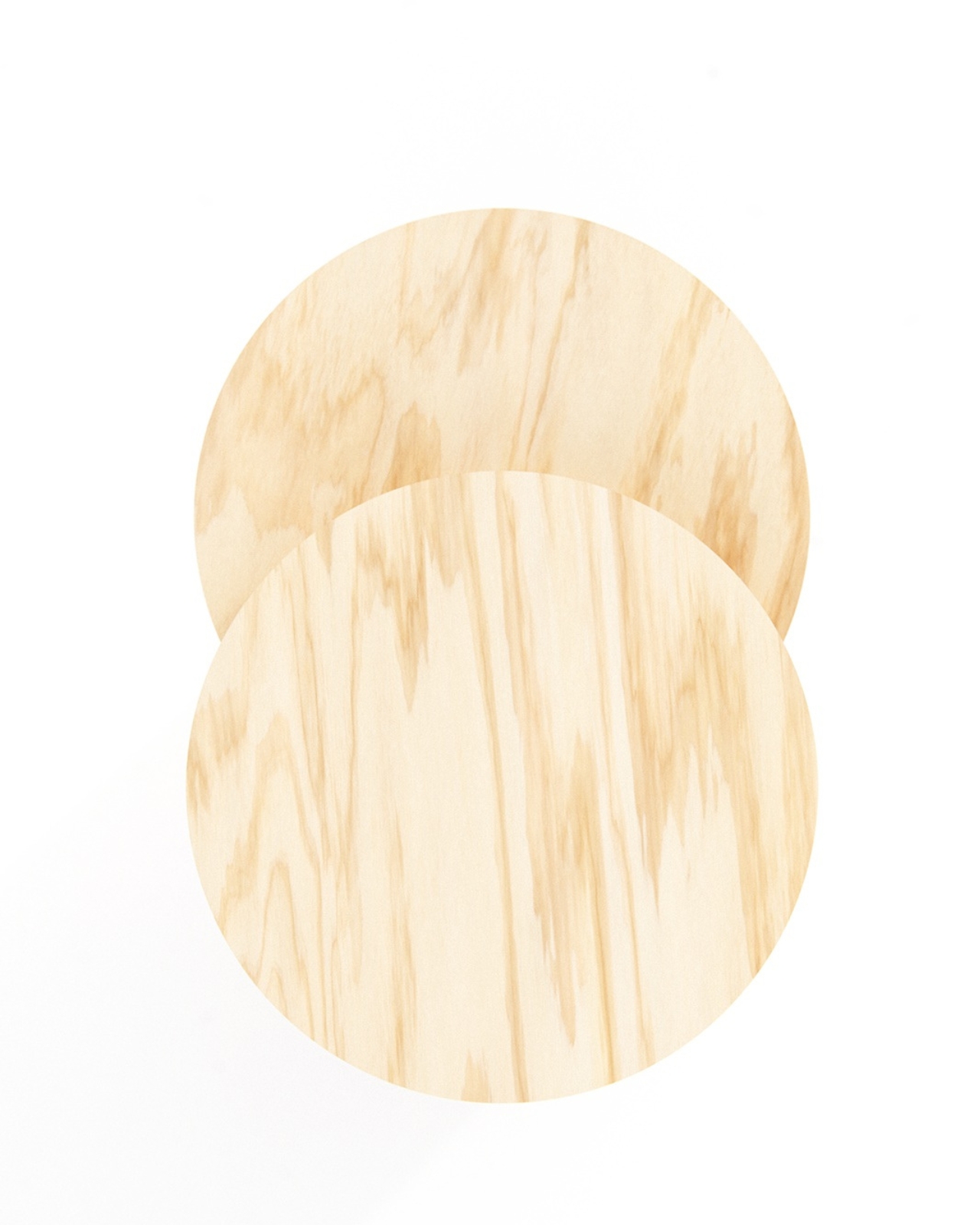
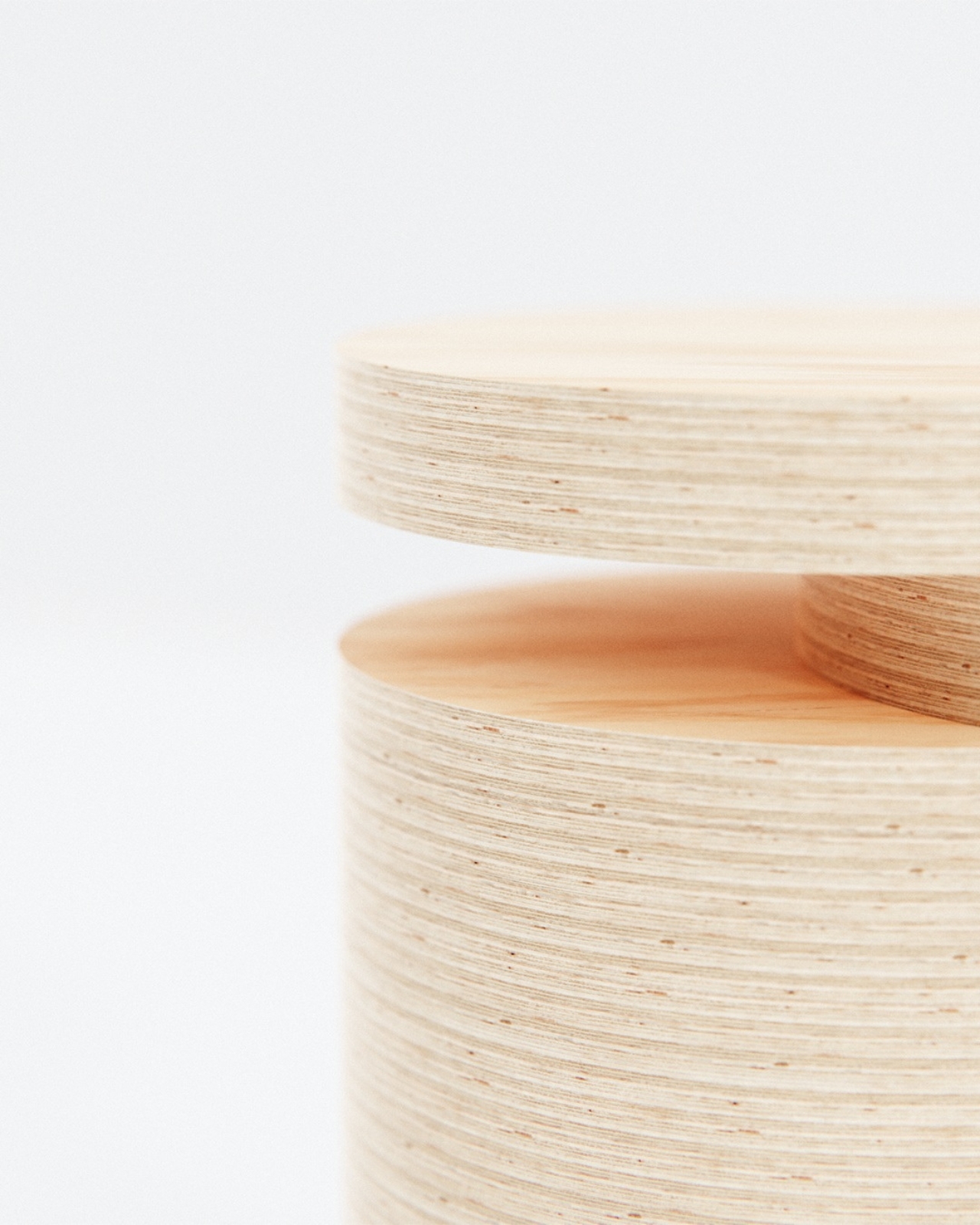
The material selection for the Nudge table plays a vital role in its overall aesthetic and structural integrity. Plywood in this context is not chosen as a budget-friendly compromise or a shortcut; it is a deliberate and confident design decision. Looking at the solid cylindrical body of the table, every individual layer of wood is exposed along the curved exterior surface, running continuously around the column in thin, parallel lines that mimic the organic growth rings visible on the cross-section of a felled tree. When viewed up close, the texture takes on an almost geological quality, feeling simultaneously warm, stratified, and grounded. This linear pattern contrasts sharply with the smooth, flat tops of both platforms, where the natural variations in the pine grain are allowed to shine through. From an aerial perspective, the two overlapping circles form a configuration that feels less like standard domestic furniture and more like a precise Venn diagram drawn by someone with a deep appreciation for geometry and spatial relationships.
Proportions also dictate the success of the piece. The central column is manufactured to be wide enough to feel visually substantial and physically stable without ever appearing squat or heavy. At the same time, it is tall enough that the offset upper platforms land at a genuinely ergonomic and useful height when positioned next to a standard sofa or reading armchair. The upper disc sits slightly higher and further back on the column, while the lower disc projects forward into the room. The book rests securely in the slot created between them, with its spine sitting flush against the edge of the assembly. When viewed from the front, a bright pop of color—such as a bold red book cover peeking out from the shadowed gap—provides precisely the kind of subtle chromatic accent the natural pine surface requires. De la Bedoyere opted against applying artificial paints, stains, or synthetic contrast elements. Instead, he allowed the everyday objects that naturally inhabit the table to provide the color, a move that speaks to a high degree of design confidence.
From certain vantage points within a room, the silhouette of the Nudge table takes on an almost totemic quality. Two thick, heavy circles float above a ribbed vertical cylinder, slightly misaligned, with a single book suspended horizontally between them like a suspended layer of strata. It photographs with the striking presence of a contemporary sculpture, yet it functions entirely intuitively without requiring any instruction manual or explanation. A user can look at the object and immediately understand precisely where a book belongs. Achieving that kind of instant functional legibility is notoriously difficult in modern industrial design, particularly when the mechanism driving the utility is purely structural rather than applied as a separate feature.
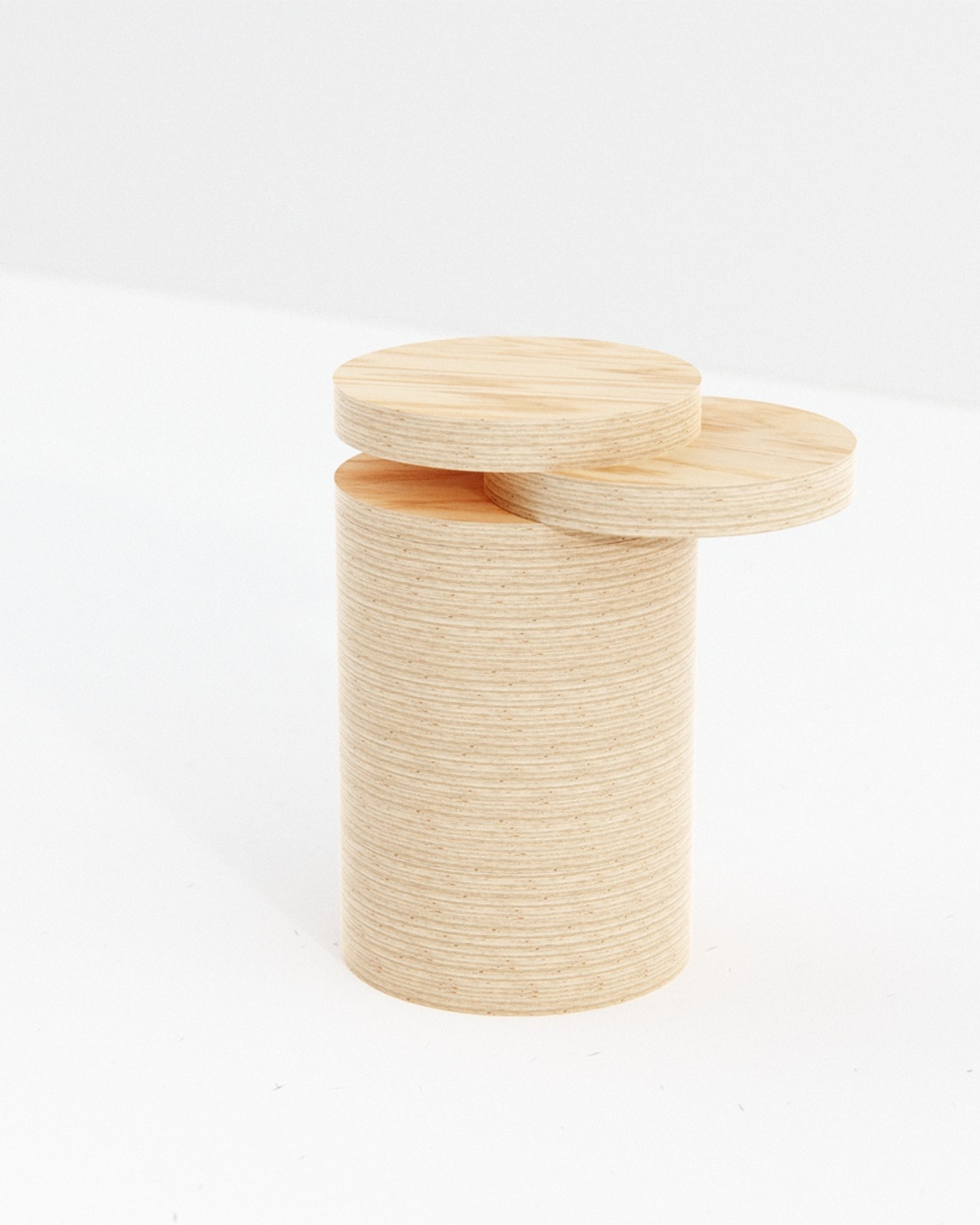
It is equally instructive to examine what the Nudge table explicitly refuses to include. There is no concealed joinery hardware buried deep inside the wooden column. There is no lower shelf equipped with an awkward lip designed to prevent items from sliding off into oblivion. There are no rubber or plastic feet dressed up in brushed metal to disguise manufacturing shortcuts. The cylindrical form remains entirely self-contained, the platforms constitute the entirety of the table structure, and the deliberate offset between them provides the storage capability. Every potential addition, embellishment, and decorative flourish was apparently considered during the prototyping phase and deliberately left out. This level of disciplined restraint is something that contemporary furniture design, across virtually every price point, genuinely struggles to maintain.
De la Bedoyere has spent considerable time exploring this specific spatial problem across a series of recent works. His Notch table, released earlier in the year, tackled a remarkably similar functional challenge by carving a clean vertical slot directly into a set of solid wooden legs to hold reading material. The Nudge table arrives at a parallel conclusion through an entirely different construction logic, utilizing a stacking method rather than a subtractive one, opting for horizontal storage over vertical orientation, and balancing two distinct surfaces instead of a single continuous plane. It represents the same stubborn commitment to keeping things elemental, executed through a completely different architectural answer.
Side tables are historically among the most neglected categories in home furnishings. They are frequently treated as the ultimate afterthought of living room styling—purchased last, given very little consideration, and replaced at the first sign of wear. The Nudge table offers a compelling argument that the furniture piece sitting closest to how people actually spend their quiet time at home deserves much more than a flat top and a hopeful prayer. Sometimes, the most genuinely useful thing a designer can do is move one circle slightly to the left and let the resulting gap speak for itself.