Over a quiet cup of coffee, a professional photographer who regularly shoots for some of the world’s most prestigious hotels shared a revealing encounter that highlights a growing tension within the luxury hospitality industry. The conversation turned to a grand, historic property known to both men—a destination that commands thousands of euros per night during the sun-drenched peak season. Recently, the hotel’s management approached the photographer, inviting him to capture the property’s opulent suites, immaculate grounds, and sunlit terraces.
However, the professional relationship quickly unraveled when the photographer submitted his standard commercial proposal. The general manager of the luxury resort immediately called back in a state of panic, claiming there had been a severe misunderstanding. The resort’s position was blunt: they do not pay for commercial photography shoots. Instead, the management offered a form of alternative currency, suggesting that the photographer should be content with posting the resulting images on his own Instagram account. The rationale, according to the hotel, was simple and dismissive: "It’s good for your reputation."
The exchange raises a broader question about how luxury establishments view creative labor in the digital age. Have high-end hotels learned a few cynical tricks from the army of "blagging" influencers who routinely disrupt poolside serenity with their endless pouts, curated poses, and demands for complimentary stays? In a marketplace where visual content is treated as infinite and free, the photographer declined the offer, proving that while exposure may be plentiful, it pays no bills. Personally, the preference remains straightforward: less reputation, more cash.
This encounter with the economics of modern imagery naturally brings one back to the physical reality of handling a camera. Photography, much like commerce, has its temperament. A dedicated camera can be a notoriously difficult companion to understand. When the light is flat or the sky stretches out in a sullen, unbroken grey, the device barely makes an effort to assist. It responds with technical stubbornness, refusing to flatter the dull atmosphere. A smartphone camera, by contrast, soldiers on regardless of the conditions, pushing through algorithms and automatic enhancements to deliver a reliable, acceptable result no matter how uninspiring the weather. Yet, when the evening arrives accompanied by a rich, golden glow, spending time with a traditional, fixed-lens contraption transforms into an absolute delight.
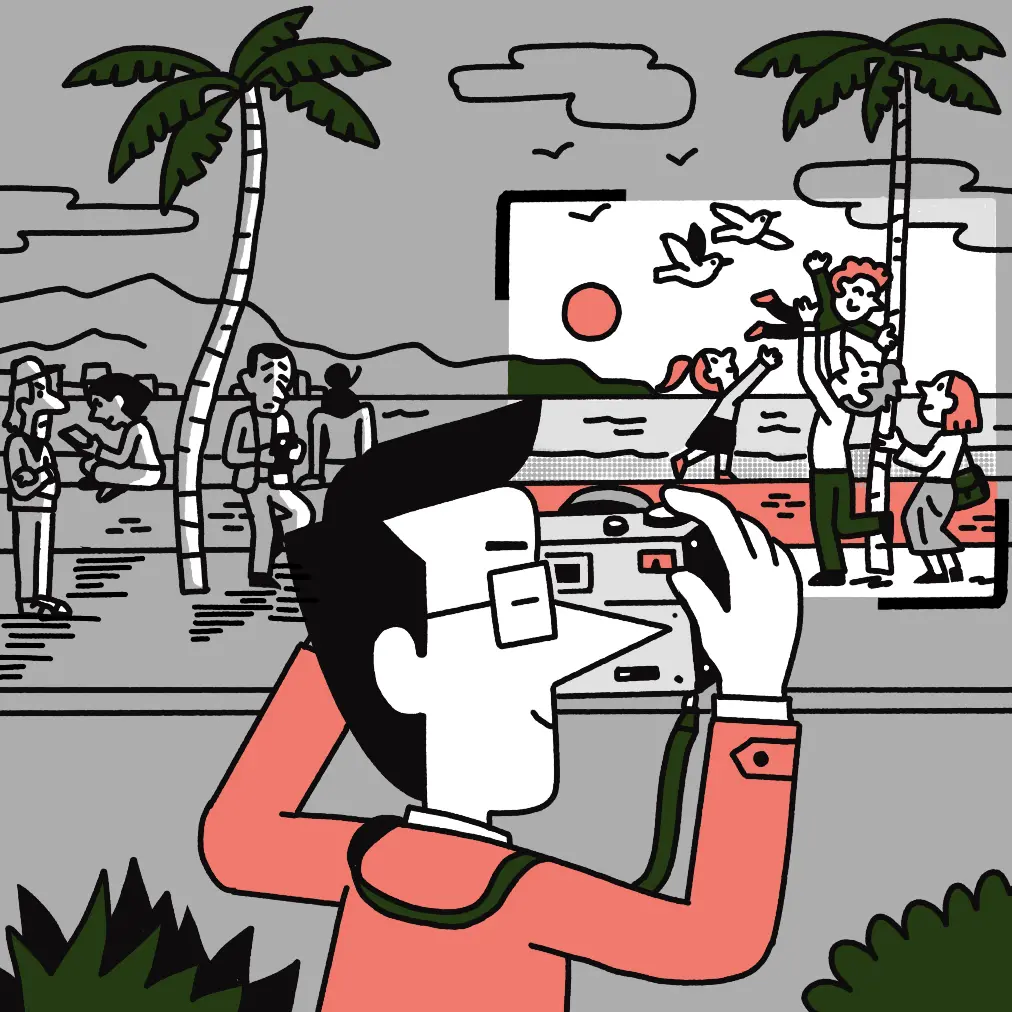
That appreciation for the tactile, deliberate nature of photography was tested just last weekend in Palma. Awakening on a Saturday to a near-perfect autumn day—characterized by brilliant blue skies, soft light, and stretching shadows—the impulse to capture the world took over. Armed with a camera and no specific agenda, the journey led down to the coast for a long, solitary walk with a singular mission: simply to take pictures.
There is a distinct cognitive shift that occurs when looking through a camera viewfinder. It acts as a mechanical filter that forces the human eye to slow down, process the environment, and truly see things as they are. It encourages mindfulness, turning a casual glance into a deeper observation and helping to find focus across multiple senses. Returning home with only a handful of acceptable photographs is no longer viewed as a failure; rather, it represents a growing embrace of the camera’s inherent capriciousness. Finding perfection within imperfection reveals a deeper truth: photography and the pursuit of a well-lived life have a great deal in common, both requiring patience, presence, and an acceptance of variables beyond human control.
This theme of slowing down and finding focus extended into the social sphere later in the week during a dinner party hosted by a successful architect friend named William. The gathering was deliberately intimate, featuring just two other guests: an artist and maker originally from Texas who now resides in London, and a woman who runs a tile-manufacturing factory. The group gathered in the kitchen while William prepared a massive seabass, accompanied by a record player spinning vinyl and a selection of fine wine.
What made the evening remarkable was not merely the food or the conversation, but a striking absence that defined modern social gatherings: not a single smartphone was placed on the table or even pulled out briefly to look up a disputed fact. That deliberate disconnect made the dinner remarkably easy and unforced. Modern social gatherings are often sources of unnecessary stress, with hosts feeling the pressure to curate elaborate, multi-course menus and perfect puddings, frequently leading them to abandon home cooking altogether in favor of booking a restaurant. Yet, a simple menu of nice ice cream, quality cheese, and free-flowing wine created something far more valuable: ample time to talk, to listen, and, once again, to focus in.
That same acute sense of observation manifested earlier in the week during a visit to a bespoke tailor. Watching the artisan work provided a striking reminder that some individuals possess a natural, finely tuned lens finder permanently attached to their eye. Though a traditional cloth tape measure was draped casually around his neck, the tailor barely needed to consult it. With a glance, his experienced eye registered the exact width of a shoulder and the precise dimensions of a waist. Watching his facial expressions, it was clear he was mentally mocking up the finished garment, visualizing structural details and micro-adjustments that untrained observers would entirely miss. Across tailoring, cooking, photography, and social interaction, it has proven to be a week defined by the deliberate pursuit of clarity and focus.