For nearly a century, the French press has relied on a reliable, if slightly cumbersome, two-piece routine. Invented and refined through various patents—beginning with a spring-sealed iteration by Attilio Calimani and Giulio Moneta in 1929, followed by Faliero Bondanini’s iconic 1958 design later popularized as the Chambord—the traditional method has remained stubbornly consistent. Coffee enthusiasts brew their grounds inside a fragile glass carafe before transferring the finished liquid into a separate drinking mug.
Recently, two prominent outdoor and specialty coffee brands looked at this classic setup and challenged a fundamental design assumption: why shouldn’t the mug do both jobs simultaneously? The resulting products, the ESPRO P0 Ultralight and the GSI MicroLite JavaPress, offer ingenious, vastly different answers to the timeless dilemma of enjoying a proper French press while away from the kitchen. Both are insulated stainless steel travel vessels engineered to brew, press, and transport coffee, yet their mechanical approaches to achieving this feat sit at opposite ends of the design spectrum.
The core engineering challenge of integrating a French press mechanism directly into a travel mug lies in managing the plunger once the coffee has finished steeping. ESPRO chose to retain a traditional rod-and-filter assembly, mounting two ultra-fine mesh filters onto a central shaft while pricing the 16-ounce P0 at $39.95. GSI Outdoors took a more radical path, eliminating the central rod entirely and allowing the inner carafe itself to act as the plunger, meaning users ultimately drink from the exact component that performed the heavy lifting of extraction. As with any piece of specialized gear, however, both designs come with specific operational caveats: ESPRO notes that its 16-ounce vessel yields roughly 12 ounces of actual beverage, while GSI explicitly warns that its lid system may leak if the mug is not kept strictly upright during transit.
ESPRO’s P0 Hangs Two Filters Off One Rod
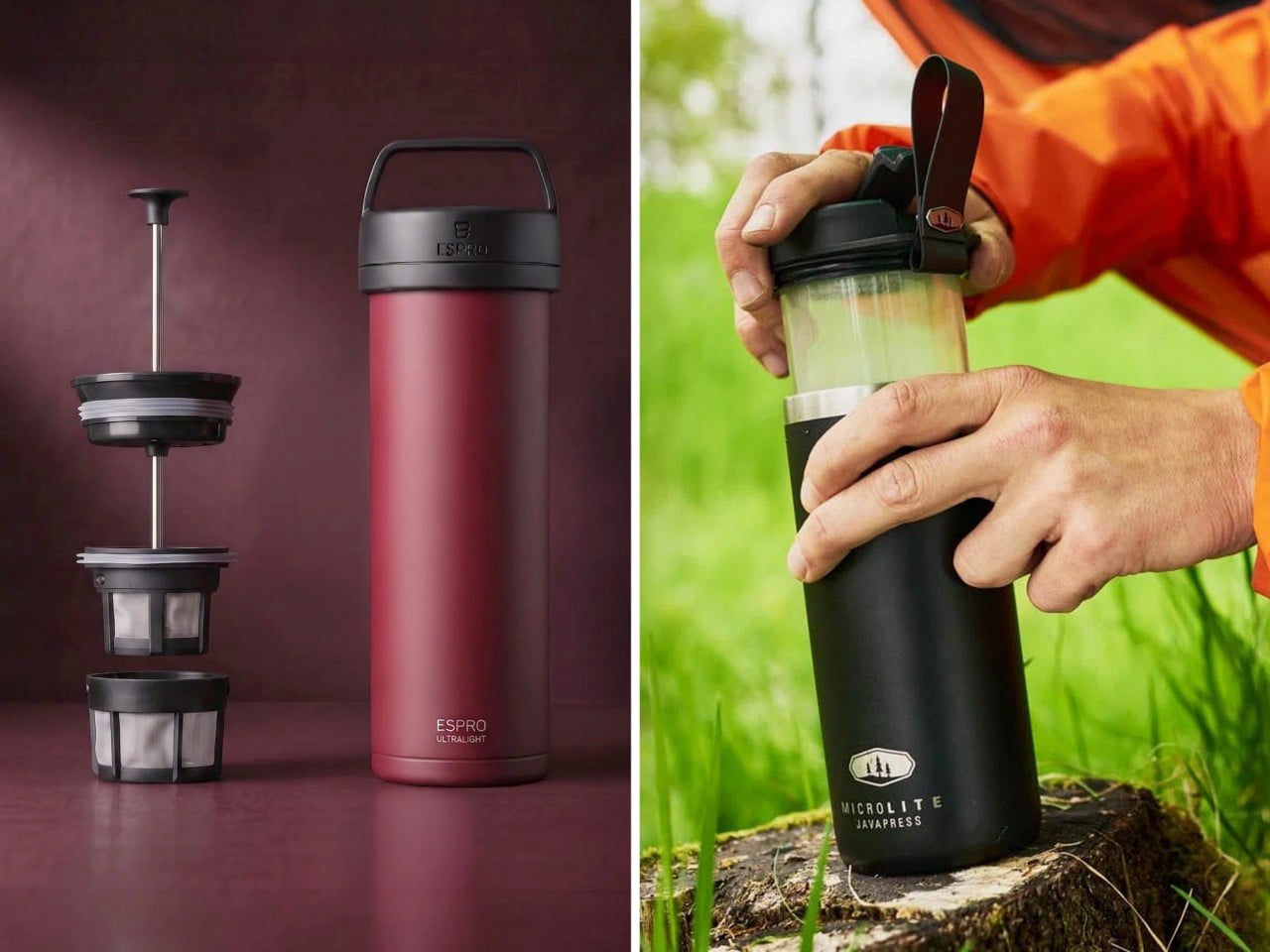
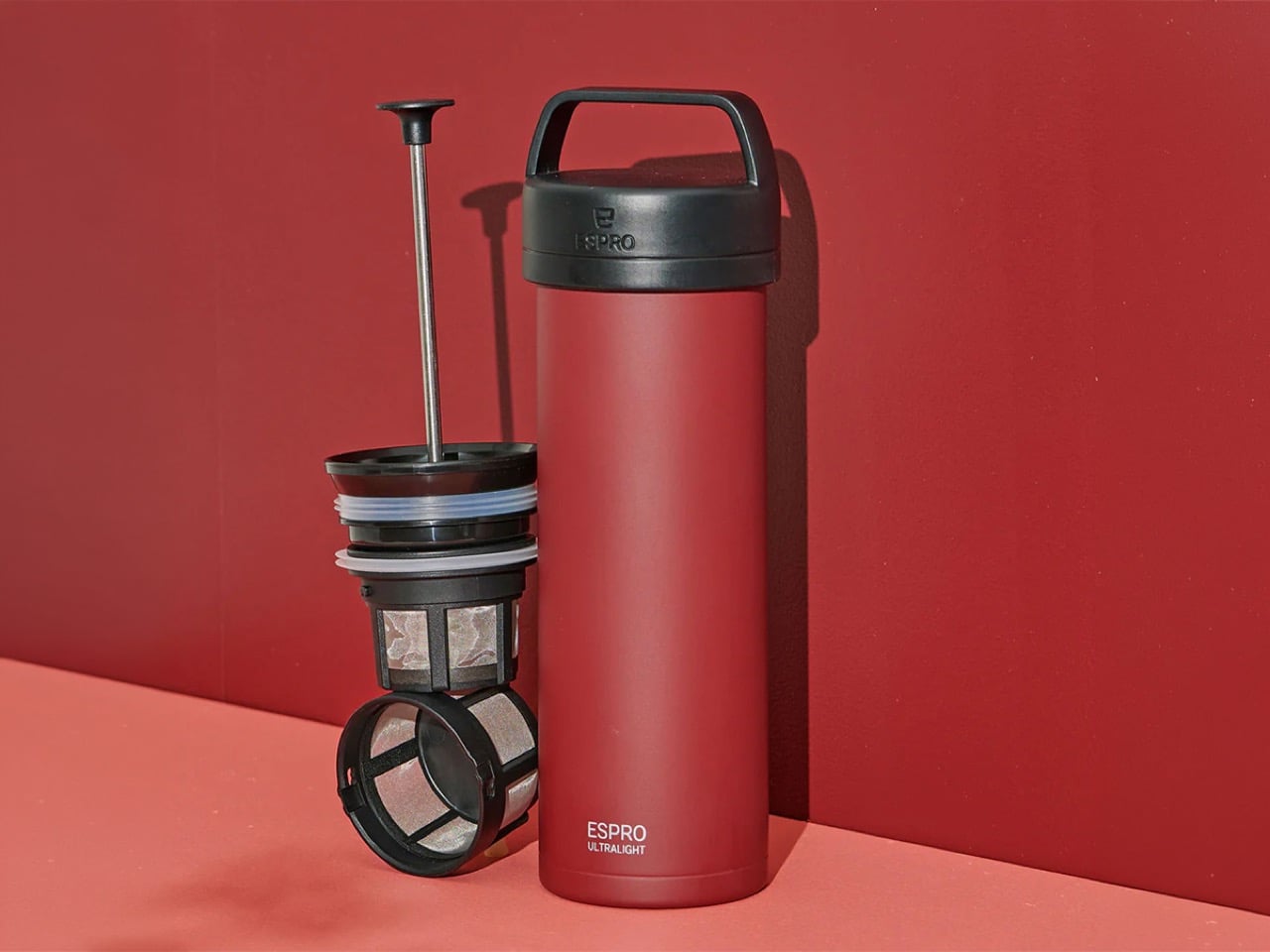
ESPRO has spent years building a formidable reputation in the specialty coffee community around its signature double micro-filter technology. The P0 adapts this exact filtration philosophy for the mobile market, utilizing the same core architecture found in the brand’s larger home-use presses. Two distinct mesh baskets twist and lock together securely at the bottom of a central metal rod. According to the manufacturer, these micro-filters are engineered to be nine and twelve times finer than the screens found in a typical, run-of-the-mill French press, promising a remarkably clean cup with minimal sediment.
To operate the P0, users introduce coarse coffee grounds directly into the chamber, fill the vessel with hot water up to the internal fill line, twist on the lower lid assembly complete with its attached filters, and wait the traditional four minutes for extraction. ESPRO claims that its design successfully halts the extraction process the moment the filters bottom out against the base of the container. This mechanical action directly addresses the notorious French press habit of over-extracting and stewing coffee, which often leads to bitterness if the grounds are left in contact with the liquid. For coffee aficionados chasing absolute clarity in their travel brew, paper filters can also be slotted into the system, while a separate tea filter is sold independently for loose-leaf enthusiasts.
Beyond the brewing mechanism, the rest of the P0’s design focuses entirely on portability and rugged durability. The vacuum-insulated stainless steel body measures 2.9 by 2.9 by 9.2 inches, or roughly 7.4 by 7.4 by 23.4 centimeters, and features a practical looped lid handle designed for clipping easily onto a backpack or climbing gear. The 210-gram figure frequently cited in early retail listings stems from ESPRO’s original 2018 Kickstarter campaign, which accounted strictly for the bottle and primary lid. With the complete press assembly factored in, ESPRO officially lists the weight at 9.6 ounces, or approximately 272 grams—still exceptionally lightweight, albeit more accurately reported. Furthermore, pulling the filter assembly out entirely restores the full 16-ounce interior volume, allowing the P0 to double as a conventional water bottle once the morning coffee has been consumed.
GSI’s MicroLite Turns the Cup into the Plunger
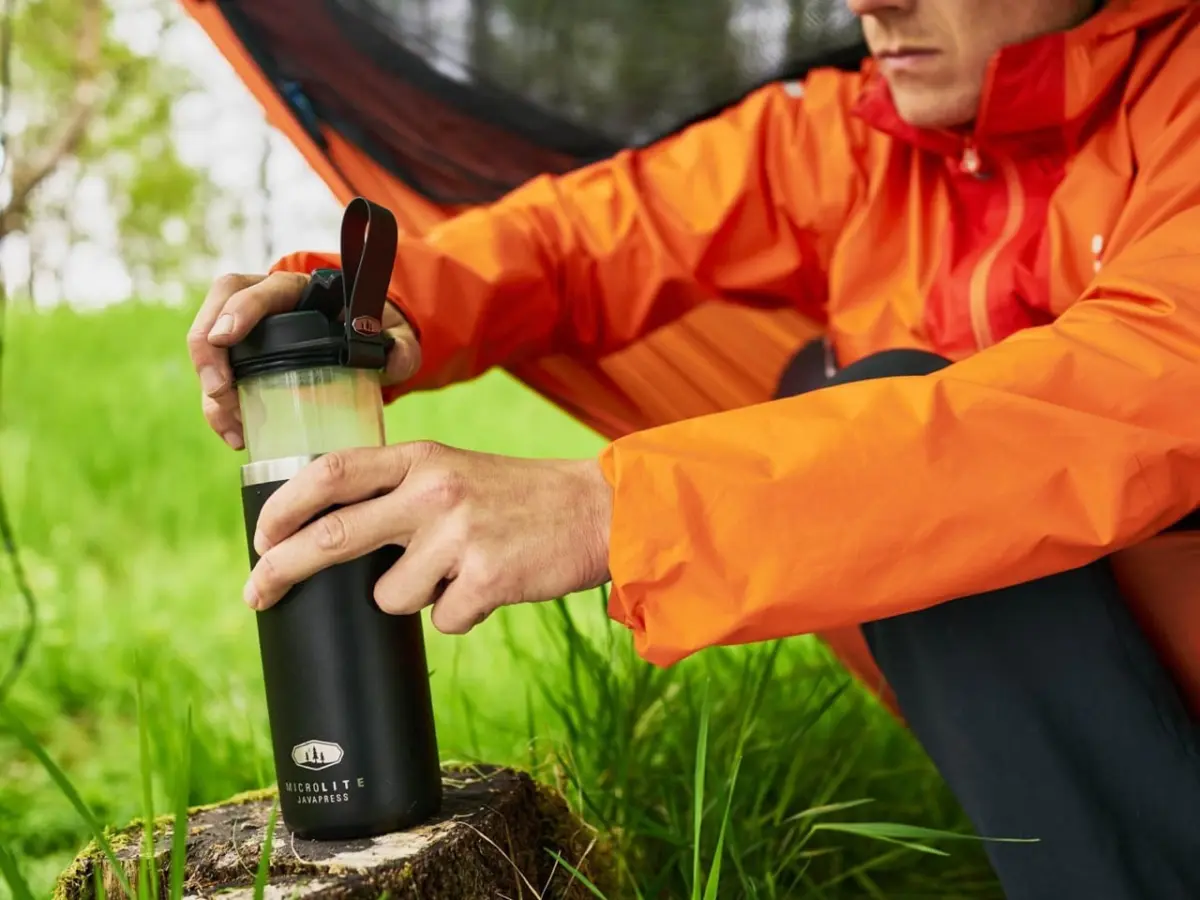
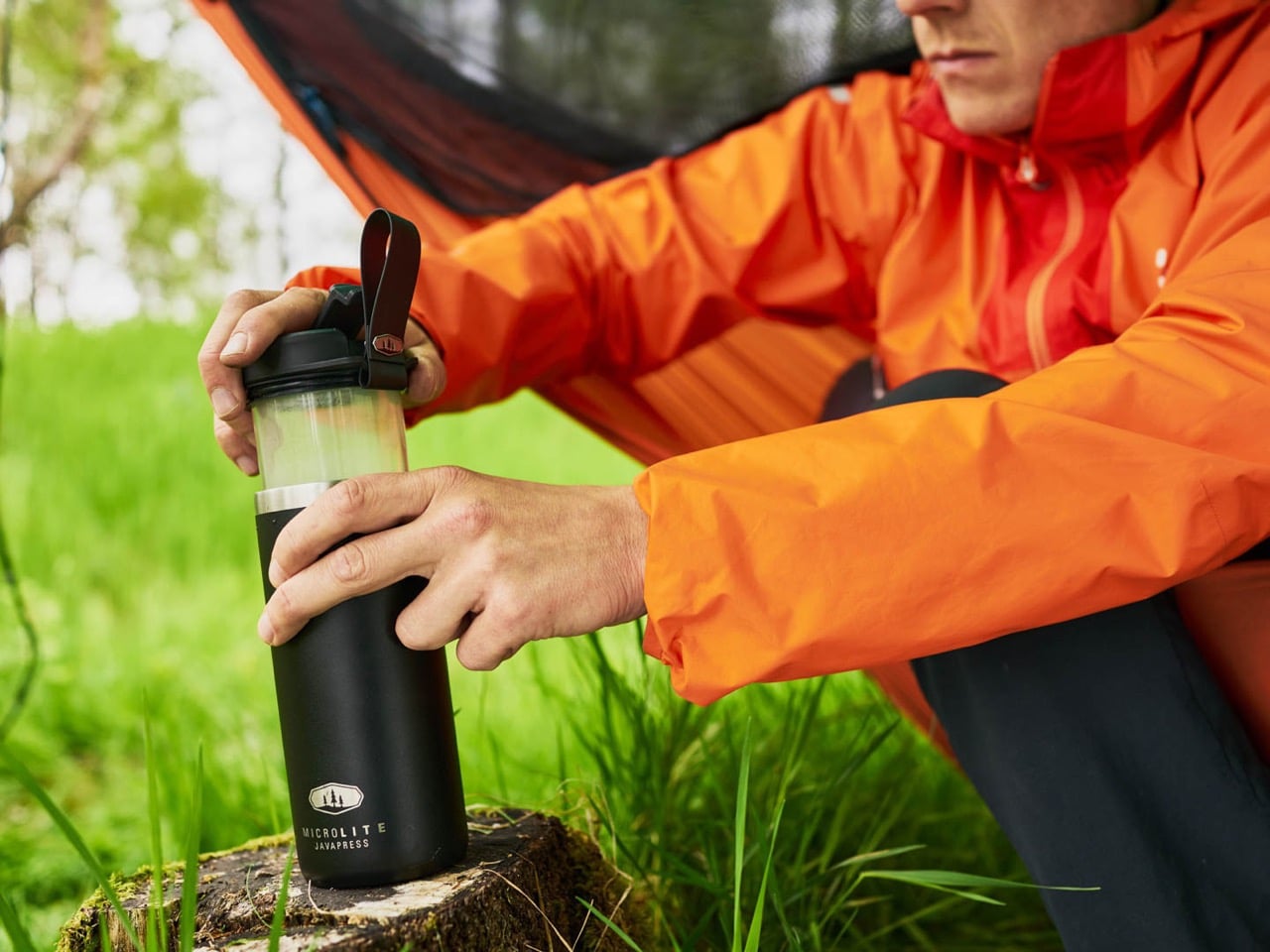
Taking a profoundly different engineering route, GSI Outdoors’ MicroLite JavaPress completely discards the traditional central metal rod. Instead, coarse coffee grounds and boiling water are poured directly into the 18/8 stainless steel outer cup, while a specialized lid screws onto a BPA-free polypropylene inner carafe featuring a mesh base at its lower end. After allowing the coffee to steep for approximately four minutes, the user simply pushes the entire inner carafe downward into the outer vessel. As the carafe descends, brewed coffee rises upward through the mesh base, leaving the spent coffee grounds safely trapped at the bottom of the outer cup. Users then sip their beverage straight from the carafe through a secure, sealable drinking spout.
GSI notes that this nested carafe arrangement provides an advantageous secondary function, serving as an extra layer of thermal insulation once the pressing process is complete. The entire unit measures 4 by 3 by 8.6 inches, translating to roughly 10.2 by 7.6 by 21.8 centimeters. GSI has successfully employed variations of this plunger-as-mug concept in past products, such as its plastic Commuter JavaPress, but the MicroLite elevates the concept into heavy-duty, vacuum-insulated stainless steel. It also incorporates modern lifestyle amenities, including a non-slip foot engineered to fit snugly inside most standard vehicle cup holders and a flexible leash securing the lid to the body.
Capacity specifications for the MicroLite vary slightly depending on the retailer, with GSI listing the total volume at 15 fluid ounces while other distributors cite 14.3 fluid ounces, or roughly 423 milliliters, without explicitly defining the net liquid yield after accounting for the displacement of the inner carafe. The operating instructions emphasize the necessity of using coarse grounds, hand washing the components, and maintaining an upright orientation to prevent spills. Additionally, early reviewers have noted that a partial vacuum or suction effect can sometimes make the inner carafe slightly stubborn to pull upward when first preparing to press.
Which Press-and-Sip Mug Belongs in Your Bag
Choosing between these two innovative portable coffee makers ultimately depends on personal travel habits, beverage preferences, and daily routines. The ESPRO P0 is arguably the superior choice for users who prioritize exceptional filtration quality and need a rugged vessel that can be securely clipped to the outside of a backpack, aided by ESPRO’s double-lock, leak-proof lid design. Conversely, the GSI MicroLite JavaPress is tailor-made for commuters and road-trip enthusiasts who value cup-holder compatibility, prefer the simplicity of operating without a plunger rod, and do not mind the minor discipline required to keep their travel mug in an upright position.
Cleanup routines also present a clear distinction between the two devices. Maintaining the P0 requires twisting apart a dual-filter assembly and rinsing a central metal rod, whereas managing the GSI system involves simply dumping spent grounds from the outer cup and rinsing the inner carafe. Because both systems rely on a standard four-minute steeping time to achieve proper extraction, neither option significantly accelerates the physical waiting period inherent to French press brewing.
Market pricing reflects the distinct engineering philosophies of each brand. ESPRO maintains a retail price of $39.95 for the P0, offering the mug in a palette ranging from Meteorite Black to Frost Wisteria. Meanwhile, GSI lists the MicroLite at $30.99, though availability has fluctuated across outdoor specialty retailers as older colorways phase out. While niche modular gadgets like the FinalPress V2 allow users to brew French press coffee inside any pre-existing mug they already own, the P0 and the MicroLite represent a dedicated hardware approach by building the press mechanism directly into the vessel itself. Nearly seven decades after Faliero Bondanini secured his landmark patent, designers continue to find fresh, creative places to house the humble French press plunger.