The modern workspace has long wrestled with a fundamental contradiction. Employers want collaborative, open, and aesthetically pleasing environments that invite creativity and fluid communication, yet these spaces are invariably undermined by the messy, tangled reality of modern technology. Power cords, data lines, HDMI cables, and lighting wires usually spill across floors, dangle awkwardly from desktop grommets, or require unsightly plastic floor channels that ruin the interior architecture. Designers and office planners have spent decades treating office wiring as a necessary nuisance—something to be managed, hidden away, or retrofitted into furniture long after the interior layout has been finalized.
Now, a new modular furniture collection is tackling this persistent headache right at the structural level. Developed by the renowned industrial design team at Foster + Partners for contemporary outdoor and indoor furniture brand Kettal, the newly launched "Area" table system integrates power, data, and lighting infrastructure directly into its architectural framework. Rather than treating technical requirements as an afterthought, Area builds these functional needs directly into the sculptural columns that support the furniture, transforming clumsy office utility into a defining design feature.
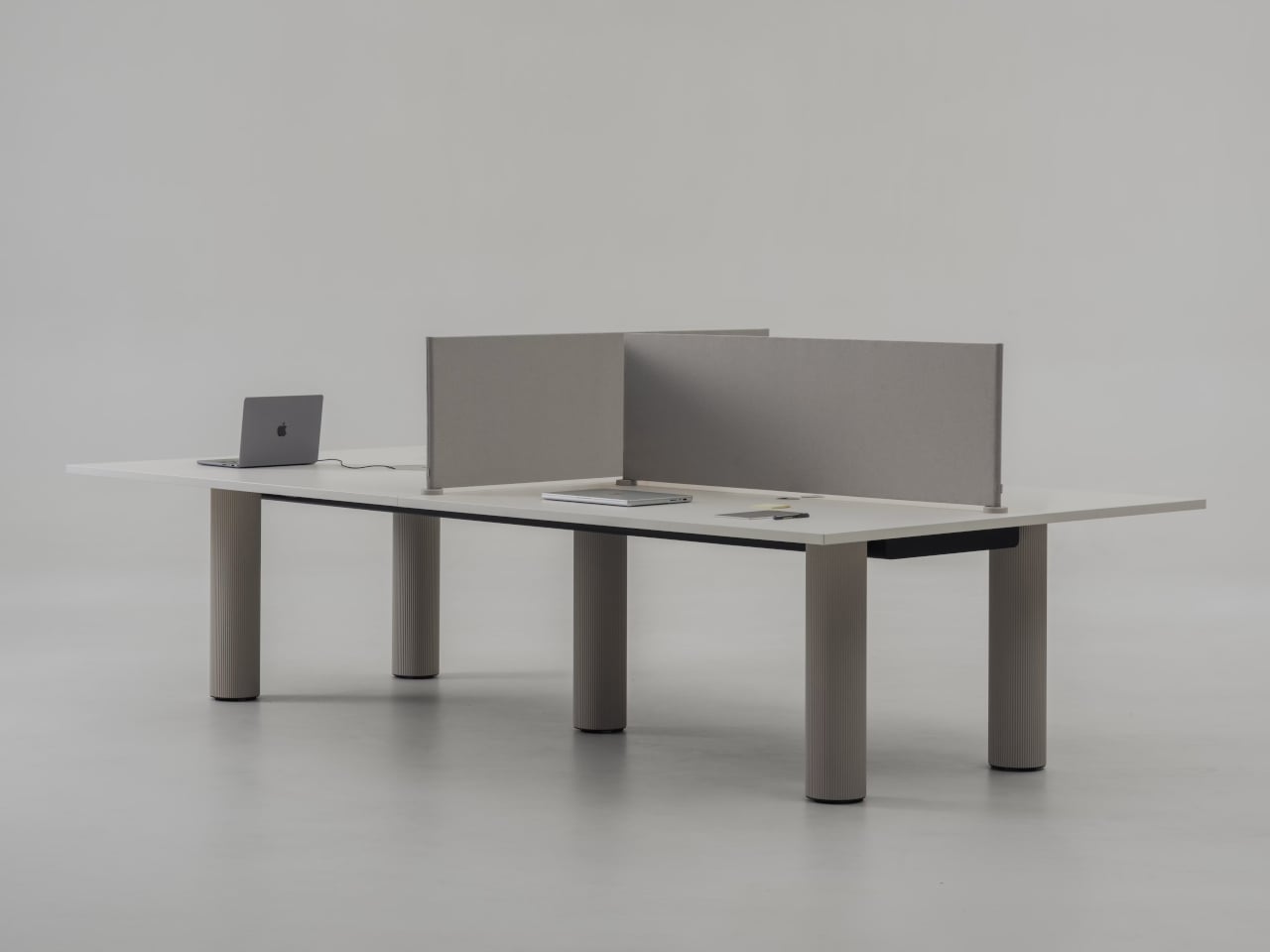
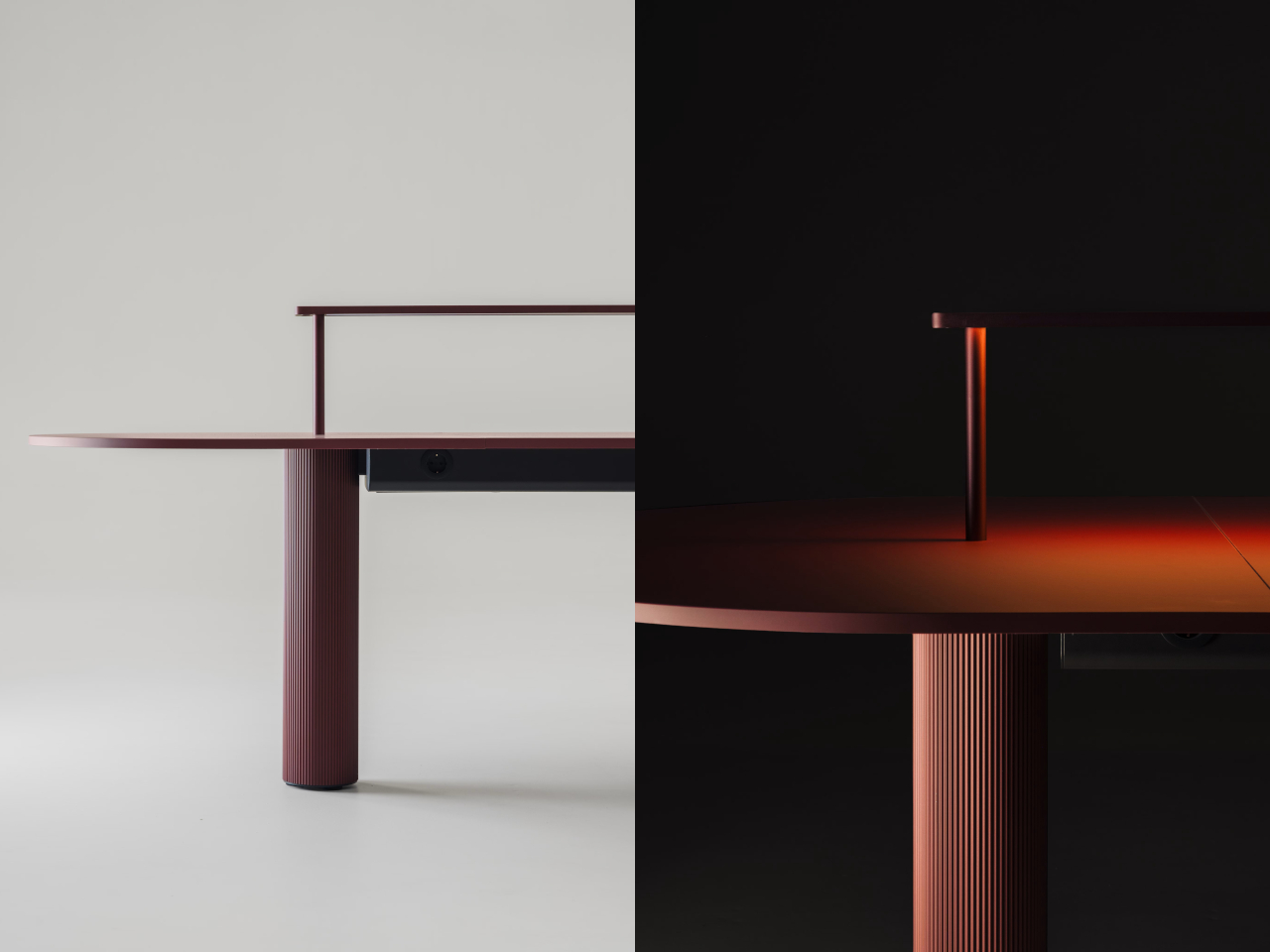
At first glance, the most striking visual elements of the Area collection are the thick, fluted legs that anchor the tables to the floor. Far from being simple structural supports, these aluminum columns are engineered to double as discreet vertical channels for a building’s power and data infrastructure. Available in a range of diameters spanning approximately 3.5, 6.3, and 17.7 inches, these cylindrical supports offer incredible versatility. Depending on the configuration, they can appear as slender, rhythmic vertical accents or transform into substantial central pedestals capable of stabilizing large conference surfaces.
The surface of these aluminum columns features fine vertical grooves, adding a sophisticated tactile texture to the rounded shapes without relying on superfluous ornamentation or applied decoration. Kettal and Foster + Partners offer these elements in a variety of anodized and powder-coated finishes, allowing facility managers and interior designers to completely move away from the sterile, corporate aesthetic of traditional office furniture. A rich, deep burgundy finish, for example, makes a particularly convincing argument that modern workspace furniture does not have to spend its operational life dressed in monotonous shades of gray.
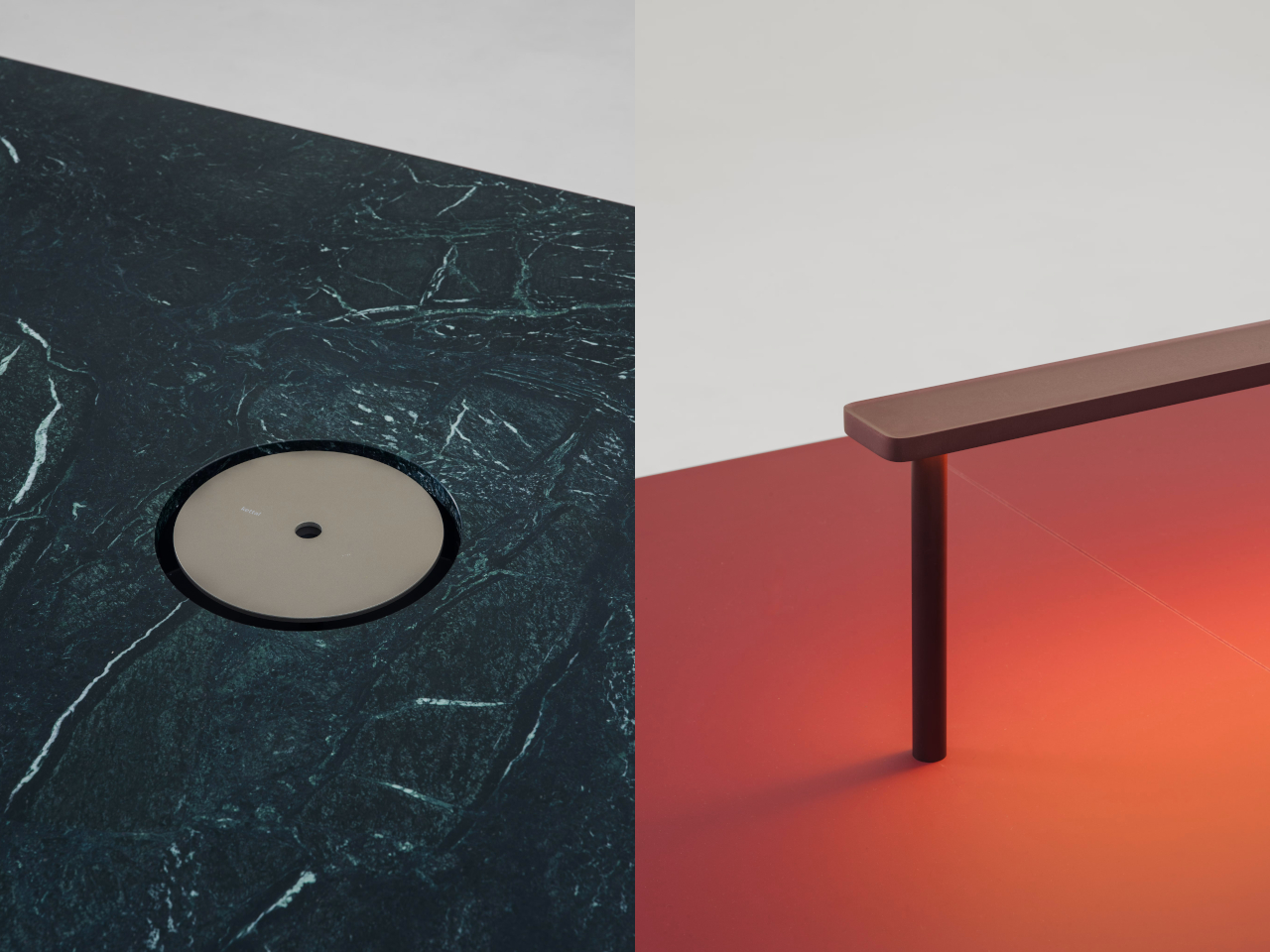
Beneath the tabletops, the engineering continues with a concealed J-profile aluminum beam. This hidden structural component not only reinforces the stability of the surface but also provides a continuous, organized horizontal route for cables to travel safely across the furniture system. Optional power equipment can be integrated seamlessly, bringing electrical sockets and USB-C connections directly to the user’s fingertips through discreet, flush-fitting access covers.
For the modern office worker arriving at a shared desk with a laptop, the implication of this design is straightforward. Connectivity is found directly at the surface of the working area rather than requiring a frustrating dive beneath the furniture to fish for a fallen charger. While a charging cable remains visible during use, it now has a logical, designated path to follow, eliminating the chaotic spaghetti-monster configurations that plague typical benching systems.
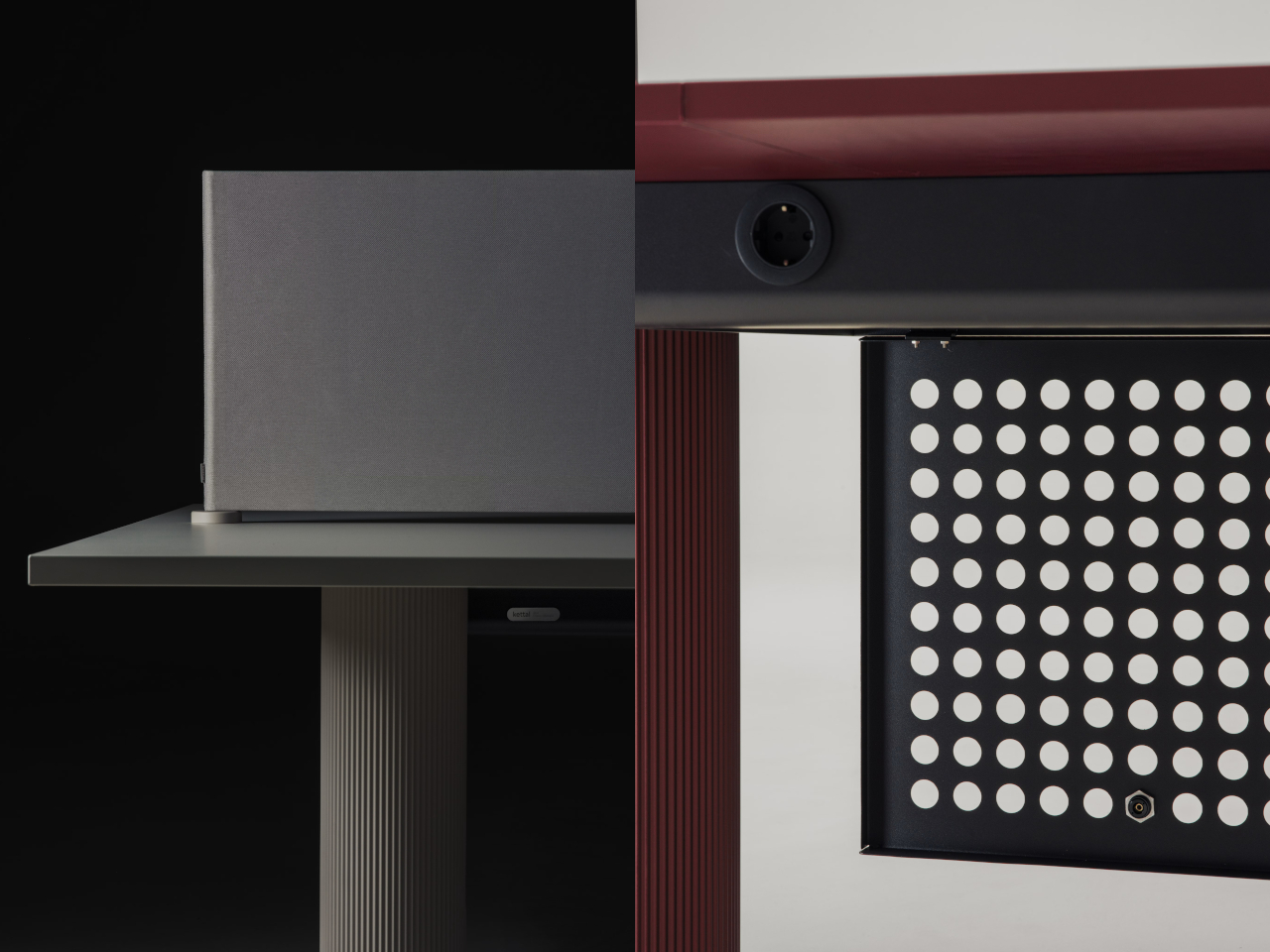
To balance the openness of collaborative layouts with the privacy needs of individual tasks, the Area collection also incorporates fabric dividers. Rather than looking like after-market desk screens or turning a cohesive room into a depressing bank of traditional cubicles, these dividers attach magnetically at designated, engineered points along the system. They clearly belong to the architectural grammar of the furniture itself. Designers note that these screens provide crucial visual separation, though they are not designed or marketed as acoustic soundproofing panels. A colleague engaging in a lively video conference nearby will still be heard, but the psychological boundary of a personal workspace is firmly established.
Lighting is another element fully integrated into the Area ecosystem, capable of working in tandem with the magnetic screens or standing entirely on its own to illuminate large communal tables. The lighting fixtures consist of narrow, horizontal elements that rise gracefully on slim vertical stems. By echoing the long, clean lines of the underlying tabletops, these fixtures avoid the visual clutter and bulk of multiple separate desk lamps fighting for space among open laptops and notebooks. Instead of forcing workers to crowd individual lamps onto an already busy surface, the system offers unified illumination that belongs intrinsically to the table structure.
The modularity of the collection extends further through its diverse tabletop geometries, which include round, triangular, and rhomboid forms. Varying module sizes accommodate everything from intimate individual workstations to expansive, collaborative meeting arrangements. Furthermore, the system supports both seated and standing configurations, pushing the collection far beyond the limitations of conventional, static office desks. A corporate cafeteria might utilize smaller gathering points for casual chats, while an architectural studio or academic library might opt for longer shared surfaces. Because all these configurations draw from the exact same family of components, a facility can maintain a cohesive design language across diverse rooms without forcing every space to follow a uniform floor plan.
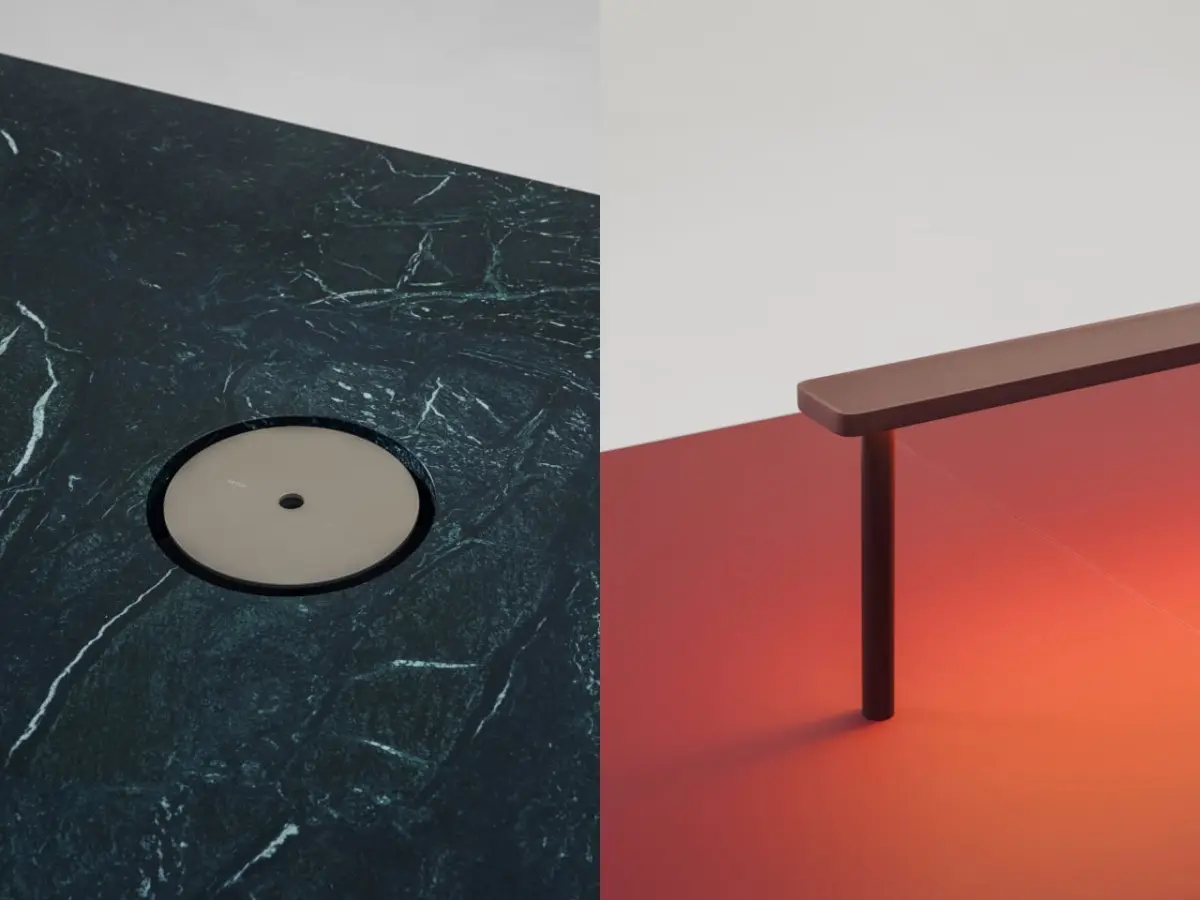
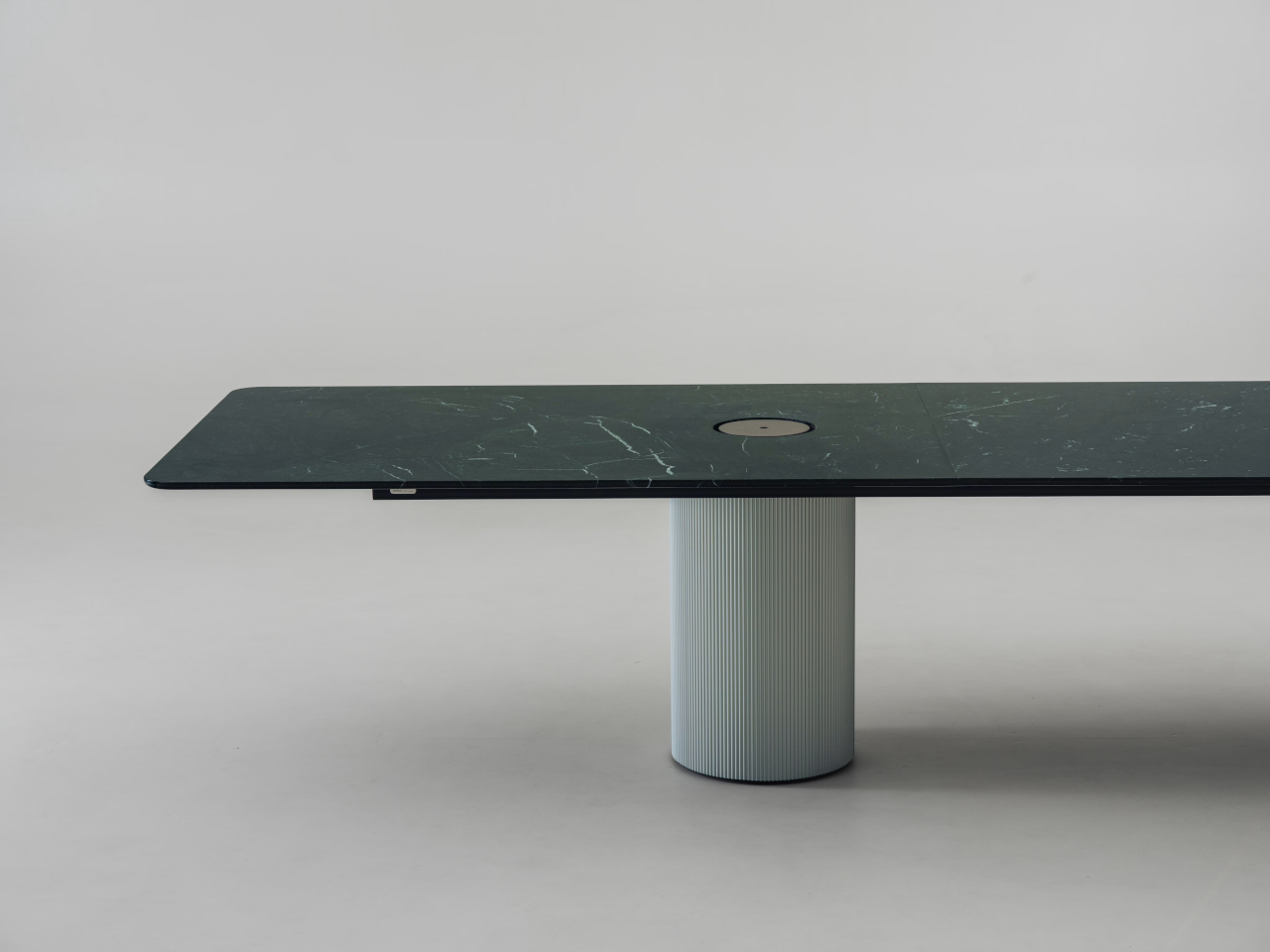
Material selection plays a massive role in setting the overall atmosphere of the room. The collection features a broad palette of standard surfaces, including traditional timber, practical linoleum, durable melamine, and high-performance Fenix laminates. For higher-end applications such as executive boardrooms or grand collaborative spaces, Kettal offers terrazzo and marble tabletops. In one striking configuration, a dark green stone top featuring delicate pale veining contrasts sharply against a broad, silver-colored central pedestal, bringing a classic sense of boardroom formality to the broader, more casual collection.
While the Area collection is already officially listed within Kettal’s product catalog—with exact pricing and delivery timelines available through direct client inquiries—experienced office planners understand that a product of this sophistication demands careful spatial coordination. The cleverest concealed cabling inside a sculptural table leg still ultimately needs to interface safely with the host building’s core power supply. A flexible, modular furniture layout only retains its adaptability if rearranging the tables does not inadvertently strand the next workstation beyond the reach of a building floor box.
By marrying high-end industrial design with rigorous functional engineering, Kettal and Foster + Partners have created a system that addresses the realities of modern office life. By hiding infrastructure inside sculptural legs and routing data smoothly through hidden beams, the Area collection proves that administrative practicality and refined aesthetic beauty do not need to be mutually exclusive in the contemporary workplace.