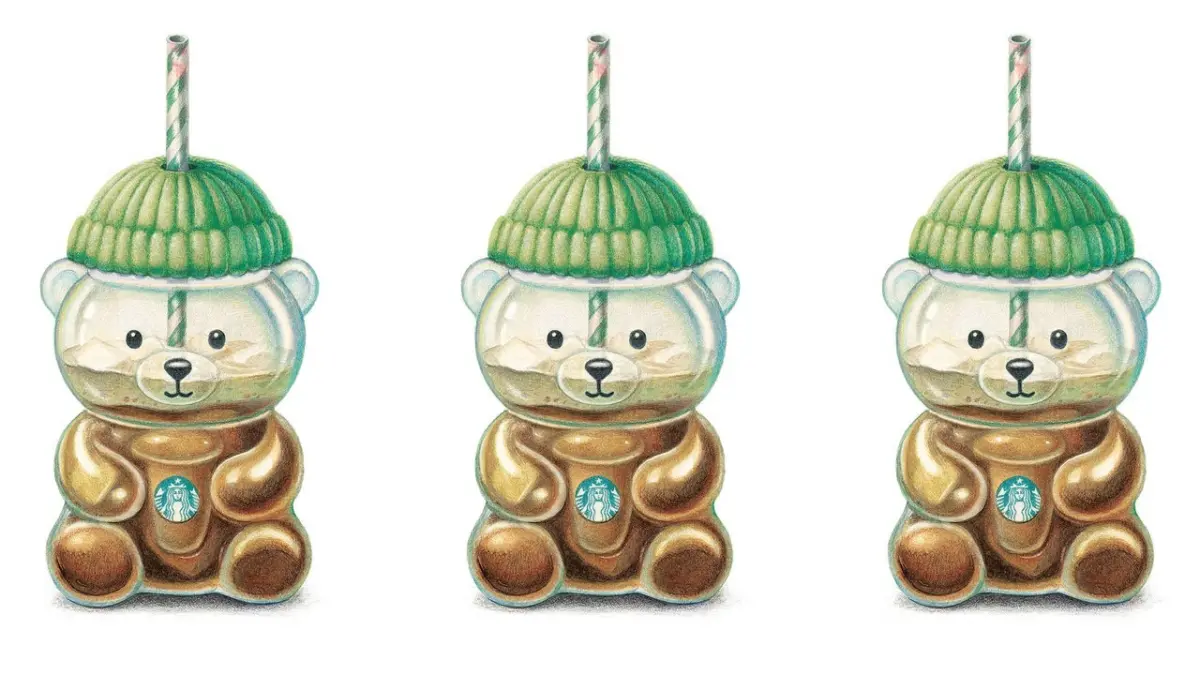
While Starbucks is universally known for its roasts, espresso drinks, and global footprint, the coffee giant has quietly mastered an entirely different kind of retail phenomenon: the creation of endlessly collectible merchandise. Over the years, collecting the brand’s seasonal mugs, tumblers, and cold cups has evolved far beyond a casual hobby. It has transformed into a subculture driven by die-hard fans and online content creators who build audiences by documenting the hunt for the latest drop. Interest in this coveted merchandise invariably reaches a fever pitch around the holidays, when limited editions trigger a rush of consumer excitement.
This retail dynamic reached new extremes in November 2025, when the company introduced the Starbucks Bearista Glass Cold Cup in the United States. The item, a handblown, bear-shaped glass vessel designed for cold beverages, arrived outfitted with a signature Starbucks-green beanie and accompanied by a green-and-white striped straw that proved virtually irresistible to collectors. Long before doors unlocked on the morning of its release, lines of eager customers snaked around store blocks. In a testament to the intense fervor surrounding the drop, more than one location witnessed physical altercations among shoppers vying for inventory, while social media feeds were flooded with viral videos of people documenting their quest to secure the elusive cup.
The Bearista is far from a newcomer to the Starbucks ecosystem, having served as a recurring mascot for the brand since 1997, when the company first introduced a plush, green-aproned bear designed specifically for the holiday season. Over the decades, the character evolved in various forms, but in 2023, it morphed into a cold cup concept in South Korea. The design quickly spread throughout Asian markets before finally crossing the ocean to hit the United States last November. By the time it officially debuted for American consumers, the item was already a legendary entity firmly established on cup collectors’ radars worldwide.
Dana Pellicano, senior vice president of global product experience at Starbucks, points to broader cultural shifts as a primary driver behind the timing of the release. According to Pellicano, the company observed a distinct and growing trend known as "kidulting," a phenomenon where adults increasingly embrace playful, nostalgic, and fun products that provide comfort and joy. The convergence of this adult toy and collectible trend, the rich legacy of the iconic bear mascot, and the meteoric rise of year-round cold drink consumption created the perfect alignment for Starbucks to finally bring the Bearista Glass Cold Cup to the U.S. market.
The appeal of international merchandise has long been a talking point within the passionate online collector community. Carol Casey, a prominent cup collector and content creator who goes by RayahSunshine on social media, notes that domestic enthusiasts frequently look overseas with a sense of covetous longing. Within the dedicated cup community, collectors constantly monitor releases happening in other countries because they frequently feature uniquely captivating designs. Casey explains that collectors noticed Starbucks Asia had curated a remarkably distinct set of items, observing that their regional cup offerings leaned heavily into a more cutesy, highly detailed aesthetic that immediately captured the imagination of global fans.
Because the Bearista cup relies on handblown artisan manufacturing rather than standard mass production, its supply was severely restricted from the outset. This inherent scarcity fueled a massive wave of social media content centered on hunting strategies, tips for tracking store inventory, and even spawned a lucrative secondary market on platforms like eBay, where the cups resold for multiples of their original retail price. The sheer intensity of the demand and the resulting supply chain strain caught many off guard, prompting the company to issue a formal statement apologizing to loyal customers who were ultimately unable to secure one of the coveted items.
Reflecting on the complex manufacturing realities behind the viral product, Pellicano acknowledges that the very attributes that made the cup a success also created immense operational hurdles. What makes an item truly special and unique, Pellicano explains, is frequently the exact factor that renders it logistically difficult to produce at scale. This reality forced the brand to exercise strict discipline regarding how the product was launched and distributed. In the retail product development space, choosing to pursue a high-end, artisan offering inevitably forces tough strategic compromises. When a brand says yes to a truly premium, elevated product line, it must accept the reality that it is unintentionally saying no to the possibility of universal availability. These delicate inventory and production balances represent the ongoing choices that product teams must carefully navigate.