A decade ago, the future of the historic British fashion house Burberry looked uncertain as sales floundered in a shifting global market. What followed was a remarkable corporate turnaround orchestrated by former CEO Angela Ahrendts and creative chief Christopher Bailey. Together, the leadership duo transformed Burberry into one of the most admired and recognizable names in the global fashion industry. They expanded the brand’s footprint into lucrative new markets like China while pioneering early adoption of the digital world with equal skill.
That digital and retail prowess is widely believed to be the reason Apple recruited Ahrendts to help build out its already formidable retail capabilities. Following her departure, Burberry appointed Christopher Bailey as its new CEO—an exceptionally unusual career track for a creative director stepping into the highest executive office of a major publicly traded luxury brand.
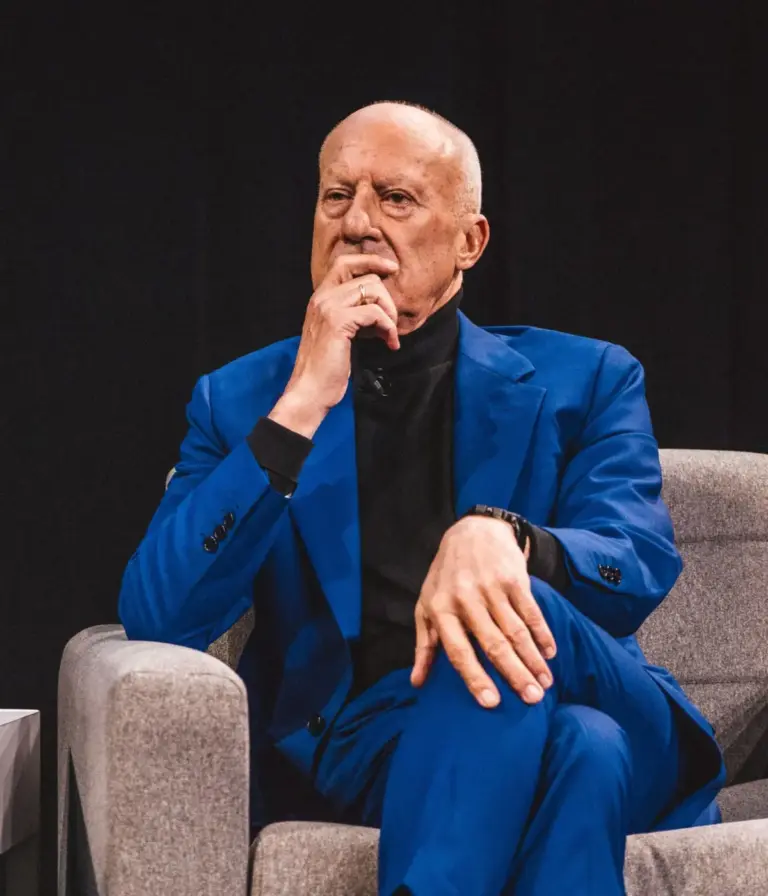
In an exclusive interview with Scott Dadich, Bailey reflects on the unique challenges of managing a design-driven business, the seamless transition from chief creative officer to overall boss, and how the convergence of digital technology and traditional craftsmanship is shaping the future of fashion.

From Creative Director to Overall Boss
Transitioning from a strictly creative role to managing the entire enterprise usually introduces a mountain of administrative hurdles and corporate bureaucracy. However, Bailey describes his shift into the chief executive role as remarkably smooth. Having worked in close partnership with Ahrendts for years, the core leadership team remained intact, providing continuity during a pivotal corporate transition.
Having spent his career moving fluidly across various creative disciplines—ranging from architecture and technology to traditional design—Bailey views his new role simply as involving a broader audience, including investors, analysts, and global stakeholders. He accepted the chief executive position primarily because design and creativity form the very soul of Burberry, a philosophy that has guided his approach to the brand from the very beginning.
This design-driven ethos has naturally evolved as Bailey settled into his expanded responsibilities. Whether designing for the physical world on a grand scale or crafting experiences for a one-by-one-inch mobile screen, the fundamental objective remains unchanged: generating an immediate emotional reaction from the audience. For Bailey, music serves as a powerful tool in this process, capable of evoking excitement, melancholy, or intense passion within seconds.

Leveraging Digital Platforms and Customer Interaction
Burberry’s engagement with modern consumers goes far beyond traditional advertising and branding; the brand actively encourages customer reactions and participation across social media platforms. Bailey points out that Burberry’s corporate origins were rooted in retail, characterized by direct, one-on-one conversations between staff and customers. Digital platforms have effectively allowed the brand to recreate that intimate relationship on a global scale while simultaneously capturing valuable trend data to inform new product lines.
A prime example of this digital-physical feedback loop is the company’s interactive website, Art of the Trench. The platform serves as a continuous source of design inspiration by showcasing the iconic Burberry trench coat interpreted in countless different ways by wearers around the world. Customer feedback gathered through these digital channels frequently influences future product development, with consumers directly voicing their desires for specific styles and variations.
This dual focus on physical craftsmanship and digital agility stems from Bailey’s personal background. Growing up with a carpenter father and a grandfather who worked as an electrician and gadget fanatic, Bailey developed a worldview defined by a balance of opposing forces: quick and slow. While the meticulous, hand-crafted production of a classic trench coat requires a significant amount of time, the rapid pace of online engagement offers immediate feedback and connection. Bailey remains fiercely proud of this balanced approach, maintaining that not everything in business should happen instantly, nor should everything move at a traditional, deliberate pace.

Bridging the Gap Between Traditional Craft and Digital Speed
The modern technology landscape inherently privileges speed, often placing pressure on traditional industries that rely on deliberate craftsmanship. However, Bailey does not view this tension as an operational problem. Instead, Burberry has actively adapted its supply chain to bridge the gap between digital exposure and physical delivery.
For instance, when the fashion house livestreams a runway show to a global audience, customers traditionally had to wait four to six months for those garments to arrive in retail stores. To address this lag, Burberry developed the "Runway Made to Order" initiative, which enables clients to purchase runway pieces immediately and receive them within six to eight weeks. While implementing this capability required significant restructuring and proved challenging for the company’s supply chain, Bailey considers it a vital evolution for the brand.
As global technology giants increasingly expand into wearable technology, the historical boundary between fashion and functional tech continues to blur. Apple’s success, Bailey notes, relies heavily on beautiful product design. However, unlike items stored inside a bag, wearable products are continuously on display, acting as an extension of the wearer’s personal character.

This convergence raises compelling questions for luxury design: What happens when technology is woven directly into fibers? What possibilities emerge when microchips are embedded into fashion accessories? To explore these uncharted territories, Burberry established a dedicated internal team known as the "What If Group" to puzzle through the intersection of advanced technology and luxury fashion.
Reconciling Lifelong Craft with Rapid Technology Cycles
Integrating fast-moving technology into a luxury brand presents a distinct timeline paradox. A traditional Burberry trench coat is built to last a lifetime, whereas consumer technology hardware cycles grow shorter and more obsolete with each passing day.
Despite these differing lifespans, Bailey sees no fundamental contradiction. He believes that people will always crave tangible, physical experiences in the real world. These physical interactions generate the authentic stories that brands subsequently share through digital narratives, ensuring there is no rigid, clear-cut division between the physical and digital realms—a synthesis that Bailey enthusiastically embraces as Burberry continues to chart its modern course.