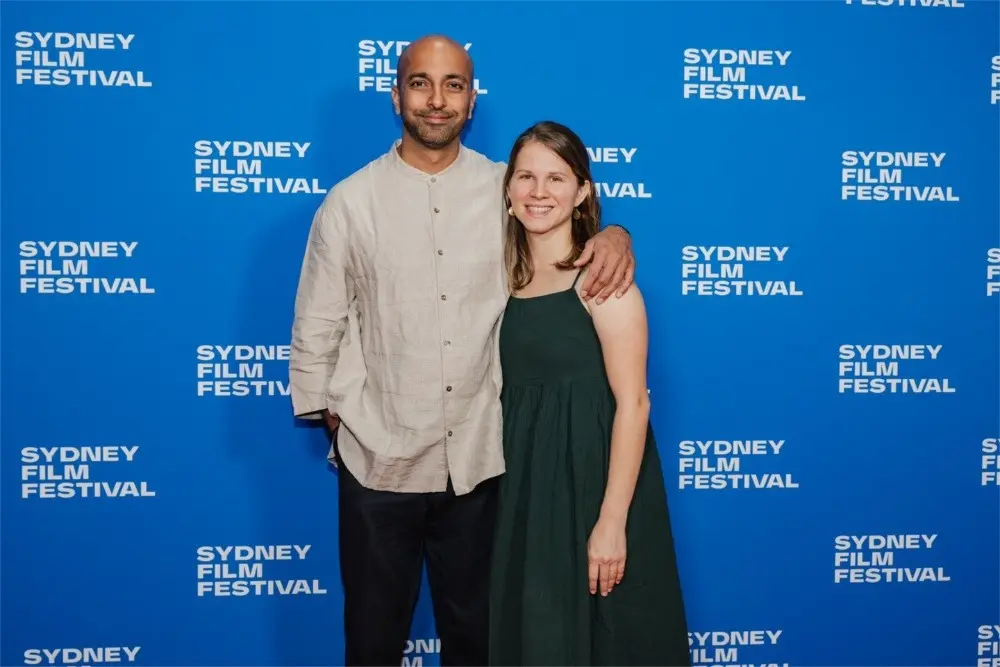
Indian-Australian filmmaker Anoop Lokkur, whose debut feature film “Don’t Tell Mother” enjoyed a prestigious premiere at the Busan International Film Festival, is transforming a deeply personal and frustrating chapter of his life into a biting dark comedy. The new project, titled “Melgade Mane Kelgade Mane” (which translates to Upstairs Downstairs in English), is currently being showcased in the Co-Production Market at the WAVES Film Bazaar, the vibrant industry counterpart to the International Film Festival of India (IFFI) held annually in Goa.
The Kannada and English-language feature film draws heavily from Lokkur’s own recent life experiences. It follows the narrative arc of Karthik, a protagonist who relocates from Melbourne back to his roots in Bengaluru, accompanied by his wife and young daughter. The primary motivation for the move is to look after his ailing father. Karthik expects a straightforward transition into the top floor of a traditional house located in an older, established Bengaluru neighborhood—a property where his family has resided for three generations.
However, reality proves to be far more complicated. The tenant occupying the space, a government contractor named Ramesh, had previously agreed to vacate the premises but abruptly changes his mind when the time comes to leave. What begins as a series of polite negotiations quickly deteriorates into a bitter, tit-for-tat war of attrition. As legal avenues stall and lead nowhere, the conflict escalates dramatically: utilities like power are deliberately cut off, property sustained within and around the house suffers damage, and access routes to different parts of the dwelling are blocked by competing parties.
Recounting the genesis of the project, Lokkur explains that the ordeal began in 2025 when he returned to Bangalore with his wife and their one-year-old daughter. Their original plan was to settle comfortably on the upper level of his parents’ home. Instead, because the tenants refused to vacate even after their lease had legally expired, the younger family ended up cramped into the parents’ shared portion of the house. The living arrangements were far from ideal, creating an environment charged with everyday tension and friction.
“The whole situation was frustrating and unpleasant,” Lokkur reflects, describing the months that followed. He recalls dealing with persistent passive aggression and constantly brainstorming ways to reclaim his family’s property. Yet, looking back, he found a profound sense of irony in the situation. Only a couple of years prior to this ordeal, he and his wife had themselves been forced out of a rented home in a similarly difficult housing shuffle. Having experienced life on both sides of the landlord-tenant divide, Lokkur grew deeply curious about the psychological dimensions of property ownership, the emotional weight of what it truly means to call a place home, and the extreme lengths to which ordinary people will go in order to come out on top of a domestic dispute.
“I realized there was a dark comedy in this situation that was universal, and the best way to deal with my frustration was to turn it into a film,” the director notes.
Currently sitting firmly in the development stage, “Melgade Mane Kelgade Mane” is being produced by Lokkur alongside Mikayla Henke under their production banner, Papunu Films. The feature carries an estimated production budget of $1.3 million. Thus far, the creative team has successfully secured $156,000 in early financing and is actively using their presence at the WAVES Film Bazaar in Goa to connect with potential international co-producers, additional financial backers, and experienced sales agents who can help propel the project onto the global stage.
Elaborating on the narrative structure and thematic depth of the screenplay, Lokkur likens the progression of the story to a high-stakes athletic contest. “The film is built like a tennis match. Your sympathies keep switching between the two families, until you’re no longer sure who to cheer for,” he says. He emphasizes that his primary creative interest lies in examining how human ego can quietly take over a rational mind, and how ordinary, otherwise decent people can incrementally justify each small act of revenge until they cross a line where they no longer recognize themselves in the mirror. Beyond the interpersonal conflict, Lokkur notes that the movie serves as a cultural commentary on Bengaluru itself—a sprawling, dynamic metropolis undergoing such rapid transformation that its historic neighborhoods and deeply rooted family homes are steadily vanishing from the urban landscape.
Producer Mikayla Henke shares a deeply intertwined perspective, having lived through the actual dispute alongside Lokkur. Given that the filmmaking duo and their family were experiencing the chaotic standoff on a daily basis, adapting the ordeal into a cinematic format felt like a natural, almost inevitable choice for their sophomore feature. Comparing the new project to their critically acclaimed debut, Henke points out the distinct artistic shifts between the two works.
“‘Don’t Tell Mother’ was a tender and very personal film,” Henke observes. “On the surface, ‘Melgade Mane Kelgade Mane’ might look like the opposite: darker, bolder and funnier. But it comes from the same place, a close eye on family and the things people struggle to say to each other. This time, we just want to take audiences on a much wilder ride.”
The creative team’s previous collaboration, “Don’t Tell Mother,” established Lokkur as a distinctive voice in contemporary independent cinema. That film notably screened in the A Window on Asian Cinema section at the prestigious Busan International Film Festival, earned a nomination for best youth film at the 2026 Asia Pacific Screen Awards, and celebrated its Australian premiere at the Sydney Film Festival. Additionally, Lokkur and Henke previously collaborated on the short film “Long Distance,” which was produced by Henke and went on to screen at the Melbourne International Film Festival and the Palm Springs International ShortFest before being acquired for distribution by the prominent European network Canal+. Henke was also the foundational producer on “Don’t Tell Mother,” cementing a strong, ongoing creative partnership with Lokkur.
Despite the distinctly local flavor of its setting in Bengaluru, the producers firmly believe that the core narrative transcends geographical borders. “While it’s set in Bengaluru, it’s a universal story about housing that people everywhere can relate to, and we believe it can travel well beyond India,” the producers assert.
As the WAVES Film Bazaar continues to host industry professionals, producers, and financiers in Goa, Lokkur and Henke remain focused on gathering the necessary alliances to bring their turbulent, darkly humorous domestic standoff from the drafting table to the silver screen.