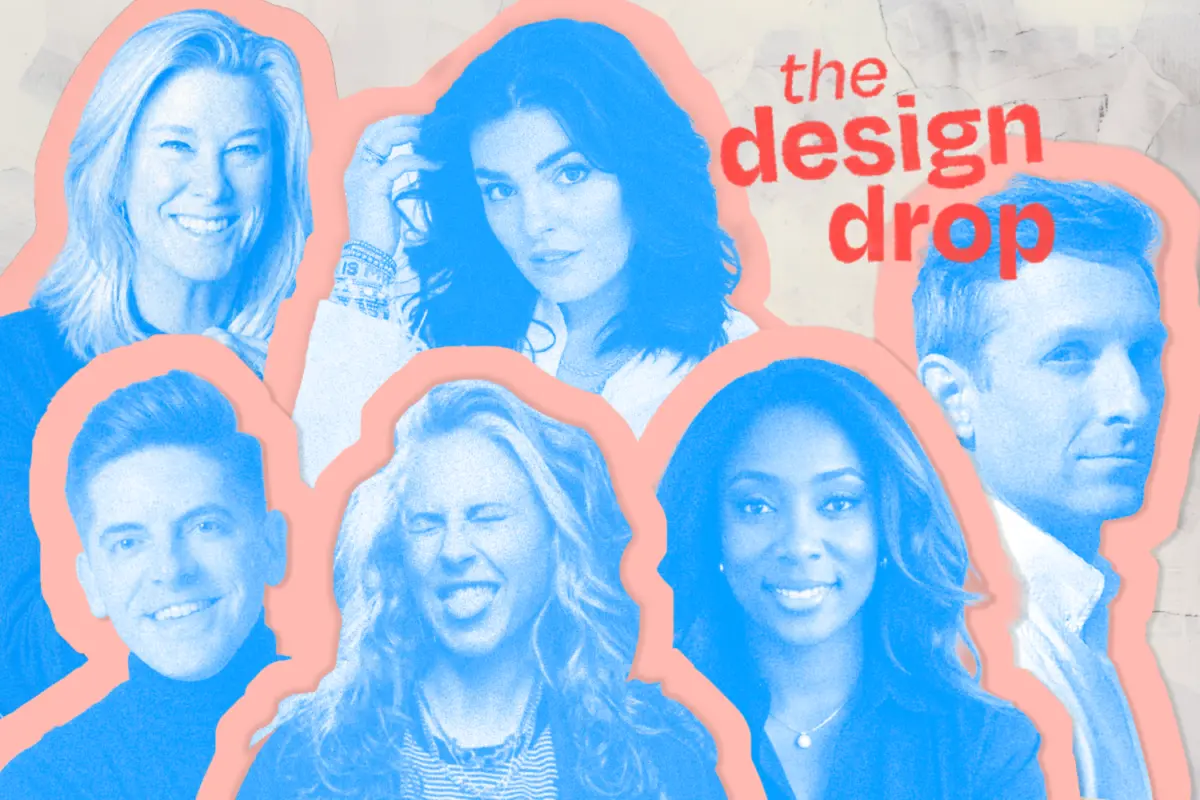
When the SANDOW Design Group launched The Design Drop podcast across the SURROUND network, the driving objective was straightforward yet ambitious: facilitate the kind of raw, unfiltered career conversations that young and emerging designers actually want to hear. Instead of relying on polished success stories, rigid professional trajectories, or repetitive advice that young creatives have heard a hundred times over, the series set out to explore the messy middle. It dug into the mistakes, the unexpected professional detours, and the unspoken rules of the creative industries that never seem to make it onto a standard job description.
For Caroline Murphy, the futureGen Engagement Lead at SANDOW Design Group and the host of the podcast, the role represents a dream job. In her day-to-day work, Murphy spends a considerable amount of time thinking deeply about how the design industry can better support its next generation of creative professionals. Sitting down with seasoned designers, industry leaders, and unexpected voices to unpack what they have learned along their professional journeys felt like a natural extension of that mission. However, what she ultimately did not expect was just how much she would learn herself—ranging from broad insights on career development, confidence, and taking risks, down to the practical mechanics of navigating studio microphone stands.
Following the completion of its initial six-episode run, the podcast has offered a treasure trove of perspective not just for its listeners, but for its host as well. Across these foundational conversations, several core themes emerged that challenge traditional perceptions of how a successful creative career is built, sustained, and navigated.
1. You Don’t Have to Know What You’re Doing to Get Started
One of the most recurring anxieties for young designers entering the workforce is the paralyzing need for absolute certainty before taking action. During her conversation with furniture designer Nicolai Czumaj-Bront, Murphy explored how conventional career paths are rarely linear. Czumaj-Bront shared how his own career began not in a high-end studio with a perfectly mapped-out blueprint, but at his kitchen table after enduring long, exhausting days working as a consultant. He operated simply on an idea, a modest amount of confidence to try, and an underlying willingness to invest in his own potential.
Twenty years later, Czumaj-Bront serves as a senior design studio manager at Haworth, which presented the inaugural season of The Design Drop. This trajectory highlights a common trap within the creative sector: aspiring professionals spend an inordinate amount of time waiting until they feel entirely qualified, thoroughly prepared, or empirically experienced enough to take the plunge. Yet, as Murphy notes, the fundamental paradox of professional development is figuring out how to acquire experience if one never actually begins. Embracing the unknown and leaping into projects that fall outside the comfort zone remains a vital catalyst for long-term growth.
2. Nobody Has It All Figured Out—Seriously, Nobody
As early-career professionals navigate the labyrinth of the design world, it is easy to fall into the psychological trap of assuming that established leaders and admired mentors possess an infallible roadmap. One of the most comforting and humanizing discoveries of hosting the podcast was realizing that even the most accomplished individuals are still figuring things out as they go.
In a candid conversation with designer and entrepreneur Dan Mazzarini, the discussion centered heavily on the immense pressure creative professionals face to please everyone, particularly during the formative stages of building a practice or a brand. Trying to be everything to everyone often results in a designer losing sight of the very perspective that makes their unique voice valuable in the first place. True professional confidence is rarely about possessing all the answers; rather, it frequently manifests as the self-assurance required to stop seeking validation from external sources. Realizing that respected industry figures continue to navigate these exact insecurities offers emerging creatives a vital sense of grace.
3. The Best Things Might Be the Ones You Never Planned
While human nature often leans toward rigid planning and structured five-year goals, creative evolution rarely adheres to a strict schedule. Interior designer and content creator Clare Sullivan joined the podcast to discuss her unique career trajectory, reinforcing the idea that unexpected professional detours deserve far more credit than they typically receive.
Sullivan did not initially set out to become a prominent design influencer or digital content creator. Instead, her career evolved organically from traditional residential design into the development of her own digital platform—long before the concept of a design influencer was an established or widely recognized career path. Her journey poses a compelling question for anyone struggling to chart a rigid professional course: how many of life’s most rewarding milestones actually went according to plan? Often, the unexpected side quest evolves into the main professional focus, and a spontaneous opportunity that one almost passes up ends up rewriting the entire playbook.
4. Life Gets Easier and Harder at the Same Time
Balancing the demands of a creative career with the realities of personal growth is an ongoing tightrope walk. As people age, life inevitably grows more complex. The list of responsibilities expands to include demanding jobs, intricate relationships, housing, bills, and everyday domestic obligations. At the same time, however, individuals accumulate invaluable experience, broader perspectives, and a sharper understanding of what truly matters.
Kay Sargent, senior principal and director of thought leadership in HOK’s Interiors group, helped reframe this dynamic during her appearance on the show. Sargent emphasized that life and work operate in distinct seasons. There is no universal requirement to be everything, everywhere, all at once. What demands relentless energy and focus today may look entirely different five years down the line, offering a much-needed reminder to release the expectation of maintaining a rigid, flawless balance across every single facet of life simultaneously.
5. Your 20s Are for Collecting Data, Not Checking Boxes
A guiding philosophy often shared by Murphy’s mother—viewing one’s twenties as a period dedicated strictly to data collection—served as a recurring touchstone throughout the season. Every individual job, professional misstep, unexpected success, and questionable decision provides raw information and context that did not exist previously. The ultimate objective during this foundational decade is not to get everything right on the first try, but to gather enough insight to make more informed decisions the next time around.

This philosophy found strong resonance in a conversation with Jessica O. Matthews, who invented an energy-generating soccer ball at the remarkable age of 19 before going on to build pioneering companies at the intersection of design, technology, and sustainability. Matthews and Murphy discussed the immense value of drawing knowledge from experiences and perspectives entirely outside one’s primary industry. Not every lesson learned needs to fit neatly into a traditional career path to be useful later in life. Embracing unconventional opportunities and exploring random intellectual curiosities remains an essential part of professional development.
6. You Have a Superpower—You Might Just Need Someone Else to Point It Out
Every guest who stepped up to the microphone brought a distinct background, a unique perspective, and a deeply personal definition of success to the table. In a conversation with Kelly Cooper—a seasoned merchandising expert whose impressive career spans major brands like Nike, Levi’s, and Universal Music Group—the discussion focused heavily on personal branding, self-advocacy, and discovering a version of professional success that functions sustainably in the real world.
In an industry driven by visual culture and constant comparison, it is remarkably easy for emerging creatives to overlook their own innate strengths while gazing at the achievements of others. Often, it requires the outside perspective of a trusted mentor, a supportive colleague, or an industry peer to help an individual recognize what they are uniquely gifted at doing. Cultivating an environment where mentors help emerging talent identify their core superpowers—and actively reciprocating that support for others—remains critical to the health of the creative community.
Ultimately, after six diverse and revealing episodes of The Design Drop, the overarching takeaway is not that there are simple, definitive answers to the complexities of a creative career, but rather that asking the right questions matters most. Across varying disciplines, generations, and backgrounds, the underlying challenges facing creative professionals remain remarkably consistent. By fostering open, transparent dialogues about the uncertainties inherent in the design world, the podcast continues to provide a vital space for the industry’s next generation to navigate their paths together.
All six episodes of The Design Drop, presented by Haworth, are currently available on the SURROUND podcast network and across major podcast streaming platforms.