Apple’s long-standing design philosophy of eliminating physical ports and openings from its hardware appears to be reaching a new milestone. Over the past decade, the tech giant has systematically removed traditional hardware boundaries from its ecosystem, starting with the controversial removal of the headphone jack on the iPhone in 2016. That same year, the MacBook Pro traded away legacy ports like HDMI, SD card slots, and standard USB-A connections in favor of streamlined Thunderbolt ports and an era of external dongles. More recently, US variants of the iPhone completely abandoned the physical SIM card tray in 2022, pushing the industry further into a wireless and minimalist future.
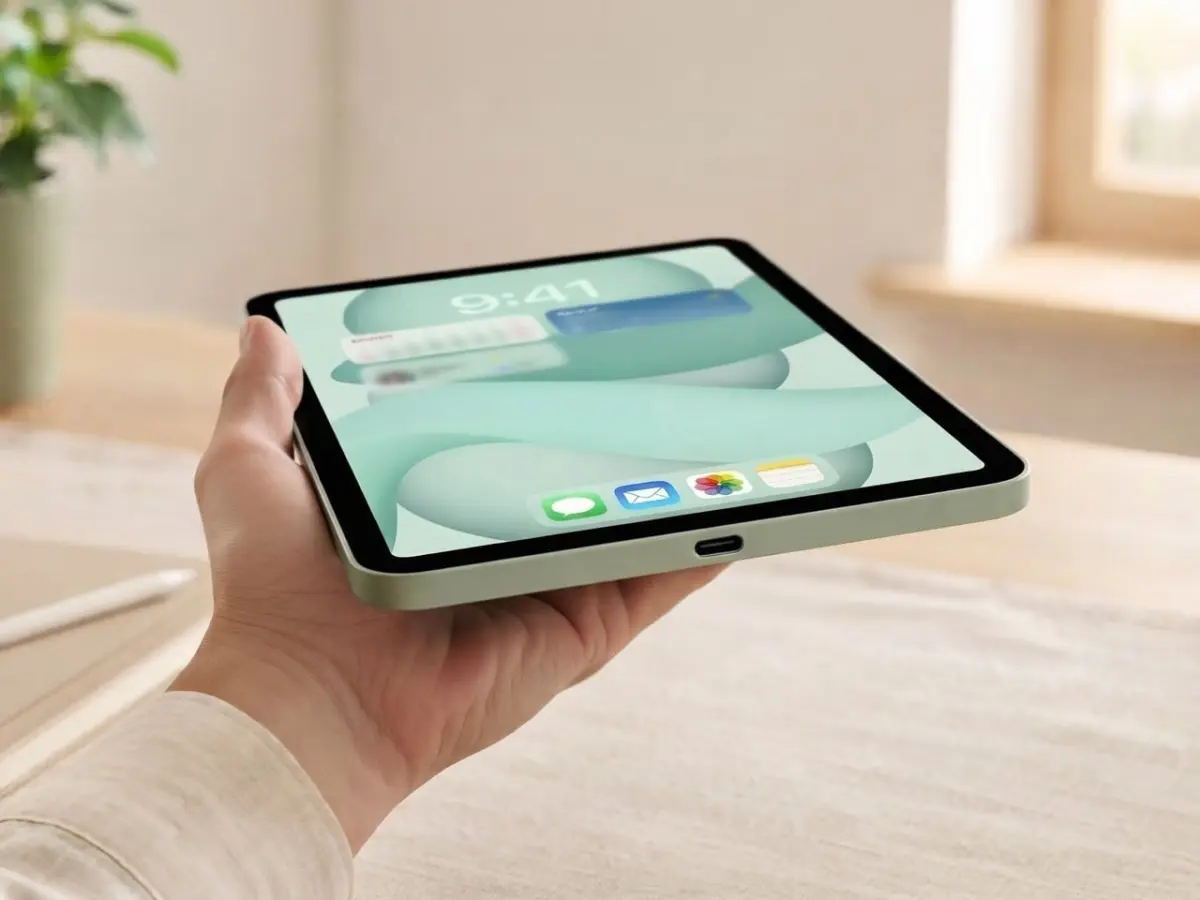
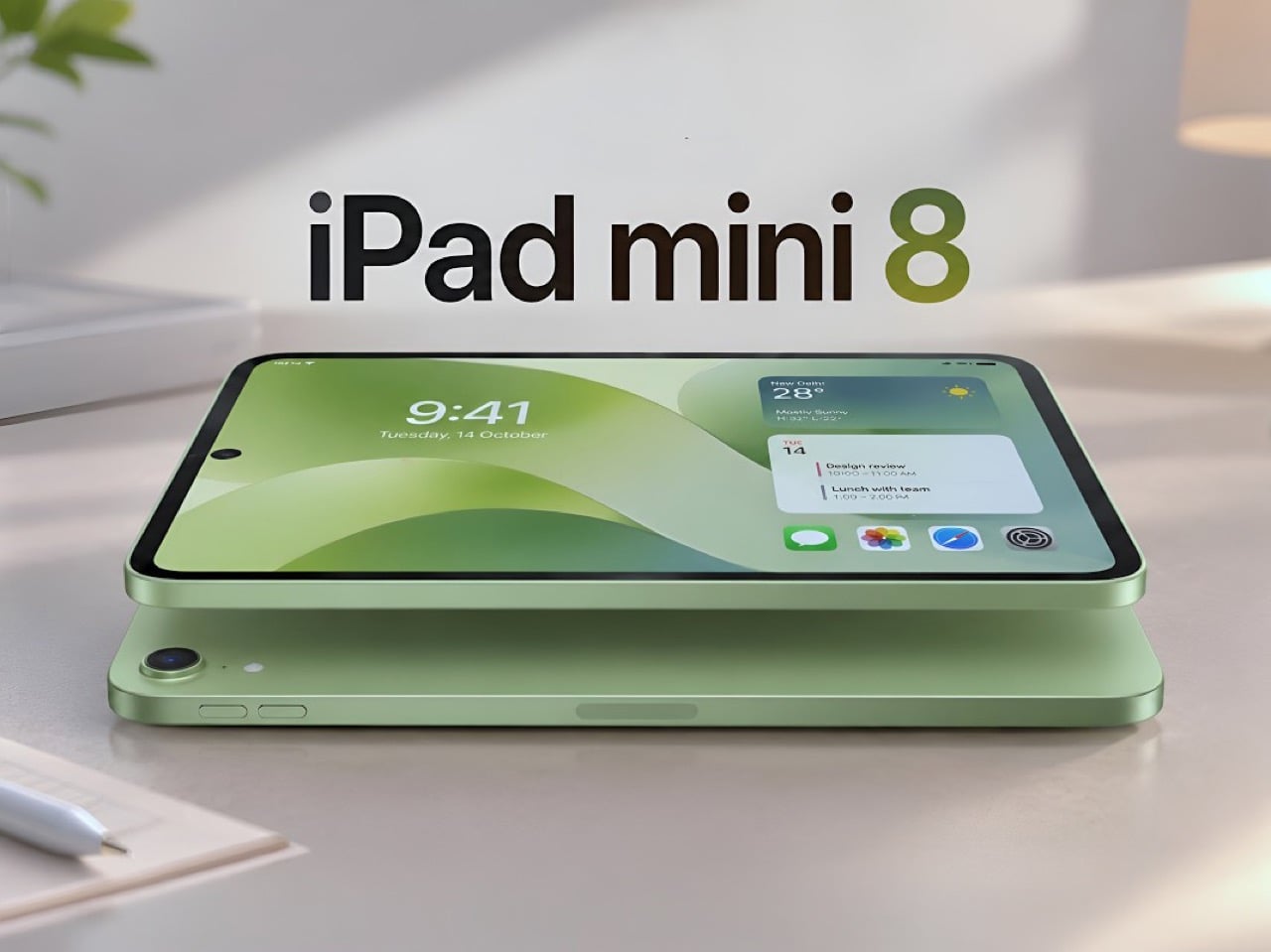
Now, the iconic speaker grilles that have long defined the profile of the iPad mini appear to be next on the chopping block. Fresh evidence uncovered within Apple’s own software code by MacRumors points to a radical redesign for the upcoming iPad mini 8. Leaked image assets depict a single, slim slot positioned discreetly at the top edge of the display glass—a design language that closely mirrors the earpiece slot found on modern iPhones. This subtle physical alteration lines up directly with previous reporting from Bloomberg’s Mark Gurman regarding a brand-new, vibration-based audio delivery system. By sealing off the traditional speaker holes, Apple is reportedly setting the stage to introduce the first-ever water-resistance rating to the compact tablet lineup.
While the removal of ports has historically sparked consumer debate and required users to adapt to accessories, this particular physical omission opens the door to tangible functional upgrades. The concept of utilizing structural vibration to project sound is not entirely unprecedented in mobile hardware. Back in 2016, Xiaomi experimented with a similar approach on its original Mi MIX smartphone, implementing a piezoelectric driver to transmit audio directly through the device chassis.
Apple’s implementation of this acoustic technology is expected to debut alongside a formidable internal hardware refresh, anchored by the unreleased A20 Pro chip, a repositioned landscape front-facing camera, and a rumored 8.4-inch OLED display. Industry expectations point toward an official unveiling of the device during Apple’s anticipated "Pro and Tell" media event scheduled in Los Angeles on October 28. However, industry analysts and watchers are already taking note of projected pricing adjustments, with Gurman estimating that the entry point for the new model could climb closer to the $799 mark, prompting questions about how consumers will receive the premium price tag for a smaller form-factor device.
Apple Spent Years Fighting Vibration. Now It’s Making Music With It.
The engineering challenge of managing internal vibrations has long been a primary focus for Apple’s hardware design teams. For instance, the 24-inch iMac incorporates two sophisticated pairs of force-cancelling woofers housed within its remarkably slim 11.5mm profile. In this configuration, each pair of drivers operates in opposite directions, allowing their mechanical vibrations to cancel one another out entirely before they can rattle or distort the delicate aluminum chassis. Similar acoustic engineering principles have been successfully integrated into the 16-inch MacBook Pro and the Studio Display. For years, Apple treated physical vibration strictly as an engineering problem that needed to be mitigated or eliminated.
The iPad mini 8 reportedly flips that fundamental engineering philosophy on its head, pivoting to utilize vibration as the primary source for audio playback. While Apple has not yet officially detailed the inner workings of its proprietary system, the precise mechanical driver mechanism and its exact internal placement within the tight confines of the chassis remain under wraps. Leaked internal images showcase a single, elongated groove embedded directly into the front glass panel where traditional stereo speaker grilles once sat, while the physical power and volume control buttons remain securely positioned along the top edge of the device.
This architectural shift also brings the iPad mini closer to the durability standards established by the Apple Watch. When Apple introduced the Apple Watch Series 2 in 2016, the company engineered the wearable to be swim-proof up to 50 meters, a feat achieved by sealing virtually every external opening except for the speaker housing itself, which fundamentally requires airflow to generate sound waves. To solve this, Apple engineered a mechanical routine where the speaker membrane vibrates rapidly to expel any residual water following a swimming session—a feature instantly recognizable to users familiar with the distinctive series of tones emitted by the Water Lock function.
The iPad mini 8 appears to represent the next evolutionary step in that design journey, condensing the speaker architecture down to a single, narrow slit. According to reporting from Mark Gurman, this design evolution will yield water resistance on an iPad mini for the very first time, although specific IP ratings detailing official dust and water intrusion scores have not yet leaked. Even a baseline level of liquid and splash protection would provide practical peace of mind for everyday environments, such as kitchen counters during cooking, poolside relaxation, or reading during a bath.
An iPhone 18 Pro Brain, an OLED Face, and a $799 Question Mark
Beneath the exterior modifications, Apple’s internal software code reveals that the iPad mini 8 will house the high-performance A20 Pro processor, a silicon architecture derived from the upcoming iPhone 18 Pro lineup and built upon TSMC’s advanced 2nm manufacturing process. This generational leap bypasses two complete iterations of mobile processors compared to the current A17 Pro-powered models. Alongside this processing upgrade, MacRumors anticipates that system memory will expand from 8GB to 12GB. This substantial increase in RAM is expected to provide the necessary overhead to run increasingly demanding on-device artificial intelligence models smoothly, while minimizing app reloading issues as users multitask across resource-intensive applications like digital note-taking platforms, large PDF documents, and professional creative software like Procreate.
Further refining the user experience, the front-facing camera has reportedly been relocated to the landscape-oriented edge of the device. This long-requested layout adjustment ensures that video conferencing and FaceTime calls will no longer awkwardly frame the user from an unflattering side angle. Additional supply chain hints come from accessory filings discovered in France, where a new Smart Folio case, carrying the model designation A3632, features roughly two-thirds more magnetic material than the protective covers designed for the sixth-generation mini. This physical change strongly indicates that the external dimensions or magnetic layout of the tablet have been altered enough to require dedicated, redesigned accessories.
Visual fidelity is also set for a significant upgrade with the inclusion of an 8.4-inch OLED panel, marking a slight expansion over the 8.3-inch liquid crystal display found on the current generation. Transitioning to OLED technology will deliver true black levels, exceptional contrast ratios, and enhanced clarity for late-night reading and media consumption. However, the display’s refresh rate remains a subject of debate among industry sources. While Gurman has reported that Apple internally tested and evaluated both traditional 60Hz and high-refresh-rate 120Hz versions, a prominent supply-chain analyst in Korea insists that the mass-production panels have been finalized at 60Hz. If accurate, this limitation would leave the premium tablet scrolling with less fluidity than a standard baseline iPhone.
These sweeping hardware and component advancements come at a time of shifting market pricing. The current-generation iPad mini previously saw its starting price rise from $499 to $599 due to escalating memory and component costs, and Gurman’s current projections suggest that the upcoming model could debut closer to a $799 price point. As Apple prepares to seal nearly every physical opening on its smallest tablet, the financial impact on prospective buyers remains the most prominent variable left to be answered.