Retail giant Walmart is officially opening its doors to autonomous artificial intelligence agents that shop on customers’ behalf, striking a starkly different tone from competitors like Amazon as the battle over agentic commerce heats up across the retail industry.
The strategic move by Walmart comes just a month after Amazon made headlines by aggressively blocking Meta’s Muse AI assistant from interacting with its platform, effectively locking out external shopping agents in a high-stakes standoff over platform control, user data, and e-commerce dominance. Rather than shutting out third-party AI agents, Walmart is leaning into the shift, introducing new infrastructure designed to safely integrate autonomous shopping tools into its massive digital marketplace.
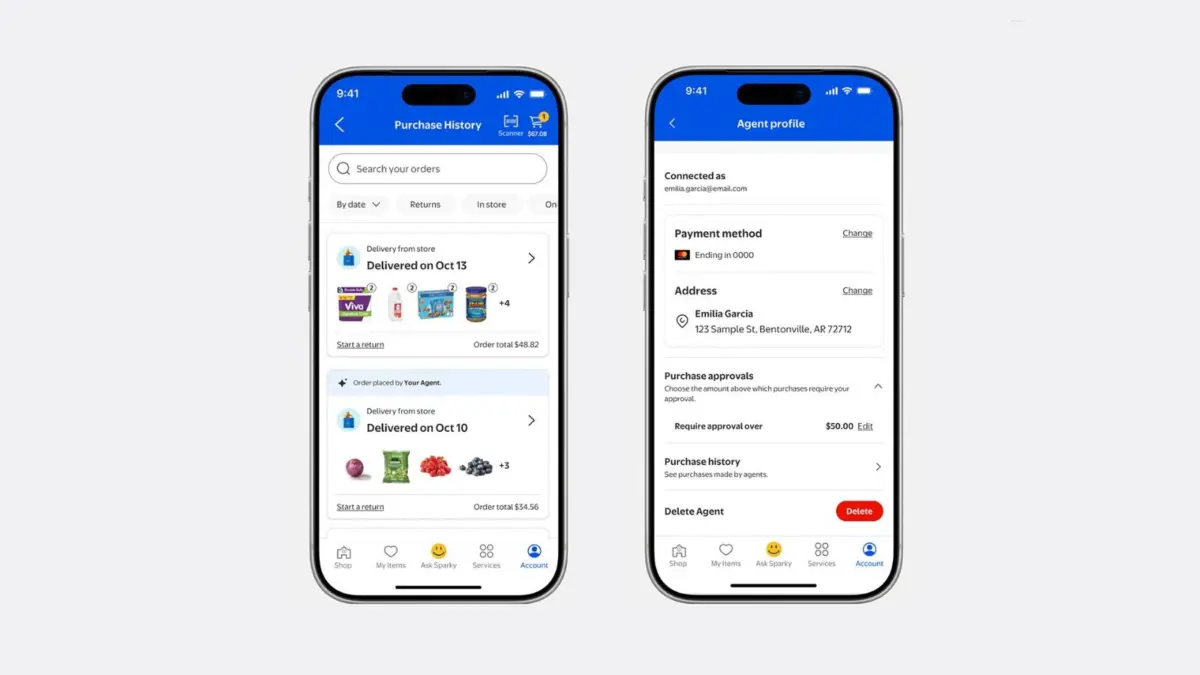
To facilitate this transition, Walmart is rolling out a dedicated portal that makes it significantly easier for external AI agents to connect and interact seamlessly with its e-commerce platform. At the same time, the retail titan is introducing a robust suite of consumer-facing features aimed at giving shoppers precise control over how these automated tools operate on their behalf. These consumer controls include critical safety guardrails such as mandatory purchase approvals and customized spending limits, ensuring that everyday shoppers retain ultimate authority over their finances while experimenting with automated retail.
Furthermore, within the next month, Walmart plans to launch a feature called Agent Profiles. This addition will allow shoppers to individually authorize each AI agent they choose to use by creating a dedicated profile within their main Walmart account. Through these specialized profiles, customers will be able to review and track their agentic purchases completely separate from their personal transaction history, bringing a new level of transparency and organization to automated shopping habits.

The emergence of agentic shopping—where autonomous software acts on a user’s instructions to research, compare, and purchase goods without continuous human intervention—represents one of the most significant structural shifts in digital commerce in recent years. As artificial intelligence models become increasingly sophisticated at understanding complex human intent, technology companies and traditional retailers alike are racing to capture the emerging market of AI-driven transactions.
However, the rapid rise of agentic commerce has immediately forced major retail platforms to confront difficult strategic choices regarding cybersecurity, data privacy, monetization, and customer trust. Companies like Amazon have chosen a defensive posture, prioritizing strict boundaries around their ecosystems to protect proprietary user data and maintain direct relationships with consumers. By locking out external applications like Meta’s Muse, Amazon signaled its intention to control the entire consumer journey from search to checkout within its own proprietary walls.
Walmart’s contrasting approach suggests a broader bet on interoperability and consumer empowerment. By offering a structured pathway for third-party agents alongside transparent management tools, Walmart is positioning itself as a welcoming destination for the next generation of digital shoppers. Rather than fighting the proliferation of AI assistants, the retailer is attempting to harness them, providing the necessary infrastructure and security controls so that customers feel comfortable letting software handle their routine purchases.
The introduction of Agent Profiles and dedicated connection portals highlights the delicate balance retailers must strike as agentic commerce matures. As artificial intelligence continues to reshape how consumers interact with online marketplaces, the ability to balance open integration with consumer protection will likely define the winners and losers in the modern digital retail landscape. With these new features set to roll out over the coming weeks, Walmart’s proactive strategy will be closely watched by industry analysts, technology developers, and competing retail giants eager to see how shoppers respond to the dawn of automated retail.