Deep within a natural volcanic lava cave in Mexico City’s rugged Pedregal de San Ángel region, a sprawling, mosaic-adorned residence once stood as a monumental achievement of modernist Mexican design. Designed in 1954, the remarkable dwelling—known as Casa Cueva—served as the creative home and sanctuary for the visionary married couple Juan and Helen O’Gorman. While Juan was an acclaimed architect and painter, Helen was a talented artist and naturalist. Together, they sculpted a domestic environment that dissolved the boundaries between architecture, organic topography, and contemporary art. Although the iconic home was largely demolished following its sale in 1969, leaving behind only echoes of its radical spatial experiments, its spirit has been resurrected in a striking new contemporary art presentation.
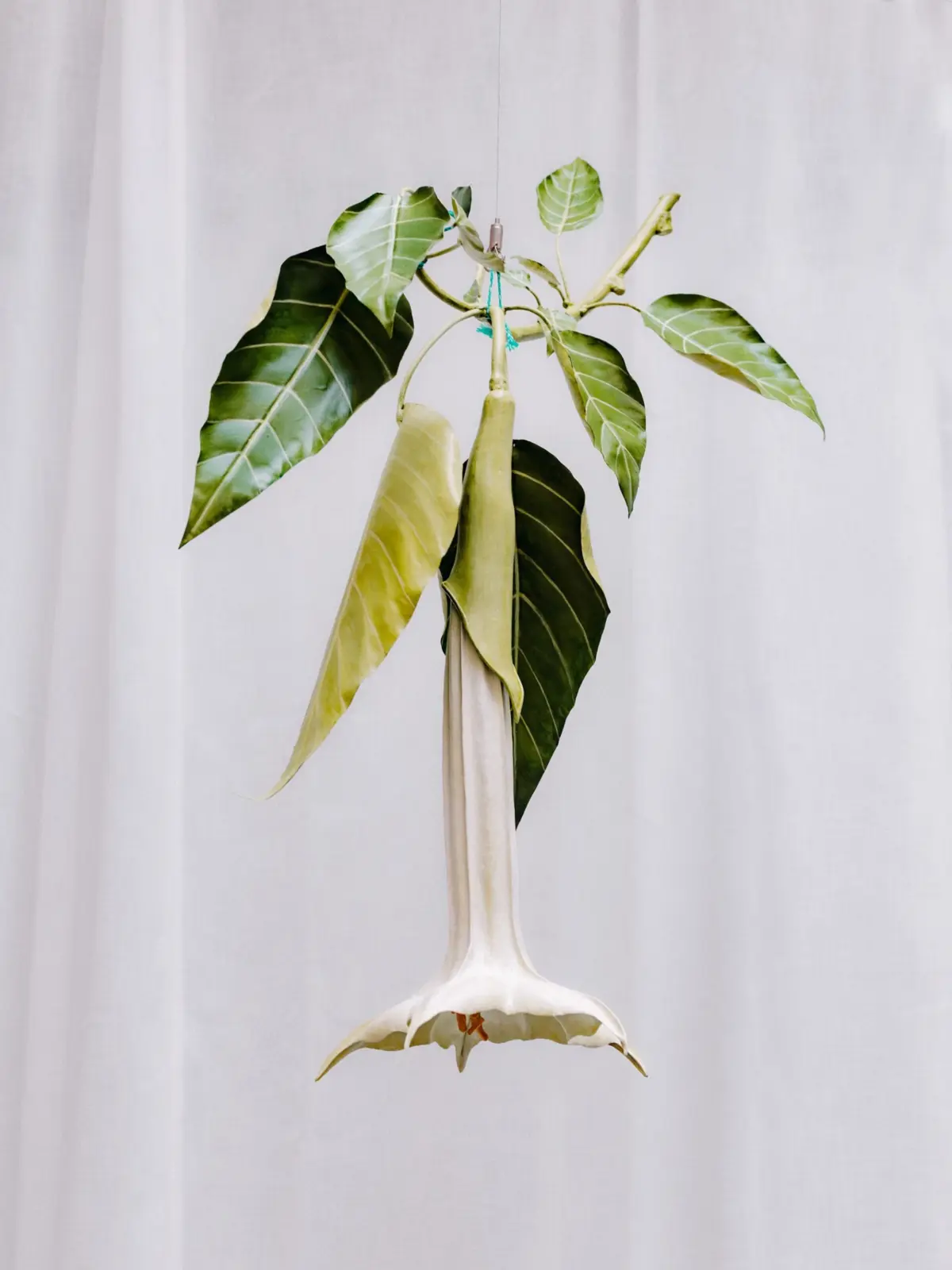
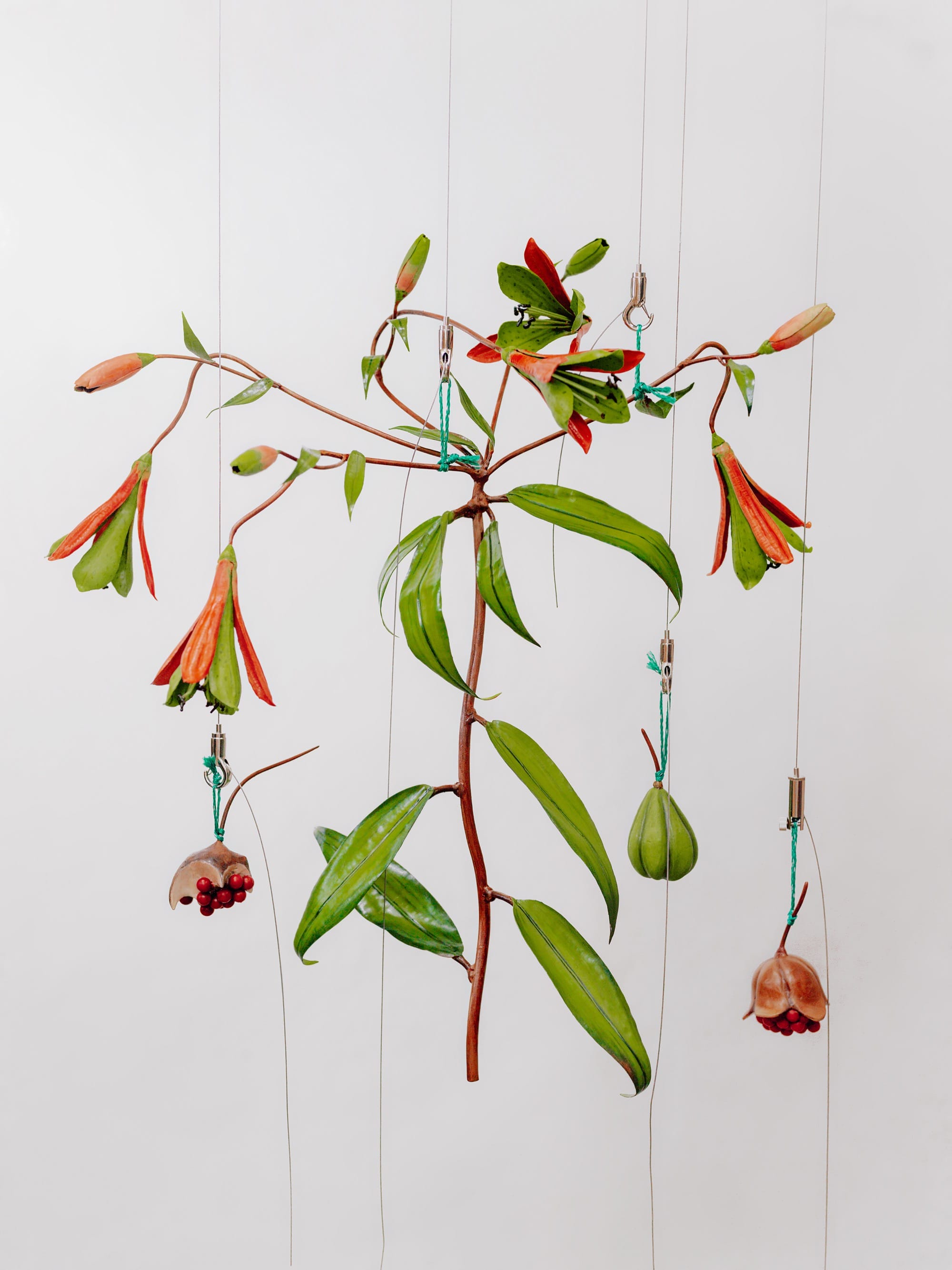
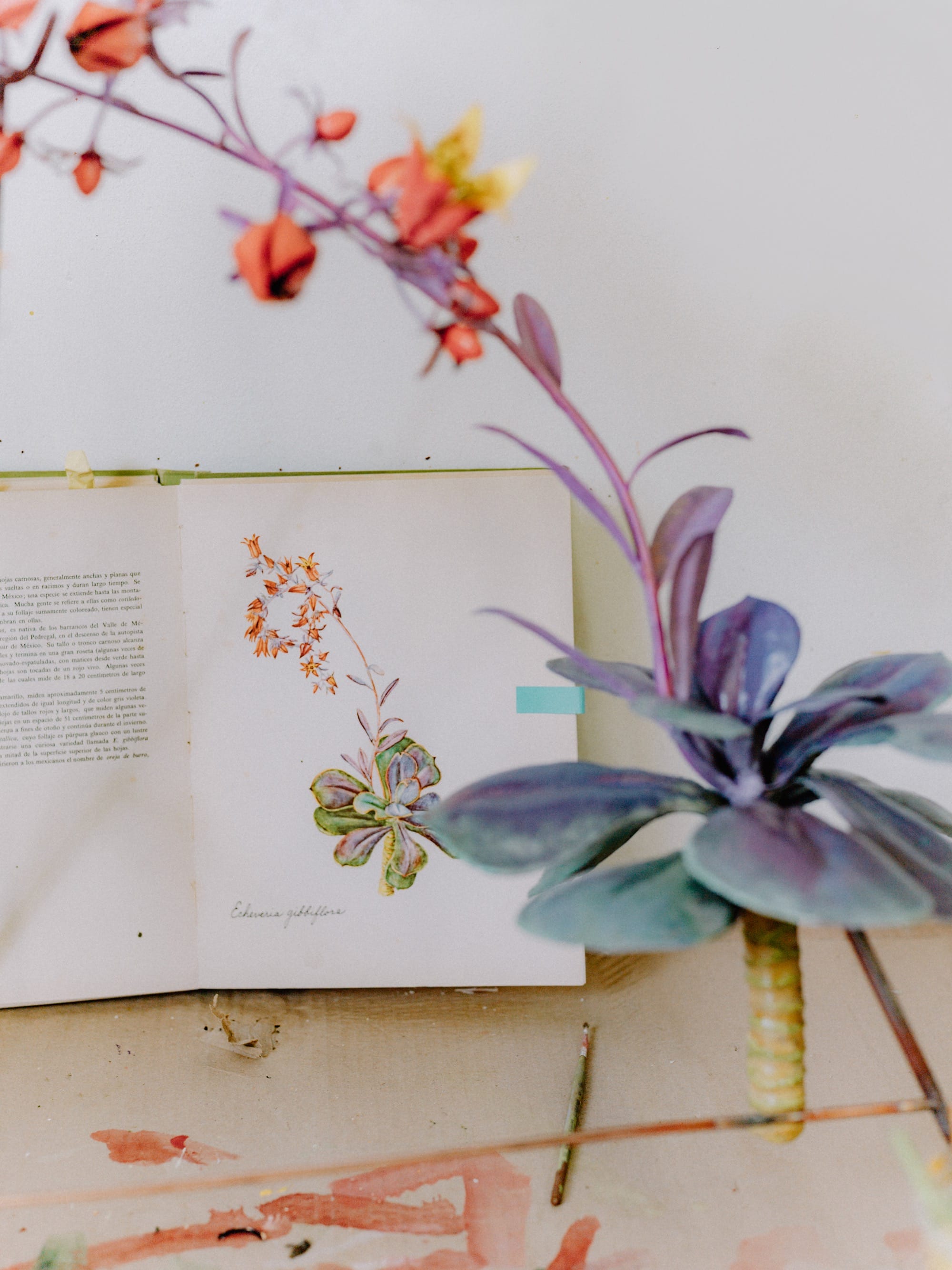
At Museo Jumex, artist Álvaro Urbano has unveiled a deeply evocative solo exhibition titled Helen, serving as a profound homage to the architectural and ecological innovations of Casa Cueva. The exhibition draws heavy inspiration from the surrounding gardens of the original cave home and the enduring legacy left behind by Helen O’Gorman. Central to Urbano’s conceptual framework is Helen’s seminal 1961 volume, Mexican Flowering Trees and Plants. Authored and meticulously illustrated during her years living inside the volcanic grotto, the rich and comprehensive volume served as a vital taxonomic and artistic documentation of the region’s native botanical specimens. For Urbano, these historical vegetal renderings became the foundational blueprint for an entirely new, ambitious body of metal sculptures.
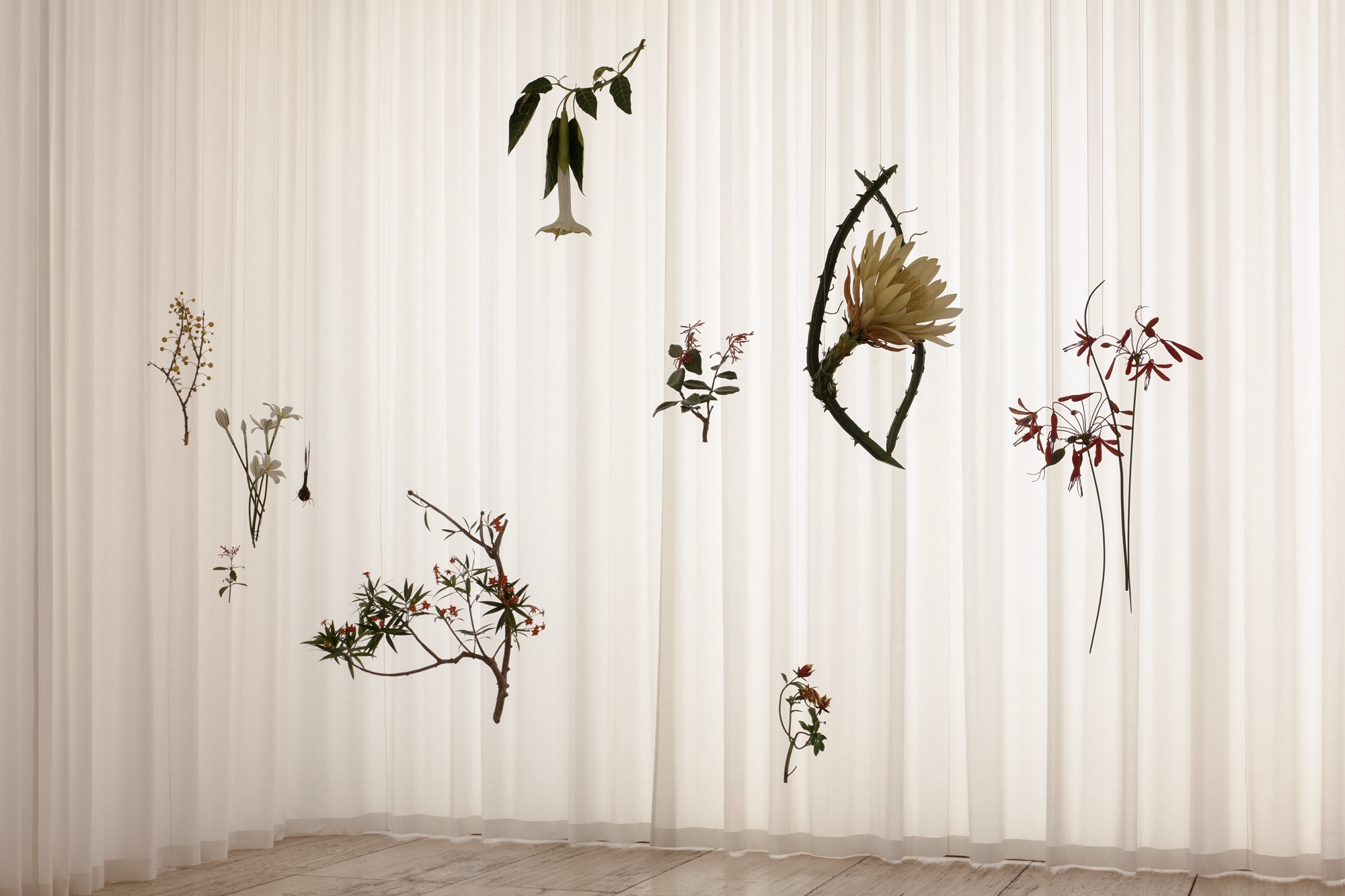
Urbano’s exhibition transforms the gallery spaces of Museo Jumex into a dreamlike, atmospheric environment where his signature painted metal plants are suspended in a delicate, precise arrangement. Floating effortlessly against a diaphanous, translucent curtain, the lifelike botanical sculptures take on an ethereal quality. They appear almost as apparitions, hovering gracefully in mid-air to gently guide viewers through the contemplative space. Rather than presenting the plants in static pedestals or rigid arrangements, the artist has engineered an installation that plays heavily on transparency, light, and movement, echoing the fluid, organic transitions between interior and exterior that defined the O’Gormans’ original subterranean residence.
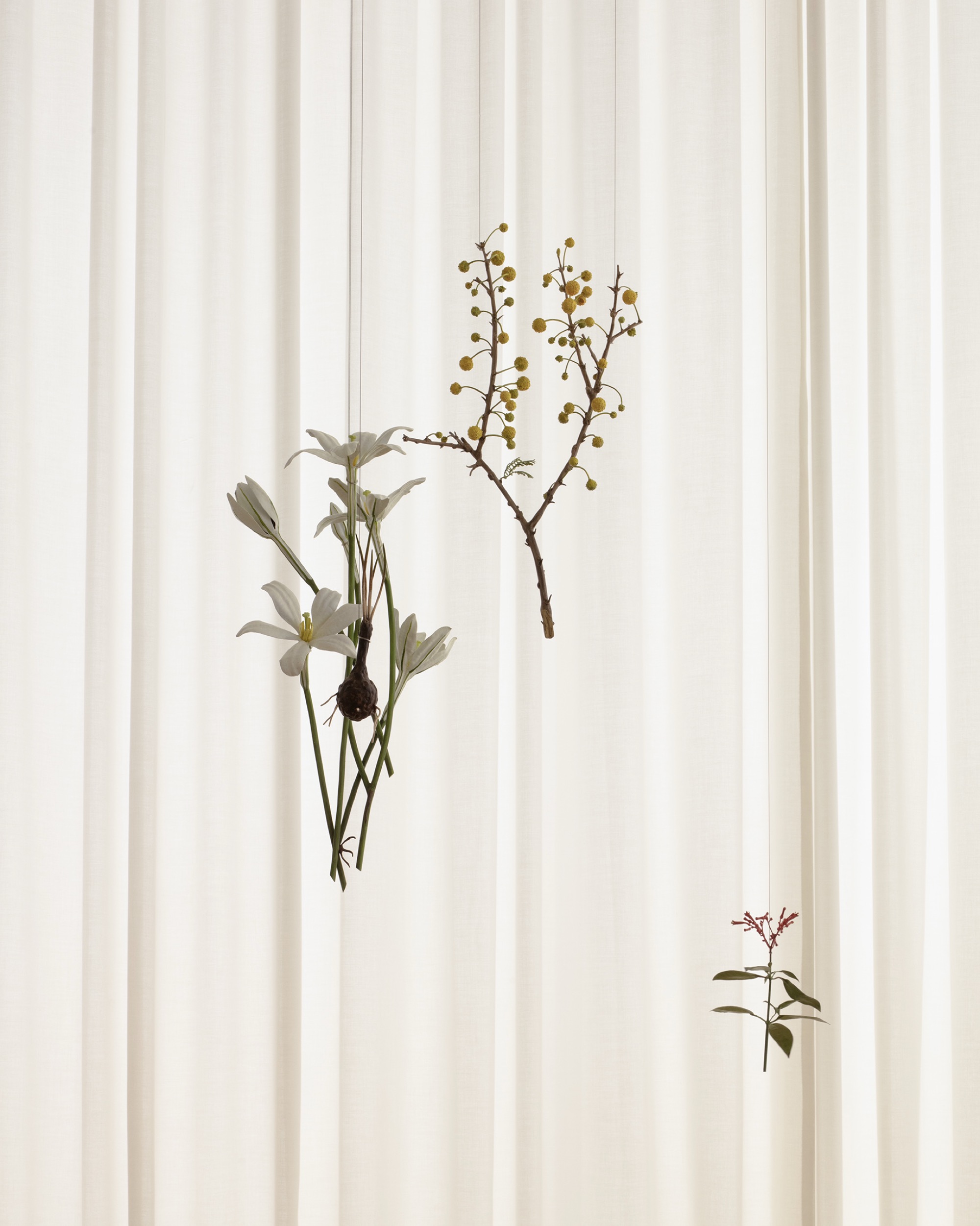
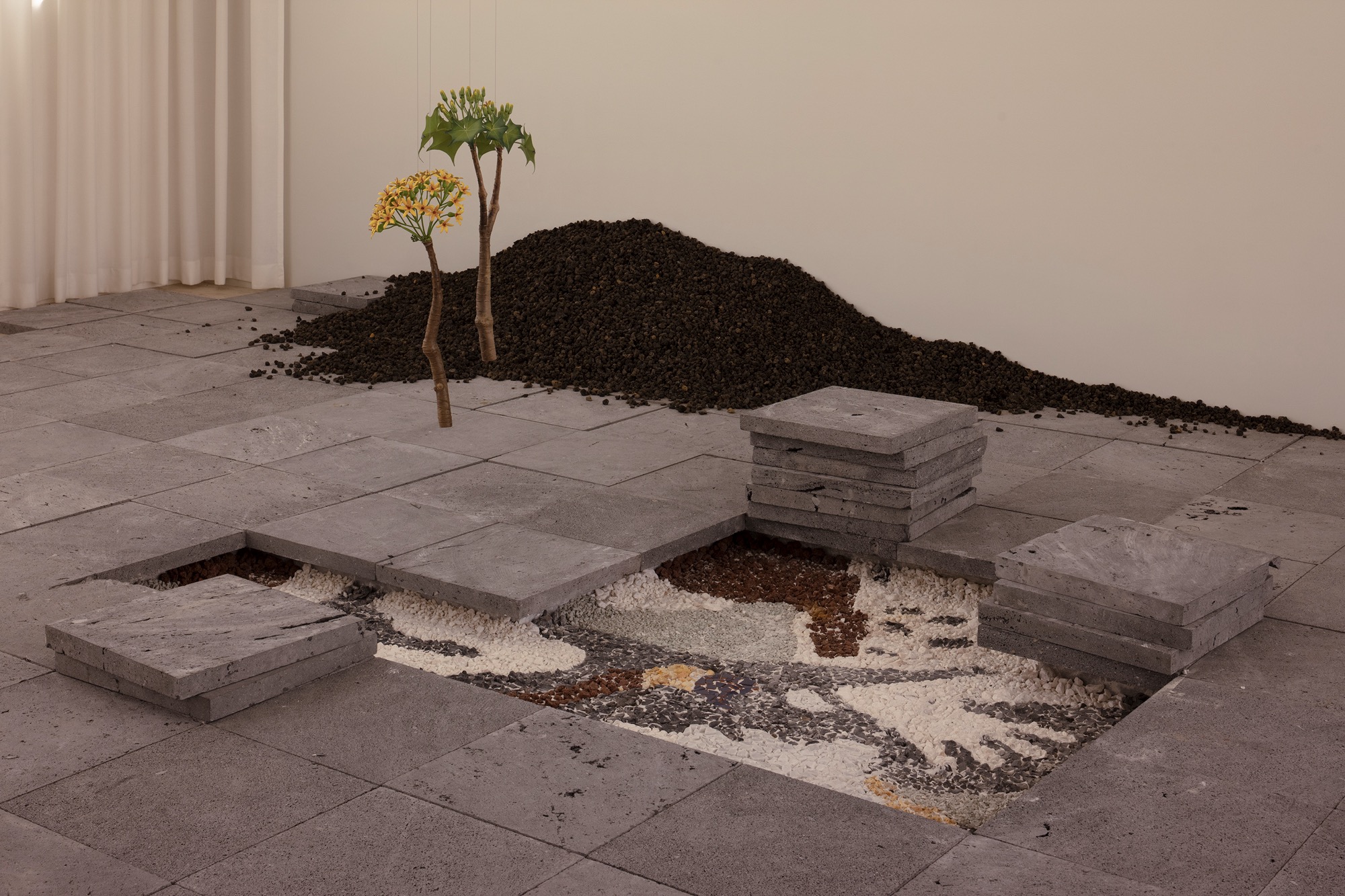
Every single botanical specimen featured in the exhibition is directly modeled after a plant that originally appeared in Helen O’Gorman’s 1961 documentation. This meticulous attention to historical detail anchors Urbano’s contemporary practice in a specific ecological and biographical narrative. Complementing the suspended floral sculptures is a site-specific installation that alters the gallery floor itself. By integrating variegated natural stone amid a clinical floor of square pavers, Urbano mimics the rugged, untamed geological formations of the Pedregal landscape that burst through the floors and walls of Casa Cueva. Much like the historic cave house, the exhibition unfolds organically, establishing a continuous, unspoken dialogue between architectural space, native plant life, and the visitors who bear witness to both.
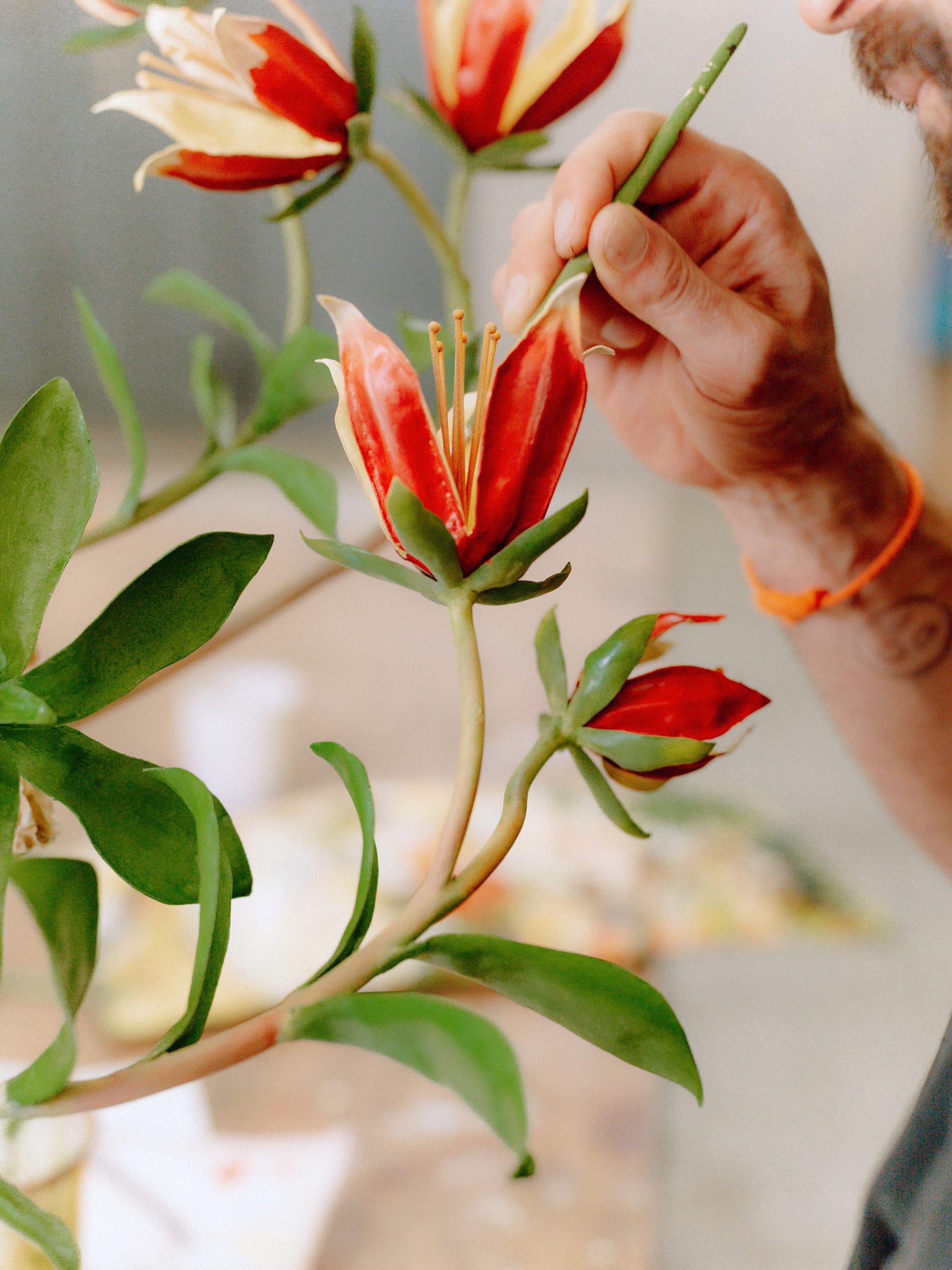
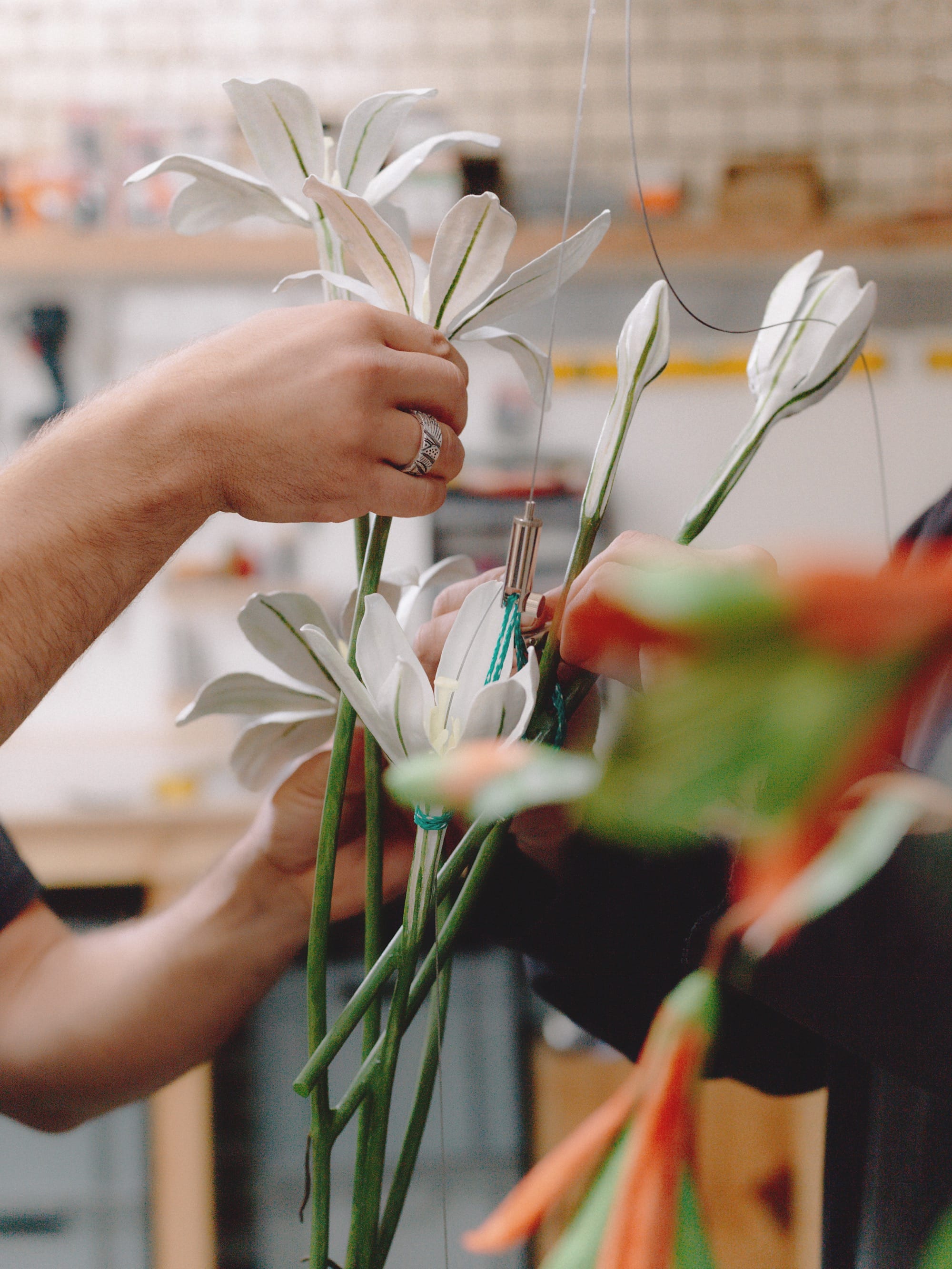
The interplay between hard industrial materials and fragile organic forms is a hallmark of Urbano’s wider artistic practice, which frequently investigates architecture, queer spaces, and botanical histories. In preparing for the Helen exhibition, studio views from earlier in the year reveal the intensive craftsmanship required to bring the metal flora to life. Working across various international studio spaces, Urbano and his collaborators meticulously hammered, welded, and painted sheet metal, transforming cold industrial supplies into lush, vibrant facsimiles of Mexican flora. Photographs from the artist’s studio showcase sprawling worktables covered in in-progress leaves, stems, and petals, alongside paint jars and reference sketches that trace the arduous journey from historical archival pages to three-dimensional gallery objects.
The exhibition also highlights the often-overshadowed contributions of women in the mid-century modernist movement in Mexico. While Juan O’Gorman’s architectural and muralist works—such as his library at the National Autonomous University of Mexico (UNAM)—frequently received widespread critical acclaim, Helen O’Gorman’s exhaustive studies of Mexican botany and her artistic contributions to their shared living environment have historically received less institutional visibility. By centering her book and her deep engagement with the local ecosystem, Urbano’s exhibition acts as a corrective, elevating Helen’s dual role as an artist and a rigorous botanical chronicler.
The resulting presentation at Museo Jumex functions simultaneously as an elegy to a lost architectural masterpiece and a celebration of enduring natural resilience. As visitors navigate the space, stepping between the loose stone pavers and looking up toward the suspended metal flora, they are invited to step into a reconstructed world where domesticity and the untamed volcanic landscape are inextricably linked.
Helen is on view at Museo Jumex through February 7.