Italian photographer Giovanna Silva never expected her lens to capture the pulsing, ephemeral world of European nightlife. Commissioned by Monditalia for the 2014 Venice Architecture Biennale to explore the architecture of Italian nightlife, Silva embarked on a journey that was entirely unfamiliar to her. At the time, club culture was a blind spot in her photographic portfolio—a detachment that ultimately afforded her an unconventional, objective perspective, though one that demanded rigorous discipline to temper her creative instincts.
That initial Venetian exhibition has since evolved into a comprehensive book, NIGHTSWIMMING: Discotheques from the 1960s to the Present, offering a profound reflection on the changing spaces of club culture, ranging from grand Italian discotheques to the improvised, underground dance floors of contemporary European nightlife.
Tracing the Archives of the Night
The research for Nightswimming began with a thorough excavation of existing literature on the subject. Because discotheques are inherently chameleon-like spaces—constantly remodeling their appearances to keep pace with fickle fashion trends, shifting musical genres, and rapid advancements in lighting and sound technology—published books served as Silva’s primary historical archive. Through these volumes, she encountered the ghost architects, critics, DJs, art directors, and club owners who shaped these spaces: what she poeticizes as the "night swimmers."
Following her extensive mapping of Italy, Silva expanded her lens to capture the state of club architecture across four major European cultural capitals: Berlin, London, Paris, and Barcelona. Selecting locations for these cities proved to be a meticulous challenge. While her Venice Biennale presentation demanded an exhaustive overview, the book required a more selective, curated approach. Silva focused on venues that held—or continue to hold—significant social and musical weight while possessing compelling architectural qualities.
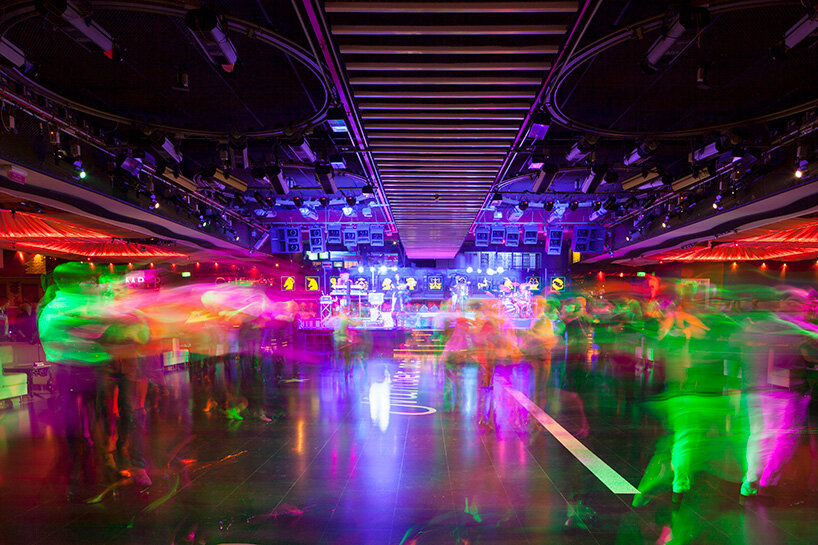
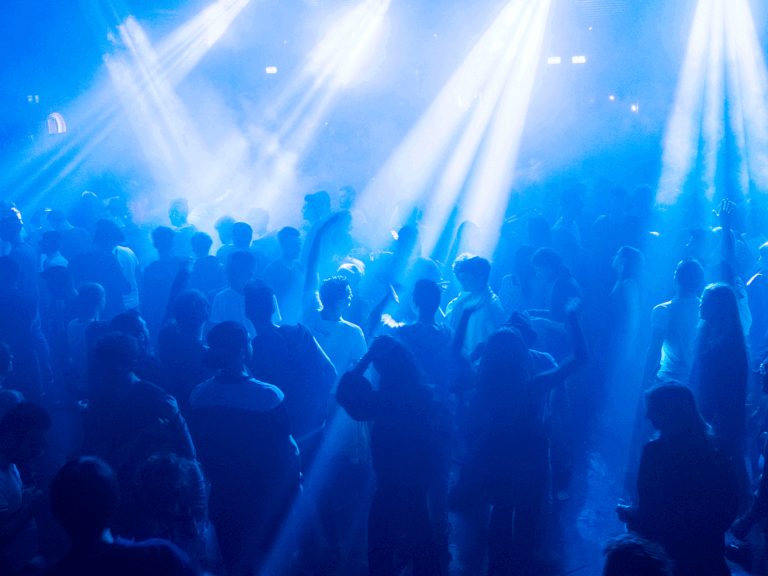
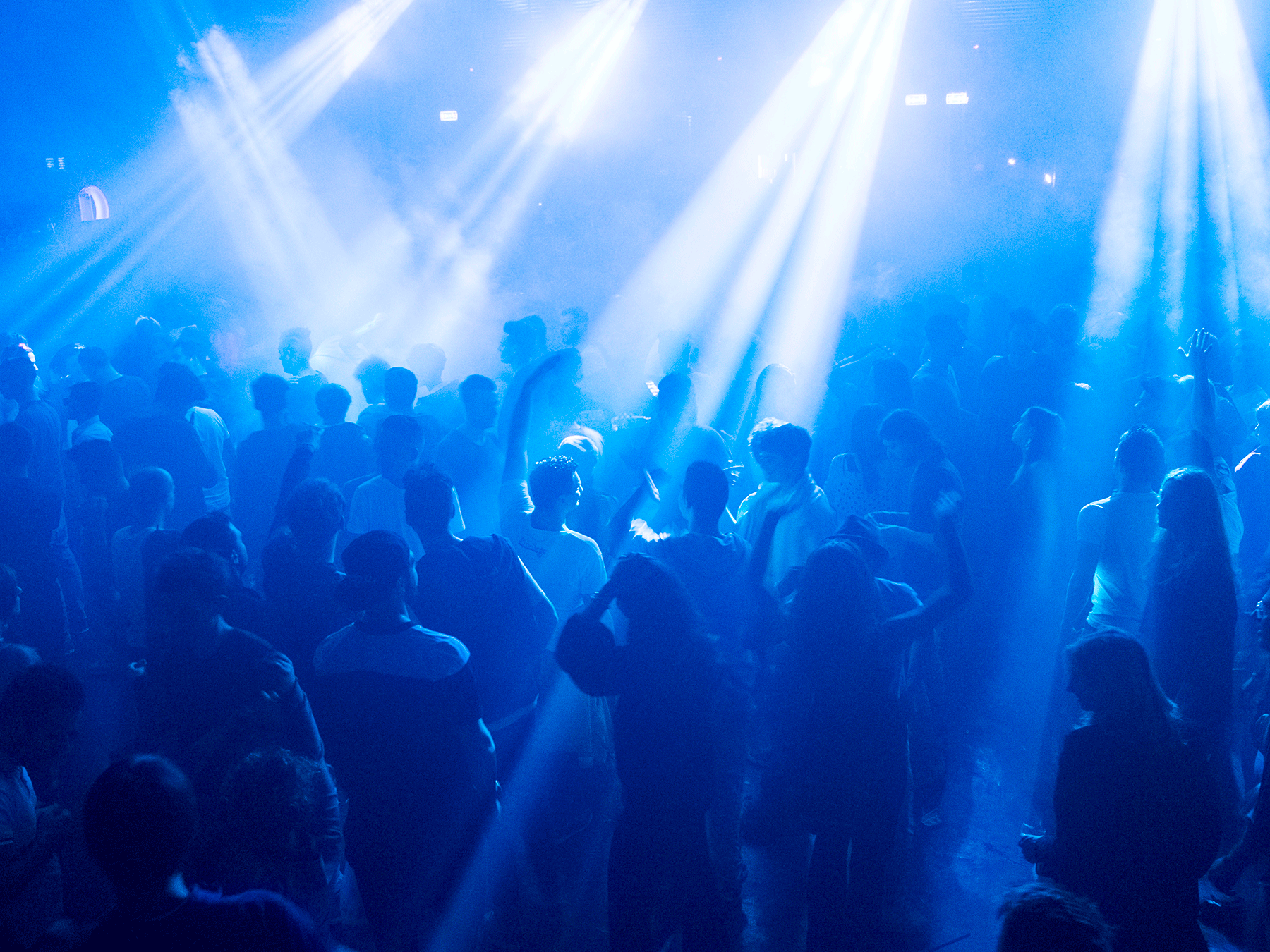
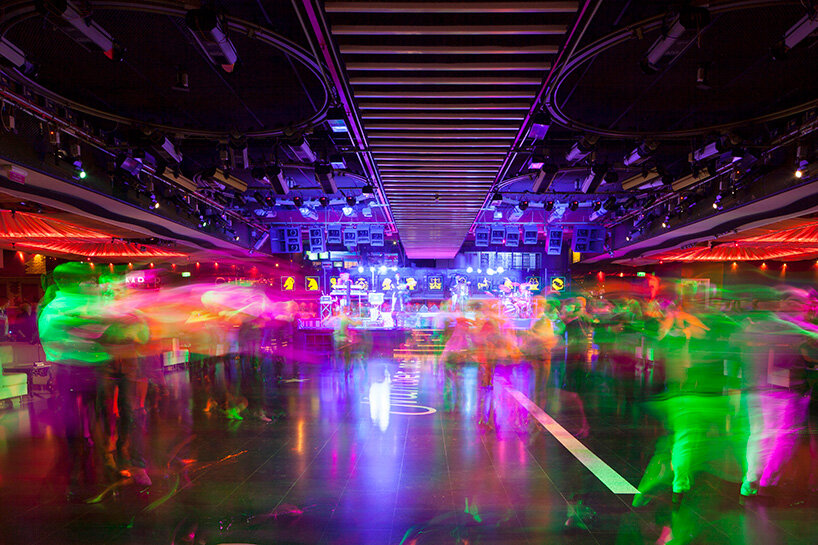
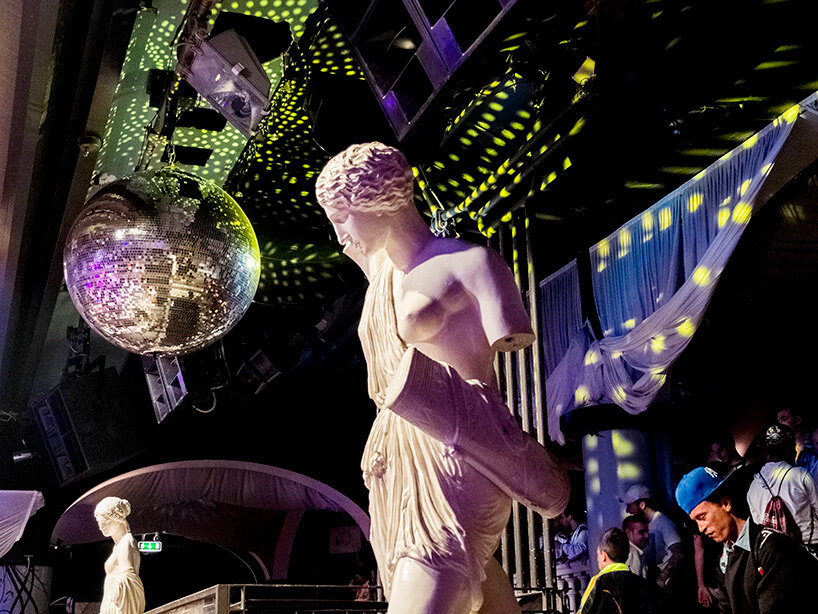
The resulting photographs document venues that define our contemporary perception of the night. Increasingly, spaces originally constructed for entirely different functions are being temporarily occupied and transformed into clandestine party locations, effectively legalizing the freewheeling, space-subverting ethos of 1990s rave culture. Silva’s photographs capture these environments in both their empty, dormant daylight states and their fully packed nocturnal incarnations, illustrating how crowds of bodies temporarily dissolve and erase the physical boundaries of architectural space.
The Sensory Markers of Club Culture
Stepping inside these architectural behemoths, Silva noted that the first sense to greet her was always smell. Because she photographed the vast majority of these locations during daylight hours, out of their natural operational context, the lingering scent acted as an involuntary memory trigger—a spatial madeleine. It is a universal constant across cities and decades, a complex olfactory blend of residual cleaning detergents, human presence, stale smoke, and the deep, abiding essence of the night.
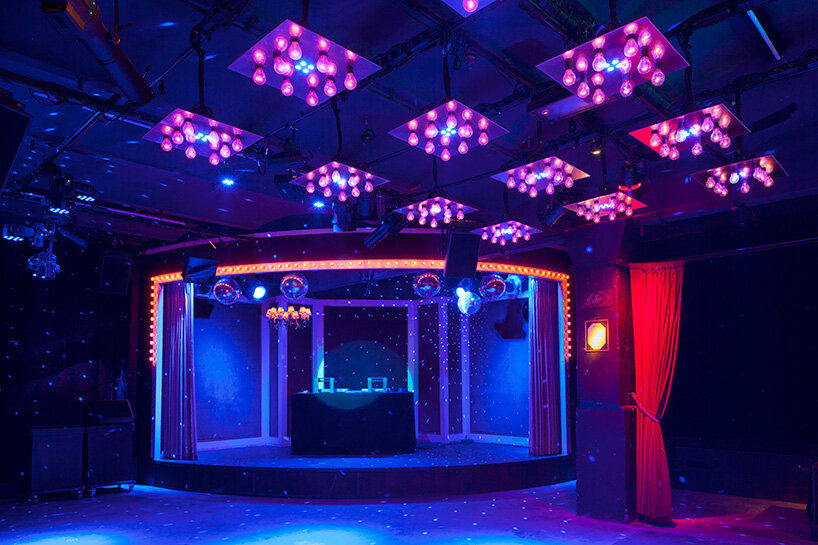
Following the scent came the immersion into light. Discotheques, as Silva was frequently told by veterans of the industry, are much like aging royalty: they should never be seen without their makeup. Light performs the crucial sleight of hand that transforms the architecture at the flick of a switch. In many of her daytime photographs, Silva deliberately chose to shoot under stark white work lights, rendering the flamboyant spaces flat, clinical, and exposed.
What began as a detached, academic architectural commission gradually transformed into a deeply familiar landscape. That transition was made possible, Silva notes, by the patience of the numerous cultural guides who took the time to explain the complex, nocturnal soul of the club scene to an outsider.
Documenting an Era
Born in Milan in 1980, Giovanna Silva has built a diverse career bridging editorial photography, publishing, and architectural theory. Her extensive bibliography features books exploring global urban landscapes, conflict zones, and architectural transformations, including works on Baghdad, Kabul, Damascus, Cairo, and her native Italy. Beyond her photography, she is the founder of Humboldt Books and San Rocco Magazine, and she shares her expertise as an educator at NABA Milan and ISIA Urbino.
Nightswimming stands as a testament to her unique ability to document the spaces we inhabit when the sun goes down, capturing the intersection of ephemeral human energy and permanent architectural design before the lights turn back on.