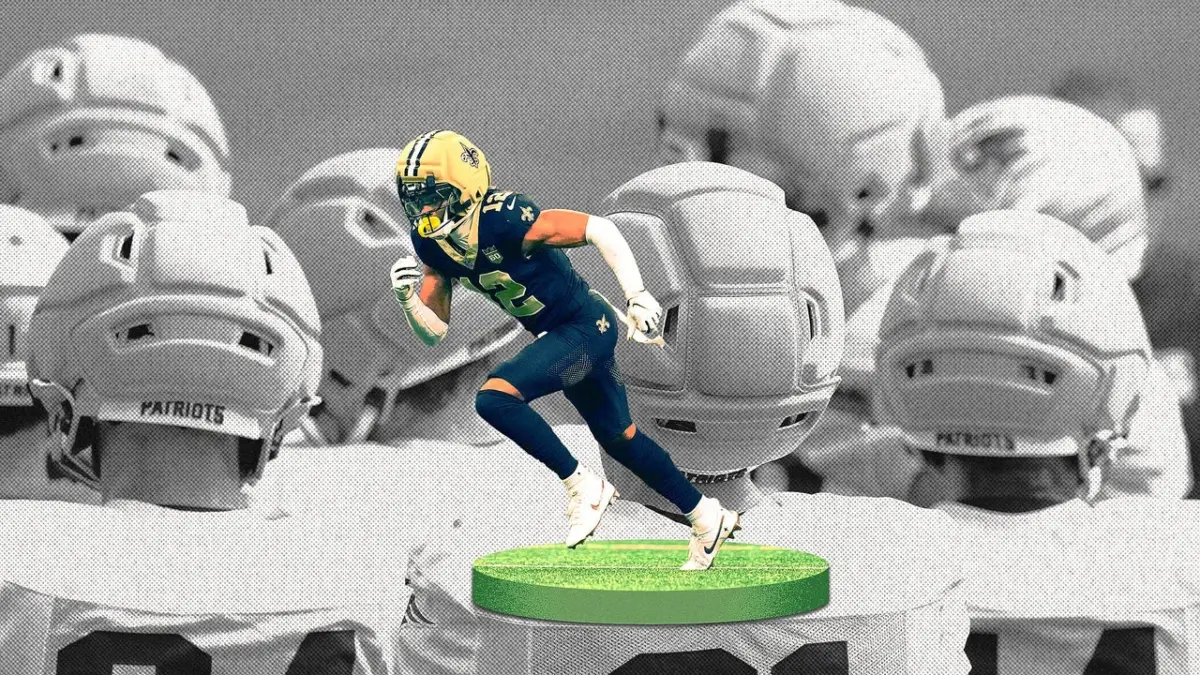
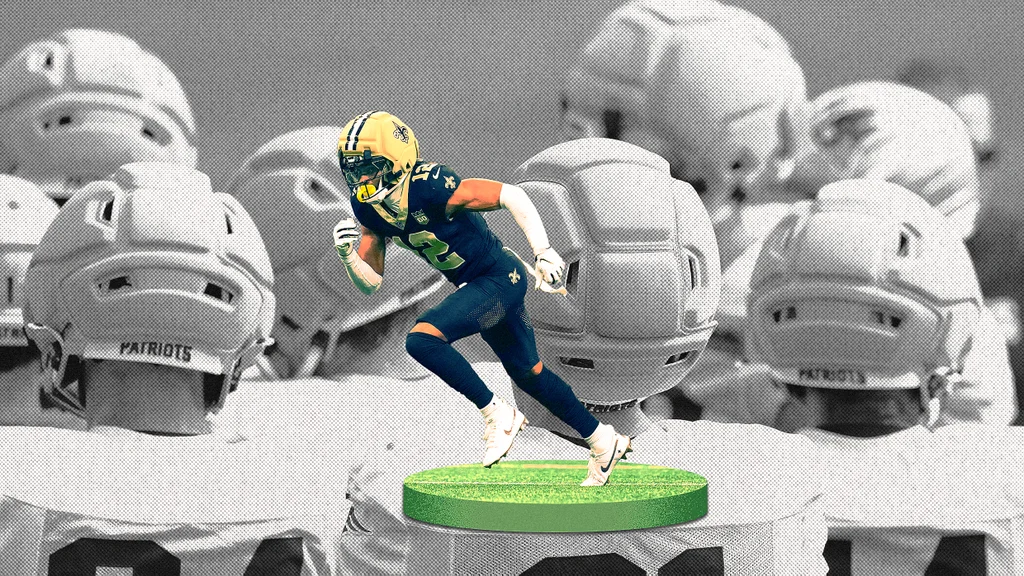
If you have been watching the NFL this season, you have probably noticed that a few dozen players have pretty significant modifications to their standard uniforms. Not in the diva sense, but literally—they have much bigger heads.
Take Chris Olave, the standout wide receiver for the New Orleans Saints. When stepping onto the field, Olave wears a Guardian Cap, a heavily padded, soft-shell cover strapped directly onto his helmet for added protection against head trauma. The noticeable trade-off is that it alters a player’s silhouette, making some jokingly look as though they just nabbed a mushroom power-up in Super Mario or stepped straight out of a cartoon.
For Olave, who has bravely dealt with the reality of suffering four diagnosed concussions during his first three NFL seasons, aesthetic concerns have firmly taken a backseat to long-term health and personal priorities.
"Shoot, I got kids now," Olave explained candidly after the Saints’ season opener. "I want to live a regular life after I’m done with football. I love my kids to death. So, I don’t really care how it looks no more."
Olave’s sentiment captures a broader cultural shift taking place across professional football. As awareness regarding the severe long-term impacts of repeated head trauma grows, an increasing number of elite athletes are willingly sacrificing their traditional on-field look to safeguard their cognitive futures.
A Persistent Safety Challenge for the NFL
The National Football League has spent the past decade desperately trying to bring its concussion numbers down, though the results of these ongoing initiatives have yielded a complex, mixed picture.
According to official league injury data, in-game concussions fell by 15% to 129 during the 2024 regular season, offering a brief glimmer of hope that safety protocols, rule adjustments, and equipment innovations were successfully curbing the issue. However, that progress hit a sudden roadblock when in-game concussions jumped 30% to 168 during the subsequent season.
A significant portion of that increase was traced directly back to high-impact phases of the game, most notably kickoffs. Following the league’s implementation of a new dynamic kickoff format designed specifically to encourage more active returns—thereby revitalizing an otherwise stagnant aspect of the sport—the number of concussions occurring specifically on kickoff plays surged from 8 in 2024 to 35 the following year.
Faced with these persistent dangers, the league and its equipment partners have continually searched for technological interventions to shield players from violent collisions. Since 2022, when the league first made the equipment mandatory during select training camp and practice sessions, the Guardian Cap has quickly become the NFL’s most prominent and recognizable safety measure.
While its usage was strictly confined to practices at first, the league adjusted its rules to allow players to wear the caps during regular-season games starting in 2024. Following a design refresh by manufacturers ahead of the current offseason, these padded shells are now showing up on game days more frequently than ever before.
Foam, Fabric, and a Lot of Jokes
Despite the lighthearted locker room jokes, ribbing from fans, and inevitable social media commentary about players resembling bobbleheads, the engineering behind the Guardian Cap serves a very serious purpose.
The protective cover is manufactured by Guardian Sports, a Georgia-based company operated by husband-and-wife team Lee and Erin Hanson. Before entering the sports safety industry, the couple’s materials business specialized in developing custom polyurethane for high-performance industrial and aerospace products, including components for rocket boosters and durable protective golf ball covers.
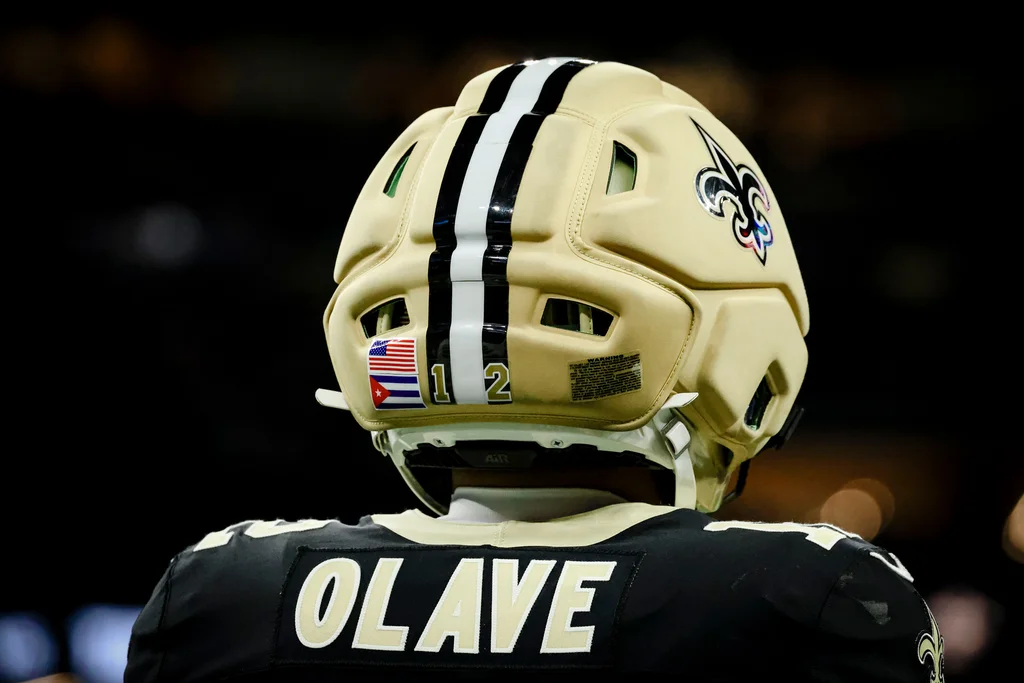
Applying this advanced materials expertise to athletics, they engineered a lightweight foam shell designed to strap securely over any standard helmet model currently approved for play. The operational physics of the cap are straightforward: upon impact, the outer foam shell is designed to compress and slide, effectively absorbing and shearing away a portion of the kinetic force before the blow ever reaches the rigid, hard helmet shell underneath.
The Guardian Cap is currently distributed in two primary versions tailored to different levels of competition. NFL players, alongside a select group of collegiate athletes, wear a heavier variant known as the NXT, which weighs roughly 12 ounces. Meanwhile, youth leagues, high school programs, and the majority of college teams utilize the XT, a slightly lighter version that weighs about half a pound and retails for up to $89.99.
Across the broader sports landscape, the adoption rates have climbed significantly. More than 500,000 athletes across various levels of competition now wear a Guardian version. Beyond American football, the company has also expanded its manufacturing footprint to produce specialized protective covers tailored for hockey and lacrosse helmets, demonstrating a growing market demand for impact-mitigation technology across multiple collision sports.
The integration of the cap into the football ecosystem has been a gradual, calculated process rather than an overnight mandate. The NFL initially cleared the device for voluntary use in practices back in 2020. Recognizing its efficacy in mitigating repetitive sub-concussive blows, the league escalated its policies by requiring position groups historically subjected to the highest frequency of helmet-to-helmet impacts—specifically linemen, tight ends, and linebackers—to wear the caps during practices starting in the 2022 season.
By the 2024 season, the mandate expanded further to encompass nearly all positions during contact practices, with exceptions made primarily for quarterbacks, kickers, and punters whose exposure to high-velocity collisions differs significantly from interior players. Crucially, the league also opened the door for players to voluntarily sport the protective covers during live game action, transforming what was once strictly a training-ground anomaly into a regular-season visual norm.
As more athletes like Chris Olave continue to prioritize longevity, cognitive health, and life after football over traditional aesthetics, the iconic padded silhouette has firmly established itself as a permanent fixture of the modern gridiron.