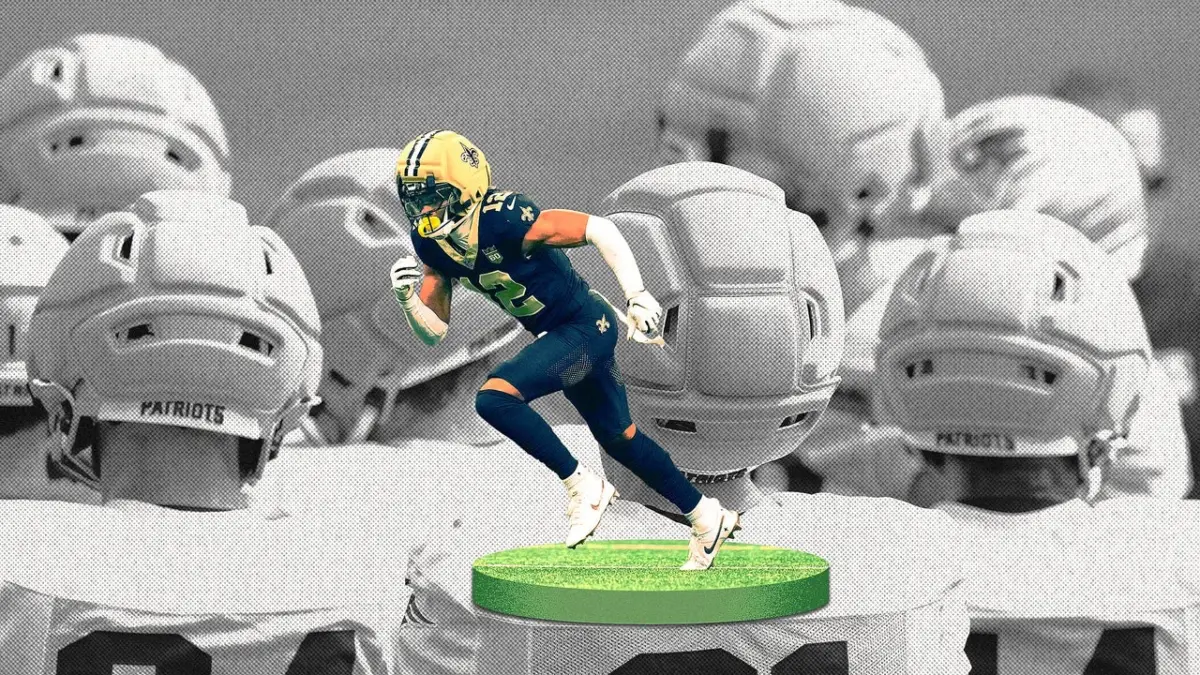
If you have been watching the National Football League this season, you have probably noticed that a few dozen players appear to have significantly larger heads. Not in the arrogant, diva sense of the phrase, but quite literally. Across the league, an increasing number of players are taking the field with a distinct, bulbous silhouette that transforms traditional aerodynamic football helmets into something resembling a character out of a video game.
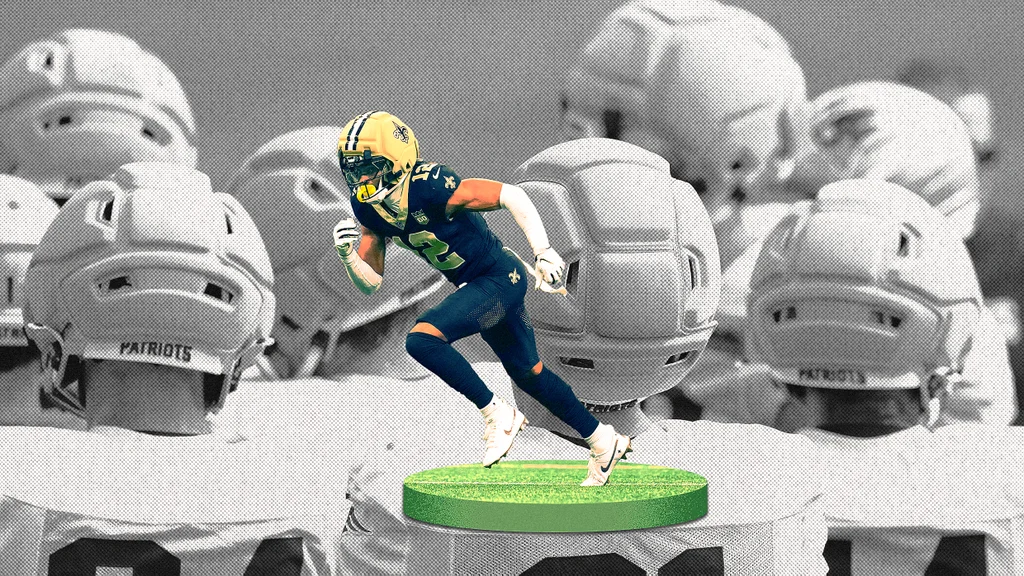
Take Chris Olave, the standout wide receiver for the New Orleans Saints. During games, Olave wears a Guardian Cap, a padded, soft-shell cover strapped directly onto his standard helmet for added protection against head trauma and concussions. The immediate visual trade-off is unmistakable: it makes him look as though he just nabbed a power-up mushroom in a round of Super Mario.
For Olave, however, aesthetic concerns have firmly taken a backseat to long-term health. The talented receiver suffered four documented concussions over the course of his first three professional NFL seasons—a staggering and alarming tally for a young player entering the prime of his career. Having made his peace with the unconventional look, Olave addressed the choice openly following the Saints’ season opener.
"Shoot, I got kids now," Olave explained. "I want to live a regular life after I’m done with football. I love my kids to death. So, I don’t really care how it looks no more."
His pragmatic sentiment captures a broader cultural shift currently underway inside locker rooms across professional football. While players have historically resisted any equipment modification that compromised their appearance or felt cumbersome, the mounting, undeniable scientific evidence surrounding chronic traumatic encephalopathy (CTE) and cumulative head trauma has reframed the conversation. Players are increasingly willing to endure friendly ribbing from teammates and opponents alike if it means preserving their cognitive health well beyond their playing days.
A Persistent Battle Against Concussions
The NFL has spent the better part of the past decade aggressively trying to bring its concussion numbers down, though the league’s efforts have yielded decidedly mixed results. In-game concussions fell by 15% to 129 during the 2024 regular season, offering a brief glimmer of hope that safety protocols, rule adjustments, and improved equipment designs were finally turning the tide.
However, that progress hit a sudden roadblock when in-game concussions jumped by 30% to 168 during the subsequent season. A significant portion of that unfortunate increase was concentrated on kickoffs. In an effort to inject more excitement back into a stagnant play, the league introduced a novel kickoff format designed to encourage more regular returns. While the dynamic new format successfully revived the kickoff, it also sent concussions skyrocketing on that specific play from just 8 in 2024 to 35 the following year, illustrating the persistent difficulties the sport faces in balancing competitive thrills with player safety.
It is against this backdrop of fluctuating injury data that the Guardian Cap has emerged as the NFL’s most visible and heavily debated safety measure. Since 2022, when the league first mandated its use during certain practice sessions, the padded cover has become a ubiquitous sight on practice fields. Its transition to actual games has been gradual but deliberate. The league first permitted players to wear the caps during regular-season games starting in 2024. Following a comprehensive design refresh by the manufacturer ahead of the offseason, the caps are now showing up on game days more frequently than ever before in professional football history.
Foam, Fabric, and a Lot of Jokes
The technology behind the burgeoning trend is deceptively simple. The Guardian Cap is manufactured by Guardian Sports, a Georgia-based company operated by a husband-and-wife team, Lee and Erin Hanson. Long before they entered the world of professional football, the couple ran a specialized materials business that developed custom polyurethane compounds for demanding industrial applications, including rocket boosters and protective covers for golf balls.
Applying that materials expertise to sports, they developed a lightweight, highly resilient foam shell designed to strap securely over any standard football helmet. The core mechanics of the cap are straightforward: upon impact, the outer foam shell is engineered to compress and slide, absorbing and dissipating a significant portion of the kinetic force before that blunt-force blow can reach the hard helmet shell worn underneath by the player.
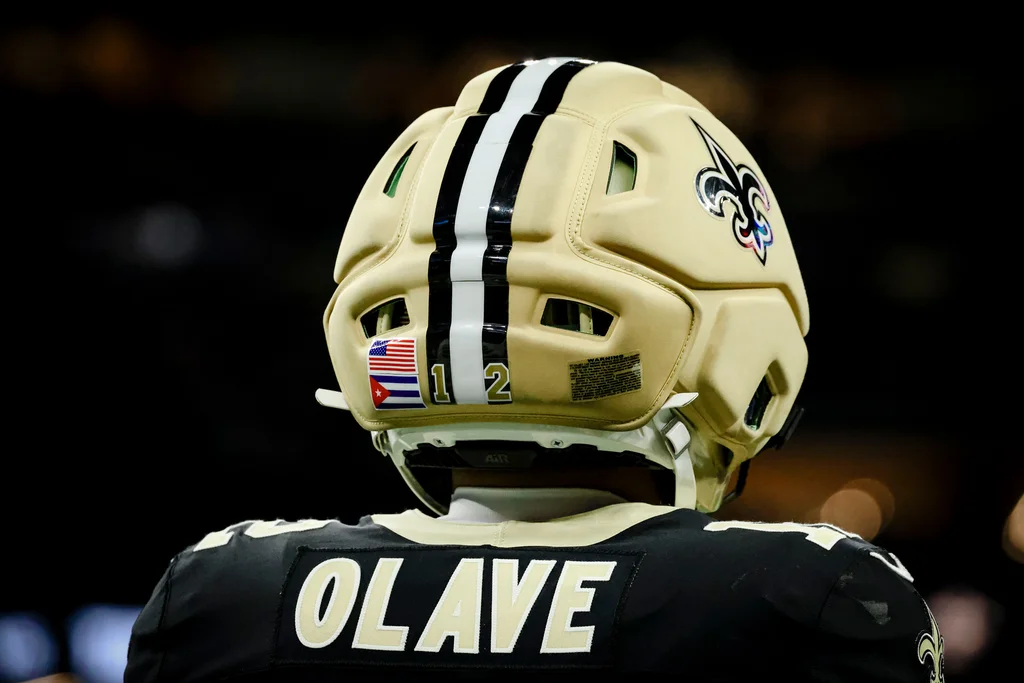
The Guardian Cap is currently produced in two primary versions tailored to different levels of competition. NFL players, along with a select group of elite college athletes, wear the NXT model, which weighs approximately 12 ounces. Meanwhile, youth leagues, high school programs, and the vast majority of college teams utilize the XT, a slightly lighter version that weighs about half a pound and retails for up to $89.99.
Market adoption has been widespread. More than 500,000 athletes across various sports and age brackets now wear a Guardian Cap during competition or practice. Recognizing the versatility of the core concept, Guardian Sports has also expanded its manufacturing footprint to produce specialized protective versions designed specifically for hockey and lacrosse helmets, where head impacts and collisions are likewise a persistent concern.
The integration of the cap into the football ecosystem has followed a carefully calibrated trajectory. The NFL initially authorized the use of the protective cover during practices in 2020, allowing teams to test its efficacy voluntarily. Impressed by the early internal data regarding impact reduction, the league made the caps mandatory during practices for positions statistically facing the highest frequency of helmet-to-helmet contact: offensive and defensive linemen, tight ends, and linebackers, starting in the 2022 season.
By 2024, the mandate had expanded significantly. Virtually every player on the roster—with the notable exceptions of quarterbacks, kickers, and punters, whose positions involve a vastly different exposure profile to contact—was required to wear a Guardian Cap during contact practices. Crucially, the league also opened the door for players to voluntarily sport the caps during official games, transforming what was once strictly a practice-field precaution into a Sunday spectacle.
As more players like Chris Olave step onto the field wearing the distinctive, larger-than-life headgear, the visual landscape of America’s most popular sport is undergoing a permanent transformation. What started as an awkward-looking piece of training equipment has rapidly evolved into a symbol of modern player advocacy, proving that when it comes to the long-term health of athletes, a little extra padding—and a few bobblehead jokes—is a small price to pay.