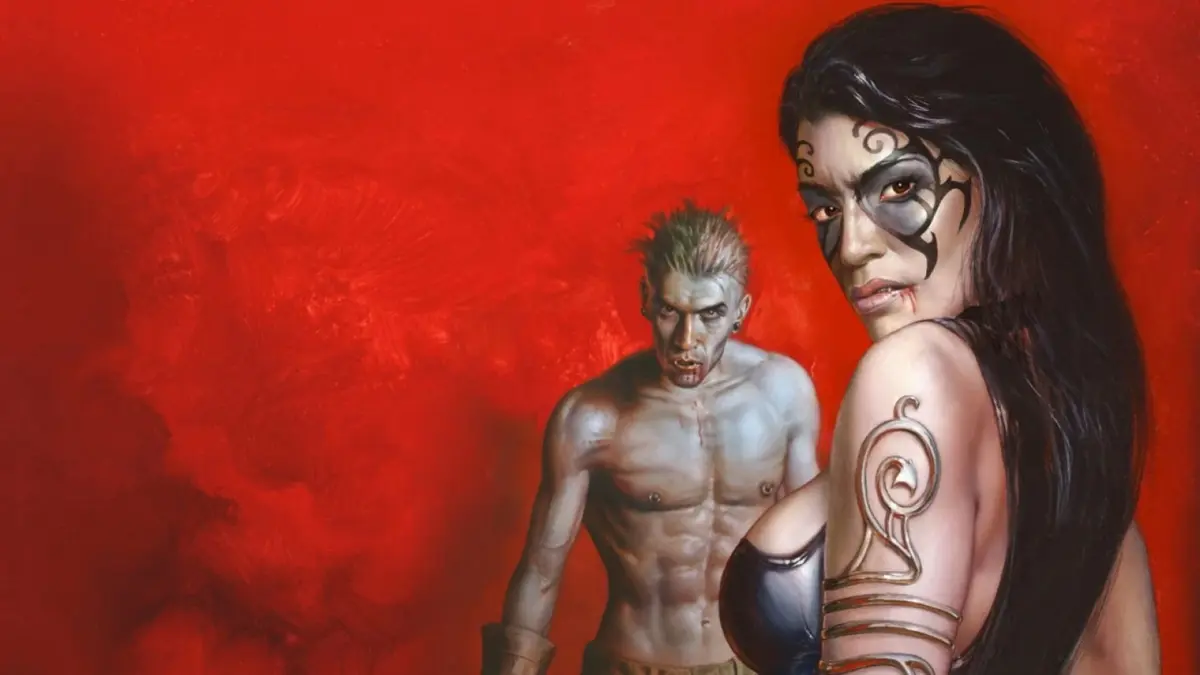
For fans of classic PC role-playing games, few titles hold the mythical, cult-classic status of 2004’s Vampire: The Masquerade – Bloodlines. Developed by the now-defunct Troika Games, the title has endured decades of fluctuating fortunes, thriving on the back of a dedicated community, legendary unofficial patches, and an atmosphere that few subsequent RPGs have ever managed to replicate.
Now, a strange and unexpected rumor has begun circulating through the community, originating from an unlikely source: an industrial metal band’s concert in Brooklyn, New York. According to a report shared on social media, the long-dormant hope for a remake of the beloved gothic-noir masterpiece might actually have some weight behind it—or it could simply be a classic case of crossed wires in the music scene.
The Rumor From Brooklyn: What Did the Genitorturers Say?
The spark for this latest wave of speculation comes from a user named Few_Interview8222 on the popular Vampire: The Masquerade – Bloodlines subreddit. The user reported back from a live performance by the industrial metal band Genitorturers at Brooklyn venue The Meadows, detailing an intriguing moment that occurred midway through the band’s set.
According to the concertgoer, the group paused partway through their performance to tell the crowd that a remake of Vampire: The Masquerade – Bloodlines is currently in development. While no independent or corroborating eyewitness accounts of this specific stage banter have surfaced across other media outlets or fan forums, tour records confirm that the Genitorturers undeniably played at The Meadows in Brooklyn as part of their ongoing "Live + Lewd Tour." This places the band squarely in the right place at the right time for such an announcement to occur, whether it was an intentional tease, a slip of the tongue, or a misunderstanding.
Industry observers and journalists have reached out to both the rights-holders—a complex web that includes Activision, among others—and representatives for the Genitorturers to seek official clarification. As of yet, no definitive official response has been provided, leaving the community to parse the clues themselves.
Why Would an Industrial Metal Band Have Inside Information?
To the uninitiated, the connection between an underground industrial metal band formed in Orlando, Florida, in 1986 and a 20-year-old PC video game might seem entirely non-existent. However, for veterans of Troika’s masterpiece, the link is both undeniable and deeply nostalgic.
Alongside a legendary, mood-setting musical score composed by Rik Schaffer, Bloodlines featured a brilliantly curated selection of era-appropriate licensed tracks from prominent rock and metal bands. Rather than simply playing over the main menu or during credit sequences, these tracks were integrated directly into the fabric of the game’s world. They served as diegetic music blasting from the speakers of the smoky nightclubs, hidden back-alley dens, and neon-lit bars scattered across the game’s atmospheric interpretation of Los Angeles.
Among those standout tracks was the Genitorturers song "Lecher Bitch," which served as the pitch-perfect audio backdrop for The Last Round. This downtown Los Angeles dive bar functioned as the primary hangout and safehouse for the Anarch faction of vampires. Because of this iconic contribution, the band has long maintained a tangential, nostalgic connection to the game’s devoted fanbase, making it at least plausible that they could have crossed paths with someone in the industry, or caught wind of behind-the-scenes whispers regarding the intellectual property.
The Skeptic’s View: What If They’re Wrong?
Naturally, the gaming community has greeted the rumor with a healthy dose of skepticism. Multiple commenters on the original Reddit thread pointed out that the band’s statement—assuming it was made at all—could easily represent a confused, untimely, or misinterpreted reference to last year’s release of Vampire: The Masquerade – Bloodlines 2.
It requires very little imagination to picture a scenario where a concertgoer misheard a stray remark amidst the heavy bass and roaring amplifiers of a live metal show, or where a performer fumbled the delivery of complex industry news. Mentioning a long-awaited sequel or a modern gaming project in passing can easily get distorted as it travels from the stage to the floor, and eventually onto internet forums. Furthermore, intellectual properties tied to the World of Darkness universe have frequently been passed around, shopped, paused, and restarted across various studios and publishers over the years. It is an environment ripe for collaborators on the periphery to act on outdated, misunderstood, or half-remembered information.
The Optimist’s View: What If They’re Right?
If a remake of the original Bloodlines is genuinely in the works, the reaction from the wider role-playing game community is likely to be a complex mix of intense excitement and profound caution. Much of that excitement would hinge entirely on who is entrusted with the project.
In the modern gaming landscape, where commercial remasters and remakes frequently face public scrutiny over performance issues, altered artistic visions, or botched technical implementations, trust is hard-earned. Recent misfires—such as historical strategy controversies and troubled classic PC remasters—have left many players wary of corporate attempts to modernize beloved retro classics.
For a game as famously distinct, structurally fragile, and idiosyncratically charming as Bloodlines, many fans argue that only specialized development teams with a proven track record of respectful restoration should touch the code. Studios known for meticulous archaeological excavation of classic source code, combined with a commitment to preserving the original developer’s intent, are seen as the gold standard for projects of this magnitude. Furthermore, any legitimate effort to revisit the original game would almost certainly need to involve or build upon the monumental work of Werner "Wesp5" Spahl, the legendary modder who has spent decades keeping the game functional, stable, and playable through the definitive unofficial patch project.
Why Bloodlines Remains Unforgettable
To understand why a stray comment at a Brooklyn concert can still send ripples through gaming communities, one only needs to look at the enduring legacy of the original 2004 release. Bloodlines occupies a unique space in role-playing game history, acting as an evolutionary missing link between classic isometric 2D role-playing frameworks and the expansive, 3D open-world design popularized in later decades. Several key creative minds behind the original project, including lead developers Leonard Boyarsky and Jason Anderson, brought their senior design experience from the original Fallout games directly into the World of Darkness universe.
Unlike the sprawling, open frontiers seen in later narrative RPGs, Bloodlines opted for a more focused, hub-based structure. Players navigated distinct, atmospheric districts of Los Angeles via a world map, immersing themselves in a Y2K gothic-noir interpretation of southern California that remains unmatched in style, tone, and writing quality.
Whether the Genitorturers’ onstage remark turns out to be an accurate leak, a garbled mention of a sequel, or simply passing stage banter, the incident underscores the remarkable staying power of a cult classic that refuses to fade into obscurity. Even if the rumor amounts to nothing more than a fleeting internet curiosity, it serves as another reminder of the profound mark Bloodlines left on a generation of gamers—and why, even two decades later, fans are still listening closely for any sign of the beast waking up once again.