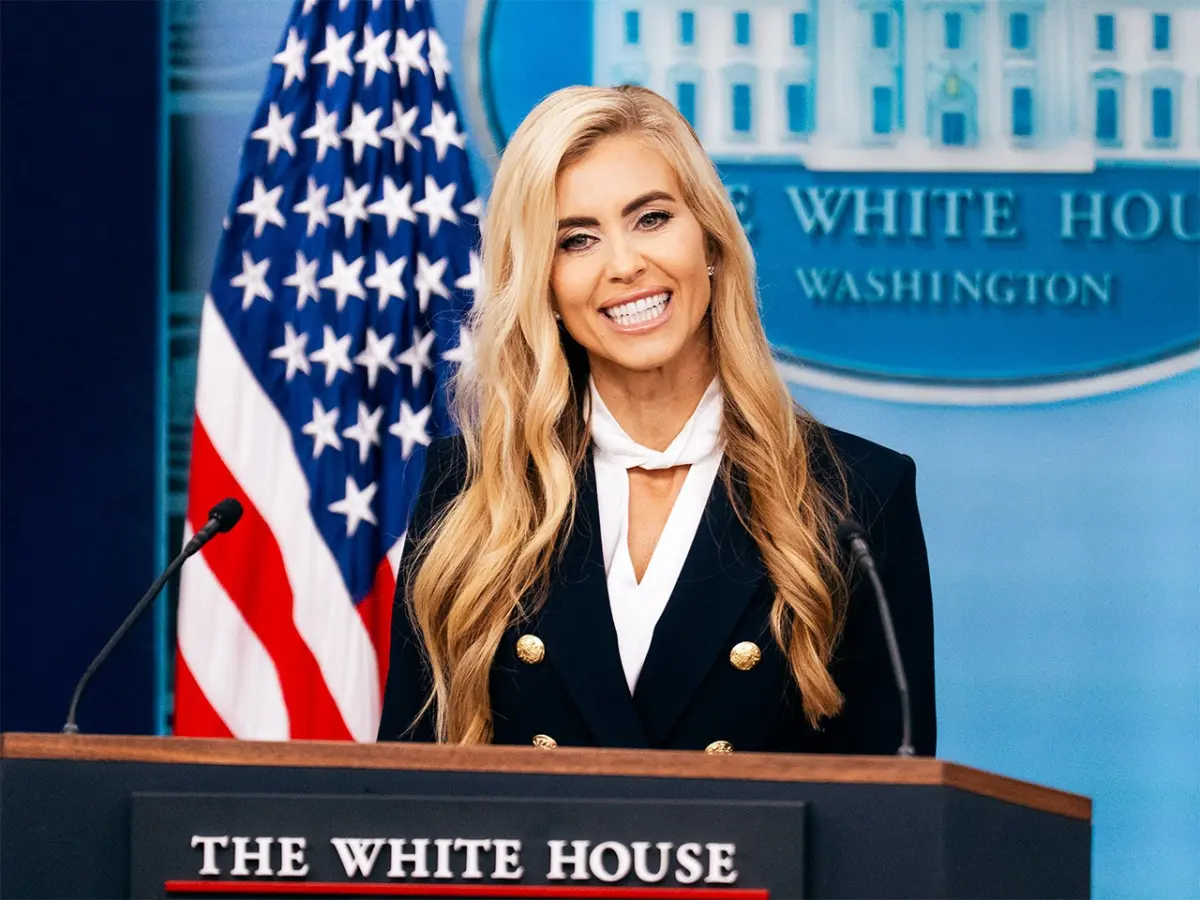
The tenure of a White House press secretary is rarely described as placid, but Katie Zacharia’s time at the podium has rewritten the modern history books for brevity and administrative turbulence. Stepping into the shoes of Karoline Leavitt, a former conservative news commentator and attorney from California endured a remarkably rocky start—and a swift, abrupt end—to a tenure that lasted a mere ten days.
Five days into her formal run, Zacharia was relieved of her frontline duties by Donald Trump. According to the administration, she is slated to transition into a different role within the West Wing, bringing her brief stint as the primary public face of the presidency to a close. To put the timeline into perspective, Zacharia’s tenure lasted precisely half as long as the famously brief ten-day run of Anthony Scaramucci, who served as the administration’s communications director during a chaotic period in Trump’s first term back in 2017.
The writing appeared to be on the wall by the end of the week. Speaking to reporters assembled on the White House South Lawn on Friday, the president recounted a candid conversation he had shared with his departing press secretary, noting that he had told Zacharia, "Honestly, if I were you, I’d reconsider."
The friction behind the scenes quickly manifested in the public eye, fueled by a disastrous public debut. Zacharia’s sole press conference as White House press secretary immediately dominated the evening news cycles, but entirely for the wrong reasons. Standing at the podium for just over eight minutes, she delivered her remarks largely from a prepared script in a traditional, newsreader-style cadence.
The briefing required her to break significant and sensitive news on live television, including the unceremonious firing of a sitting United States ambassador. When queried by reporters regarding the status of Kimberly Guilfoyle—the embattled former fiancée of Donald Trump Jr. and America’s top diplomat in Athens—Zacharia delivered the news with clinical detachment.
"हम have asked ambassador Kimberly Guilfoyle to resign," she told reporters in the briefing room. "She has been a wonderful asset to the team and we wish her well."
Beyond the dramatic personnel announcement, access to the briefing was heavily restricted. Reporters from just three media outlets—all of them staunchly conservative and friendly to the administration—were permitted to pose questions. Even within that controlled environment, Zacharia frequently found herself unable to answer fundamental queries about ongoing policy matters. When pressed by journalists on whether the United States was still actively sharing intelligence with Ukraine, her response was notably sparse. "I’ll have to get back to you on that," she offered, highlighting an apparent lack of deep preparation for the complexities of the global stage.
The swift unraveling of her public appearances threw a harsh spotlight on the vetting and selection process that brought her into the West Wing. Brief, biting, and visibly icy, Zacharia fit the visual mold of the high-profile women frequently elevated within the MAGA ecosystem—handpicked by Trump perhaps as much for her polished presentation as her presumed political alignment. Yet, surface-level loyalty and television-ready poise could only carry her so far, particularly once political opponents and media outlets began rigorously examining her professional credentials.
When President Trump formally announced her appointment, he introduced her prominently as an "attorney." However, a closer look at her background revealed lingering ambiguities regarding her authorization to practice law in the United States. While Zacharia is a graduate of Pepperdine University’s law school in California and holds a position on its Dean’s Council, public records do not clearly indicate that she ever passed the mandatory state bar exam in California. Instead, her legal background largely stems from her time working abroad at a Beijing law firm in China.
Zacharia’s emergence into the highest echelons of the West Wing came as a surprise to many observers, largely because few anticipated that her predecessor would ever step down. Karoline Leavitt, the 29-year-old press secretary who defined the role in Trump’s confrontational, unpredictable, and often theatrical image, had maintained a tight grip on the position since the return to the Oval Office. When Leavitt abruptly departed in early August, it immediately sparked intense speculation inside Washington circles over who might inherit the high-pressure post.
Prominent figures, including CNN contributor and veteran Republican strategist Scott Jennings, topped early lists of potential successors. Ultimately, however, it was Zacharia who secured the appointment. Within the president’s inner circle, her resume checked all the necessary boxes. She had previously held roles tied to Truth Social and the Trump Media & Technology Group, cementing her status as an ardent defender of the "America First" agenda across various media platforms.
Furthermore, Zacharia’s personal life aligns closely with the cultural values currently championed by the upper tiers of the Republican Party. As a mother of four children, she shares a familial demographic that holds significant currency within an administration that frequently frames reproduction and large families as a civic and cultural priority. In this regard, she joins the ranks of other prominent MAGA figures who champion pronatalist policies, including Vice President JD Vance and Deputy Chief of Staff and Homeland Security Adviser Stephen Miller, both of whom also have four children.
While political analysts often debate the relevance of focusing on a public official’s personal life or appearance, within the distinct operational culture of the Trump White House, visual presentation and personal alignment are frequently viewed as critical tools for governance. Yet, even with the right stylistic credentials and established network connections, Zacharia quickly crossed a dangerous threshold in the eyes of the West Wing: she transformed from an asset into a liability.
Unlike the high turnover rate that defined the communications team during Trump’s first term, the second iteration of the administration has generally maintained a steadier internal structure. With Leavitt serving as the sole voice of the administration until her departure, the pressure on Zacharia to maintain that continuity was immense.
In the wake of her difficult press briefing, Zacharia attributed her struggles to a severe lack of preparation time and exhaustion brought on by grueling hours, noting that she had been forced to wake up as early as 3:00 AM. Critics, however, pointed out that the grueling demands of the White House press office routinely require punishing schedules and round-the-clock crisis management. As the president reportedly remarked to reporters on the South Lawn, "Katie, do you need this? I don’t think you need this."
Whether it was Zacharia who ultimately needed the intense spotlight or the president who needed to stem the tide of mounting administrative drama remains a subject of debate in Washington. At a time when the political opposition and media landscape remain intensely focused on administration missteps, the sudden departure leaves the White House once again searching for a steady hand to step behind the podium.